 Preview
 Send
Send Share
Share
 Details

 Download
 Similars
 X-Ray
X-Ray Diaporama
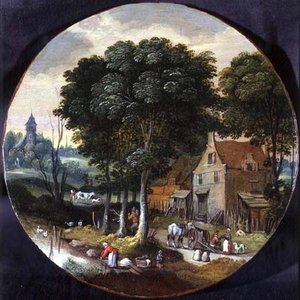
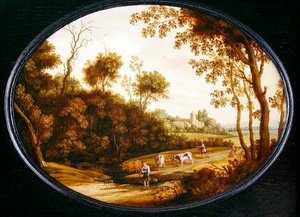
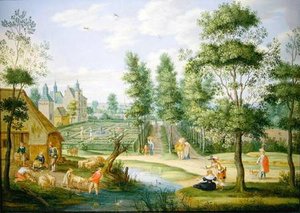
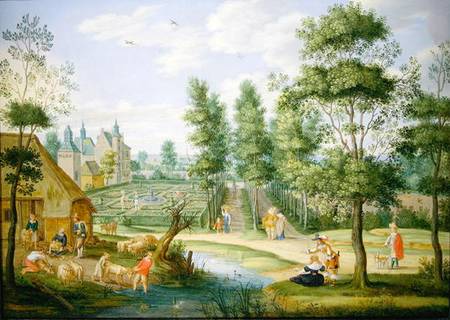
Figures In The Grounds Of A Country House
 Read More
Hand Made Oil Reproduction
Hand-painted oil on canvas in your size and frame, made to order by our artists. ( Buy Print Buy Image)




































Pick from our preset sizes that match the artwork's original proportions.

You may enter your own dimensions to fit a specific frame or space. If your selected size does not match the original image's proportions, we will either crop the artwork or extend the painting with additional hand-painted elements. A digital mockup will be sent for your approval before production begins.
Please note that the on-screen preview does not reflect the actual cropping or extension. Only the mockup will accurately show the final composition.
While custom sizes are available, we recommend selecting a dimension from the predefined list to preserve the original proportions.
After order, ArtsDot.com team will email client for instructions and provide a mockup preview
Worldwide Delivery () in 3/4 weeks instead of standard 5 weeks. (1 September). No compromise on quality.

Free Worldwide Express Shipping

High-Quality Linen Canvas

Full Shipping Insurance

Customs Tax Refund Guarantee

True Color Matching Guarantee

60-Day Return Policy (Defects Only)

100% Money-Back Guarantee

Bulk Discount Offer
 Glass option is only available in size under 110 CM

Figures In The Grounds Of A Country House
Reproduction Medium
Reproduction Size
-


Total Price
$ 263
Related Artworks

Artist Biography
The Serene World of Isaak van Oosten: Flemish Landscape and Cabinet Painting
Isaak van Oosten (1613-1661), a name perhaps less familiar than his contemporaries Jan Brueghel the Elder or Peter Paul Rubens, nevertheless holds a significant place within the rich tapestry of 17th-century Flemish art. Born in Antwerp, the son of an art dealer already established as a master craftsman, van Oosten’s life remains shrouded in relative obscurity – a common characteristic for many artists of his era. Little is definitively known about his early training or the specific masters who shaped his artistic development; it's believed he initially honed his skills within his father’s workshop, absorbing techniques and stylistic influences without formally registering with the prestigious Antwerp Guild of Saint Luke until the age of 39. This delay speaks volumes about the realities faced by artists during that period – a system often favoring established lineages over formal apprenticeships. His relatively brief tenure as a guild master, lasting only a decade before his untimely death in 1661, further underscores this sense of a life lived largely behind the scenes, yet one brimming with quiet artistic achievement.A Landscape Painter Rooted in Antwerp’s School
Van Oosten's legacy rests primarily on his captivating landscape paintings and panels designed for the intimate setting of Antwerp cabinets – small, luxurious rooms within aristocratic homes. These weren’t grand, sweeping vistas; rather, they were carefully composed scenes evoking a sense of tranquility and understated beauty. His compositions are characterized by an almost meditative quality, reflecting the prevailing mood of the Antwerp school of landscape painting during the first half of the 17th century – a movement that prioritized atmospheric perspective, subtle color palettes, and a focus on capturing the essence of nature rather than meticulously replicating every detail. He was profoundly influenced by Jan Brueghel the Elder, whose masterful use of light and shadow, combined with his ability to infuse scenes with human activity, undoubtedly shaped van Oosten’s approach. Furthermore, he engaged with contemporary Flemish painters like Alexander Keirincx, Lucas van Uden, and Jan Wildens, absorbing their techniques and stylistic sensibilities. A fascinating, though sometimes debated, influence is that of Jan Brueghel the Younger, whose later works often featured similar themes – particularly depictions of the Garden of Eden and the Creation of Animals – leading some scholars to tentatively suggest a shared artistic lineage, although definitive proof remains elusive.The Language of Gentle Light and Mediterranean Echoes
Van Oosten’s landscapes are remarkably consistent in their aesthetic—a deliberate choice that speaks volumes about his artistic philosophy. They typically depict simple, open spaces: rolling hills, meandering roads, and tranquil ponds, often populated by clusters of trees rendered with a delicate touch. A pervasive sense of calm permeates these scenes, achieved through the use of even, gentle light that seems to bathe the entire composition in a soft glow. The trees themselves are depicted without the dramatic windswept forms favored by woodland painters, instead appearing serene and untouched—a deliberate rejection of the more turbulent, emotionally charged landscapes popular at the time. Interestingly, many of his works possess an undeniable Mediterranean flavor – a subtle hint of sun-drenched shores and distant mountains that suggests a fascination with Italianate scenery, despite no documented evidence of van Oosten ever having traveled to Italy. This stylistic influence likely stemmed from the dissemination of artistic ideas through prints and engravings, allowing him to draw inspiration from the works of Italian painters without physically experiencing their landscapes.Collaboration and the Art of the Cabinet
Van Oosten’s practice was rarely solitary. He frequently collaborated with other artists specializing in specific elements within his compositions—a common practice during this period. Willem van Herp, for example, is believed to have contributed the staffage – the figures and domestic scenes that populated many of van Oosten's paintings, adding a touch of human drama and narrative. The two panels depicting “The Four Elements” offer a particularly compelling illustration of this collaborative approach, with Pieter van Avont responsible for the staffage and possibly Jan van Kessel the Elder contributing to the intricate depiction of animals and still-life elements. This division of labor highlights the interconnectedness of the artistic community in Antwerp and underscores the importance of specialized skills within the broader landscape painting tradition.A Lasting Legacy: Rediscovered Beauty
Despite his relatively modest profile, Isaak van Oosten’s work continues to resonate with viewers today. His landscapes, characterized by their serene beauty, subtle color palettes, and evocative atmosphere, offer a welcome respite from the grandeur of more overtly dramatic works. His paintings are now housed in prestigious collections across Europe – including the Uffizi Gallery in Florence, the Prado Museum in Madrid, and the Hermitage Museum in St. Petersburg—testament to their enduring appeal. Van Oosten’s legacy lies not in grand pronouncements or revolutionary innovations, but rather in his quiet dedication to capturing the essence of nature with a gentle hand and an artist's discerning eye, solidifying his place as a significant, if often overlooked, figure in the history of Flemish landscape painting.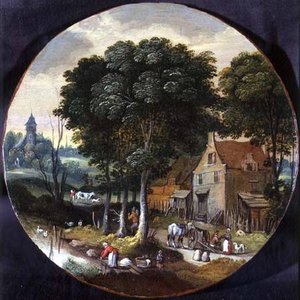
isaak van oosten
1613 - 1661
Quick Facts
- Artistic Movement Or Style: Baroque landscape
- Artists Or Movements Influenced By This Artist: ['Jan Brueghel the Younger']
- Artists Who Influenced This Artist:
- Jan Brueghel the Elder
- Alexander Keirincx
- Lucas van Uden
- Jan Wildens
- Date Of Birth: 10 Dec 1613
- Date Of Death: Dec 1661
- Full Name: Isaak van Oosten
- Nationality: Flemish
- Notable Artworks:
- River Landscape
- A Wooded Landscape
- Figures In The Grounds
- Place Of Birth: Antwerp, Belgium