 Preview
 Send
Send Share
Share
 Details

 Download
 Similars
 X-Ray
X-Ray Diaporama
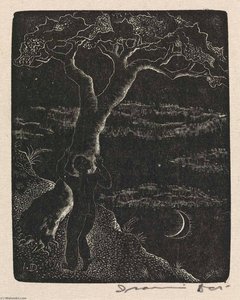
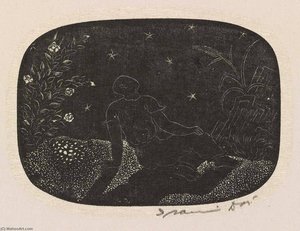
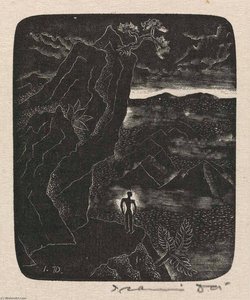
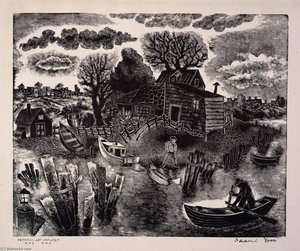
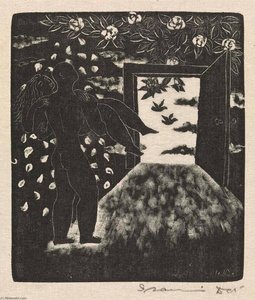
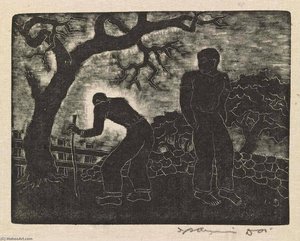
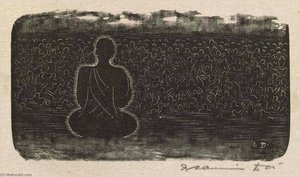
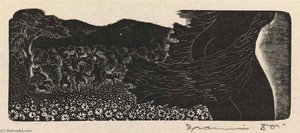
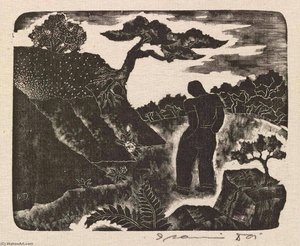
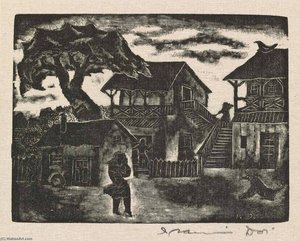
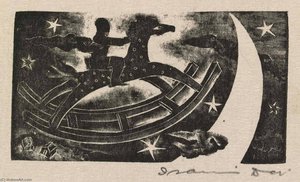
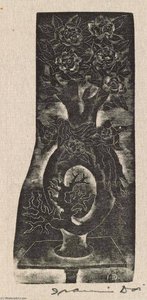
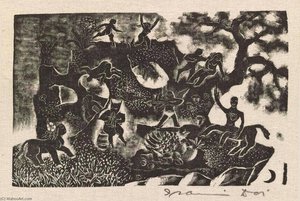
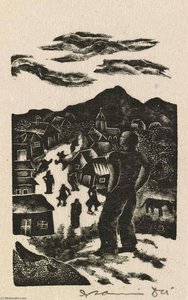
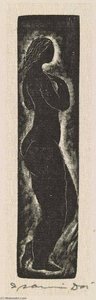
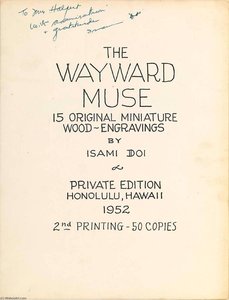
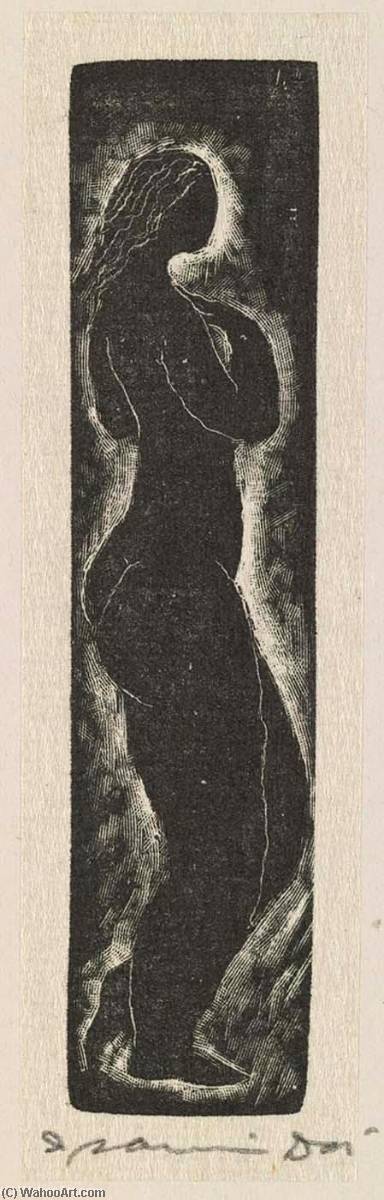
(The Wayward Muse, portfolio) Quand Vous Regardez l'Essor, Etc
 1952
1952 8.0 x 2.0 cm
 Read More
Giclée / Art Print
Museum-quality giclée or canvas print with fast production and flexible finish options. ( Buy Hand Made Painting Buy Image)




































Pick from our preset sizes that match the artwork's original proportions.

You may enter your own dimensions to fit a specific frame or space. If your selected size does not match the original image's proportions, we will either crop the artwork or extend the image with a mirrored or solid-fill edge. A digital mockup will be sent for your approval before production begins.
Please note that the on-screen preview does not reflect the actual cropping or extension. Only the mockup will accurately show the final composition.
While custom sizes are available, we recommend selecting a dimension from the predefined list to preserve the original proportions.
Worldwide Delivery () in 2 weeks instead of standard 4/5 weeks. (25 August)

Free Worldwide Express Shipping

High-Quality Linen Canvas

Full Shipping Insurance

Customs Tax Refund Guarantee

True Color Matching Guarantee

60-Day Return Policy (Defects Only)

100% Money-Back Guarantee

Bulk Discount Offer
 Glass option is only available in size under 110 CM

(The Wayward Muse, portfolio) Quand Vous Regardez l'Essor, Etc
Giclée / Art Print
Reproduction Size
-


Total Price
$ 63
Related Artworks




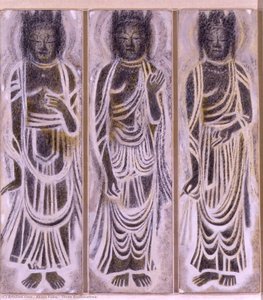
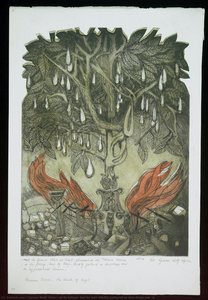
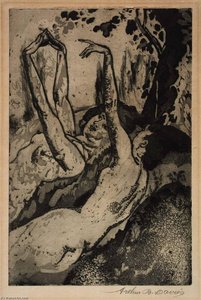
Artist Biography
The Soul of the Islands: The Artistic Journey of Isami Doi
Born in 1903 to Japanese immigrants on the island of Oahu, Isami Doi’s life was a profound bridge between cultures and continents. While his roots were firmly planted in the volcanic soil of the Hawaiian Islands, his artistic spirit was forged in the cosmopolitan intensity of New York City and the classical light of Paris. This unique trajectory allowed him to weave together the rugged, natural grandeur of Kauai with the sophisticated principles of modernism. His early years at the University of Hawaii provided a foundational connection to his homeland, but it was his time in Manhattan—studying under masters like Albert Bierstadt and exploring the rigorous color theories of Josef Albers at Columbia University—that equipped him with the technical vocabulary to transform landscape into emotion.
Doi’s early aesthetic was deeply rooted in the tradition of tonal harmony and naturalism. Influenced by Bierstadt’s sweeping landscapes, his initial works often utilized muted duns, browns, and earthy hues to capture the dramatic mountains of Kauai. These early pieces possessed a subtle, almost discreet erotic quality, finding beauty in the textures of the earth and the soft gradations of light. A landmark moment in his burgeoning career arrived in 1929 with his first solo exhibition at the Honolulu Museum of Art, where his prints and paintings immediately established him as a vital new voice in the Hawaiian art scene. His ability to render the landscape not just as scenery, but as a living, breathing entity, earned him national recognition, including being named one of the fifty best printmakers in America for his work Woodstock Village.
From Classical Symbolism to Abstract Spirit
As Doi’s career progressed, his work underwent a mesmerizing metamorphosis, moving away from literal representation toward a deeply personal symbolic language. Mid-way through his journey, the artist began to integrate classical motifs inherited from Greek and Roman mythology. He introduced elements such as centaurs, sphinxes, and broken columns into his compositions, creating a dialogue between the ancient Mediterranean world and the Pacific landscape. This period reflected an artist grappling with the weight of history and the permanence of myth, blending the physical reality of Hawaii with the intellectual heritage of Western civilization.
However, it was the deepening of his spiritual life that ultimately led him toward the threshold of pure abstraction. The symbols of the classical world gradually dissolved into more primal, elemental forms. His palette shifted dramatically; the muted tones of his youth gave way to vibrant oranges and vermilions, colors that signified flickering flames and divine light. In this stage of his evolution, Doi utilized a simplified Buddha shape as a personal hieroglyph for meditation, signaling a move toward a Zen-like minimalism. This transition was not merely stylistic but spiritual, as he sought to capture the essence of existence through color and form rather than through recognizable figures.
A Lasting Legacy of Light and Landscape
In his final years during the 1960s, Doi’s work came full circle. He set aside the complex symbols of his middle period to return to the cliffs of Kauai, yet he viewed them through an entirely new lens. No longer just landscapes to be observed, these geological formations became spiritual entities in themselves. His late abstract paintings, such as Early Spring, represent a pinnacle of his achievement, where the distinction between the physical world and the spiritual realm vanishes into fluid, energetic strokes.
The historical significance of Isami Doi lies in his role as a pioneer of Hawaiian Abstract Expressionism. He successfully navigated the complexities of being a second-generation Japanese American artist, creating a body of work that is simultaneously local and universal. His legacy is preserved in prestigious institutions such as:
- The National Gallery of Art in Washington, DC, which holds his significant contributions to American printmaking.
- The Honolulu Museum of Art, where his early mastery of the Hawaiian landscape remains a cornerstone of the collection.
- The Hawaii State Art Museum, housing works that showcase his unique integration of classical and Pacific motifs.
Through his teaching of printmaking, drawing, and metalwork, and his ability to find the infinite within the local, Isami Doi remains an enduring icon of American modernism, reminding us that art is a continuous journey from the observation of nature to the realization of the soul.
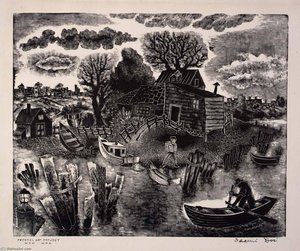
isami doi
1903 - 1965
Quick Facts
- Artistic Movement Or Style: Hawaiian Landscape Painting & Printmaking
- Artists Or Movements Influenced By This Artist: ['Hawaiian Folk Art']
- Artists Who Influenced This Artist:
- Albert Bierstadt
- George Grosz
- Date Of Birth: 1903
- Date Of Death: 1965
- Full Name: Isami Doi
- Nationality: American
- Notable Artworks:
- Near Coney Island
- (The Wayward Muse, portfolio) Frontispiece
- (The Wayward Muse, portfolio) No More the Walls Surround, Etc
- Place Of Birth: Oahu, Hawaii