 Preview
 Send
Send Share
Share
 Details

 Download
 Similars
 X-Ray
X-Ray Diaporama
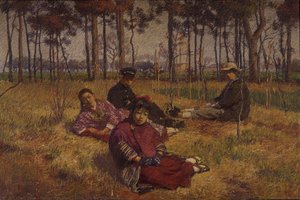
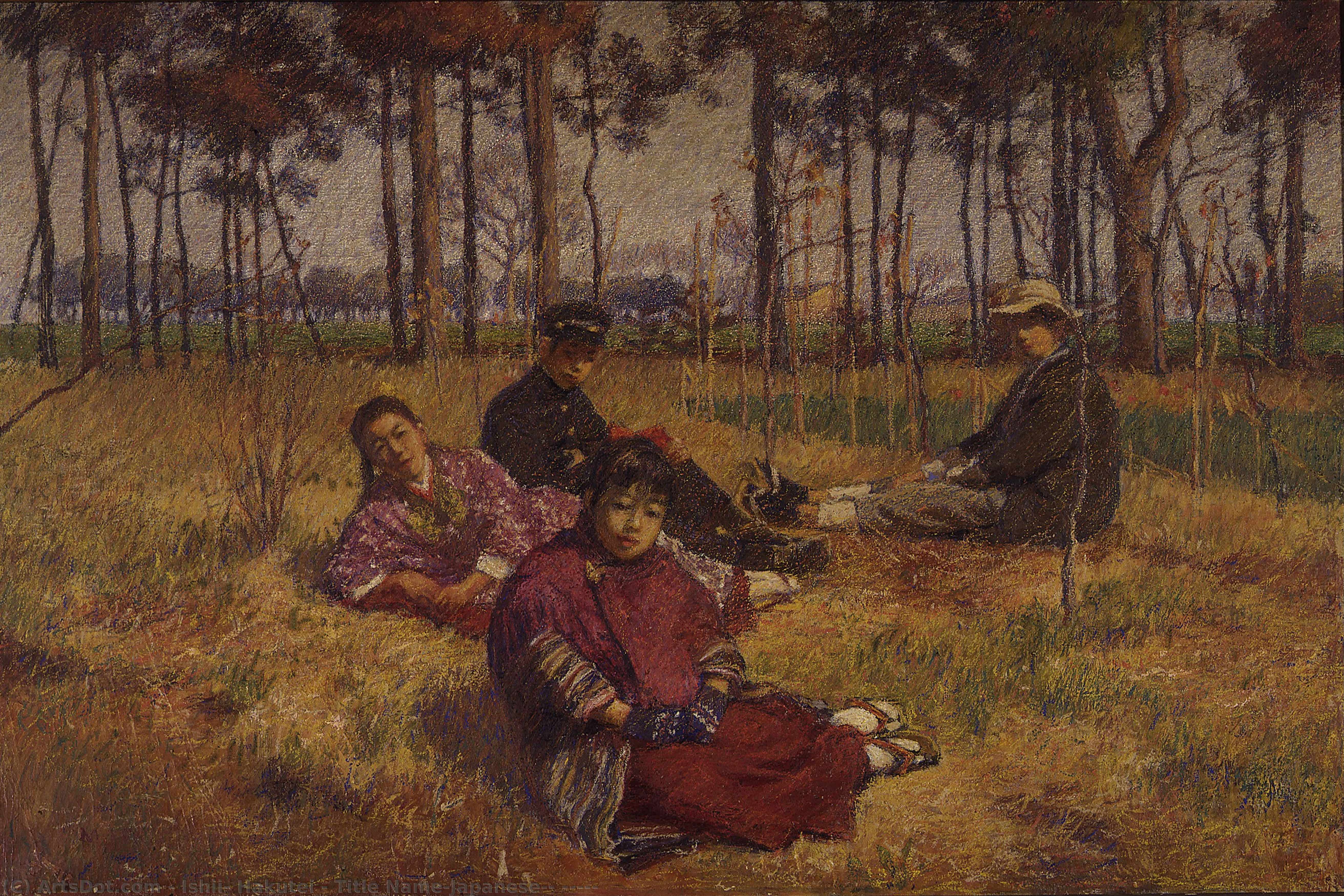
Title Name(Japanese): 草上の小憩
 137.0 x 92.0 cm
 Read More
Giclée / Art Print
Museum-quality giclée or canvas print with fast production and flexible finish options. ( Buy Hand Made Painting Buy Image)




































Pick from our preset sizes that match the artwork's original proportions.

You may enter your own dimensions to fit a specific frame or space. If your selected size does not match the original image's proportions, we will either crop the artwork or extend the image with a mirrored or solid-fill edge. A digital mockup will be sent for your approval before production begins.
Please note that the on-screen preview does not reflect the actual cropping or extension. Only the mockup will accurately show the final composition.
While custom sizes are available, we recommend selecting a dimension from the predefined list to preserve the original proportions.
Worldwide Delivery () in 2 weeks instead of standard 4/5 weeks. (26 August)

Free Worldwide Express Shipping

High-Quality Linen Canvas

Full Shipping Insurance

Customs Tax Refund Guarantee

True Color Matching Guarantee

60-Day Return Policy (Defects Only)

100% Money-Back Guarantee

Bulk Discount Offer
 Glass option is only available in size under 110 CM

Title Name(Japanese): 草上の小憩
Giclée / Art Print
Reproduction Size
-


Total Price
$ 63
Related Artworks









Artist Biography
Early Life and Education
- Birth and Family: Ishii Hakutei was born Mankichi Ishii on March 28, 1882, in Tokyo, Japan. He came from an artistic family; his father was the nihonga artist Ishii Teiko.
- Early Training: Hakutei initially studied traditional Japanese painting (nihonga) under his father’s guidance. He later transitioned to yōga – Western-style painting – studying with Asai Chū and Nakamura Fusetsu.
- Formal Studies & Departure: He enrolled at the Tokyo School of Fine Arts, learning from prominent artists like Kuroda Seiki and Fujishima Takeji. However, he left after only one year of study.
Artistic Development and Influences
- Early Career & Travel: Despite leaving the Tokyo School of Fine Arts, Hakutei continued to exhibit at the Bunten exhibitions. He embarked on extensive travels throughout Egypt, Italy, Spain, Germany, and England, broadening his artistic horizons.
- Key Influences: His style was notably influenced by artists like Kishida Ryusei and Asai Chū, both significant figures in yōga painting.
- Founding Nikakai & Issuikai: In 1914, Hakutei co-founded the Nikakai (Society for Progressive Japanese Artists) with Yamashita Shintarō and Arishima Ikuma. This group aimed to push boundaries in Japanese art. Later, in 1936, he co-founded the Issuikai alongside Yamashita Shintarō and Yasui Sōtarō.
- Engagement with Modernism: Hakutei was deeply engaged with European modern art movements like Fauvism, Futurism, and Cubism. He wrote extensively about these styles, contributing to their introduction in Japan.
Major Achievements and Contributions
- Dissemination of Modern Art: Hakutei played a crucial role in introducing European modern art concepts to Japan through his writings and exhibitions. He translated Albert Gleizes and Jean Metzinger’s *Du Cubisme* into Japanese, making it accessible to a wider audience.
- Sosaku Hanga & ‘Twelve Views of Tokyo’: He was involved in the sosaku hanga movement, emphasizing artist control over all aspects of printmaking. His series “Twelve Views of Tokyo” (1910), though ultimately incomplete due to poor sales, demonstrated his exploration of this medium.
- Academic Recognition & Imperial Service: In 1935, he joined the Imperial Fine Arts Academy and became a member of the reorganized academy in 1937. After World War II, he served as chief judge of the yōga section of the Nitten exhibitions.
- Cultural Preservation Role: He also held a special advisory position following the enactment of the 1950 Law for the Protection of Cultural Properties, demonstrating his commitment to preserving Japan’s artistic heritage.
- National Honor: Shortly before his death in December 1958, Hakutei was decorated with the Order of the Rising Sun.
Legacy and Historical Significance
- Bridging Traditions: Ishii Hakutei is remembered as a pivotal figure who bridged the gap between traditional Nihonga aesthetics and Western modern art styles. He successfully integrated these influences into his own unique artistic vision.
- Impact on Japanese Art Scene: His contributions to the Nikakai and Issuikai, along with his writings and translations, significantly impacted the development of modern Japanese art.
- Preservation of Works: Notable examples of his work can be found at institutions like the Artizon Museum (Tokyo) and the Aichi Prefectural Museum of Art (Nagoya).
- Hakutei’s legacy lies in his ability to navigate and synthesize diverse artistic influences, leaving a lasting mark on the Japanese art landscape.
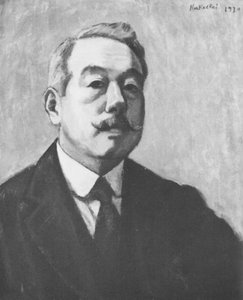
Ishii Hakutei
1882 - 1958 , Japan
Quick Facts
- Artistic Movement Or Style: Yōga, Nihonga, Modern art
- Artists Or Movements Influenced By This Artist: ['Sosaku Hanga movement']
- Artists Who Influenced This Artist:
- Kishida Ryusei
- Asai Chū
- Date Of Birth: March 28, 1882
- Date Of Death: December 29, 1958
- Full Name: Ishii Hakutei
- Nationality: Japanese
- Notable Artworks: ['Title Name(Japanese): 草上の小憩']
- Place Of Birth: Tokyo, Japan