 Preview
 Send
Send Share
Share
 Details

 Download
 Similars
 X-Ray
X-Ray Diaporama
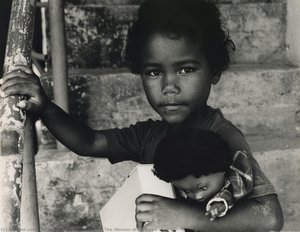
A Port Town Elegy (5 of 5)
 Acrylic On Canvas
- WallArt
- Documentary Photography
 1983
1983 17.0 x 21.0 cm
 Queensland Art Gallery | Gallery of Modern Art
 Read More
Hand Made Oil Reproduction
Hand-painted oil on canvas in your size and frame, made to order by our artists. ( Buy Print Buy Image)




P118B $10

P118H $10

P118W $10

P438Z $10

P508JH $12

P508YH $12

P805H $10

P805Z $10

P919BZ $10

P919G $10

P919XJ $10

P959ZH $10

P968JZ $12

W106C $8

W218G $10

W218JH $8

W218Y $10

W307PJ $10

W316G $10

W316PJ $8

W316Y $10

W398PJ $8

W4111J $10

W500HY $15

W500JH $15

W692G $12

W849H $8

W940BG $15

W953PJ $8




Pick from our preset sizes that match the artwork's original proportions.

You may enter your own dimensions to fit a specific frame or space. If your selected size does not match the original image's proportions, we will either crop the artwork or extend the painting with additional hand-painted elements. A digital mockup will be sent for your approval before production begins.
Please note that the on-screen preview does not reflect the actual cropping or extension. Only the mockup will accurately show the final composition.
While custom sizes are available, we recommend selecting a dimension from the predefined list to preserve the original proportions.
After order, ArtsDot.com team will email client for instructions and provide a mockup preview
Worldwide Delivery () in 3/4 weeks instead of standard 5 weeks. (1 September). No compromise on quality.

Free Worldwide Express Shipping

High-Quality Linen Canvas

Full Shipping Insurance

Customs Tax Refund Guarantee

True Color Matching Guarantee

60-Day Return Policy (Defects Only)

100% Money-Back Guarantee

Bulk Discount Offer
 Glass option is only available in size under 110 CM

A Port Town Elegy (5 of 5)
Reproduction Medium
Reproduction Size
-


Total Price
$ 338
A Window Into Okinawan Soul: Mao Ishikawa’s “A Port Town Elegy”
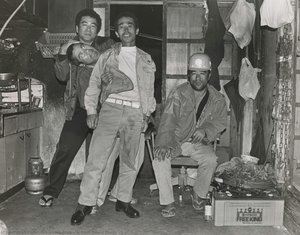
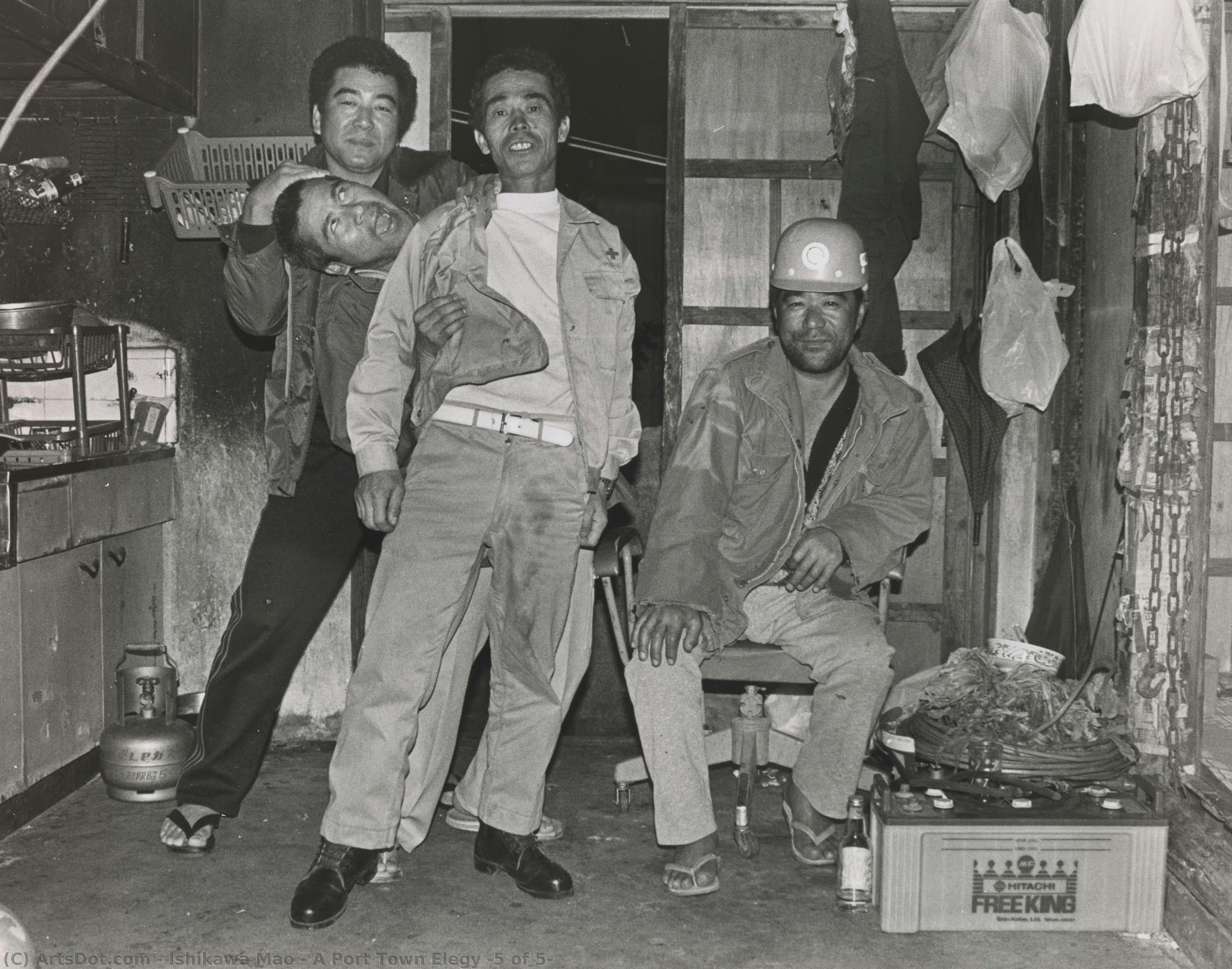
Mao Ishikawa's "A Port Town Elegy (5 of 5)" isn’t merely a photograph; it’s a distilled moment, a frozen echo of lives lived on the fringes of Japanese society. Captured in 1983 amidst the bustling port area of Naha, Okinawa, this image offers an intimate glimpse into a world often overlooked – the weathered faces and quiet resilience of dockworkers and fishermen grappling with hardship and camaraderie. Ishikawa’s work transcends simple documentation; it's imbued with a deep empathy and a profound understanding of her island home’s complex history and cultural identity.
The photograph immediately draws the eye into a dimly lit, almost claustrophobic space. Three men dominate the frame, their postures suggesting both weariness and an underlying strength. One, clad in a tie, appears to be engaged in conversation, while another gently cradles what seems to be a woman’s head – a gesture simultaneously playful and loaded with unspoken narratives. The third figure, seated and seemingly lost in thought, anchors the composition with his quiet presence. The deliberate lack of color—a stark monochrome palette—amplifies the scene's raw emotionality, stripping away any superficial distractions and forcing the viewer to confront the textures, shadows, and subtle expressions that reveal a wealth of untold stories.
Crafting Intimacy: Technique and Composition
Ishikawa’s masterful use of light and shadow is central to the photograph's impact. The uneven illumination creates a sense of depth and drama, highlighting the worn surfaces of the room – peeling paint, rough-hewn chairs, and scattered objects like bottles and bowls. These details speak volumes about the lives lived within this space: a testament to hard work, simple pleasures, and perhaps a touch of melancholy. The composition itself is deliberately chaotic, mirroring the lived experience of the subjects—a feeling of being crammed into a small, vital world. The slightly off-center placement of the figures adds to the sense of immediacy and invites the viewer to become an active participant in the scene.
Beyond the technical aspects, Ishikawa’s approach is deeply rooted in her immersive methodology. As she herself described, her work isn't about *looking* at a subject; it’s about *living* within their world. This dedication to understanding—spending time with her subjects, sharing meals, and building genuine connections—is evident in the photograph’s authenticity. The trust established between Ishikawa and these men is palpable, allowing her to capture candid moments of vulnerability and connection that would otherwise remain hidden.
Echoes of Okinawa: History and Symbolism
"A Port Town Elegy" isn't simply a portrait of working-class Okinawans; it’s a window into a specific historical context. Shot during a period of significant upheaval—the aftermath of World War II, the reversion to Japanese sovereignty in 1972, and the continued presence of American military bases—the photograph reflects the island's complex relationship with both its own heritage and the forces shaping its future. The men depicted represent a demographic often marginalized and overlooked by mainstream narratives – those who labored tirelessly on the docks, providing essential services while facing economic hardship and social exclusion.
The image’s symbolism is layered and resonant. The woman's head cradled in the hands of one of the men could be interpreted as a gesture of affection, protection, or perhaps even a subtle challenge to traditional gender roles. The dimly lit setting evokes a sense of confinement and hardship, while the shared space suggests a community bound together by mutual reliance and resilience. Ishikawa’s work powerfully embodies the spirit of “Okinawa soul”—a blend of stoicism, humor, and an unwavering connection to one's roots.
A Legacy of Observation: Ishikawa’s Vision
Mao Ishikawa’s body of work stands as a testament to her enduring commitment to documenting marginalized communities and challenging conventional perspectives. Her photographs are not merely images; they are narratives—stories of resilience, loss, and the quiet dignity of everyday life. “A Port Town Elegy” exemplifies her signature style: an immersive approach that prioritizes empathy, authenticity, and a profound respect for her subjects. Reproductions of this powerful image offer a unique opportunity to connect with the heart of Okinawan culture and witness the enduring legacy of one of Japan’s most insightful photographers.
Related Artworks
Artist Biography
A Life Immersed: The Photography of Mao Ishikawa
Born in 1953 in the village of Ogimi, Okinawa, Japan, Mao Ishikawa’s life and artistic vision are inextricably linked to the complex history and vibrant culture of her island home. More than simply a documentarian, Ishikawa is an immersive storyteller, a chronicler of lives lived on the periphery, and a fearless observer of the socio-political forces that have shaped modern Okinawa. Her work isn't about *looking* at a subject; it’s about living within its world, breathing its air, and understanding its unspoken narratives. This deep engagement defines her photographic practice, resulting in images that possess an intimacy and raw honesty rarely encountered. From the bustling energy of American military clubs to the quiet dignity of Okinawan port towns, Ishikawa's lens captures a reality often overlooked by mainstream perspectives.Early Visions: Documenting a Changing Okinawa
Ishikawa’s journey into photography began during a period of significant transition for Okinawa. Following decades under U.S. administration, the island was returned to Japan in 1972, but this return did not bring complete liberation. The continued presence of American military bases and the complex relationship between Okinawan identity and Japanese sovereignty became central themes in her work. Initially studying with Shomei Tomatsu at the Workshop School of Photography in Tokyo, Ishikawa quickly forged her own path, returning to Okinawa determined to document the lives unfolding around her. Her early series, Red Flower: The Women of Okinawa (1975), stands as a powerful testament to this commitment. This poignant black-and-white collection offered an unflinching look at the women working in bars catering to American servicemen – individuals often marginalized and misunderstood. Ishikawa didn’t shy away from portraying their resilience, vulnerability, and quiet strength, creating portraits that were both empathetic and profoundly revealing. This work wasn't merely observation; she lived amongst her subjects, fostering a trust that allowed for an unprecedented level of intimacy. This immersive approach became a hallmark of her style, setting her apart as a photographer deeply invested in the stories she told.Political Awakening: Confronting the U.S. Military Presence
As Ishikawa’s career progressed, her work took on increasingly explicit political undertones. While always rooted in human experience, she began to directly address the contentious issue of the U.S. military presence in Okinawa and the growing distrust towards the Japanese government's handling of the situation. Her photographs moved beyond individual portraits to encompass broader scenes – active soldiers, sprawling military bases both within Japan and abroad, and the tangible impact these forces had on Okinawan life. This shift wasn’t a sudden departure but rather a natural evolution, born from her deep connection to the island and its people. She began using her photography as a form of social commentary and activism, challenging dominant narratives and giving voice to those often silenced. This period solidified Ishikawa's role not just as an artist, but as a vital chronicler of her time, fearlessly documenting the complexities of a politically charged landscape.The Great Ryukyu Photo Scroll & Lasting Legacy
Ishikawa’s most ambitious and ongoing project, Great Ryukyu Photo Scroll (2014-), exemplifies her evolving artistic vision. This narrative-driven work employs satire, pop culture references, and a playful reimagining of historical events to reconstruct key moments in Okinawan history. It's a bold departure from traditional documentary photography, yet it remains deeply rooted in her commitment to truth and social commentary. The series serves as a powerful reinterpretation of the past, challenging conventional understandings and prompting viewers to question established narratives. Ishikawa’s contributions have been widely recognized, culminating in the Lifetime Achievement Award from the Photographic Society of Japan in 2019. Her work has been exhibited internationally at prestigious institutions including the Yokohama Museum of Art, Queensland Art Gallery, Tokyo Photographic Art Museum, Okinawa Prefectural Museum, and MoMA PS1. Mao Ishikawa’s legacy lies not only in her stunning photographs but also in her unwavering dedication to documenting truth, fostering dialogue, and preserving the cultural memory of Okinawa – a testament to the power of photography as a force for social change and artistic expression.Influences & Artistic Style
- Documentary Tradition: Ishikawa’s work resonates with documentary traditions focused on social realism and marginalized communities, prioritizing deep engagement with her subjects.
- Immersive Approach: Her style suggests an affinity for photographers who prioritize deep engagement with their subjects, living within the environments she documents.
- Raw Aesthetic & Narrative Quality: She blends a raw, unflinching aesthetic with a subtle narrative quality, creating images that are both visually striking and emotionally resonant.
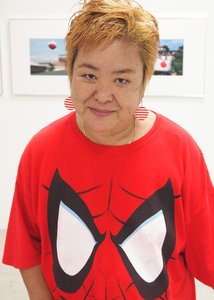
ishikawa mao
1953 - , Japan
Quick Facts
- Artistic Movement Or Style: Documentary photography
- Artists Who Influenced This Artist: ['Shomei Tomatsu']
- Date Of Birth: 1953
- Full Name: Mao Ishikawa
- Nationality: Japanese
- Notable Artworks:
- Red Flower: Okinawa
- A Port Town Elegy
- Great Ryukyu Photo Scroll
- Place Of Birth: Ogimi, Japan
Related Articles

Monochrome Visions: Exploring the Aesthetic & Historical Significance of Black & White Photography
Explore the rich history & artistic power of black and white photography. From early techniques to iconic masters like Ansel Adams, discover why monochrome continues to captivate art lovers today. Expert insights for collectors.

White on Canvas: 10 Masterpieces & Timeless Elegance for Your Home Decor
Explore 10 iconic white paintings by Monet, Whistler & Rothko! Discover the stories behind these serene masterpieces and their impact on art history. Find museum-quality reproductions for your home decor at .
Timeless & Chic: Elevating Your New Home with the Sophistication of Black and White Photography
Transform your new home with the timeless allure of black and white photography. ArtsDot.com specializes in elegant monochrome decor and custom hand-painted wedding portraits that turn cherished milestones into lasting, soulful masterpieces. Elevate your space with ease.
Beyond the Lens: Photography's Enduring Influence on Modern & Contemporary Art
Explore photography's pivotal role in shaping modern & contemporary art. Discover key movements, influential artists like Stieglitz, and expert collecting advice from ArtsDot.

Dark Masterpieces: 10 Iconic Paintings Dominated by Black Tones |
Explore 10 iconic paintings dominated by black tones, from Rembrandt’s chiaroscuro to Goya's dark expressions. Discover the stories behind these masterpieces & find museum-quality art reproductions for your home at .