 Preview
 Send
Send Share
Share
 Details

 Download
 Similars
 X-Ray
X-Ray Diaporama
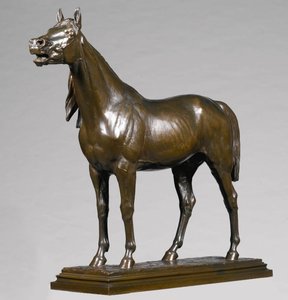
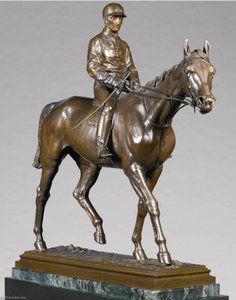
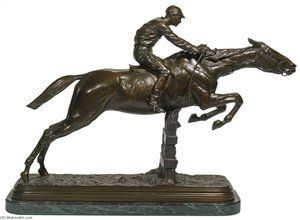
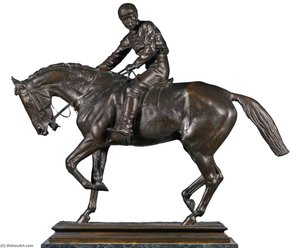
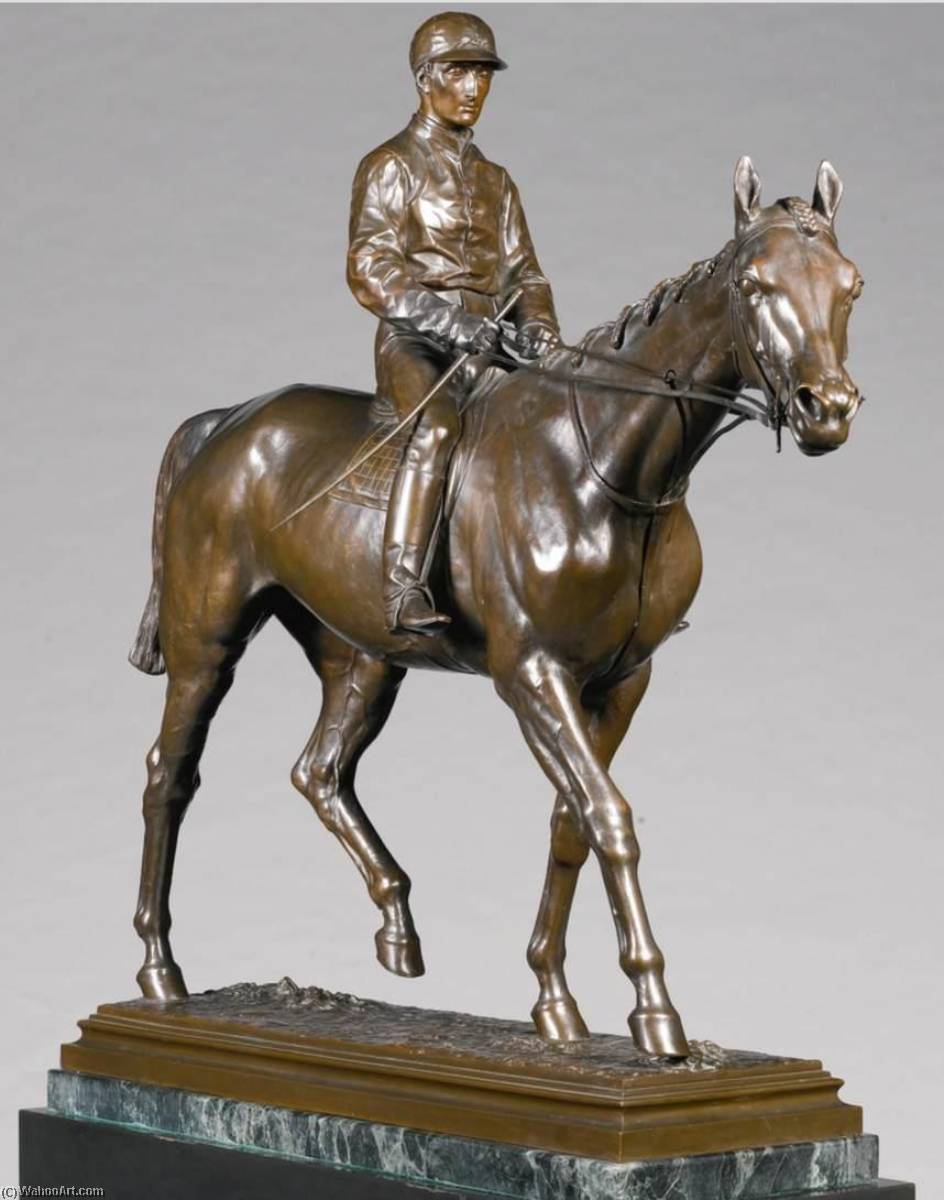
Kincsem with Charles Madden
 76.0 x 86.0 cm
 Read More
Hand Made Oil Reproduction
Hand-painted oil on canvas in your size and frame, made to order by our artists. ( Buy Print Buy Image)




































Pick from our preset sizes that match the artwork's original proportions.

You may enter your own dimensions to fit a specific frame or space. If your selected size does not match the original image's proportions, we will either crop the artwork or extend the painting with additional hand-painted elements. A digital mockup will be sent for your approval before production begins.
Please note that the on-screen preview does not reflect the actual cropping or extension. Only the mockup will accurately show the final composition.
While custom sizes are available, we recommend selecting a dimension from the predefined list to preserve the original proportions.
After order, ArtsDot.com team will email client for instructions and provide a mockup preview
Worldwide Delivery () in 3/4 weeks instead of standard 5 weeks. (22 August). No compromise on quality.

Free Worldwide Express Shipping

High-Quality Linen Canvas

Full Shipping Insurance

Customs Tax Refund Guarantee

True Color Matching Guarantee

60-Day Return Policy (Defects Only)

100% Money-Back Guarantee

Bulk Discount Offer
 Glass option is only available in size under 110 CM

Kincsem with Charles Madden
Reproduction Medium
Reproduction Size
-


Total Price
$ 263
Related Artworks







Artist Biography
William Blake: A Visionary Bridging Poetry and Art
William Blake (1757–1827) remains a figure of profound mystery and enduring fascination, an artist and poet whose work defies easy categorization yet profoundly shaped the course of Western art and literature. Born in London into a humble family with strong Nonconformist religious convictions, Blake’s life was marked by both artistic brilliance and periods of perceived instability. He wasn't merely a painter or a poet; he conceived himself as a “prophet,” striving to fuse imagination and reason, spirituality and social critique – a synthesis that continues to resonate powerfully today.
Blake’s early training was conventional for the period: he apprenticed with the commercial engraver James Basire, acquiring technical skills in printmaking. However, this formal education quickly gave way to a deeply personal artistic vision. Influenced by his family's religious beliefs and a burgeoning interest in medieval art and philosophy, Blake began experimenting with innovative techniques that would distinguish his work. Crucially, he developed “relief etching,” a revolutionary method of printing that allowed him to create both text and image simultaneously on a single plate – a process that granted him unprecedented control over the entire production of his illuminated books.
The Illuminated Books: A Unique Artistic Form
Blake’s most significant contribution lies in his “illuminated books”—a series of hand-printed volumes combining poetry, prose, and intricate engravings. These weren't simply illustrated poems; they were complex, multi-layered works that explored themes of innocence and experience, good and evil, spirituality and social injustice. Titles like *Songs of Innocence and of Experience*, *The Marriage of Heaven and Hell*, *Jerusalem*, and *Vala, or The Four Zoas* represent a vast and ambitious body of work, each piece imbued with Blake’s intensely personal symbolism and visionary imagery.
Blake's approach to illustration was radically different from the prevailing artistic norms. He didn’t merely decorate his poems; he used images as integral components of the text itself, creating visual metaphors that deepened the meaning of his words. His engravings were not reproductions of reality but rather expressions of his inner world—dreamlike visions populated by mythical creatures, angels, and demons, all rendered in a vibrant, almost hallucinatory style.
Symbolism and Mythological Influences
Blake’s work is saturated with symbolism, drawing heavily from the Bible, classical mythology, medieval folklore, and his own invented imagery. He frequently employed archetypal figures—the Lamb (representing innocence), the Tyger (representing experience), Urizen (representing reason), and Los (representing imagination)—to explore fundamental human dilemmas. His use of allegory and dream logic invites multiple interpretations, challenging viewers to engage with his work on a deeply personal level.
Blake’s fascination with mythology is particularly evident in works like *The Marriage of Heaven and Hell*, where he deliberately blurred the boundaries between good and evil, arguing that both are necessary for spiritual growth. He also drew inspiration from the writings of Emanuel Swedenborg, a 18th-century Swedish theologian who developed a complex cosmology based on visions and dreams. Blake’s exploration of visionary experiences—his own encounters with angels and spirits—became central to his artistic practice.
A Legacy of Visionary Art
Despite facing considerable obscurity during his lifetime, William Blake's influence has grown exponentially in the 20th and 21st centuries. He is now recognized as a pivotal figure in the Romantic movement, a precursor to modernism, and a visionary artist whose work continues to inspire artists, writers, and thinkers around the world. His radical ideas about imagination, spirituality, and social justice remain remarkably relevant today.
Blake’s legacy extends beyond his individual works; he fundamentally altered the relationship between poetry and art, demonstrating that they can be mutually enriching forms of expression. He challenged conventional notions of beauty and representation, advocating for a more subjective and emotionally charged approach to artistic creation. His enduring appeal lies in his ability to tap into our deepest fears, hopes, and dreams—to remind us of the power of imagination and the importance of seeing beyond the surface of reality.
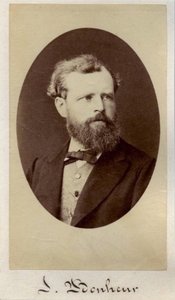
isidore jules bonheur
1827 - 1901
Quick Facts
- Artistic Movement Or Style: Romanticism, Pre-Raphaelite
- Artists Or Movements Influenced By This Artist:
- Frye
- Romantic poetry
- Artists Who Influenced This Artist:
- Raphael
- Michelangelo
- Dürer
- Delacroix
- Swedenborg
- Date Of Birth: November 28, 1757
- Date Of Death: August 12, 1827
- Full Name: William Blake
- Nationality: British
- Notable Artworks:
- Songs of Innocence
- Songs of Experience
- The Marriage of Heaven and Hell
- Jerusalem
- Place Of Birth: London, England