 Preview
 Send
Send Share
Share
 Details

 Download
 Similars
 X-Ray
X-Ray Diaporama
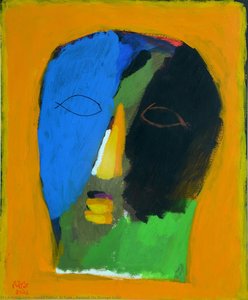
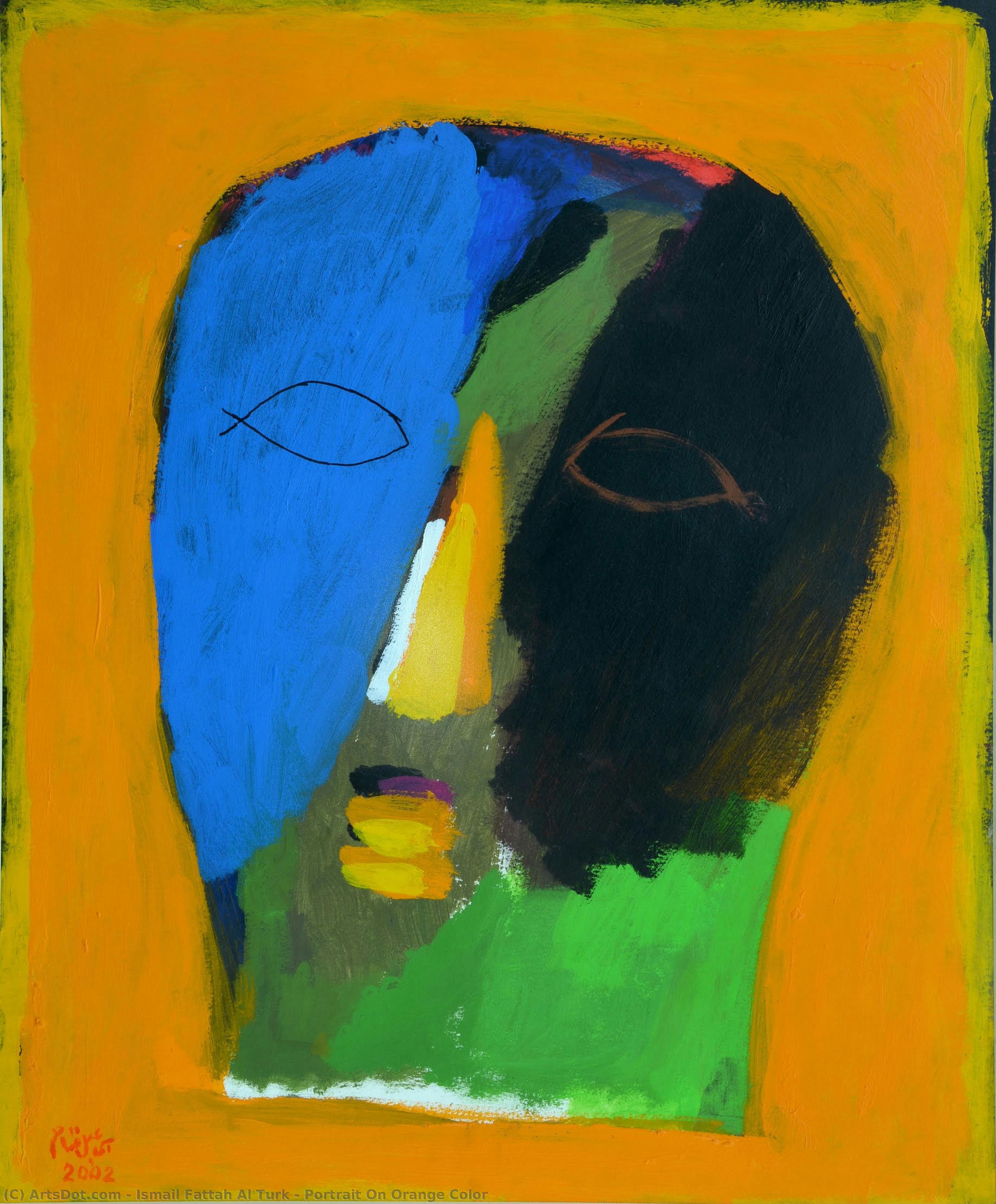
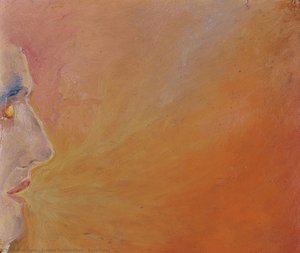
Portrait On Orange Color
 Painting
- Abstract Expressionism
 2002
2002- Contemporary
 75.0 x 60.0 cm
 Ibrahimi Collection
 Read More
Giclée / Art Print
Museum-quality giclée or canvas print with fast production and flexible finish options. ( Buy Hand Made Painting Buy Image)




































Pick from our preset sizes that match the artwork's original proportions.

You may enter your own dimensions to fit a specific frame or space. If your selected size does not match the original image's proportions, we will either crop the artwork or extend the image with a mirrored or solid-fill edge. A digital mockup will be sent for your approval before production begins.
Please note that the on-screen preview does not reflect the actual cropping or extension. Only the mockup will accurately show the final composition.
While custom sizes are available, we recommend selecting a dimension from the predefined list to preserve the original proportions.
Worldwide Delivery () in 2 weeks instead of standard 4/5 weeks. (23 August)

Free Worldwide Express Shipping

High-Quality Linen Canvas

Full Shipping Insurance

Customs Tax Refund Guarantee

True Color Matching Guarantee

60-Day Return Policy (Defects Only)

100% Money-Back Guarantee

Bulk Discount Offer
 Glass option is only available in size under 110 CM

Portrait On Orange Color
Giclée / Art Print
Reproduction Size
-


Total Price
$ 63
Collectible Description
A Visionary Fusion of Form and Color
In the evocative masterpiece Portrait On Orange Color, the late Iraqi master Ismail Fattah al Turk invites viewers into a dreamscape where the boundaries between human identity and abstract symbolism dissolve. Created in 2002, during the twilight of his illustrious career, this painting serves as a profound testament to his ability to blend the visceral energy of abstract expressionism with deeply rooted symbolic motifs. The composition centers on a face that defies traditional portraiture; it is not a literal representation but rather an emotional landscape, where features are distorted and reimagined through a lens of fluid, rhythmic lines. The striking use of a vibrant orange palette provides a warm, pulsating backdrop that commands immediate attention, setting a stage for the cool, contrasting blues that dance across the canvas.
The technical brilliance of this work lies in al Turk’s masterful manipulation of color and texture to evoke a sense of movement. The artist utilizes bold, sweeping strokes that suggest a face in flux, caught in a moment of metamorphosis. Most captivating is the presence of a fish symbol delicately placed upon the forehead—a motif that acts as a spiritual or psychological anchor within the abstraction. In many Middle Eastern artistic traditions, the fish can represent fertility, abundance, or the flow of life, and here, it serves to bridge the gap between the physical human form and the ethereal realm of thought and instinct. This placement suggests a connection between the intellect and the primal, subconscious forces of nature.
A Legacy of Modernity and Tradition
To understand the depth of this piece, one must consider the historical weight carried by Ismail Fattah al Turk. As a pioneer of the Iraqi modern art movement, al Turk spent his life navigating the intersection of Western academic training—honed in the prestigious academies of Rome—and the rich, ancient heritage of Mesopotamia. This painting is a sophisticated culmination of that lifelong dialogue. It does not merely present an image; it presents a philosophy of existence where the individual is part of a larger, more complex cosmic pattern. For the discerning collector or interior designer, this artwork offers more than just aesthetic beauty; it provides a conversational centerpiece that radiates intellectual depth and cultural significance.
For those seeking to curate a space of inspiration, Portrait On Orange Color brings an unparalleled energy. Its vibrant hues are perfect for creating a focal point in contemporary settings, offering a sophisticated balance of warmth and contemplative mystery. Whether placed in a minimalist gallery-style room or a richly textured study, the painting’s ability to evoke emotion—ranging from curiosity to profound tranquility—makes it a timeless addition to any high-end collection. Owning a reproduction of this caliber allows one to possess a fragment of Iraq's modern art history, celebrating a legacy of innovation that continues to resonate across borders and generations.
Related Artworks

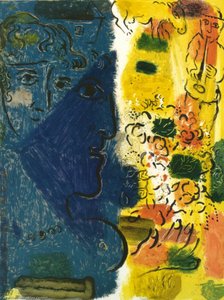
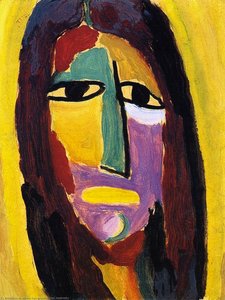
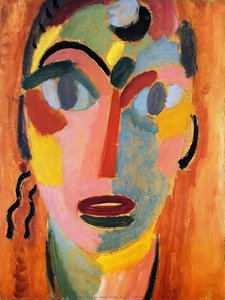
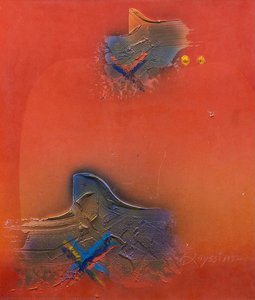
Artist Biography
The Soul of Iraqi Modernism: The Life and Legacy of Ismail Fattah al Turk
Ismail Fattah al Turk (1934-2004) stands as a monumental figure in the pantheon of Middle Eastern modernism, a visionary whose hands shaped both the canvas and the very skyline of Baghdad. Born in the historic city of Basra, al Turk emerged from a period of profound cultural transformation in Iraq, carrying with him an artistic ambition to bridge the ancient heritage of Mesopotamia with the radical frontiers of 20 century abstraction. His journey was one of constant synthesis, where the weight of history met the lightness of experimental form. Through his mastery of both painting and sculpture, he did not merely depict Iraqi identity; he reconstructed it through a visual language that spoke of resilience, memory, and the eternal dance between tradition and modernity.
A Journey Through Form and Clay
The foundation of al Turk’s aesthetic prowess was laid at Baghdad’s Institute of Fine Arts, but his artistic consciousness was truly expanded by his travels through Europe. His time spent studying at the Accademia di Belle Arti in Rome and the Accademia San Giacomo provided him with a sophisticated understanding of classical proportions and the tactile possibilities of ceramics. This European exposure did not dilute his Iraqi roots; rather, it gave him the technical vocabulary to translate local motifs into a global modernist dialect. He became a master of texture, often utilizing surfaces that felt weathered by time, much like the archaeological ruins that define his homeland.
As a prominent member of the Baghdad Modern Art Group, al Turk participated in one of the most vital intellectual movements in Arab art history. This group sought to create a "local modernism" by blending Istilham al-Turath (inspiration from heritage) with contemporary techniques. His work often featured a striking use of geometric shapes—circles and squares that anchored his compositions—interspersed with vibrant, emotive palettes of deep reds and sun-drenched yellows. In his paintings, one can observe a captivating tension between the structured and the spontaneous, where abstract expressionism meets a profound sense of cultural belonging.
Sculptural Grandeur and the Al-Shaheed Monument
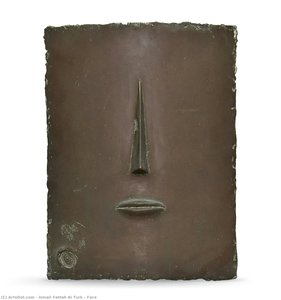
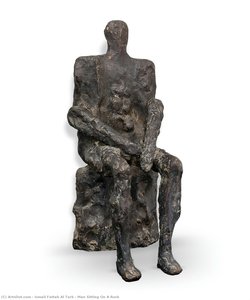
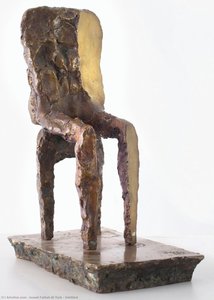
While his paintings offered intimate windows into the human psyche, al Turk’s sculptures commanded the public square. He possessed a rare ability to scale emotion, moving from the delicate textures of bronze portraits to the massive, architectural demands of public monuments. His sculptural work often embodied "abstract realism," a style that captured the vulnerability and strength of the human condition through textured, rugged surfaces that invited touch and contemplation.
The pinnacle of his public contribution remains the Al-Shaheed Monument in Baghdad. This towering achievement serves as a profound tribute to Iraqi martyrs, utilizing a design that is both breathtakingly modern and deeply symbolic. Through this work, al Turk achieved a rare feat: he created a landmark that functions simultaneously as a site of national mourning and a masterpiece of structural abstraction. His ability to weave the scars of conflict into the fabric of monumental art ensured that his legacy would be etched into the very landscape of Iraq, making him an eternal guardian of the nation's artistic and historical memory.
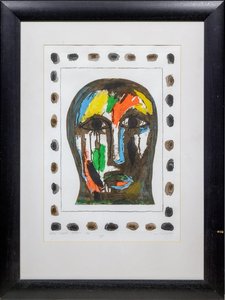
ismail fattah al turk
1934 - 2004 , Iraq
Quick Facts
- Artistic Movement Or Style: Abstract Art
- Date Of Birth: 1934
- Date Of Death: 2004
- Full Name: Ismail Fattah al Turk
- Nationality: Iraqi
- Notable Artworks: ['Al-Shaheed Monument']
- Place Of Birth: Basra, Iraq
Related Articles

Slate Blue Masterpieces: 10 Iconic Paintings & Timeless Home Decor Ideas
Immerse yourself in the captivating world of slate blue! Explore 10 iconic paintings by Monet, Van Gogh & Renoir. Discover their stories, techniques & find museum-quality art reproductions for your home at .
Abstract Expressionism's 10 Defining Masterpieces |
Explore 10 defining Abstract Expressionism masterpieces by Pollock, Rothko & de Kooning. Discover the stories behind these iconic paintings and find museum-quality art reproductions to elevate your home decor on .
Kandinsky's Masterpieces: 25 Paintings That Define Abstract Art | ArtsDot
Journey through Wassily Kandinsky's 25 most iconic abstract paintings. Explore his revolutionary use of color, form & spiritual expressionism. Find museum-quality Kandinsky reproductions and elevate your home decor with ArtsDot.com. Discover all masterpieces on ArtsDot.com!

Geometric Abstraction's 10 Defining Masterpieces | Art for Your Home - ArtsDot
Explore 10 defining masterpieces of Geometric Abstraction! Discover Kandinsky, Mondrian & Malevich’s iconic works. Find museum-quality art reproductions and curated decor ideas to elevate your home at ArtsDot.com.
The Allure of Azure: Exploring the Symbolic & Aesthetic Depths of Blue in Art History
Explore the rich history of blue in art! Discover its symbolism, from ancient pigments to modern masterpieces by Kandinsky & Seurat. Uncover the psychological impact and cultural meanings behind this captivating hue.