

 Preview
 Send
Send Share
Share
 Details

 Download
 Similars
 X-Ray
X-Ray Diaporama
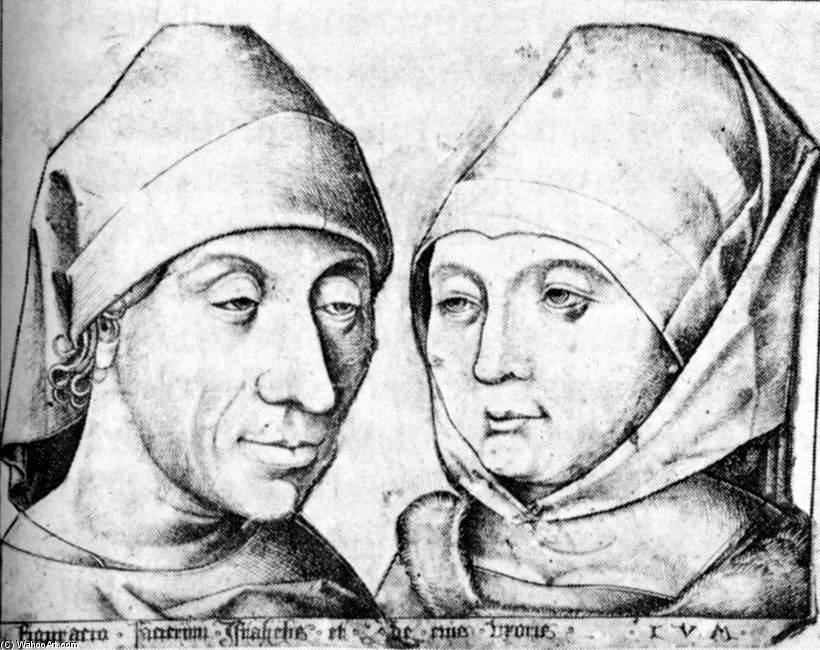
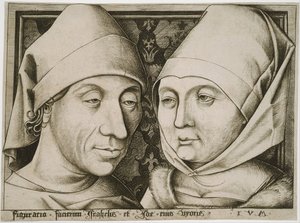
The Artist and his Wife Ida
 Acrylic On Canvas
- WallArt
- Northern Renaissance Printmaking
 1490
1490 142.0 x 175.0 cm
 Staatliche Museen
 Read More
Purchase a high-resolution, enhanced digital image, far superior to the online preview.
Each file is meticulously prepared by our in-house specialists using advanced tools and expert manual retouching. We ensure every image has exceptional clarity, precise color accuracy, and fine detail.
The final file is delivered via email within 72 hours, optimized for immediate use in professional, editorial, and print environments. This is the same quality trusted by top-tier design studios, publishers, and galleries.
Digital Image
Download a high-resolution file for personal display, printing, and creative projects. ( Buy Print Buy Hand Made Painting)
Included in Every Digital Image Order
Expert Digital Delivery, Guaranteed
When you choose ArtsDot.com, you're not just getting an image - you're receiving a professionally enhanced digital artwork, crafted with precision and backed by a satisfaction guarantee. Here's everything that comes with your order, automatically:

Fast Email Delivery
Your high-resolution digital image file will be emailed to you within 72 hours of ordering - ready for immediate use.

AI-Enhanced Digital File
Your artwork is professionally optimized using advanced AI tools and manual editing, ensuring maximum detail, clarity, and color accuracy.

Free Lifetime Re-Delivery
Accidentally deleted or lost your file? No worries - we'll resend it to you anytime, free of charge.

No Import Fees - Ever
Enjoy your artwork instantly with zero customs, duties, or delivery fees - digital downloads are always tax-free.

Color Accuracy Guarantee
We ensure your digital image reflects the original colors as closely as possible using professional tools and color management.

60-Day Satisfaction Guarantee
If you're not satisfied with your digital image, we'll revise it or refund 100% within 60 days - no questions asked.

100% Money-Back Guarantee
Not satisfied? Get a full refund within 60 days of receiving your digital file - no questions asked.

Bulk Order Discounts
Buy 3 images, save 10% - Buy 5, save 15% - Buy 10+, save 20%. Great for creative projects, galleries, and agencies.
A Pioneering Portrait in Printmaking: Israhel van Meckenem’s “The Artist and His Wife Ida”
Israhel van Meckenem the Younger (c. 1445 – November 10, 1503) stands as a monumental figure in Northern European art history—a true innovator who irrevocably altered the landscape of visual culture during the fifteenth century. His prolific output of over 620 engravings represents an astonishing proportion of print production across the region at the time, cementing his legacy as one of the foremost masters of engraving and establishing old master prints as a respected artistic medium.
This remarkable portrait, “The Artist and His Wife Ida,” created around 1490, transcends mere representation; it embodies a pivotal moment in artistic experimentation. Produced during the burgeoning Renaissance, it marks the earliest known instance of a self-portrait executed in printmaking—a daring decision that challenged conventions and foreshadowed the stylistic developments of subsequent generations.
Composition and Technique: A Delicate Balance
The painting’s composition is deceptively simple yet profoundly effective. Two figures dominate the canvas, positioned facing each other with their heads close together – a gesture laden with intimacy and conveying a shared gaze that speaks volumes about their relationship. The artist's meticulous attention to detail—particularly in capturing the expressive nuances of facial features—demonstrates his mastery of engraving technique.
Israhel van Meckenem skillfully employed burin etching, utilizing hardened needles to incise lines into copper plates. This process allowed for unparalleled precision and tonal gradation, resulting in a velvety surface texture that captures the subtle interplay of light and shadow. The artist’s masterful control over line weight contributes to a sense of dynamism and realism, mirroring the humanist ideals prevalent during the Renaissance.
Historical Context and Symbolism
“The Artist and His Wife Ida” emerged from a vibrant artistic milieu characterized by intellectual curiosity and a renewed interest in classical art. The painting reflects the humanist preoccupation with human psychology and emotion—a departure from medieval iconography that prioritized spiritual contemplation. The artist’s wife, depicted with serene composure and closed eyes, symbolizes domestic tranquility and idealized femininity.
Furthermore, scholars believe the composition draws inspiration from earlier paintings depicting similar poses found in South Germany – a testament to Israhel van Meckenem's awareness of artistic precedents and his ability to synthesize diverse influences. The image’s hazy atmosphere enhances its emotional impact, conveying a sense of quiet contemplation and profound connection.
A Legacy Enduring Through Reproduction
Today, “The Artist and His Wife Ida” resides in the Staatliche Museen zu Berlin, where it continues to captivate viewers with its understated beauty and psychological depth. ArtsDot.com offers high-quality reproductions of this iconic artwork, allowing enthusiasts worldwide to experience its artistic brilliance firsthand.
Related Artworks
Artist Biography
The Prolific Hand of the Northern Renaissance
In the bustling workshops of fifteenth-century Northern Europe, where the scent of metal and ink permeated the air, one name resonated with unparalleled productivity: Israhel van Meckenem. Known to history as Israhel the Younger, this master engraver and goldsmith acted as a vital conduit for visual culture during a transformative era. While the precise details of his early years remain shrouded in the mists of the mid-1400s, his presence in the art historical record is undeniable and immense. Born likely in Meckenheim, Germany, with ancestral ties that suggest a Dutch heritage, van Meckenem did not merely participate in the art market; he dominated it. At the height of his career, his engravings accounted for an astonishing twenty percent of all print production across Northern Europe, making him a cornerstone of the Renaissance's burgeoning print culture.
The foundation of his extraordinary skill was laid through a rigorous apprenticeship under the enigmatic Master E. S., one of the most influential engravers of the age. This formative period was less about mere imitation and more about a deep, technical communion with the masters of the previous generation. Van Meckenem demonstrated an unparalleled dedication to his craft by acquiring, reworking, and expanding upon the plates of his mentor. Through this process, he absorbed the precise, linear language of South German printmaking, blending it with a burgeoning interest in the more fluid, narrative styles emerging from the Low Countries. This synthesis allowed him to bridge the gap between the rigid traditions of the late Gothic period and the expressive potential of the early Renaissance.
A Legacy Carved in Copper
To examine the body of work left by van Meckenem is to witness a vast, intricate tapestry of religious devotion, social commentary, and technical mastery. His output, exceeding 620 engravings, serves as an encyclopedic record of the fifteenth-century imagination. While much of his fame rests upon his ability to replicate and refine the works of others—including the early prints of Albrecht Dürer—his true genius lies in his original compositions. He was a storyteller who utilized the fine lines of the burin to convey profound emotional pathos, whether through the harrowing scenes of Christ's Passion or the more whimsical, allegorical depictions of daily life.
His technical repertoire was deeply informed by his training as a goldsmith, a profession that demanded extreme precision and an intimate understanding of texture and light. This metallurgical background is evident in the way he manipulated shadow and highlight to create a sense of three-dimensional form on a two-dimensional plane. His works often feature:
- Meticulous anatomical details that reflect the growing Renaissance interest in human realism.
- Intricate drapery and textures that showcase his ability to mimic various materials through varying line weights.
- Complex allegorical themes, such as his famous World Turned Upside Down, which used satire to comment on the social upheavals of his time.
Historical Significance and Enduring Influence
The death of Israhel van Meckenem in 1503 marked the end of an era, yet his influence persisted through the very medium he helped to standardize. He was a pioneer who understood the power of the multiple; by creating works that could be owned by many, he helped democratize art and establish the print as a legitimate and prestigious medium for high art. His career spanned the transition from the late Middle Ages to the dawn of the modern era, and his ability to adapt—moving from the copying of Master E. S. to engaging with the works of Dürer—demonstrates a remarkable artistic plasticity.
Today, scholars look back at van Meckenem not just as a prolific producer of images, but as an essential architect of Northern European visual identity. He provided the visual vocabulary that would be used by generations of artists to follow. His life's work remains a testament to the power of the hand and the burin, a legacy etched permanently into the history of Western art through every fine line and deep shadow he left behind on the copper plate.
israhel van the younger meckenem
1442 - 1503 , Germany
Quick Facts
- Artistic Movement Or Style: Flemish Painting
- Artists Or Movements Influenced By This Artist: ['Dürer']
- Artists Who Influenced This Artist: ['Master E. S.']
- Date Of Birth: c. 1445
- Date Of Death: 1503
- Full Name: Israhel van Meckenem
- Nationality: German
- Notable Artworks:
- Vera icon
- The Artist and his Wife Ida
- Morris Dance
- Place Of Birth: Meckenheim, Germany

