

 Preview
 Send
Send Share
Share
 Details

 Download
 Similars
 X-Ray
X-Ray Diaporama
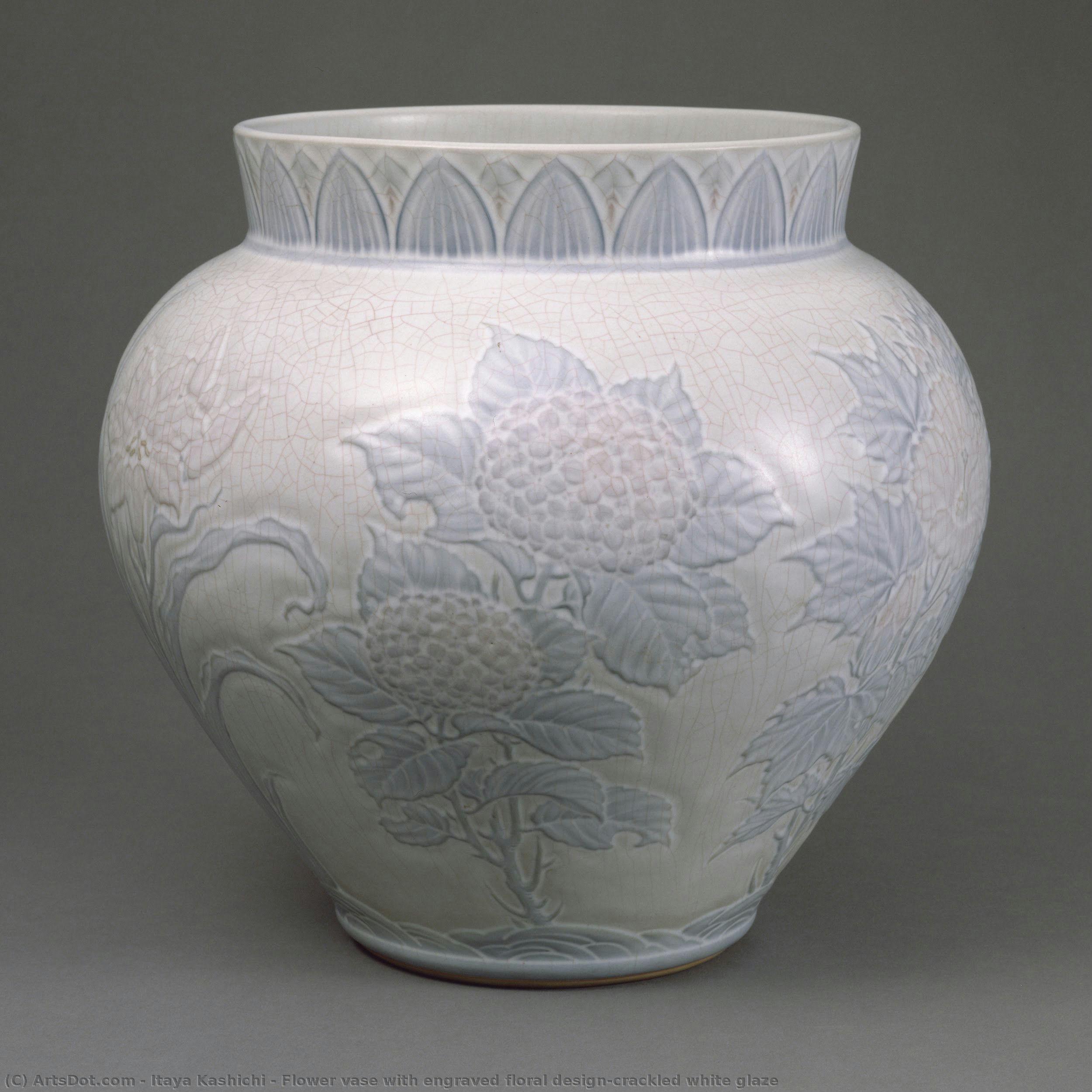
Flower vase with engraved floral design,crackled white glaze

 Read More
Purchase a high-resolution, enhanced digital image, far superior to the online preview.
Each file is meticulously prepared by our in-house specialists using advanced tools and expert manual retouching. We ensure every image has exceptional clarity, precise color accuracy, and fine detail.
The final file is delivered via email within 72 hours, optimized for immediate use in professional, editorial, and print environments. This is the same quality trusted by top-tier design studios, publishers, and galleries.
Digital Image
Download a high-resolution file for personal display, printing, and creative projects. ( Buy Print Buy Hand Made Painting)
Included in Every Digital Image Order
Expert Digital Delivery, Guaranteed
When you choose ArtsDot.com, you're not just getting an image - you're receiving a professionally enhanced digital artwork, crafted with precision and backed by a satisfaction guarantee. Here's everything that comes with your order, automatically:

Fast Email Delivery
Your high-resolution digital image file will be emailed to you within 72 hours of ordering - ready for immediate use.

AI-Enhanced Digital File
Your artwork is professionally optimized using advanced AI tools and manual editing, ensuring maximum detail, clarity, and color accuracy.

Free Lifetime Re-Delivery
Accidentally deleted or lost your file? No worries - we'll resend it to you anytime, free of charge.

No Import Fees - Ever
Enjoy your artwork instantly with zero customs, duties, or delivery fees - digital downloads are always tax-free.

Color Accuracy Guarantee
We ensure your digital image reflects the original colors as closely as possible using professional tools and color management.

60-Day Satisfaction Guarantee
If you're not satisfied with your digital image, we'll revise it or refund 100% within 60 days - no questions asked.

100% Money-Back Guarantee
Not satisfied? Get a full refund within 60 days of receiving your digital file - no questions asked.

Bulk Order Discounts
Buy 3 images, save 10% - Buy 5, save 15% - Buy 10+, save 20%. Great for creative projects, galleries, and agencies.
Collectible Description
Related Artworks








Artist Biography
Itaya Hazan: A Pioneer of Modern Japanese Ceramics
Itaya Kashichi Itaya Hazan (板谷波山, 1872—1963) stands as a monumental figure in the history of Japanese ceramics, recognized universally as a trailblazer who fundamentally reshaped artistic expression during the Meiji and Taisho eras. Born in Shimodate, Ibaraki Prefecture, he descended from humble origins – his father was a soya sauce maker – yet ascended to become one of Japan’s most celebrated artists, leaving an indelible mark on both craft and aesthetic philosophy. His artistic pseudonym, Hazan (“wavy mountain”), derived from the landscape of his birthplace, encapsulates the spirit of observation and connection to nature that would permeate his oeuvre.- Early Life & Education: Hazan’s formative years were marked by a profound engagement with Western art movements, particularly Art Nouveau. Influenced by luminaries like Kōun Takamura and Tenshin Okakura at the Tokyo Fine Arts School (now Tokyo University of the Arts), he honed his sculptural skills alongside an equally fervent dedication to ceramics. This dual pursuit would prove instrumental in shaping his artistic vision.
- The Birth of Hazan Style: The closure of Ishikawa Prefectural Industrial School in 1898 propelled Hazan toward independent exploration, where he established a kiln in Tokyo and embarked on a journey to master traditional Chinese ceramic techniques. His groundbreaking sketchbook “Twelve Shapes of Ancient Ceramics” published in the same year signaled his commitment to preserving heritage while simultaneously innovating new forms.
- A Studio Dedicated to Craftsmanship: Hazan’s studio was a crucible of artistic experimentation, fostering collaborations with assistants like Fukami Sanjiro and later Genda Ichimatsu until Ichimatsu's passing in 1963. This partnership nurtured a distinctive aesthetic characterized by meticulous attention to detail and an unwavering pursuit of perfection—a hallmark of Hazan’s artistic approach.
The Flowering of Hazan Style: Innovation and Recognition
Hazan’s artistic evolution unfolded in two distinct styles – Saiji and Hokosaiji – each reflecting a nuanced understanding of materiality and visual language. His debut exhibition at the Japan Art Association in 1906 garnered critical acclaim, propelling him to prominence within the burgeoning Japanese art scene. The subsequent nationwide ceramics exhibition of 1911 cemented his reputation as a visionary artist, securing him the prestigious top prize and establishing Hokosaiji as a dominant aesthetic force.- Commercial Ceramics & Artistic Retreat: As ceramics gained traction in Japan’s commercial landscape during the 1910s, Hazan consciously distanced himself from exhibitions, prioritizing artistic contemplation over public recognition. This decision allowed him to delve deeper into classical Chinese traditions and refine his craft with unwavering dedication.
- The Order of Cultural Merit & Legacy: In 1954, Hazan achieved unparalleled honor when he was awarded the Order of Cultural Merit – Japan’s highest accolade for artistic achievement—a testament to his enduring influence on Japanese art history. His work continues to inspire artists and scholars alike, housed prominently in the Idemitsu Museum of Arts where it stands as a beacon of aesthetic excellence.
Exploring Hazan's Artistic Vision: Form and Color
Hazan’s ceramics are distinguished by their masterful manipulation of form and color—elements that intertwine to convey profound emotional resonance. He championed the concept of “inner life,” striving to imbue each piece with a sense of dynamism and expressive depth, mirroring his sculptural training. His distinctive Saiji style favored relief carving, meticulously capturing subtle nuances of texture and surface ornamentation. Simultaneously, Hokosaiji embraced bold color palettes—often incorporating vibrant hues inspired by nature—creating visually arresting compositions that captivated audiences.Notable Works & Influence
Among Hazan’s celebrated creations is “Large Vase with Painted Porcelain Butterbur Leaves Design,” a masterpiece embodying his stylistic principles and securing him the top prize at the Japan Art Association Exhibition in 1917. His exploration of Chinese ceramic traditions profoundly impacted subsequent generations of Japanese artists, establishing Hokosaiji as an influential aesthetic paradigm. Hazan’s legacy extends beyond individual artworks; he fundamentally transformed perceptions of ceramics—elevating it from a utilitarian craft to a realm of artistic contemplation and cultural significance.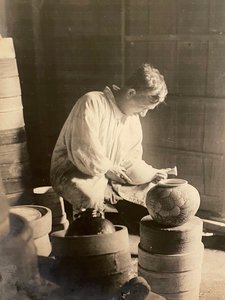
itaya kashichi
1872 - 1963 , Japan
Quick Facts
- Artistic Movement Or Style: Modern Japanese Ceramics; Saji & Hokosaiji Styles
- Artists Or Movements Influenced By This Artist: ['Art Nouveau']
- Artists Who Influenced This Artist:
- Kōun Takamura
- Tenshin Okakura
- Date Of Birth: 1872
- Full Name: Itaya Kashichi Hazan
- Nationality: Japanese
- Notable Artworks: ['Large Vase with Painted Porcelain Butterbur Leaves Design']
- Place Of Birth: Shimoda, Japan

