 Preview
 Send
Send Share
Share
 Details

 Download
 Similars
 X-Ray
X-Ray Diaporama
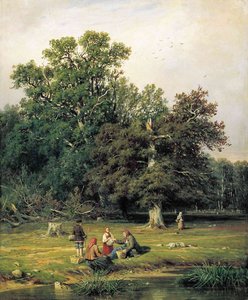
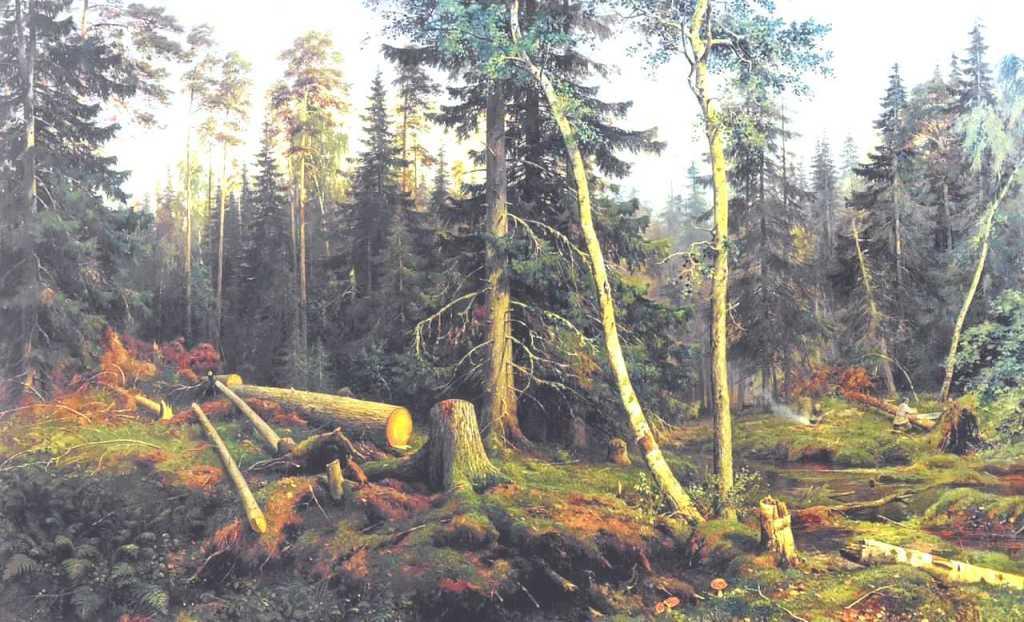
Cutting of wood
 Oil On Canvas
- WallArt
- Russian Landscape
 1867
1867 122.0 x 194.0 cm
 Tretyakov Gallery
 Read More
Hand Made Oil Reproduction
Hand-painted oil on canvas in your size and frame, made to order by our artists. ( Buy Print Buy Image)




P118B $10

P118H $10

P118W $10

P438Z $10

P508JH $12

P508YH $12

P805H $10

P805Z $10

P919BZ $10

P919G $10

P919XJ $10

P959ZH $10

P968JZ $12

W106C $8

W218G $10

W218JH $8

W218Y $10

W307PJ $10

W316G $10

W316PJ $8

W316Y $10

W398PJ $8

W4111J $10

W500HY $15

W500JH $15

W692G $12

W849H $8

W940BG $15

W953PJ $8




Pick from our preset sizes that match the artwork's original proportions.

You may enter your own dimensions to fit a specific frame or space. If your selected size does not match the original image's proportions, we will either crop the artwork or extend the painting with additional hand-painted elements. A digital mockup will be sent for your approval before production begins.
Please note that the on-screen preview does not reflect the actual cropping or extension. Only the mockup will accurately show the final composition.
While custom sizes are available, we recommend selecting a dimension from the predefined list to preserve the original proportions.
After order, ArtsDot.com team will email client for instructions and provide a mockup preview
Worldwide Delivery () in 3/4 weeks instead of standard 5 weeks. (17 August). No compromise on quality.

Free Worldwide Express Shipping

High-Quality Linen Canvas

Full Shipping Insurance

Customs Tax Refund Guarantee

True Color Matching Guarantee

60-Day Return Policy (Defects Only)

100% Money-Back Guarantee

Bulk Discount Offer
 Glass option is only available in size under 110 CM

Cutting of wood
Reproduction Medium
Reproduction Size
-


Total Price
$ 263
Artwork Description
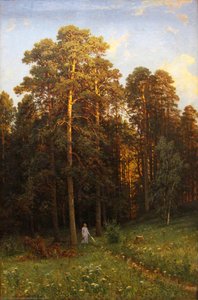
A Forest’s Breath: Ivan Shishkin's "Cutting of Wood"
Ivan Ivanovich Shishkin’s “Cutting of Wood” isn’t merely a landscape; it’s a distillation of the Russian soul, a profound meditation on humanity’s relationship with the vast, enduring wilderness. Painted in 1867, this oil-on-canvas masterpiece transports us to a specific moment within an ancient forest – a scene both ruggedly real and imbued with a quiet, almost melancholic beauty. Shishkin, a master of capturing the subtle nuances of nature, eschews grand vistas or dramatic lighting in favor of a meticulously observed detail that draws the viewer into the heart of this particular woodland.
The composition is deceptively simple. A fallen spruce dominates the foreground, its rough-hewn trunk and scattered branches immediately grounding us in the physicality of the forest. Around it, a network of younger trees – birches, pines, and spruces – rises towards the sky, their forms rendered with an almost photographic precision. The artist’s skill lies not just in depicting individual trees but in conveying the collective weight and texture of the entire woodland ecosystem. Notice how Shishkin subtly suggests depth through variations in tone and shadow; the distant trees fade into a hazy blue, while those closer to the viewer are sharply defined, their bark intricately detailed.
The Painter’s Palette: Technique and Style
Shishkin's style is firmly rooted in Realism, yet transcends simple imitation. He wasn’t interested in romanticizing nature; instead, he sought to represent it with unflinching accuracy. His brushwork is deliberate and controlled, building up layers of paint to create a rich, textured surface. The use of color is restrained – predominantly greens, browns, and grays – but remarkably effective in conveying the mood of the scene. The subtle shifts in hue, from the deep shadows beneath the trees to the dappled sunlight filtering through the canopy, are masterful examples of his ability to capture atmospheric effects.
Crucially, Shishkin employed a technique known as “broken color,” layering thin washes of paint over each other to create a sense of luminosity and depth. This method allows light to penetrate the layers of pigment, mimicking the way sunlight interacts with foliage in reality. The meticulous detail evident in the depiction of bark textures, leaf patterns, and even individual twigs speaks volumes about Shishkin’s dedication to his craft – he wasn't simply painting a forest; he was dissecting it, understanding its structure, and translating that knowledge onto canvas.
A Glimpse into 19th-Century Russia
"Cutting of Wood" offers a poignant window into the social and artistic landscape of 19th-century Russia. Shishkin’s work emerged during a period of significant change, as the country grappled with modernization while simultaneously clinging to its traditions. The rise of Realism in art reflected a broader cultural shift towards valuing authenticity and depicting everyday life – even within the context of the natural world. The inclusion of a lone figure engaged in felling a tree subtly acknowledges humanity’s impact on the environment, a theme that resonates powerfully today.
Furthermore, Shishkin's work aligns with the broader artistic movement known as “peredvizhniki” (the Wanderers), a group of artists who sought to depict the lives and landscapes of ordinary Russians. Like many peredvizhniki, Shishkin was deeply concerned with portraying the beauty and dignity of rural life, and his paintings often served as social commentary on issues such as poverty and exploitation.
The Heart of the Forest: Symbolism and Emotional Resonance
Beyond its technical brilliance, “Cutting of Wood” possesses a profound emotional resonance. The painting evokes a sense of both tranquility and melancholy – a feeling that is deeply rooted in the timelessness of nature. The fallen tree symbolizes mortality and decay, while the ongoing cycle of growth and renewal suggests an enduring connection between humanity and the natural world.
There’s a quiet dignity to the scene, a sense of respect for the forest's ancient wisdom. The painting invites us to contemplate our place within this vast ecosystem, prompting questions about our relationship with nature and the consequences of our actions. It is not simply a depiction of a forest; it is an invitation to experience its spirit – a breath of the wild captured on canvas.
Related Artworks

Artist Biography
The Soul of the Russian Forest: A Life in Landscape
Ivan Ivanovich Shishkin, a name synonymous with the vast and soulful landscapes of Russia, was born into a world steeped in tradition on January 25, 1832, in Yelabuga, Vyatka Governorate. His early life, though rooted in the mercantile pursuits of his father, revealed an innate sensitivity to the natural world—a sensibility that would blossom into a lifelong artistic obsession. After completing his education at the Kazan Gymnasium, Shishkin embarked on a rigorous academic journey, first at the Moscow School of Painting, Sculpture and Architecture for four years, then continuing at the prestigious Saint Petersburg Imperial Academy of Arts from 1856 to 1860. It was here, under the tutelage of renowned masters, that his technical skills were honed, culminating in a gold medal upon graduation—a testament to his exceptional talent and dedication. This academic foundation provided him with the tools to translate his deep connection with nature onto canvas with unparalleled realism.A Master of Realism and the Peredvizhniki Movement
Shishkin’s artistic development was profoundly shaped by his association with the *Peredvizhniki*, or Wanderers, a group of Russian artists who rejected the constraints of academic tradition in favor of bringing art directly to the people. This movement championed realism and sought to depict life as it truly was—often focusing on social issues and the beauty of the Russian countryside. Shishkin’s landscapes perfectly aligned with this ethos; he wasn't merely painting scenery, but capturing the very essence of Russia’s forests, fields, and skies. He became a member of the Imperial Academy in St. Petersburg and later headed the landscape painting class at the Highest Art School there from 1873 to 1898, influencing generations of artists with his meticulous technique and unwavering commitment to portraying nature's grandeur. His dedication wasn’t simply about accurate depiction; it was about evoking a profound emotional response in the viewer—a sense of awe, tranquility, and connection to the land.Iconic Visions: Works That Defined a Nation
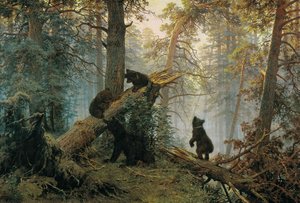
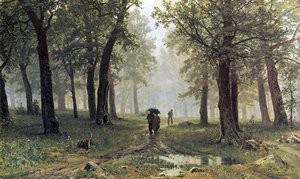
Shishkin’s oeuvre is populated with masterpieces that have become ingrained in the Russian cultural consciousness. Morning in a Pine Forest, perhaps his most famous work—often mistakenly credited as solely his, though featuring bears painted by Konstantin Savitsky—captures a serene yet powerful scene of sunlight filtering through towering pines. The painting’s enduring appeal lies not only in its technical brilliance but also in its symbolic resonance: the forest representing Russia itself, strong, resilient, and untamed. A Rye Field, with its sweeping expanse of golden wheat under a vast sky, exemplifies his ability to convey the scale and beauty of the Russian plains. Rain in an Oak Forest demonstrates his mastery of atmospheric effects, evoking the damp earthiness and somber mood of a forest after a downpour. These works weren’t simply landscapes; they were national symbols, imbued with a sense of pride and belonging. His attention to detail was legendary—every leaf, every blade of grass rendered with painstaking accuracy, yet always serving the larger composition and emotional impact.Legacy and Enduring Influence
Ivan Ivanovich Shishkin passed away on March 20, 1898, leaving behind a legacy that continues to inspire artists and captivate audiences today. His contributions to Russian landscape painting are immeasurable; he elevated the genre to new heights of realism and emotional depth. His work is prominently featured in numerous museum collections, including the Kartinnaja galerija Tambov and the Yaroslavl Arts Museum, and can be found on platforms like Kramskoy Museum of Fine Arts (Voronezh, Russia) and ArtsDot. Even beyond the art world, his influence extends to scientific circles—a minor planet, 3558 Shishkin, was named in his honor by Soviet astronomer Lyudmila Zhuravlyova in 1978, a fitting tribute to an artist who so profoundly captured the beauty and majesty of the natural universe. Shishkin’s paintings remain powerful reminders of the enduring connection between humanity and the land—a testament to his skill, vision, and unwavering dedication to portraying the soul of the Russian forest.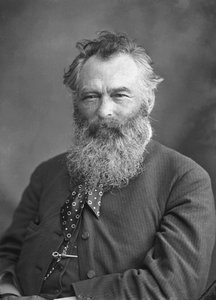
Ivan Ivanovich Shishkin
1832 - 1898 , Russia
Quick Facts
- Artistic Movement Or Style: Realism, Peredvizhniki
- Date Of Birth: January 25, 1832
- Date Of Death: March 20, 1898
- Full Name: Ivan Ivanovich Shishkin
- Nationality: Russian
- Notable Artworks:
- Morning in a Pine Forest
- A Rye Field
- Rain in an Oak Forest
- Oaks (study)
- Place Of Birth: Yelabuga, Russia
Related Articles

Beyond the Horizon: 10 Landscape Masterpieces for Your Home Decor
Journey through 10 breathtaking landscape paintings by Monet, Van Gogh & more! Explore iconic artworks, artistic techniques & find inspiration for your home decor. Museum-quality reproductions at ArtsDot.com. Discover all masterpieces on ArtsDot.com
Ivan Bilibin: A Synthesis of Folklore, Modernism & National Identity in Russian Illustration
Explore the enchanting world of Ivan Bilibin, a master Russian illustrator who synthesized folklore, Art Nouveau & national identity. Discover his iconic fairy tale illustrations and legacy with ArtsDot.

Evocations of Place: A Historical Journey Through Landscape Art
Explore the rich history of landscape art with ArtsDot. Discover renowned artists, movements like Impressionism & Romanticism, and expert guidance for collecting timeless pieces. Find your perfect serene escape today!

Romantic Landscapes: 10 Masterpieces for Your Home | ArtsDot
Journey through 10 Romantic landscape masterpieces by Friedrich, Turner & Cole. Explore emotional art, sublime nature scenes & iconic 19th-century paintings. Find museum-quality reproductions for your home at ArtsDot.com – discover the full collection online!
Nature’s Sanctuary: Curating Enchanting Forest Artworks to Transform Your Home into a Serene Woodland Retreat
Transform your home into a serene woodland retreat with enchanting forest artworks. Discover museum-quality oil reproductions and custom landscape commissions designed to bring the peaceful beauty of nature indoors.