 Preview
 Send
Send Share
Share
 Details

 Download
 Similars
 X-Ray
X-Ray Diaporama
Italian woman
 Contemporary Realism
 1851
1851- 19th Century
 62.0 x 51.0 cm
 Chernihiv Regional Art Museum
 Read More
Giclée / Art Print
Museum-quality giclée or canvas print with fast production and flexible finish options. ( Buy Hand Made Painting Buy Image)




P118B $10

P118H $10

P118W $10

P438Z $10

P508JH $12

P508YH $12

P805H $10

P805Z $10

P919BZ $10

P919G $10

P919XJ $10

P959ZH $10

P968JZ $12

W106C $8

W218G $10

W218JH $8

W218Y $10

W307PJ $10

W316G $10

W316PJ $8

W316Y $10

W398PJ $8

W4111J $10

W500HY $15

W500JH $15

W692G $12

W849H $8

W940BG $15

W953PJ $8




Pick from our preset sizes that match the artwork's original proportions.

You may enter your own dimensions to fit a specific frame or space. If your selected size does not match the original image's proportions, we will either crop the artwork or extend the image with a mirrored or solid-fill edge. A digital mockup will be sent for your approval before production begins.
Please note that the on-screen preview does not reflect the actual cropping or extension. Only the mockup will accurately show the final composition.
While custom sizes are available, we recommend selecting a dimension from the predefined list to preserve the original proportions.
Worldwide Delivery () in 2 weeks instead of standard 4/5 weeks. (17 August)

Free Worldwide Express Shipping

High-Quality Linen Canvas

Full Shipping Insurance

Customs Tax Refund Guarantee

True Color Matching Guarantee

60-Day Return Policy (Defects Only)

100% Money-Back Guarantee

Bulk Discount Offer
 Glass option is only available in size under 110 CM

Italian woman
Giclée / Art Print
Reproduction Size
-


Total Price
$ 63
Collectible Description
A Vision of Elegance: The Timeless Allure of Italian Woman
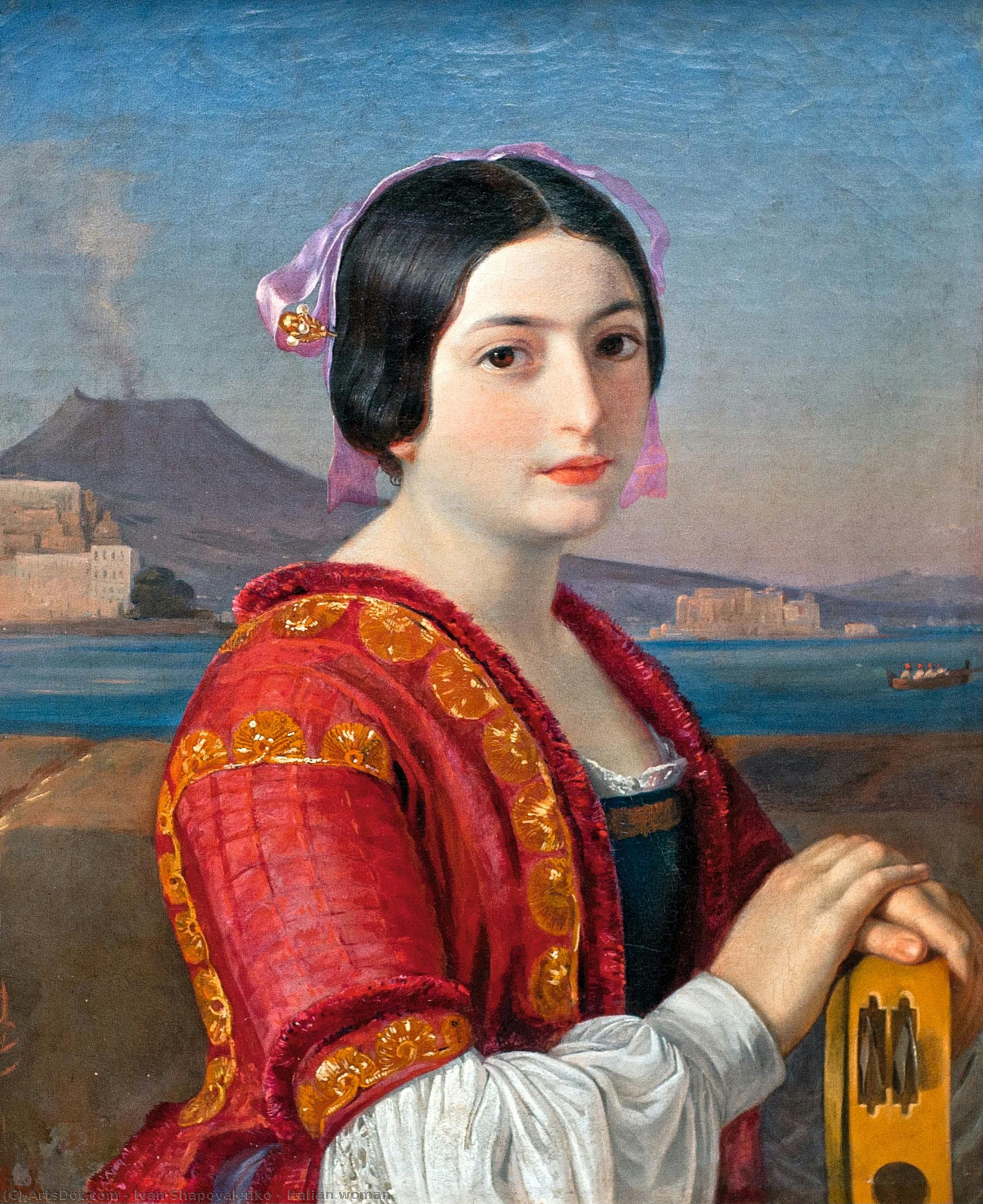
In the evocative portrait Italian woman, painted in 1851 by Ivan Shapovalenko, we are transported to a bygone era of romanticism and refined grace. The painting captures a moment of quiet splendor, centering on a female subject whose presence commands the canvas with an air of aristocratic poise. Draped in vibrant red clothing that serves as the visual heartbeat of the composition, she wears a delicate pink bow upon her head, adding a touch of soft femininity to her striking attire. The intricate details of her costume—from the structured silhouette of her corset to the voluminous, dramatic ruffles of her collar—speak to a period where fashion was an elaborate language of status and artistry. As she holds a subtle object, perhaps a fan or a precious piece of jewelry, the viewer is invited into a silent dialogue with a woman who embodies the very essence of mid-19th-century elegance.
Beyond the intimate focus on the sitter, Shapovalenko masterfully expands the narrative scope by integrating a breathtaking landscape that breathes life into the portrait. The background reveals a majestic mountainous terrain, suggesting an outdoor setting where the grandeur of nature meets the sophistication of human culture. In the far distance, two small boats drift upon a tranquil body of water, their presence adding a sense of depth and peaceful movement to the scene. This juxtaposition of the detailed, textured figure against the expansive, atmospheric vista creates a profound sense of scale, reminding us that even in moments of personal reflection, we are part of a much larger, breathtaking world.
For the discerning collector or interior designer, this piece offers more than mere decoration; it provides an emotional anchor for a room. The rich, warm palette of reds and pinks, contrasted against the cool, distant blues and earthy tones of the mountains, makes it a versatile masterpiece capable of anchoring a classical gallery wall or serving as a sophisticated focal point in a modern, minimalist space. The technique employed reflects a deep reverence for classical portraiture, utilizing light and shadow to sculpt the subject's features and create a lifelike texture that invites close inspection. Owning a reproduction of this work is an opportunity to bring a sense of historical continuity and romantic nostalgia into a contemporary home, evoking a feeling of timelessness and cultured sophistication.
Related Artworks

Artist Biography
Keith Haring: A Revolutionary Voice in Pop Art
Born on May 4, 1958, in Reading, Pennsylvania, and raised in the small town of Kutztown, Keith Allen Haring’s artistic journey began not with formal training but with an innate drive to draw—a passion nurtured by his father, a keen amateur cartoonist. This early fascination blossomed into a distinctive style that would quickly catapult him from the subway walls of New York City to international acclaim, forever altering the landscape of pop art and social commentary.
Haring’s formative years were marked by a restless spirit and a rejection of conventional paths. He briefly enrolled in the Ivy School of Professional Art in Pittsburgh but soon realized that commercial illustration wasn't his calling. Instead, he found himself drawn to the vibrant, experimental art scene emerging in New York City—a world fueled by graffiti, performance art, and a rebellious energy. This immersion proved pivotal, exposing him to influences ranging from Jean Dubuffet’s raw expressionism and Pierre Alechinsky’s abstract gestural painting to Andy Warhol's groundbreaking fusion of art and popular culture. The spirit of Christo’s participatory installations, particularly his “Running Fence,” also resonated deeply with Haring’s desire to create accessible art for a broad audience.
Haring’s breakthrough came through his spontaneous drawings in the subway system – bold, energetic lines depicting figures, dogs, and other stylized images that appeared seemingly out of nowhere on blank advertising panels. These “subway drawings,” as he called them, quickly gained recognition, transforming him from an anonymous street artist into a local celebrity. His work wasn’t merely decorative; it was infused with social awareness, tackling issues like safe sex and AIDS awareness – subjects often ignored or stigmatized at the time. The iconic "Crack is Wack" mural, for example, served as a powerful visual warning against drug abuse, while his depictions of dancing figures celebrated joy and community.
The 1980s witnessed an explosion in Haring’s career. He secured solo exhibitions at prestigious galleries like Tony Shafrazi and Leo Castelli, participated in major international events such as Documenta 7 in Kassel, the São Paulo Biennial, and the Whitney Biennial, and established his own retail space, “The Pop Shop,” which democratized access to his art by offering affordable prints and merchandise. His work became a visual language understood globally, reflecting both the exuberance of pop culture and a deep commitment to social justice. Haring’s style—characterized by its simple lines, bright colors, and often playful imagery—became instantly recognizable and profoundly influential.
Thematic Concerns and Artistic Style
Haring's art wasn't simply about aesthetics; it was deeply rooted in social consciousness. He frequently addressed issues of inequality, poverty, and the AIDS epidemic, using his distinctive visual vocabulary to raise awareness and advocate for change. His figures—often depicted dancing, reaching out, or engaging with one another—embodied themes of community, connection, and hope. The recurring presence of dogs, a symbol of loyalty and companionship, further underscored these messages.
Technically, Haring’s style was remarkably simple yet incredibly effective. He employed bold outlines and vibrant colors to create instantly engaging images that bypassed intellectual analysis and spoke directly to the viewer's emotions. His use of repetition—particularly in his subway drawings—generated a sense of rhythm and movement, mirroring the energy of urban life. While influenced by Pop Art’s embrace of mass culture, Haring distinguished himself through his raw emotionality and his commitment to public engagement.
Public Works and Collaborative Projects
Beyond gallery exhibitions, Haring was committed to creating art for public spaces—a testament to his belief that art should be accessible to everyone. He produced over 50 murals in hospitals, schools, day care centers, and community organizations across the United States and internationally. These projects weren’t merely decorative; they were intended to spark dialogue, promote positive messages, and foster a sense of connection within the communities they served.
His collaborations extended beyond individual commissions. He worked with artists like Kenny Scharf and Jean-Michel Basquiat during their early careers, contributing to the vibrant artistic ecosystem of downtown New York City. He also designed sets for theater productions, created animated shorts for television, and contributed artwork to various commercial campaigns – demonstrating his versatility and willingness to engage with diverse creative fields.
Legacy and Recognition
Keith Haring’s untimely death from AIDS-related complications on February 16, 1990, at the age of 31, left a profound void in the art world. However, his legacy continues to thrive through the Keith Haring Foundation, which he established to support organizations dedicated to combating HIV/AIDS and promoting children’s health and education. The foundation also oversees the preservation and promotion of Haring's artwork.
In 2014, Haring was honored with a place on the Rainbow Honor Walk in San Francisco, recognizing his significant contributions to LGBTQ+ culture. His work has been celebrated through retrospectives at major museums worldwide, including the Whitney Museum of American Art and the Guggenheim Museum. Keith Haring’s art remains remarkably relevant today, continuing to inspire artists, activists, and audiences with its message of hope, connection, and social responsibility—a testament to the enduring power of a revolutionary voice in pop art.
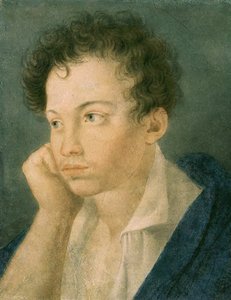
ivan shapovalenko
1958 - , Ukraine
Quick Facts
- Artistic Movement Or Style: Pop art, graffiti art
- Artists Or Movements Influenced By This Artist:
- Graffiti art
- Pop Art
- Artists Who Influenced This Artist:
- Jean Dubuffet
- Pierre Alechinsky
- Andy Warhol
- Date Of Birth: May 4, 1958
- Date Of Death: February 16, 1990
- Full Name: Keith Allen Haring
- Nationality: American
- Notable Artworks:
- Crack Is Wack
- Tower
- Untitled Series
- Todos Juntos Podemos Parar el SIDA
- Place Of Birth: Reading, Pennsylvania, USA
Related Articles
Blush & Brilliance: 10 Iconic Paintings Dominated by Light Pink Tones |
Explore 10 iconic paintings bathed in captivating light pink tones! From Monet's Impressionism to Renoir’s romance, discover the stories behind these blush-hued masterpieces. Find museum-quality art reproductions & decor inspiration at .

Crimson Threads of Narrative: Exploring Symbolism & Representation in Artworks Featuring the Red Dress
Explore the rich symbolism of the red dress in art history! From ancient power displays to iconic portraits like Cézanne’s 'Madame Cezanne', discover the cultural and artistic significance behind this captivating color. Expert analysis & insights.

Mark Rothko's Masterpieces: 25 Paintings That Define Abstract Expressionism | ArtsDot
Explore 25 iconic Mark Rothko paintings that define Abstract Expressionism. Discover the stories, colors & emotions behind these masterpieces. Find museum-quality art reproductions and curated decor ideas at ArtsDot.com.

Henri Matisse's Masterpieces: Explore 25 Iconic Paintings & Art Decor Ideas
Journey through Henri Matisse's 25 most iconic paintings! Explore Fauvism, vibrant colors & the stories behind masterpieces like 'The Dance'. Find museum-quality art reproductions and curated decor ideas to elevate your space. Discover all masterpieces on ArtsDot.com.
Modigliani's Masterpieces: 25 Iconic Paintings & Sculptures | ArtsDot
Explore 25 iconic artworks by Amedeo Modigliani, from his haunting portraits to captivating sculptures. Discover the stories behind these masterpieces of early 20th-century art & find museum-quality reproductions at ArtsDot.com.