

 Preview
 Send
Send Share
Share
 Details

 Download
 Similars
 X-Ray
X-Ray Diaporama
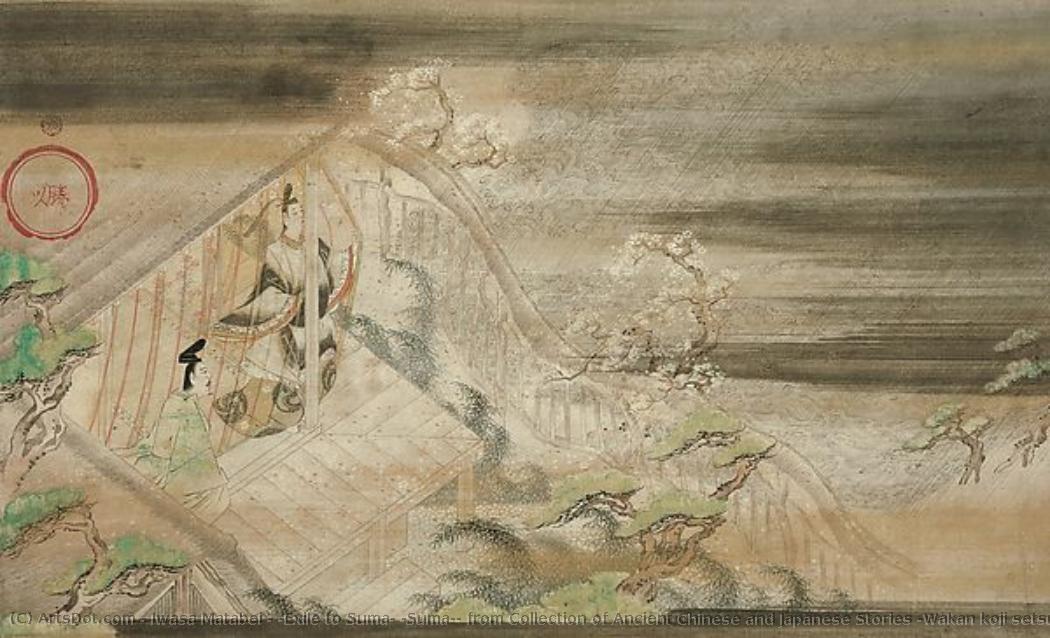
“Exile to Suma” (Suma), from Collection of Ancient Chinese and Japanese Stories (Wakan koji setsuwa zu)
 601
601 36.0cm x 59.0cm
 Read More
Purchase a high-resolution, enhanced digital image, far superior to the online preview.
Each file is meticulously prepared by our in-house specialists using advanced tools and expert manual retouching. We ensure every image has exceptional clarity, precise color accuracy, and fine detail.
The final file is delivered via email within 72 hours, optimized for immediate use in professional, editorial, and print environments. This is the same quality trusted by top-tier design studios, publishers, and galleries.
Digital Image
Download a high-resolution file for personal display, printing, and creative projects. ( Buy Print Buy Hand Made Painting)
Included in Every Digital Image Order
Expert Digital Delivery, Guaranteed
When you choose ArtsDot.com, you're not just getting an image - you're receiving a professionally enhanced digital artwork, crafted with precision and backed by a satisfaction guarantee. Here's everything that comes with your order, automatically:

Fast Email Delivery
Your high-resolution digital image file will be emailed to you within 72 hours of ordering - ready for immediate use.

AI-Enhanced Digital File
Your artwork is professionally optimized using advanced AI tools and manual editing, ensuring maximum detail, clarity, and color accuracy.

Free Lifetime Re-Delivery
Accidentally deleted or lost your file? No worries - we'll resend it to you anytime, free of charge.

No Import Fees - Ever
Enjoy your artwork instantly with zero customs, duties, or delivery fees - digital downloads are always tax-free.

Color Accuracy Guarantee
We ensure your digital image reflects the original colors as closely as possible using professional tools and color management.

60-Day Satisfaction Guarantee
If you're not satisfied with your digital image, we'll revise it or refund 100% within 60 days - no questions asked.

100% Money-Back Guarantee
Not satisfied? Get a full refund within 60 days of receiving your digital file - no questions asked.

Bulk Order Discounts
Buy 3 images, save 10% - Buy 5, save 15% - Buy 10+, save 20%. Great for creative projects, galleries, and agencies.
Collectible Description
Related Artworks








Artist Biography
Early Life and Ancestral Shadows
Iwasa Matabei, born Araki Katsumochi in 1578, entered a world already steeped in the drama of Japan’s turbulent Sengoku period. His lineage was inextricably linked to the fate of powerful clans, a heritage that would profoundly shape his artistic trajectory. His father, Araki Murashige, was a prominent daimyō—a feudal lord—whose eventual forced suicide under Toyotomi Hideyoshi cast a long shadow over young Katsumochi’s life. Raised by his mother's family, adopting the Iwasa name, he inherited not only a new identity but also a poignant awareness of political upheaval and the ephemeral nature of power. This early experience instilled in him a sensitivity to human emotion and a fascination with capturing fleeting moments in time—themes that would become central to his art.
A Fusion of Styles: Tosa and Kanō Traditions
Matabei’s artistic education began within the established schools of Japanese painting, most notably under Kanō Naizen of the prestigious Kanō school. The Kanō style, favored by the shogunate, emphasized bold brushwork, dynamic compositions, and often depicted historical or mythological subjects with a grandeur intended to convey authority. However, Matabei’s inherent sensibilities drew him towards the more refined elegance of the Tosa school. The Tosa tradition, known for its delicate lines, vibrant colors, and focus on narrative scenes from classical literature, resonated deeply with his inclination for intimate storytelling and detailed observation. He masterfully blended these seemingly disparate approaches—the power of Kanō and the grace of Tosa—creating a unique visual language that set him apart.
Genre Scenes and Historical Narratives
Matabei’s oeuvre is remarkably diverse, encompassing genre scenes depicting everyday life, illustrations of classical Japanese and Chinese literature, and striking portraits. He possessed an exceptional ability to breathe life into historical events, imbuing them with a sense of immediacy and human drama. His figures are instantly recognizable—characterized by large heads and delicately rendered features that convey a wealth of emotion. He wasn’t merely recording history; he was interpreting it through the lens of personal experience and empathy. This is particularly evident in his depictions of Kyoto, capturing the bustling energy of urban life alongside the serene beauty of its temples and gardens.
The Rakuchu Rakugai Zu Byōbu: A Window into Early Edo Kyoto
Among Matabei’s most celebrated works is the Rakuchu Rakugai Zu Byōbu (Funaki Version), a pair of folding screens designated as a National Treasure. These screens offer an invaluable glimpse into the urban and suburban landscape of Kyoto around 1615, during the early years of the Tokugawa shogunate. The composition is meticulously detailed, showcasing the Nijō Castle—the seat of Tokugawa power—on one side and the Hōkō-ji Great Buddha Hall, a symbol of the former Toyotomi clan, on the other. This juxtaposition subtly reflects the shifting political landscape of the time. The screens are not simply topographical representations; they are vibrant narratives filled with scenes of daily life, festivals, merchants, artisans, and travelers—a testament to Matabei’s keen observational skills and his ability to capture the spirit of a city in transition.
Legacy and the Origins of Ukiyo-e
Iwasa Matabei's influence on the development of Japanese art is profound. While he didn’t exclusively create what we now recognize as ukiyo-e (pictures of the floating world), his work laid crucial groundwork for its emergence. His focus on genre scenes, depicting the lives and pleasures of common people, was a departure from the traditional emphasis on aristocratic or religious subjects. Scholars debate whether he should be considered the “originator” of ukiyo-e, as other artists also contributed to its early development. However, his pioneering spirit and distinctive style undoubtedly paved the way for future generations of ukiyo-e masters. His son, Katsushige, continued in his father’s artistic tradition, further solidifying the family's legacy within the world of Japanese painting. Matabei’s work remains a powerful reminder of the enduring beauty and emotional depth that can be found in capturing the fleeting moments of human existence.
Quick Facts
- Artistic Movement Or Style: Genre scenes, portraits
- Artists Or Movements Influenced By This Artist: ['Early Ukiyo-e']
- Artists Who Influenced This Artist:
- Kanō Naizen
- Tosa Mitsunobu
- Date Of Birth: 1578
- Date Of Death: July 20, 1650
- Full Name: Iwasa Matabei
- Nationality: Japanese
- Notable Artworks:
- Rakuchu Rakugai Zu Byōbu
- Hōkoku Sairei Zu Byōbu

