

 Preview
 Send
Send Share
Share
 Details

 Download
 Similars
 X-Ray
X-Ray Diaporama
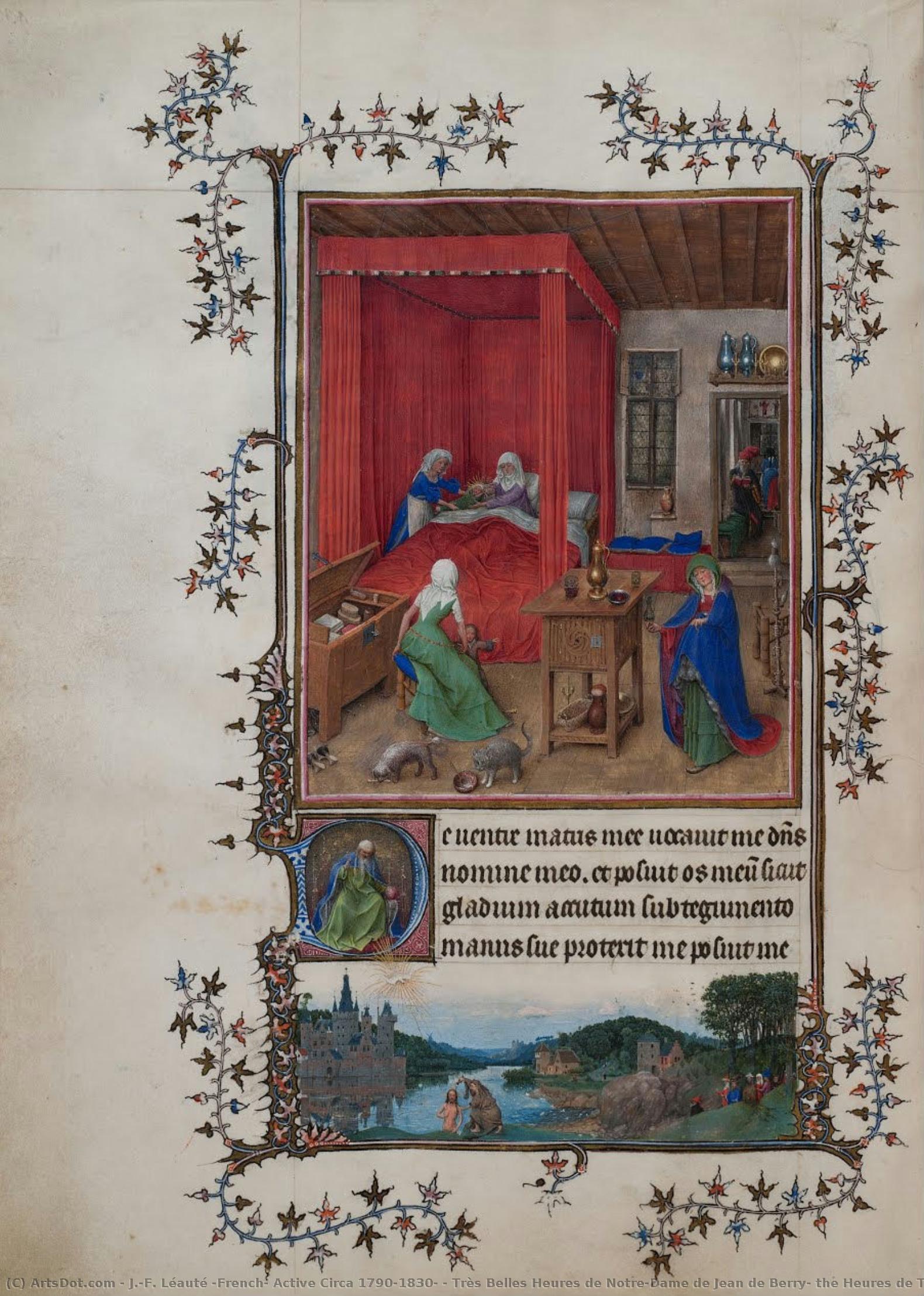
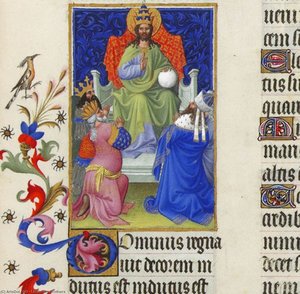
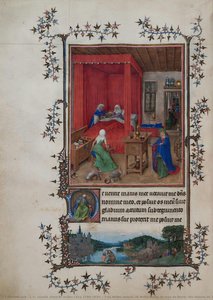
Très Belles Heures de Notre-Dame de Jean de Berry, the Heures de Turin-Milan

 Read More
Purchase a high-resolution, enhanced digital image, far superior to the online preview.
Each file is meticulously prepared by our in-house specialists using advanced tools and expert manual retouching. We ensure every image has exceptional clarity, precise color accuracy, and fine detail.
The final file is delivered via email within 72 hours, optimized for immediate use in professional, editorial, and print environments. This is the same quality trusted by top-tier design studios, publishers, and galleries.
Digital Image
Download a high-resolution file for personal display, printing, and creative projects. ( Buy Print Buy Hand Made Painting)
Included in Every Digital Image Order
Expert Digital Delivery, Guaranteed
When you choose ArtsDot.com, you're not just getting an image - you're receiving a professionally enhanced digital artwork, crafted with precision and backed by a satisfaction guarantee. Here's everything that comes with your order, automatically:

Fast Email Delivery
Your high-resolution digital image file will be emailed to you within 72 hours of ordering - ready for immediate use.

AI-Enhanced Digital File
Your artwork is professionally optimized using advanced AI tools and manual editing, ensuring maximum detail, clarity, and color accuracy.

Free Lifetime Re-Delivery
Accidentally deleted or lost your file? No worries - we'll resend it to you anytime, free of charge.

No Import Fees - Ever
Enjoy your artwork instantly with zero customs, duties, or delivery fees - digital downloads are always tax-free.

Color Accuracy Guarantee
We ensure your digital image reflects the original colors as closely as possible using professional tools and color management.

60-Day Satisfaction Guarantee
If you're not satisfied with your digital image, we'll revise it or refund 100% within 60 days - no questions asked.

100% Money-Back Guarantee
Not satisfied? Get a full refund within 60 days of receiving your digital file - no questions asked.

Bulk Order Discounts
Buy 3 images, save 10% - Buy 5, save 15% - Buy 10+, save 20%. Great for creative projects, galleries, and agencies.
Related Artworks






Artist Biography
The Delicate Precision of Jean-François Léauté
In the shifting cultural tides of late eighteenth and early nineteenth-century France, few art forms captured the intimate pulse of society as tenderly as the miniature portrait. Among the masters of this diminutive medium, Jean-François Léauté emerges as a captivating figure, a Parisian craftsman whose brushwork bridged the fading elegance of the Rococo era with the burgeoning emotional depth of Romanticism. Though the precise details of his early life remain shrouded in the mists of history—a common fate for many artists of his period—Léauté’s presence is felt through the enduring legacy of his meticulous creations. Born in Paris, he likely honed his skills within the rigorous atmosphere of Parisian ateliers, absorbing the disciplined techniques of Neoclassicism while maintaining the delicate, ornamental grace inherited from the preceding century.
Léauté’s artistry was defined by a profound mastery over scale and detail. To work in miniature is to engage in a constant battle with the infinitesimal; it requires an exceptional command of pigment preparation and a breath-like lightness of touch. His primary vocation centered on these small, precious likenesses, which served as much more than mere portraits. In an age before photography, these works were vital vessels of familial pride and social identity. A Léauté miniature was often housed in exquisite casework, such as the fausse-monstre—a false watch case—which allowed a gentleman to carry a loved one’s image alongside his timepiece. Such objects transformed art into wearable intimacy, blending the boundaries between fine art and precious jewelry.
A Legacy of Light and Manuscript
Beyond the intimate confines of portraiture, Léauté demonstrated a versatility that extended into the realm of monumental illumination. His involvement in projects like the 'Très Belles Heures de Notre-Dame' reveals an artist capable of grander, more complex narratives. This undertaking, commissioned by Jean-Baptiste Visconti, the Archbishop of Turin, showcases his ability to employ sophisticated color glazing techniques to breathe life into sacred texts. In these works, one can observe a transition from the purely decorative to the deeply evocative, as he utilized light and shadow to create a sense of spiritual presence.
The significance of Léauté’s career lies in his role as a stylistic conduit. His work embodies several key elements of his era:
- Technical Virtuosity: An unparalleled ability to render the subtle nuances of facial expressions, the soft folds of drapery, and the intricate textures of lace and hair on a microscopic scale.
- Cultural Synthesis: The seamless integration of the structured, classical forms of the late 1700s with the more fluid, emotive sensibilities that would define the Romantic movement.
- Material Mastery: A deep understanding of how his paintings interacted with their physical surroundings, whether mounted on ivory or encased in gold and cobalt glass.
Ultimately, Jean-François Léauté remains a vital subject for those studying the evolution of French art. He was an artist who understood that greatness is not solely measured by the size of the canvas, but by the depth of the emotion captured within its borders. Through his miniature worlds, he preserved the fleeting elegance of a bygone aristocracy and left behind a testament to the enduring power of precision and passion.
Quick Facts
- Artistic Movement Or Style: Miniature portraiture
- Full Name: j.-f. léauté
- Nationality: French
- Notable Artworks:
- Très Belles Heures de Notre-Dame
- A Gentleman
- Place Of Birth: France

