

 Preview
 Send
Send Share
Share
 Details

 Download
 Similars
 X-Ray
X-Ray Diaporama
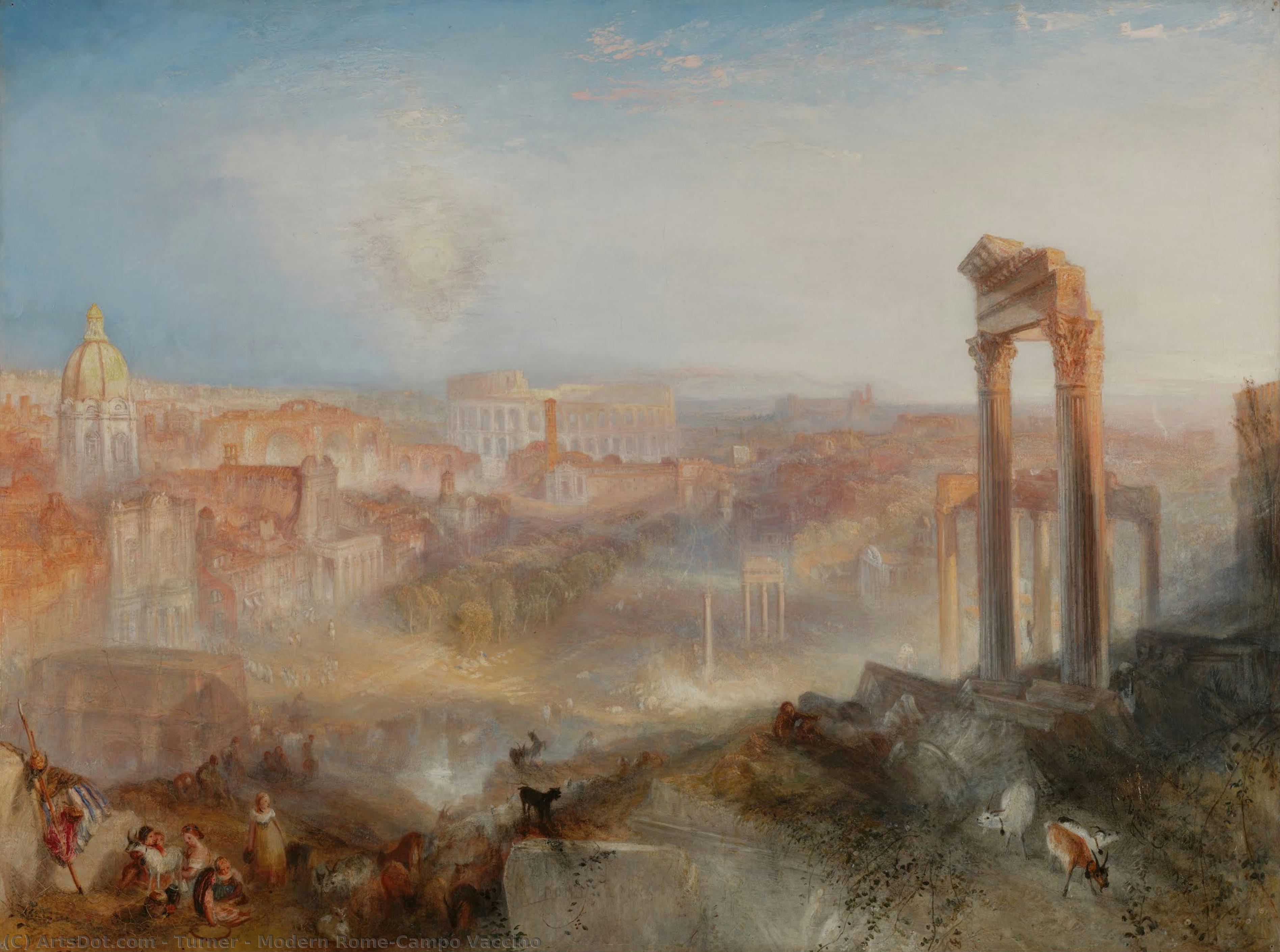
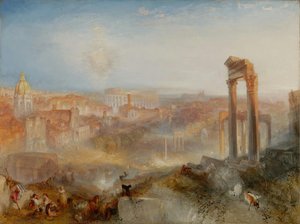
Modern Rome-Campo Vaccino
 Oil On Canvas
- WallArt
- Romanticism
 1839
1839 122.0 x 91.0 cm
 J. Paul Getty Museum
 Read More
Purchase a high-resolution, enhanced digital image, far superior to the online preview.
Each file is meticulously prepared by our in-house specialists using advanced tools and expert manual retouching. We ensure every image has exceptional clarity, precise color accuracy, and fine detail.
The final file is delivered via email within 72 hours, optimized for immediate use in professional, editorial, and print environments. This is the same quality trusted by top-tier design studios, publishers, and galleries.
Digital Image
Download a high-resolution file for personal display, printing, and creative projects. ( Buy Print Buy Hand Made Painting)
Included in Every Digital Image Order
Expert Digital Delivery, Guaranteed
When you choose ArtsDot.com, you're not just getting an image - you're receiving a professionally enhanced digital artwork, crafted with precision and backed by a satisfaction guarantee. Here's everything that comes with your order, automatically:

Fast Email Delivery
Your high-resolution digital image file will be emailed to you within 72 hours of ordering - ready for immediate use.

AI-Enhanced Digital File
Your artwork is professionally optimized using advanced AI tools and manual editing, ensuring maximum detail, clarity, and color accuracy.

Free Lifetime Re-Delivery
Accidentally deleted or lost your file? No worries - we'll resend it to you anytime, free of charge.

No Import Fees - Ever
Enjoy your artwork instantly with zero customs, duties, or delivery fees - digital downloads are always tax-free.

Color Accuracy Guarantee
We ensure your digital image reflects the original colors as closely as possible using professional tools and color management.

60-Day Satisfaction Guarantee
If you're not satisfied with your digital image, we'll revise it or refund 100% within 60 days - no questions asked.

100% Money-Back Guarantee
Not satisfied? Get a full refund within 60 days of receiving your digital file - no questions asked.

Bulk Order Discounts
Buy 3 images, save 10% - Buy 5, save 15% - Buy 10+, save 20%. Great for creative projects, galleries, and agencies.
Collectible Description
A Dreamscape of Rome: Turner’s “Modern Rome – Campo Vaccino”
Joseph Mallord William Turner's "Modern Rome – Campo Vaccino," painted in 1839, isn’t merely a depiction of a Roman landscape; it’s an immersive experience, a shimmering memory of the Eternal City filtered through the artist’s intensely personal vision. This monumental canvas captures not the grandeur of its famed monuments, but rather the evocative atmosphere of the Campo Vaccino – the “Cow Pasture” – a vast, unexcavated area surrounding the Roman Forum that still retains a raw, almost primordial quality. Turner, at the peak of his creative power, abandons precise detail in favor of capturing an ethereal sense of time and place, creating a scene both ancient and utterly contemporary. The painting’s enduring appeal lies in its ability to transport the viewer into a realm where history, myth, and the sublime converge—a testament to Turner's mastery of light, color, and emotional resonance.A Symphony of Light and Color
Turner’s technique is nothing short of revolutionary for his time. He employs a loose, almost frantic brushstroke – a hallmark of his mature style – layering washes of pigment with remarkable speed and fluidity. The colors are extraordinarily vibrant, yet subtly blended to create an iridescent glow that seems to emanate from the canvas itself. Notice how he masterfully juxtaposes warm oranges and yellows in the setting sun with cooler blues and purples in the twilight sky. This deliberate contrast isn’t simply aesthetic; it represents a dynamic tension between past and present, day and night, life and death. The painting is bathed in an almost hallucinatory light—a blend of sunset and moonlight—that seems to defy conventional perspective, creating a sense of disorientation and dreamlike unreality. He utilizes glazing techniques, building up layers of translucent color to achieve incredible depth and luminosity, capturing the fleeting effects of atmospheric conditions with astonishing accuracy.Echoes of History and Myth
The Campo Vaccino itself holds significant historical weight. For centuries, it was a pastureland used for grazing cattle – hence its evocative name. However, Turner transforms this mundane landscape into something far more profound. The ruins of ancient Roman structures—columns, arches, and fragments of temples—are subtly integrated into the scene, hinting at the vast empire that once dominated this area. Yet, these remnants are not presented as imposing monuments; they dissolve into the haze, suggesting a sense of decay and the relentless passage of time. Turner’s choice to depict the Forum in its unexcavated state is deliberate—a rejection of the idealized representations favored by earlier artists. He presents Rome as it *was*, raw and untamed, a place where the ghosts of emperors and gladiators still linger. The inclusion of figures – goatherds tending their flocks – further anchors the scene in the present, reminding us that even amidst the ruins of antiquity, life continues to unfold.Symbolism and Emotional Resonance
“Modern Rome – Campo Vaccino” is rich with symbolic meaning. Turner’s frequent use of light—particularly its interplay with shadow—evokes themes of mortality, memory, and the sublime. The hazy atmosphere suggests a sense of loss and nostalgia, as if the artist is gazing back at a vanished world. The painting can be interpreted as an allegory for the decline of civilizations, but also as a celebration of the enduring beauty of Rome. Turner’s own life was marked by periods of intense creativity followed by bouts of melancholy and isolation; this painting reflects his complex emotional state—a longing for the past combined with a recognition of its inevitable demise. The overall effect is profoundly moving, inviting viewers to contemplate their own relationship to history, time, and the ephemeral nature of existence.A Timeless Masterpiece
“Modern Rome – Campo Vaccino” remains one of Turner’s most celebrated works, admired for its innovative technique, evocative atmosphere, and profound emotional depth. It's a painting that transcends mere representation, offering instead a glimpse into the artist’s soul—a testament to his extraordinary vision and his ability to capture the essence of a place and a time. Reproductions of this iconic artwork continue to captivate audiences worldwide, serving as a reminder of Turner’s enduring legacy as one of history's greatest landscape painters.- Medium: Oil on Canvas
- Dimensions: 122.6 x 91.8 cm
- Date: 1839
Related Artworks
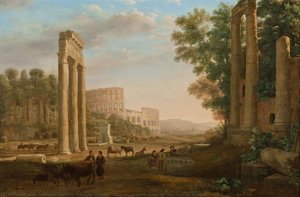
Artist Biography
A Life Painted in Light: The World of J.M.W. Turner
Joseph Mallord William Turner, known to the world as J.M.W. Turner, was more than just a painter; he was a visionary who redefined landscape art and paved the way for modern abstraction. Born in Maiden Lane, Covent Garden, London, in 1775, his beginnings were humble – the son of a barber and wig maker. Yet, even as a child, a remarkable talent blossomed within him. By age fourteen, he was enrolled at the Royal Academy, exhibiting his first work just a year later. This early promise wasn’t merely technical skill; it hinted at an innate understanding of light, color, and atmosphere that would become the hallmarks of his extraordinary career. He supplemented his artistic education with practical experience as an architectural draftsman, honing his perspective and compositional abilities – skills that would prove invaluable in rendering both detailed topographical views and vast, emotive landscapes. Turner’s early life was marked by a dedication to his craft, fueled by a natural aptitude and a relentless pursuit of artistic excellence.The Romantic Tempest: Style and Influences
Turner emerged during the height of the Romantic era, but he wasn't simply a follower of its conventions. He absorbed influences from various sources – the Dutch masters like Claude Lorrain and Aelbert Cuyp for their luminous landscapes, and artists such as Richard Wilson for his poetic approach to nature. However, Turner didn’t merely imitate; he synthesized these influences into something entirely new. His work is characterized by an expressive use of color, often employing bold contrasts and vibrant hues to convey emotion and atmosphere. He was fascinated by the power and drama of nature – turbulent seascapes, fiery sunsets, and swirling storms became recurring motifs in his paintings. He wasn’t interested in simply depicting what he saw; he sought to capture the *feeling* of a place, the sublime awe inspired by the natural world. This pursuit led him to experiment with increasingly loose brushwork, dissolving forms into washes of color and light – techniques that would anticipate the Impressionist movement decades later. From 1840, his work gained significant recognition thanks to the championing of John Ruskin, who elevated landscape painting to a new level of critical acclaim.A Prolific Legacy: The Scope of Turner’s Output
The sheer volume of Turner's artistic output is astonishing. He created over 550 oil paintings, nearly 2,000 watercolors, and an astounding 30,000 works on paper. This prolificacy wasn’t simply a matter of quantity; it reflected his tireless exploration of different subjects, techniques, and styles. His paintings range from detailed topographical views of British landscapes to dramatic historical scenes and evocative maritime paintings. He was equally adept at capturing the tranquility of a pastoral scene and the terrifying power of a raging storm. Works like “Fort Vimieux” exemplify his mastery of depicting atmospheric effects – the swirling clouds, the crashing waves, and the intense light all contribute to a sense of drama and sublime beauty. Similarly, "Scene in the Campagna" showcases his ability to capture the warmth and serenity of the Italian countryside with delicate brushwork and luminous colors. Beyond painting, Turner was also a skilled printmaker, further disseminating his artistic vision through engravings and lithographs.Eccentricity and Remembrance: The Man Behind the Masterpieces
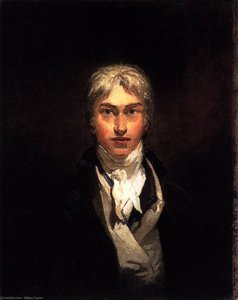
Turner’s personal life was as complex and enigmatic as his art. He remained intensely private and reclusive, often shunning social gatherings and preferring the solitude of his studio or the open road. He fathered two daughters, Evelina and Georgiana, with Sarah Danby, the wife of a fellow artist, but maintained a distant relationship with them. His later years were marked by increasing eccentricity and declining health. After his father’s death in 1829, he became increasingly morose and withdrawn, living in squalor and neglecting his appearance. He adopted the pseudonym “Mr. Booth” to avoid recognition and even rowed his boat into the Thames during a census to remain untraceable. Despite his eccentricities, or perhaps because of them, Turner remains one of Britain’s most beloved artists. His final years were spent in Chelsea where he passed away on December 19, 1851, at the age of 76. In a fitting tribute to his enduring legacy, he is buried in St Paul's Cathedral, alongside other British luminaries – a testament to his profound impact on art and culture. His work continues to inspire artists and captivate audiences worldwide, ensuring that the light of J.M.W. Turner will continue to shine for generations to come.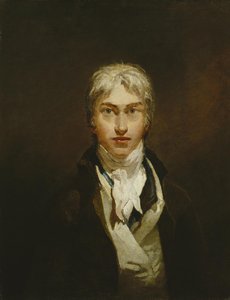
J.M.W. Turner
1775 - 1851 , United Kingdom
Quick Facts
- Artistic Movement Or Style: Romanticism
- Artists Or Movements Influenced By This Artist:
- Impressionism
- Abstract Art
- Artists Who Influenced This Artist:
- John Robert Cozens
- Richard Wilson
- Date Of Birth: April 23, 1775
- Date Of Death: December 19, 1851
- Full Name: Joseph Mallord William Turner
- Nationality: British
- Notable Artworks:
- Fort Vimieux
- Scene in the Campagna
- Place Of Birth: London, United Kingdom

