

 Preview
 Send
Send Share
Share
 Details

 Download
 Similars
 X-Ray
X-Ray Diaporama
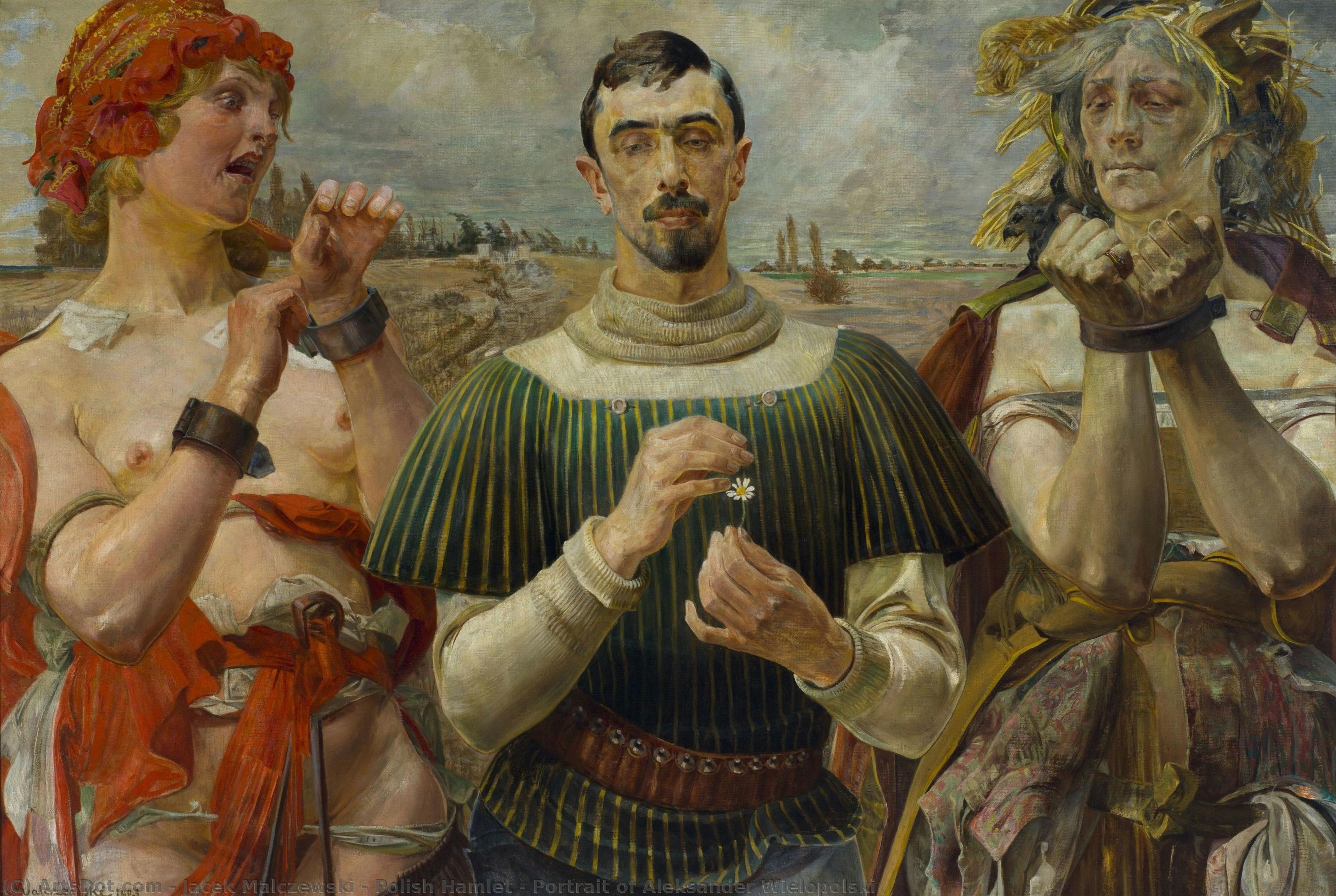
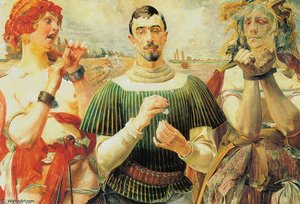
Polish Hamlet – Portrait of Aleksander Wielopolski
 Oil On Canvas
- WallArt
- Polish Symbolism
 19th Century
 148.0 x 100.0 cm
 Warsaw National Museum
 Read More
Purchase a high-resolution, enhanced digital image, far superior to the online preview.
Each file is meticulously prepared by our in-house specialists using advanced tools and expert manual retouching. We ensure every image has exceptional clarity, precise color accuracy, and fine detail.
The final file is delivered via email within 72 hours, optimized for immediate use in professional, editorial, and print environments. This is the same quality trusted by top-tier design studios, publishers, and galleries.
Digital Image
Download a high-resolution file for personal display, printing, and creative projects. ( Buy Print Buy Hand Made Painting)
Included in Every Digital Image Order
Expert Digital Delivery, Guaranteed
When you choose ArtsDot.com, you're not just getting an image - you're receiving a professionally enhanced digital artwork, crafted with precision and backed by a satisfaction guarantee. Here's everything that comes with your order, automatically:

Fast Email Delivery
Your high-resolution digital image file will be emailed to you within 72 hours of ordering - ready for immediate use.

AI-Enhanced Digital File
Your artwork is professionally optimized using advanced AI tools and manual editing, ensuring maximum detail, clarity, and color accuracy.

Free Lifetime Re-Delivery
Accidentally deleted or lost your file? No worries - we'll resend it to you anytime, free of charge.

No Import Fees - Ever
Enjoy your artwork instantly with zero customs, duties, or delivery fees - digital downloads are always tax-free.

Color Accuracy Guarantee
We ensure your digital image reflects the original colors as closely as possible using professional tools and color management.

60-Day Satisfaction Guarantee
If you're not satisfied with your digital image, we'll revise it or refund 100% within 60 days - no questions asked.

100% Money-Back Guarantee
Not satisfied? Get a full refund within 60 days of receiving your digital file - no questions asked.

Bulk Order Discounts
Buy 3 images, save 10% - Buy 5, save 15% - Buy 10+, save 20%. Great for creative projects, galleries, and agencies.
Polish Hamlet – Portrait of Aleksander Wielopolski
Jacek Malczewski’s “Polish Hamlet,” completed in 1903, stands as an emblem of Polish Symbolism and a poignant meditation on national identity. More than just a depiction of Aleksander Wielopolski—a prominent Polish politician who navigated the turbulent waters of partition-era Poland—the painting embodies a complex tapestry of artistic influences and philosophical considerations.
- Subject Matter: The artwork portrays Aleksander Wielopolski, grandson of Margrave Stanisław Wielopolski, alongside two women representing opposing visions of Poland’s destiny.
- Style & Technique: Executed in oil on canvas, Malczewski employed a masterful blend of neo-romanticism and Symbolist aesthetics, characterized by rich color palettes and evocative imagery.
- Historical Context: Created during the period immediately following World War I, “Polish Hamlet” reflects the anxieties and aspirations of Poland grappling with its newfound independence amidst European instability. It’s a direct response to Matejko's monumental historical paintings, which Malczewski admired deeply.
- Symbolism: The painting overflows with symbolic elements—the woman on the right embodies the enslaved past, while the young girl symbolizes the hopeful future. The flower held by Wielopolski represents the fading spiritual virtue of the era, mirroring Hamlet’s internal struggle.
- Emotional Impact: “Polish Hamlet” evokes a profound sense of melancholy and contemplation, prompting viewers to ponder questions of moral responsibility and the enduring legacy of national history. It's considered one of Malczewski's most emotionally resonant works.
The artist’s deliberate choice to depict Wielopolski alongside two women—one representing Poland’s subjugated past, symbolized by an elderly woman shackled with twine and crowned with a wreath of twine—and the other embodying the burgeoning revolution—a young woman breaking free from her shackles—immediately establishes a dichotomy. This reflects Malczewski's own artistic convictions: he sought to transcend Matejko’s stylistic conventions, embracing instead a more personal vision informed by mythology and folklore.
Malczewski’s meticulous attention to detail—the inclusion of a clock on the wall, the depiction of birds in flight—further enhances the painting's symbolic depth. The artist’s use of color is particularly noteworthy; he employs vibrant hues to convey emotion and atmosphere, creating an immersive experience for the viewer.
“Polish Hamlet” cemented Malczewski’s reputation as a pioneer of Polish Symbolism and remains a cornerstone of Polish artistic heritage. Its enduring appeal lies in its ability to capture the spirit of a nation striving for self-determination while confronting profound moral dilemmas—a timeless exploration of human experience rendered with unparalleled artistry.
Related Artworks


Artist Biography
A Life Imbued with Polish Longing
Jacek Malczewski, born in 1854 in Radom, a city then nestled within the Russian-controlled Congress Poland, was more than simply a painter; he was a visual embodiment of Polish national identity and a profound voice for a nation yearning for self-determination. His life’s trajectory and artistic vision were inextricably linked to the romantic ideals of independence, deeply instilled by his father, Julian Malczewski—a dedicated patriot who cultivated in young Jacek an unwavering love for Polish culture, literature, and history. This early influence became the bedrock of his creative expression, shaping him into the leading figure of Polish Symbolism and earning him the esteemed title of “father of Polish Symbolism.” His formative years were steeped in tales of heroism, sacrifice, and a poignant awareness of Poland’s troubled past—themes that would resonate throughout his entire *oeuvre*. The family's relocation to Wielgiem, and the guidance he received from Adolf Dygasiński, further cemented this connection to Poland’s rich folklore and evocative landscapes, providing an inexhaustible wellspring of inspiration for his future artistic endeavors.From Academic Training to Symbolic Revelation
Malczewski's artistic journey began in Kraków in 1872, where he studied under Leon Piccard at the Academy of Fine Arts, benefiting from the mentorship of Władysław Łuszczkiewicz and Feliks Szynalewski. A pivotal moment arrived with his time at the École des Beaux-Arts in Paris, exposing him to a diverse range of European artistic currents while simultaneously solidifying his commitment to a distinctly Polish aesthetic sensibility. While absorbing international influences, Malczewski never strayed far from the patriotic fervor that defined his upbringing. This unique synthesis is readily apparent in his early works, which gradually evolved from historical narratives influenced by Jan Matejko—whose dramatic style and exploration of Polish history left an indelible mark—to more complex symbolic compositions. He completed master classes with Matejko in 1879, a period where he honed his technical skills while absorbing the neo-romantic metaphors that would later characterize his own work. The influence of Artur Grottger’s dramatic art also played a crucial role in shaping Malczewski's artistic vision, particularly its emotional intensity and focus on themes of suffering and resilience.The Language of Symbolism: A Nation’s Soul Unveiled
Malczewski’s mature style is characterized by an evocative blend of historical motifs, Christian iconography, mythological allusions, and the haunting beauty of the Polish landscape. He wasn't merely depicting scenes; he was crafting visual allegories that spoke directly to the soul of a nation—a nation burdened by oppression yet sustained by enduring hope. Works like Melancholia (1890-1894), widely considered a masterpiece of Polish Symbolism, capture the profound sense of national sorrow and introspection prevalent during a time of political subjugation. Błędne koło (The Mad Circle, 1895–97) stands as a poignant reflection on the human condition, its cyclical imagery mirroring the seemingly endless struggles for freedom and self-determination. Natchnienie malarza (Painter's Muse, 1897) showcases his unique style and explores the role of the artist in society, often portraying himself within his paintings as a symbolic figure grappling with artistic inspiration and national identity. The *Thanatos* Series delves into profound themes of mortality and the afterlife, reflecting a philosophical depth that permeated his work. His collection of Bajki (Fables) draws upon folklore and mythology, imbuing these traditional narratives with layers of symbolic meaning and offering subtle critiques of contemporary society.Legacy and Enduring Influence on Polish Art
Beyond his remarkable artistic achievements, Malczewski dedicated himself to education, serving as a professor and later rector of the Academy of Fine Arts in Kraków. He nurtured generations of artists, imparting not only technical skills but also a deep sense of national pride and unwavering artistic integrity. His works were exhibited internationally, gaining recognition for their unique blend of Polish identity and European artistic trends. The preservation of his legacy was largely due to the tireless efforts of his son, Rafał Malczewski, who ensured that many of his father’s paintings found their way into the National Museum in Warsaw. Jacek Malczewski's influence on Polish art is undeniable; he remains a pivotal figure in the nation’s cultural heritage, forever celebrated as the “father of Polish Symbolism.” His ability to weave together personal emotion, national longing, and universal themes continues to resonate with audiences today, solidifying his place among the great masters of European painting. He left behind not just paintings, but a visual language that spoke volumes about the Polish spirit—a spirit of resilience, faith, and an enduring hope for a brighter future.Key Characteristics of His Work
- Symbolism: Malczewski’s work is deeply rooted in symbolism, using allegorical figures and motifs to convey complex ideas about Polish identity, history, and spirituality.
- Patriotism: A strong sense of patriotism permeates his art, reflecting Poland's struggles for independence and the longing for national revival.
- Mythology & Folklore: He frequently drew inspiration from Polish folklore, mythology, and religious themes, blending them with historical narratives.
- Psychological Depth: His paintings often explore psychological states of melancholy, introspection, and existential questioning.
- Unique Style: Malczewski developed a distinctive style characterized by muted colors, ethereal atmospheres, and dreamlike imagery.
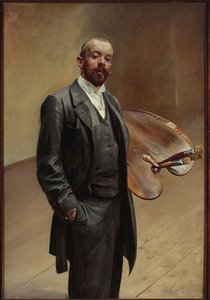
Jacek Malczewski
1854 - 1897 , United States of America
Quick Facts
- Artistic Movement Or Style: Symbolism
- Artists Or Movements Influenced By This Artist: ['Young Poland']
- Artists Who Influenced This Artist:
- Jan Matejko
- Artur Grottger
- Date Of Birth: 1854
- Date Of Death: 1929
- Full Name: Jacek Malczewski
- Nationality: Polish
- Notable Artworks:
- Melancholia
- The Dust Storm
- Death
- Painter's Muse
- Place Of Birth: Radom, Poland

