 Preview
 Send
Send Share
Share
 Details

 Download
 Similars
 X-Ray
X-Ray Diaporama
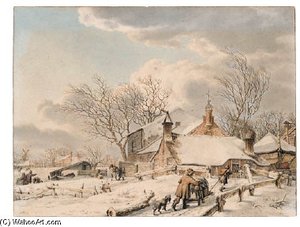
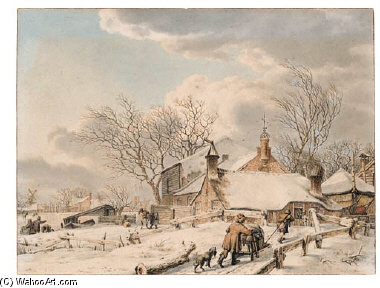
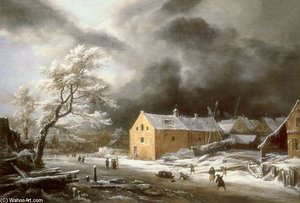
A Winter Landscape With Men And A Sledge Near A Farm, People On The Ice Beyond
 Read More
Hand Made Oil Reproduction
Hand-painted oil on canvas in your size and frame, made to order by our artists. ( Buy Print Buy Image)




































Pick from our preset sizes that match the artwork's original proportions.

You may enter your own dimensions to fit a specific frame or space. If your selected size does not match the original image's proportions, we will either crop the artwork or extend the painting with additional hand-painted elements. A digital mockup will be sent for your approval before production begins.
Please note that the on-screen preview does not reflect the actual cropping or extension. Only the mockup will accurately show the final composition.
While custom sizes are available, we recommend selecting a dimension from the predefined list to preserve the original proportions.
After order, ArtsDot.com team will email client for instructions and provide a mockup preview
Worldwide Delivery () in 3/4 weeks instead of standard 5 weeks. (21 August). No compromise on quality.

Free Worldwide Express Shipping

High-Quality Linen Canvas

Full Shipping Insurance

Customs Tax Refund Guarantee

True Color Matching Guarantee

60-Day Return Policy (Defects Only)

100% Money-Back Guarantee

Bulk Discount Offer
 Glass option is only available in size under 110 CM

A Winter Landscape With Men And A Sledge Near A Farm, People On The Ice Beyond
Reproduction Medium
Reproduction Size
-


Total Price
$ 263
Related Artworks
Artist Biography
Peter Paul Rubens: The Master of Baroque Color
Born in Siegen, Germany, in 1577, Peter Paul Rubens’s life was a vibrant tapestry woven from artistic ambition, diplomatic service, and profound personal loss. His early years were marked by upheaval – his father’s death forced the family to relocate to Antwerp, Belgium, a bustling center of trade and art. This relocation proved pivotal, immersing young Rubens in the rich artistic environment that would shape his extraordinary career. Initially apprenticed to Tobias Verhaecht, Adam van Noort, and Otto van Veen, he quickly surpassed his teachers, absorbing the techniques of the Renaissance masters while simultaneously forging a distinctly Baroque style characterized by dynamic composition, intense color palettes, and an exuberant celebration of life.
Rubens’s journey to artistic maturity began with a transformative trip to Italy in 1600. He spent eight years meticulously studying the works of Raphael, Michelangelo, Titian, and other giants of the Renaissance. This period wasn't merely about imitation; it was an intellectual and emotional immersion, fueling his desire to synthesize classical ideals with contemporary sensibilities. He returned to Antwerp a changed artist, imbued with a newfound confidence and a commitment to pushing the boundaries of artistic expression. His early works, such as “The Descent from the Cross” (1612-13) and “The Raising of the Cross” (1610-11), demonstrated his mastery of history painting – monumental scenes depicting biblical narratives or historical events – but it was his innovative use of color and dramatic lighting that truly set him apart.
Antwerp: A Studio and a Kingdom
Rubens established his studio in Antwerp, transforming it into more than just a workshop; it became a vibrant hub of artistic activity. He employed a large team of assistants, skillfully delegating tasks while maintaining meticulous control over the final product. This system allowed him to manage an astonishingly prolific output – hundreds of paintings, sculptures, and designs that adorned palaces and churches across Europe. His home, a grand residence reflecting Italian Renaissance influences, was not merely a dwelling but a testament to his wealth and artistic tastes; it housed a vast collection of antiquities, gems, and curiosities, serving as an ongoing source of inspiration.
Rubens’s career was inextricably linked to the political landscape of the Netherlands. He served as court painter to Archduke Albert and Isabella, playing a crucial role in diplomatic negotiations between the Spanish rulers and the Dutch rebels. This involvement extended beyond artistic commissions; he acted as an envoy, fostering relationships with European royalty and navigating complex political alliances. His travels throughout Europe – to France, England, Spain, and Germany – were often undertaken on official business, further cementing his reputation as a versatile and influential figure.
The Art of Rubens: Color, Movement, and Emotion
Rubens’s artistic style is instantly recognizable by its vibrant color palette, dynamic compositions, and masterful rendering of human form. He rejected the cool, restrained tones favored by some of his contemporaries, embracing a bold and sensual approach to color – reds, yellows, blues, and greens were used liberally to create an atmosphere of intense emotion and vitality. His figures are rarely static; they are caught in moments of dramatic action, imbued with energy and movement.
Rubens’s technique involved layering thin glazes of paint over a dark ground, creating a luminous effect that seemed to radiate from within. He employed a ‘lost-and-found’ technique, subtly concealing details beneath layers of color, inviting the viewer to actively engage with the painting and discover new elements upon repeated viewing. His mastery of light and shadow – *chiaroscuro* – further enhanced the dramatic impact of his compositions.
Legacy and Influence
Peter Paul Rubens died in Antwerp on May 30, 1640, leaving behind a legacy that continues to inspire artists today. He is considered one of the greatest painters of all time, a pivotal figure in the development of Baroque art. His influence can be seen in the works of countless artists who followed, from Anthony van Dyck (his most famous pupil) to Rembrandt and even Impressionist painters like Monet, who admired his use of color. Rubens’s emphasis on emotional expression, dynamic composition, and vibrant color palettes cemented his place as a master of Baroque art – a painter who captured the exuberance and drama of life itself.
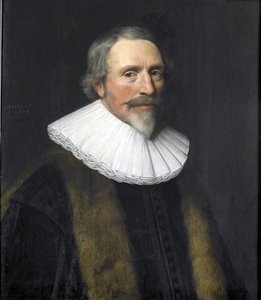
jacob cats
1577 - 1660 , Netherlands
Quick Facts
- Artistic Movement Or Style: Baroque
- Artists Or Movements Influenced By This Artist: ["Rubens' style influenced many"]
- Artists Who Influenced This Artist:
- Titian
- Tintoretto
- Raphael
- Date Of Birth: June 28, 1577
- Date Of Death: May 30, 1640
- Full Name: Peter Paul Rubens
- Nationality: Flemish
- Notable Artworks:
- Descent from the Cross
- Raising of the Cross
- The Garden of Love
- Place Of Birth: Siegen, Germany