 Preview
 Send
Send Share
Share
 Details

 Download
 Similars
 X-Ray
X-Ray Diaporama
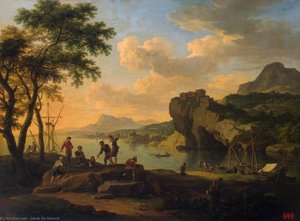
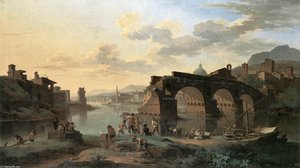
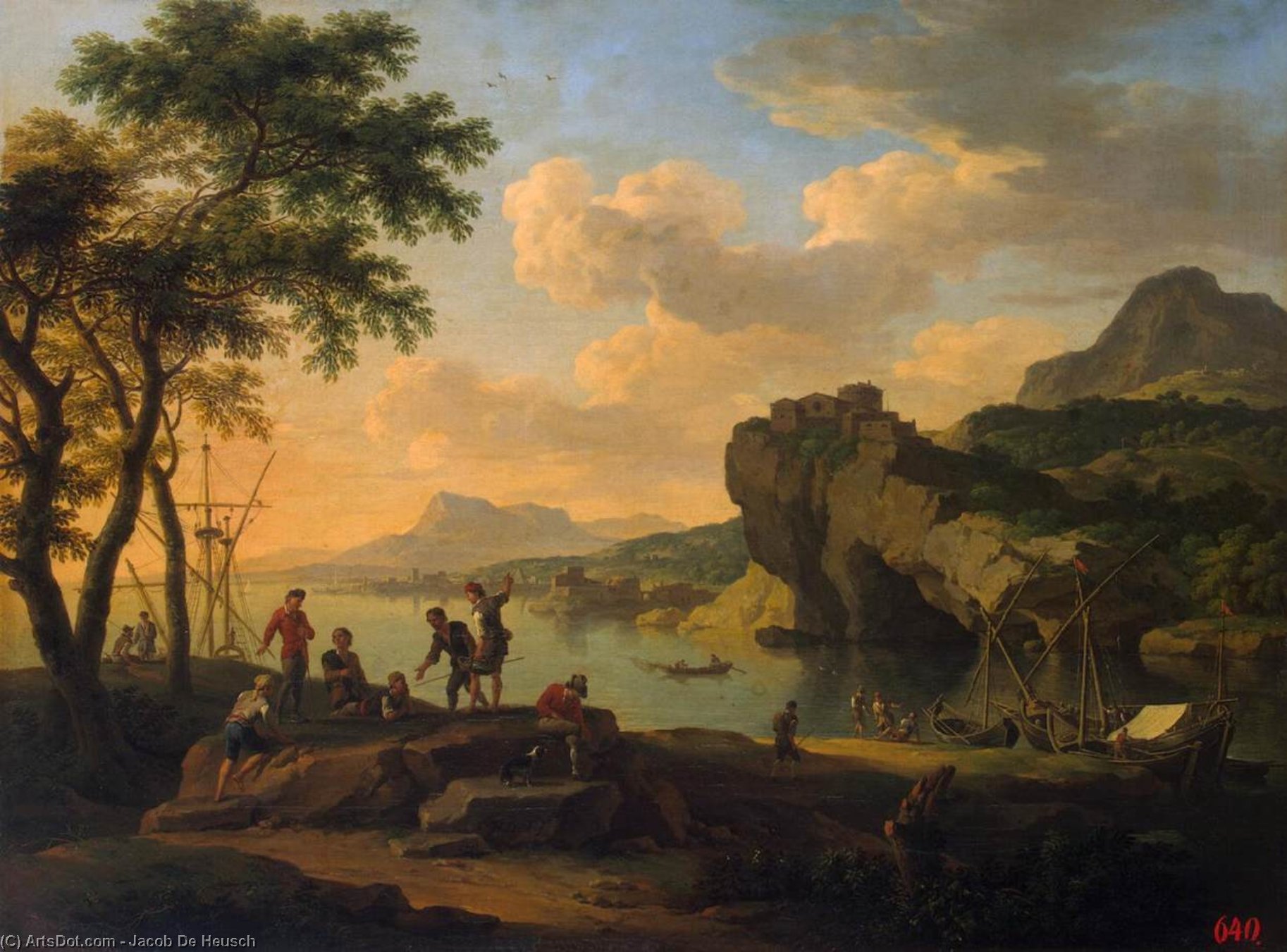
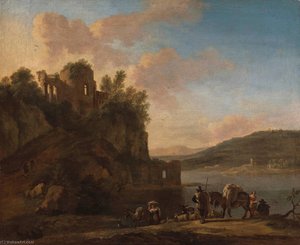
Italian Harbour
 Oil On Canvas
- WallArt
- Baroque
 1697
1697 52.0 x 71.0 cm
 Hermitage Museum
 Read More
Hand Made Oil Reproduction
Hand-painted oil on canvas in your size and frame, made to order by our artists. ( Buy Print Buy Image)




P118B $10

P118H $10

P118W $10

P438Z $10

P508JH $12

P508YH $12

P805H $10

P805Z $10

P919BZ $10

P919G $10

P919XJ $10

P959ZH $10

P968JZ $12

W106C $8

W218G $10

W218JH $8

W218Y $10

W307PJ $10

W316G $10

W316PJ $8

W316Y $10

W398PJ $8

W4111J $10

W500HY $15

W500JH $15

W692G $12

W849H $8

W940BG $15

W953PJ $8




Pick from our preset sizes that match the artwork's original proportions.

You may enter your own dimensions to fit a specific frame or space. If your selected size does not match the original image's proportions, we will either crop the artwork or extend the painting with additional hand-painted elements. A digital mockup will be sent for your approval before production begins.
Please note that the on-screen preview does not reflect the actual cropping or extension. Only the mockup will accurately show the final composition.
While custom sizes are available, we recommend selecting a dimension from the predefined list to preserve the original proportions.
After order, ArtsDot.com team will email client for instructions and provide a mockup preview
Worldwide Delivery () in 3/4 weeks instead of standard 5 weeks. (16 August). No compromise on quality.

Free Worldwide Express Shipping

High-Quality Linen Canvas

Full Shipping Insurance

Customs Tax Refund Guarantee

True Color Matching Guarantee

60-Day Return Policy (Defects Only)

100% Money-Back Guarantee

Bulk Discount Offer
 Glass option is only available in size under 110 CM

Italian Harbour
Reproduction Medium
Reproduction Size
-


Total Price
$ 263
Artwork Description
Italian Harbour by Jacob De Heusch: A Baroque Vision of Tranquility
Jacob de Heusch’s “Italian Harbour,” painted in 1697, stands as a testament to the Baroque aesthetic—a style characterized by dramatic contrasts of light and shadow, opulent ornamentation, and an emphasis on emotion. More than just a depiction of a picturesque harbor scene, it embodies the spirit of its time, reflecting the Order of Saint John’s influence over Malta and capturing a profound sense of serenity amidst turbulent political currents.
- Subject Matter: The painting portrays Valletta Harbour, specifically focusing on the Ponte Rotto (Broken Bridge), which spans across the waterway connecting Marsamxett Harbour and Grand Harbour. De Heusch meticulously rendered boats of varying sizes—merchant vessels laden with cargo and smaller craft navigating the calm waters—creating a dynamic yet balanced composition.
- Style: Baroque art sought to inspire awe and convey religious fervor, though “Italian Harbour” eschews overt piety for a more contemplative mood. The artist skillfully employs chiaroscuro – dramatic lighting – to sculpt the forms of the harbor buildings and vessels, highlighting textures and creating depth.
- Technique: Executed in oil on canvas, De Heusch’s technique demonstrates masterful brushwork and blending, resulting in smooth surfaces that capture the subtle nuances of light reflecting off water and stone. The artist's meticulous attention to detail is evident in every stroke, conveying a remarkable sense of realism despite the stylized representation.
- Historical Context: Painted during the reign of Grand Master António Manuel de Saldanha da Câmara, “Italian Harbour” reflects Malta’s role as a vital maritime hub and a bastion of Protestant resistance against Ottoman expansion. The harbor served as a symbol of resilience and prosperity for the Order of Saint John, who had established Valletta as their capital in 1569.
- Symbolism: Beyond its visual beauty, “Italian Harbour” speaks to themes of stability amidst change—the calm harbor mirroring the Order’s steadfast defense against adversity. The broken bridge itself could symbolize overcoming obstacles and reaching a higher level of understanding, reflecting the Baroque preoccupation with spiritual contemplation.
Currently housed at The Hermitage in St. Petersburg, Russia, “Italian Harbour” continues to captivate viewers with its timeless elegance and masterful execution. Its muted palette—dominated by blues, greens, and browns—creates an atmosphere of tranquility and invites reflection on the grandeur of nature and the enduring legacy of artistic genius.
The painting’s composition is carefully balanced, drawing the eye towards the central bridge while simultaneously incorporating elements of perspective that convey a sense of depth. De Heusch's masterful use of color contributes to this effect, subtly enhancing the drama of the scene without resorting to excessive ornamentation.
“Italian Harbour” exemplifies the Baroque ideal of “tenebris et lux”—darkness and light—a technique employed by De Heusch to heighten emotional impact and create a visually arresting experience. It remains an enduring masterpiece of landscape painting, demonstrating the artist’s profound understanding of both artistic principles and human psychology.
Its placement within The Hermitage underscores its significance as a cultural treasure—a testament to Malta's artistic heritage and a celebration of Baroque artistry at its finest. Reproductions of “Italian Harbour” offer an opportunity to appreciate De Heusch’s vision and immerse oneself in the serene beauty of Valletta Harbor.
Related Artworks

Artist Biography
A Tranquil Vision of Roman Landscapes
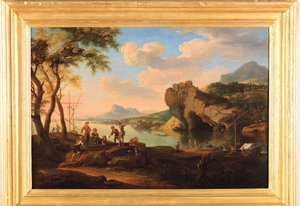
Jacob de Heusch stands as a singular figure in the golden age of Dutch Baroque landscape painting, renowned primarily for his exquisitely rendered depictions of Italian harbors and sun-drenched towns. While history often reserves its brightest spotlights for contemporaries like Rembrandt or Vermeer, De Heusch’s work possesses a quiet elegance and a masterful observation of light that continues to captivate art historians and collectors alike. His artistic lineage was deeply rooted in the traditions of Utrecht; he was the nephew of the celebrated painter Willem de Heusch, and he adopted a similar monogrammatic signature, subtly substituting a ‘J’ for his uncle’s ‘G’. This familial connection provided him with a foundational strength, yet it was his own wanderlust that would ultimately define his creative soul.
The trajectory of De Heusch’s life changed forever in 1675 when he embarked upon a transformative journey to Rome. This period of Italian immersion served as the crucible for his mature style, allowing him to cultivate vital connections with influential patrons and fellow artists. Within the vibrant artistic community of Rome, he found himself part of the Bentvueghels, a group of much-loved Northern artists, where he earned the nickname 'Afdruk' or 'Copia'. It was during these years that his brushwork began to absorb the classical ideals of the Mediterranean, blending the meticulous detail of his Dutch training with the atmospheric grandeur of the Italian landscape.
The Influence of the Arcadian Ideal
De Heusch’s artistic development was profoundly shaped by the masters who preceded and traveled alongside him. He became an ardent imitator of Jan Both, whose luminous, expansive landscapes provided a blueprint for De Heusch’s own approach to light and space. Much like Both, De Heusch sought to capture the "Arcadian" essence—a nostalgic, idealized vision of nature where rocky formations, lofty thin-leaved trees, and wide expanses of country meet the soft glow of an approaching evening. His work often echoes the dramatic, rugged sensibilities of Salvator Rosa, yet he frequently steered his compositions toward a more serene and harmonious atmosphere.
His technical prowess is most evident in his specialized focus on Italian harbor views. In these works, one can observe a delicate balance between the structural permanence of architecture—such as towers and ancient walls—and the fluid, transient nature of water and maritime life. Through his use of color and light, he was able to evoke the specific warmth of the Roman sun, creating scenes that feel less like mere documentation and more like poetic meditations on the beauty of the classical world. His ability to render the subtle shifts in atmosphere, from the clarity of midday to the hazy, golden hues of twilight, remains his most enduring technical achievement.
A Legacy Carved in Light and Shadow
Despite a life that was tragically curtailed by a sudden accident, De Heusch left behind a body of work that serves as a vital bridge between Dutch precision and Italian romanticism. After years spent abroad, he returned to Utrecht, living alongside his brother, the postmaster. Though he did not achieve the prolific output of some of his more famous peers, his dedication to his craft remained steadfast, with much of his output destined for discerning Italian clients who craved the charm of his Mediterranean vistas. His travels were not limited to Italy; his excursions to Venice and even Berlin allowed him to weave a diverse tapestry of European scenery into his repertoire.
The end of De Heusch’s life was as sudden as it was poignant. During a final journey to Amsterdam to visit fellow artists, a carriage mishap resulted in injuries that led to his untimely death at the age of forty-eight. Yet, the scarcity of his surviving canvases only adds to their mystique and value. Today, his masterpieces reside in some of the world's most prestigious institutions, including:
- The Louvre in Paris, showcasing his mastery of classical composition.
- The Belvedere in Vienna, housing his breathtaking depictions of harbors and mountains.
- The British Museum, preserving the historical context of his era.
- The Hermitage in St. Petersburg, where his light-filled landscapes continue to inspire awe.
Ultimately, Jacob de Heusch remains a master of the atmospheric landscape, an artist who successfully translated the spirit of Italy through a Dutch lens, leaving behind a legacy of tranquil, enduring beauty.
Jacob de Heusch
1656 - 1701 , Netherlands
Quick Facts
- Artistic Movement Or Style: Baroque/Romantic
- Artists Or Movements Influenced By This Artist: ['Italian Harbour Views']
- Artists Who Influenced This Artist:
- Salvator Rosa
- Jan Both
- Date Of Birth: November 23, 1656
- Date Of Death: May 8, 1701
- Full Name: Jacob de Heusch
- Nationality: Dutch
- Notable Artworks:
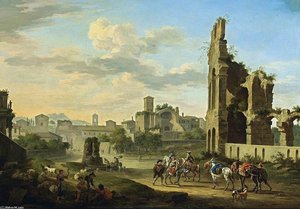
- River View with the Ponte Rotto
- Rome: A View of the Forum Romanum
- River Landscape with Figures in a Boat
- Place Of Birth: Utrecht, Netherlands
Related Articles

Demandes Commerciales
APS ofrece reproducciones de bellas artes y encargos personalizados desde 2004. Confían en nosotros corporaciones, hoteles y coleccionistas selectos para obras de arte de calidad museística, servicio discreto y soluciones artísticas completas. ¡Póngase en contacto con nosotros para obtener un presupuesto personalizado!

Goya's Masterpieces: Explore 25 Iconic Paintings & Art Prints | ArtsDot
Delve into the world of Francisco Goya with ArtsDot. Explore 25 iconic paintings – from 'The Third of May' to his haunting Black Paintings. Discover the stories, techniques & emotions behind these Spanish masterpieces. Find museum-quality art reproductions for your home at ArtsDot.com!

A riguardo di noi
Découvrez notre histoire ! Nous apportons l'art de classe mondiale dans votre vie grâce à une sélection experte, des créations personnalisées et des aperçus gratuits. Approuvé par les particuliers et les entreprises depuis 2000.

Baroque Drama: Bringing Opulence & Emotion into Contemporary Interiors
Explore the opulent world of Baroque interior design! Discover key elements, modern applications & how to bring dramatic elegance into your home with 's authentic reproductions.

Baroque Masterpieces: 10 Paintings That Defined an Era |
Journey through the drama & grandeur of Baroque art! Explore 10 masterpieces by Caravaggio, Rembrandt, Rubens & more. Discover stunning oil paintings, rich colors & timeless stories. Find museum-quality reproductions at .