 Preview
 Send
Send Share
Share
 Details

 Download
 Similars
 X-Ray
X-Ray Diaporama
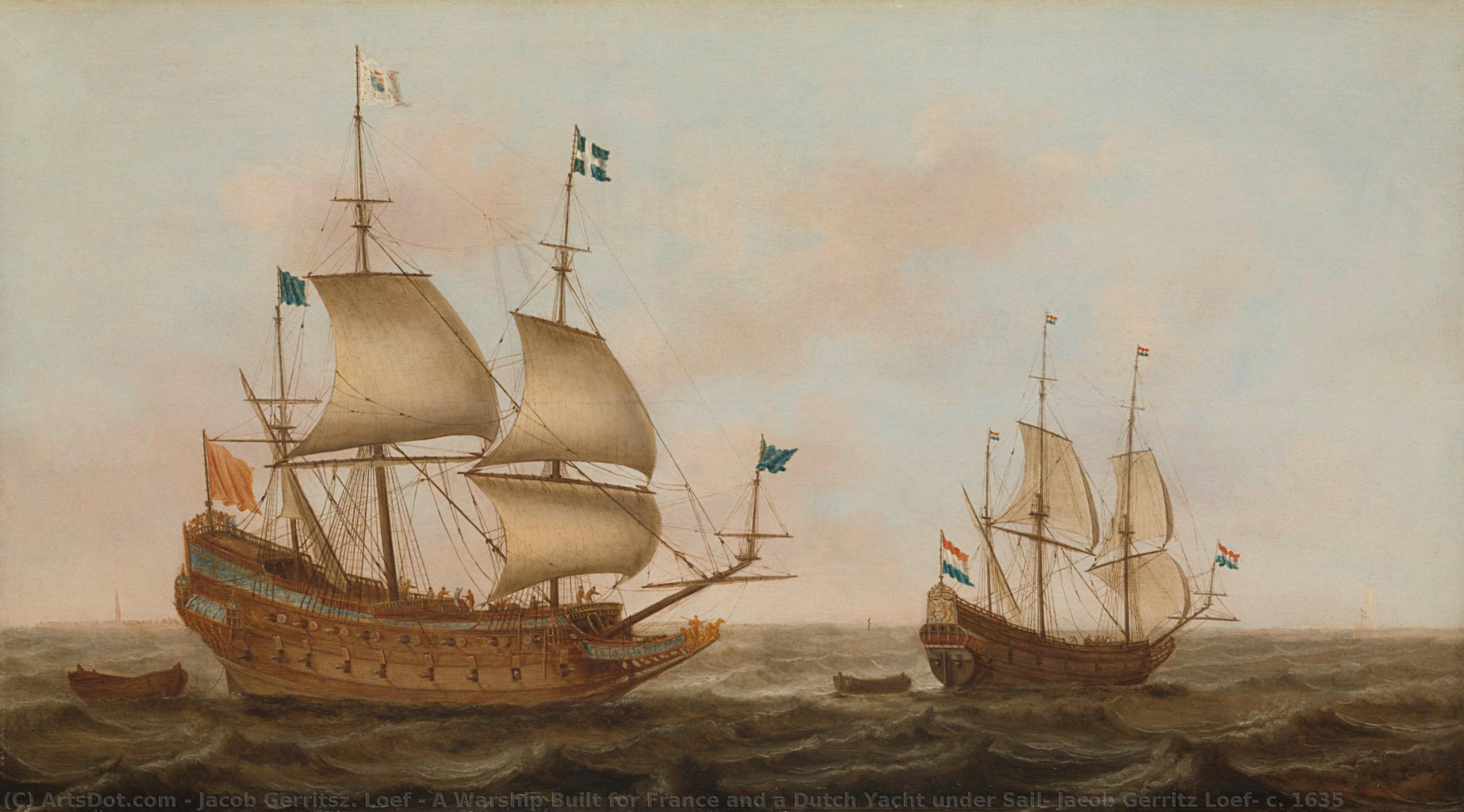
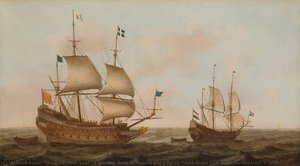
A Warship Built for France and a Dutch Yacht under Sail, Jacob Gerritz Loef, c. 1635
 1635
1635 55.0 x 98.0 cm
 Read More
Hand Made Oil Reproduction
Hand-painted oil on canvas in your size and frame, made to order by our artists. ( Buy Print Buy Image)




































Pick from our preset sizes that match the artwork's original proportions.

You may enter your own dimensions to fit a specific frame or space. If your selected size does not match the original image's proportions, we will either crop the artwork or extend the painting with additional hand-painted elements. A digital mockup will be sent for your approval before production begins.
Please note that the on-screen preview does not reflect the actual cropping or extension. Only the mockup will accurately show the final composition.
While custom sizes are available, we recommend selecting a dimension from the predefined list to preserve the original proportions.
After order, ArtsDot.com team will email client for instructions and provide a mockup preview
Worldwide Delivery () in 3/4 weeks instead of standard 5 weeks. (30 August). No compromise on quality.

Free Worldwide Express Shipping

High-Quality Linen Canvas

Full Shipping Insurance

Customs Tax Refund Guarantee

True Color Matching Guarantee

60-Day Return Policy (Defects Only)

100% Money-Back Guarantee

Bulk Discount Offer
 Glass option is only available in size under 110 CM

A Warship Built for France and a Dutch Yacht under Sail, Jacob Gerritz Loef, c. 1635
Reproduction Medium
Reproduction Size
-


Total Price
$ 263
Related Artworks









Artist Biography
Johannes Stradanus: A Florentine Master of the Sixteenth Century
Born in Bruges around 1523 and passing away in Florence in 1605, Johannes Stradanus – also known as Jan van der Straet or Giovanni Stradano – stands as a pivotal figure bridging the artistic currents of the Northern Renaissance with the burgeoning dynamism of Italian Mannerism. His life was one of constant movement, a testament to his ambition and a reflection of the interconnectedness of European art during this transformative period. Initially trained in the workshop of his father, a painter in Bruges, Stradanus’s journey led him through Antwerp, Lyon, Venice, and finally, to Florence – a city that would indelibly shape his artistic vision.
Stradanus wasn't merely a painter; he was a polymathic artist deeply involved in tapestry design, fresco painting, printmaking, and even pottery decoration. This breadth of experience speaks volumes about his versatility and his engagement with the diverse demands of Renaissance courts. His early training instilled him with a solid understanding of Flemish artistic traditions – particularly the meticulous detail and realistic depiction characteristic of the region – but it was in Italy that he truly blossomed, absorbing the innovations of artists like Caravaggio and Titian while simultaneously retaining a distinctly Northern sensibility.
The Medici Court and Florentine Innovation
Stradanus’s arrival in Florence coincided with a period of intense artistic activity fueled by the patronage of the Medici family. He quickly established himself as a valued designer for their lavish projects, contributing to the opulent interiors of the Palazzo Pitti and other prominent buildings. His work for the Medici encompassed a remarkable range of subjects – from historical narratives and mythological scenes to portraits, architectural studies, and even depictions of everyday life. Notably, he designed numerous tapestries that adorned the walls of the Palazzo Vecchio, showcasing his ability to translate complex compositions into visually arresting textile designs.
Crucially, Stradanus’s time in Florence marked a significant shift in his artistic style. He moved away from the rigid formality of earlier Mannerism and embraced a more dynamic and expressive approach. His paintings became characterized by loose brushwork, dramatic lighting effects, and a heightened sense of movement – qualities that foreshadowed developments in Baroque art. His frescoes, particularly those commissioned for the Palazzo Farnese, demonstrate this evolution brilliantly, blending classical motifs with a distinctly personal style.
A Pioneer in Printmaking
Beyond his easel paintings, Stradanus’s contribution to the world of printmaking is equally significant. He was one of the earliest and most influential practitioners of combining engraving and etching on a single plate – a technique that revolutionized print production. This innovation allowed for greater detail, tonal variation, and expressive potential than previously possible with either method alone. Stradanus's prints were widely circulated throughout Europe, influencing generations of artists and contributing to the dissemination of Renaissance ideas across national boundaries.
His engravings often depicted scenes from classical mythology and history, but he also produced a remarkable series of portraits – including those of Cardinal Agucchi – that showcased his mastery of capturing likeness and conveying psychological depth. The meticulous detail and expressive quality of these prints cemented Stradanus’s reputation as a leading printmaker of the era.
Legacy and Influence
Johannes Stradanus died in Florence in 1605, leaving behind a remarkably diverse body of work that reflects his extraordinary artistic versatility. He was a key figure in the development of Mannerism and a crucial link between Northern and Italian art traditions. His innovative printmaking techniques had a lasting impact on the history of graphic arts, while his paintings continue to be admired for their dynamism, expressiveness, and masterful handling of color and light. Stradanus’s legacy endures as a testament to the power of artistic exchange and the enduring influence of a truly exceptional artist.
jacob gerritszoon loef
1605 - 1683 , Netherlands
Quick Facts
- Artistic Movement Or Style: Renaissance, Baroque
- Artists Or Movements Influenced By This Artist: ['Romanists']
- Artists Who Influenced This Artist: ['Pieter Aertsen']
- Date Of Birth: 1523
- Date Of Death: 1605
- Full Name: Johannes Stradanus
- Nationality: Flemish
- Notable Artworks:
- Landscape with fishermen
- Portrait of Cardinal Agucchi
- A Virgin with a Unicorn
- Place Of Birth: Bruges, Flanders