Menu
FREE ART CONSULTATION
PreviewPreview AR previewAR preview Buy Print Buy PrintBuy Hand Made Painting Buy Hand Made Painting SendSend
DetailsDetails Add to favorites Add to favorites DownloadDownload SimilarsSimilars X-RayX-Ray DiaporamaDiaporama

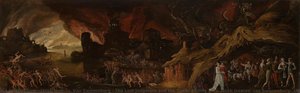
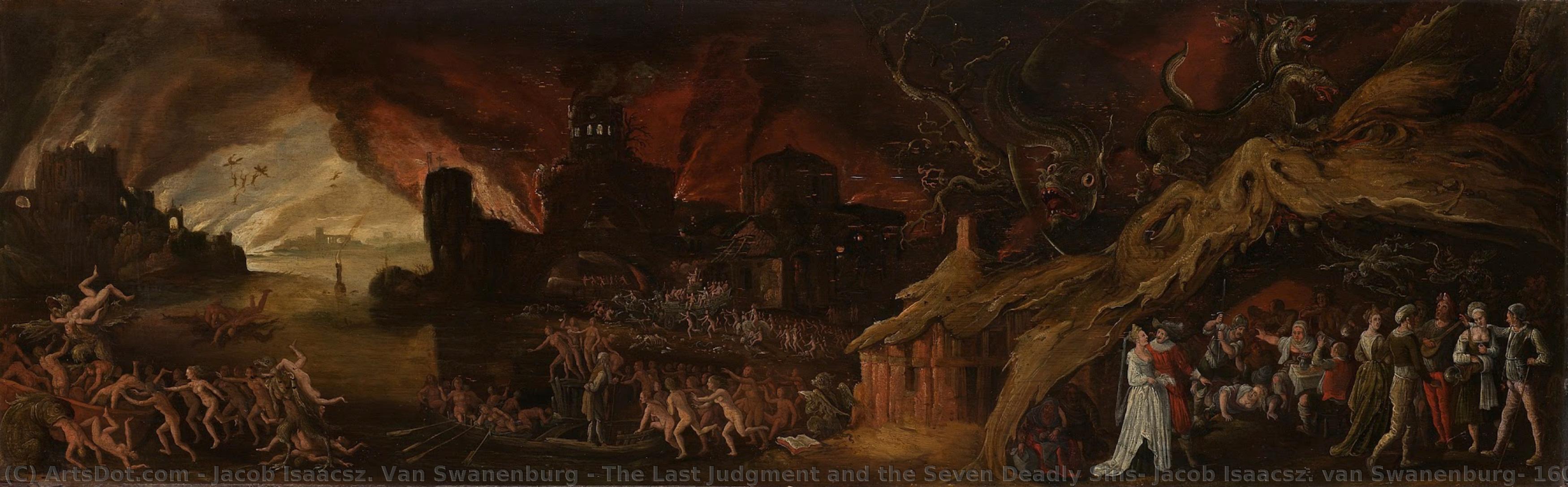
The Last Judgment and the Seven Deadly Sins, Jacob Isaacsz. van Swanenburg, 1600 - 1638

  • Creation date1638
  • Dimensions28.0 x 88.0 cm

Jacob Isaacsz. Van Swanenburg was a Dutch Golden Age painter known for his detailed still lifes and festive banquet scenes, capturing the opulence of 17th-century Holland; discover his exquisite depictions of food, glassware, and lively gatherings at ArtsDot.

Purchase a high-resolution, enhanced digital image, far superior to the online preview.

Each file is meticulously prepared by our in-house specialists using advanced tools and expert manual retouching. We ensure every image has exceptional clarity, precise color accuracy, and fine detail.

The final file is delivered via email within 72 hours, optimized for immediate use in professional, editorial, and print environments. This is the same quality trusted by top-tier design studios, publishers, and galleries.

Digital Image

Download a high-resolution file for personal display, printing, and creative projects. (Buy Print Buy PrintBuy Hand Made Painting Buy Hand Made Painting)

Total Price

$ 24.00

Included in Every Digital Image Order

Expert Digital Delivery, Guaranteed

When you choose ArtsDot.com, you're not just getting an image - you're receiving a professionally enhanced digital artwork, crafted with precision and backed by a satisfaction guarantee. Here's everything that comes with your order, automatically:

shipping_icon
Fast Email Delivery

Your high-resolution digital image file will be emailed to you within 72 hours of ordering - ready for immediate use.

canvas_icon
AI-Enhanced Digital File

Your artwork is professionally optimized using advanced AI tools and manual editing, ensuring maximum detail, clarity, and color accuracy.

insurance_icon
Free Lifetime Re-Delivery

Accidentally deleted or lost your file? No worries - we'll resend it to you anytime, free of charge.

tax_icon
No Import Fees - Ever

Enjoy your artwork instantly with zero customs, duties, or delivery fees - digital downloads are always tax-free.

color_icon
Color Accuracy Guarantee

We ensure your digital image reflects the original colors as closely as possible using professional tools and color management.

return_icon
60-Day Satisfaction Guarantee

If you're not satisfied with your digital image, we'll revise it or refund 100% within 60 days - no questions asked.

guarantee_icon
100% Money-Back Guarantee

Not satisfied? Get a full refund within 60 days of receiving your digital file - no questions asked.

discount_icon
Bulk Order Discounts

Buy 3 images, save 10% - Buy 5, save 15% - Buy 10+, save 20%. Great for creative projects, galleries, and agencies.
Collectible Description

The final judgment and the seven chief sins. The hell in which the naked damned swarm in groups over the land and water, on the right a big hell mouth in which the main sins are depicted by figures. Devils and monsters fly everywhere, some big buildings and flames on the left,

Artist Biography

A Life Shrouded in Light: The Enigmatic World of Jacob Isaacsz. Van Swanenburg

The name Jacob Isaacsz. Van Swanenburg resonates with a quiet power within the annals of 17th-century Dutch painting, yet details surrounding his life remain tantalizingly scarce. Born into an era brimming with artistic innovation – the Golden Age of Holland – Van Swanenburg emerged as a master of *tronie*, those captivating character studies that weren’t portraits in the strict sense but rather explorations of type, expression, and often, symbolic meaning. While precise dates for his birth are currently unknown, scholars place him firmly within the active artistic community of Leiden between approximately 1612 and 1680. He is not a name emblazoned across textbooks like Rembrandt or Vermeer; instead, Van Swanenburg’s legacy rests on the compelling intimacy of his works, their ability to draw viewers into the psychological depths of his subjects.

The Leiden Circle and the Allure of the Tronie

Van Swanenburg's artistic formation unfolded within the vibrant milieu of Leiden, a city that fostered a particularly strong tradition of *tronie* painting. He was likely influenced by the teachings or at least the stylistic currents emanating from artists like Jan van Bijlert and Willem Pietersz Buytewech, both prominent figures in Leiden’s artistic landscape. These masters specialized in depicting lively scenes populated with expressive faces and intriguing costumes, a direction Van Swanenburg would wholeheartedly embrace. The *tronie* itself was a relatively new genre at the time, allowing artists to experiment with light, shadow, and characterization without the constraints of commissioned portraiture. It offered a space for psychological observation and subtle storytelling. Van Swanenburg excelled in this form, crafting images that are less about *who* his subjects were and more about *what* they convey – emotions like mirth, contemplation, or even a hint of melancholy.

Technique and the Pursuit of Realism

What distinguishes Van Swanenburg’s work is his remarkable technical skill. He possessed an exceptional ability to render textures—the sheen of silk, the roughness of wool, the delicate flush of skin—with astonishing realism. His brushwork, though often finely detailed, never feels overly labored; instead, it contributes to a sense of immediacy and life. He was particularly adept at capturing light, employing chiaroscuro techniques – the dramatic contrast between light and dark – to sculpt his figures and heighten their emotional impact. This mastery of light is not merely decorative; it serves to illuminate character, revealing inner states through subtle gradations of tone. His palette, while generally restrained, features rich earth tones punctuated by vibrant accents in reds, blues, and golds, adding depth and visual interest to his compositions. He often focused on the head and shoulders of his subjects, allowing him to concentrate intensely on facial expression and the nuances of human emotion.

Themes and Symbolism: Beyond the Surface

While Van Swanenburg’s *tronies* may appear as straightforward depictions of individuals, a closer examination reveals layers of symbolic meaning. He frequently depicted figures in exotic costumes or with props that allude to specific trades or social roles. These elements weren't necessarily intended as literal representations but rather as vehicles for exploring broader themes—the transience of life (*vanitas* motifs occasionally appear), the complexities of human nature, and the allure of the theatrical. His works often invite viewers to ponder the stories behind the faces, prompting speculation about their origins, motivations, and inner lives. The inclusion of musical instruments or books suggests intellectual pursuits or artistic inclinations, while certain gestures or expressions might hint at hidden emotions or social commentary.

Historical Significance and Lasting Appeal

Although Van Swanenburg did not achieve the widespread fame of his contemporaries, his contribution to Dutch Golden Age painting is significant. He represents a vital strand within the *tronie* tradition, demonstrating a profound understanding of human psychology and an exceptional technical command. His works offer a fascinating glimpse into the social and cultural values of 17th-century Holland, revealing a society captivated by observation, introspection, and artistic innovation. Today, Van Swanenburg’s paintings are prized for their captivating beauty, their psychological depth, and their ability to transport viewers back in time—to a world where light played upon faces, and every expression held a story waiting to be discovered.