

 Preview
 Send
Send Share
Share
 Details

 Download
 Similars
 X-Ray
X-Ray Diaporama
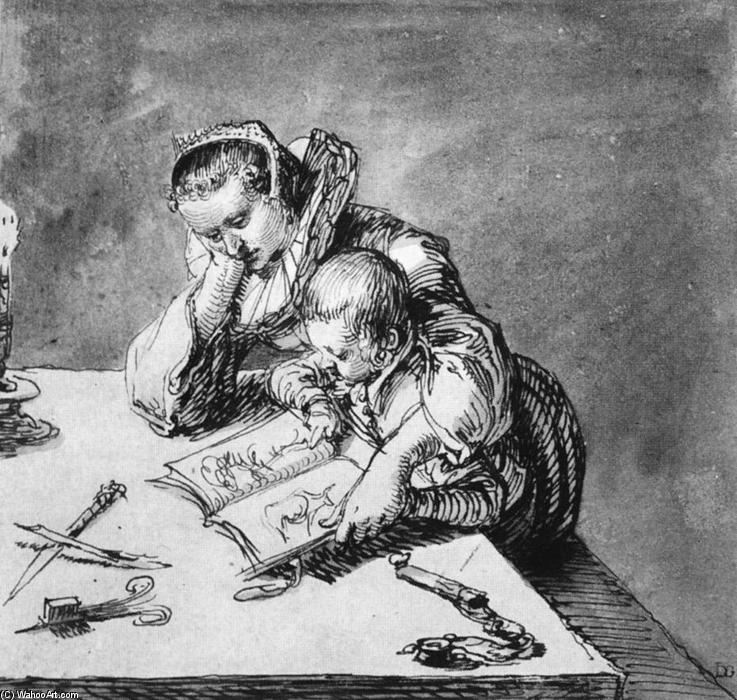
Woman and Child looking at a Picture Book


 Read More
Purchase a high-resolution, enhanced digital image, far superior to the online preview.
Each file is meticulously prepared by our in-house specialists using advanced tools and expert manual retouching. We ensure every image has exceptional clarity, precise color accuracy, and fine detail.
The final file is delivered via email within 72 hours, optimized for immediate use in professional, editorial, and print environments. This is the same quality trusted by top-tier design studios, publishers, and galleries.
Digital Image
Download a high-resolution file for personal display, printing, and creative projects. ( Buy Print Buy Hand Made Painting)
Included in Every Digital Image Order
Expert Digital Delivery, Guaranteed
When you choose ArtsDot.com, you're not just getting an image - you're receiving a professionally enhanced digital artwork, crafted with precision and backed by a satisfaction guarantee. Here's everything that comes with your order, automatically:

Fast Email Delivery
Your high-resolution digital image file will be emailed to you within 72 hours of ordering - ready for immediate use.

AI-Enhanced Digital File
Your artwork is professionally optimized using advanced AI tools and manual editing, ensuring maximum detail, clarity, and color accuracy.

Free Lifetime Re-Delivery
Accidentally deleted or lost your file? No worries - we'll resend it to you anytime, free of charge.

No Import Fees - Ever
Enjoy your artwork instantly with zero customs, duties, or delivery fees - digital downloads are always tax-free.

Color Accuracy Guarantee
We ensure your digital image reflects the original colors as closely as possible using professional tools and color management.

60-Day Satisfaction Guarantee
If you're not satisfied with your digital image, we'll revise it or refund 100% within 60 days - no questions asked.

100% Money-Back Guarantee
Not satisfied? Get a full refund within 60 days of receiving your digital file - no questions asked.

Bulk Order Discounts
Buy 3 images, save 10% - Buy 5, save 15% - Buy 10+, save 20%. Great for creative projects, galleries, and agencies.
A Moment of Quiet Learning: Exploring Jacob de Gheyn II’s “Woman and Child Looking at a Picture Book”
Jacob de Gheyn II (c. 1565 – 1629) stands as a pivotal figure in the artistic landscape of Antwerp during the transition between Mannerism and Baroque, embodying a synthesis of stylistic approaches that cemented his reputation as one of Flanders’ most accomplished engravers and painters. Born into a distinguished artistic lineage—his father, Jacob de Gheyn I, was himself a celebrated printmaker—young Jacques inherited not only technical skill but also an unwavering dedication to anatomical accuracy and classical ideals, shaping the trajectory of his oeuvre and securing his place within the broader canon of Northern Renaissance art. This masterful depiction captures precisely this delicate balance between tradition and innovation, offering viewers a glimpse into a serene domestic scene imbued with intellectual curiosity.Early Life & Artistic Training: The Foundations of Precision
Jacob de Gheyn II’s formative years were steeped in artistic excellence. Trained initially by his father, Jacob de Gheyn I—a titan of glass painting, engraving, and draughtsmanship—he absorbed the meticulous attention to detail characteristic of the Flemish workshop tradition. This rigorous training instilled a profound understanding of anatomy and perspective, principles that would permeate his entire artistic practice. Notably influenced by Hans Holbein the Younger’s masterful realism and Pieter Bruegel the Elder's evocative landscapes, de Gheyn II honed his skills in pen and wash on paper, mastering techniques that prioritized clarity and accuracy—a hallmark of Mannerist aesthetics.Notable Engravings: Anatomical Studies & Classical Scenes
De Gheyn II’s fame rests primarily upon his engravings, where he achieved unparalleled levels of anatomical precision. His meticulous studies of the human form, executed with astonishing detail, demonstrate a commitment to classical ideals that mirrored those championed by Renaissance humanist thinkers. These engravings weren't merely exercises in technical prowess; they served as foundational elements for subsequent Baroque artists seeking to elevate realism and convey emotion through carefully rendered figures. Furthermore, he produced stunning depictions of mythological subjects—classical scenes bathed in diffused light—reflecting the broader artistic currents shaping Europe during his lifetime.Painting Style & Influences: Mannerist Roots & Baroque Sensibility
While primarily recognized as an engraver, Jacob de Gheyn II’s paintings reveal a subtle yet significant engagement with Baroque sensibilities. Unlike many of his contemporaries who embraced dramatic chiaroscuro and exuberant ornamentation, de Gheyn II favored a more restrained palette and compositional style—a characteristic trait of Mannerism that persisted throughout his career. However, traces of Baroque influence can be discerned in the soft gradations of tone and the subtle modeling of form, suggesting an awareness of emerging artistic trends. This duality underscores de Gheyn II’s position as a bridge between two distinct stylistic epochs.Major Achievements & Legacy: Recognition & Continued Reproduction
Jacob de Gheyn II enjoyed considerable acclaim during his lifetime, securing commissions from prominent patrons and establishing himself as one of Antwerp's leading artists. His engravings were disseminated throughout Europe, contributing to the spread of humanist ideals and furthering the advancement of anatomical knowledge. Today, reproductions of “Woman and Child Looking at a Picture Book” continue to captivate audiences worldwide, serving as enduring reminders of de Gheyn II’s artistic genius and his contribution to Northern Renaissance art history. The artwork's serene composition and masterful execution exemplify the best qualities of Mannerist precision blended with Baroque subtlety—a legacy that resonates powerfully across centuries.Historical Significance: Representing a Transitional Era
“Woman and Child Looking at a Picture Book” embodies the artistic tensions inherent in the period between Mannerism and Baroque. It reflects the humanist preoccupation with observation and understanding, mirroring the intellectual fervor of the Renaissance while retaining the stylistic refinements of earlier traditions. The image speaks to themes of education, familial affection, and contemplation—universal concerns that transcend temporal boundaries. Its enduring appeal testifies to de Gheyn II’s ability to capture a moment of quiet beauty and profound psychological insight—a testament to his artistic vision and its lasting impact on art history.Related Artworks

![Vida De Miguel De Cervantes Saavedra (life Of Miguel De Cervantes Saavedra). Book V Of The Edition Of Don Quixote (biblioteca Nacional De España)\n\n[7] — Martín Fernández De Navarrete Y Ximénez De Tejada, Academic Art](/media/artworks/images-thumb/8c/b6/8cb67a4dd450447373a546c8dd039e57.jpg)
![La Verdadera Patria De Miguel De Cervantes (miguel De Cervantes’s True Homeland) (biblioteca Nacional De España)\n\n[4][fol.1] — Pedro José García Balboa, Baroque Rococo Revival](/media/artworks/images-thumb/a6/d8/a6d842058b3ffb23732e0ff43fd89aac.jpg)
Artist Biography
The Master of Precision: The Life and Legacy of Jacob de Gheyn II
In the vibrant, turbulent heart of Antwerp during the transition from the sixteenth to the seventeenth century, Jacob de Gheyn II emerged as a virtuoso of line and light. Born into an illustrious artistic dynasty around 1565, he was the son of the renowned printmaker Jacob de Gheyn I, a heritage that provided him with both the tools of the trade and a profound respect for the meticulous craft of engraving. His life unfolded during a transformative era in Northern Europe, a period where the stylized elegance of Mannerism began to yield to the dramatic, muscular energy of the Baroque. Within this shifting landscape, de Gheyn II carved out a unique identity, one defined by an almost scientific devotion to the natural world and an unparalleled mastery over the copperplate.
The foundation of his extraordinary skill was laid through rigorous training and high-profile associations. Most notably, his time under the influence of Peter Paul Rubens provided him with a window into the burgeoning Baroque sensibility. From the great Flemish master, de Gheyn II absorbed an understanding of dynamic composition and the expressive potential of form. Yet, where Rubens sought grandeur and movement, de Gheyn II found his passion in the minute and the anatomical. He was not merely a decorator of surfaces but a seeker of truth beneath the skin. His dedication to anatomical accuracy was legendary; he famously engaged in the study of human cadavers, a practice that allowed him to render musculature, bone structure, and the subtle tension of flesh with a precision that would later inspire even the likes of Rembrandt.
A Synthesis of Science and Artistry
The work of Jacob de Gheyn II is characterized by a breathtaking marriage of humanist scholarship and technical virtuosity. His engravings are far more than mere illustrations; they are profound explorations of the human condition and the classical ideal. Through his burin, he was able to translate the complexities of life into a language of stark contrasts and delicate textures. His notable engravings often focused on anatomical studies and classical scenes, where every vein, tendon, and fold of drapery was rendered with obsessive care. This commitment to realism served a higher purpose in his eyes—to illuminate the natural world through the lens of scientific observation, thereby elevating the human spirit through the appreciation of divine complexity.
Beyond his anatomical prowess, de Gheyn II’s oeuvre reflects the broader cultural currents of his time. His ability to blend the intricate, often elongated aesthetics of Mannerism with a burgeoning sense of Baroque realism allowed him to capture the zeitgeist of Antwerp. Whether depicting the stoic grace of a classical figure or the raw reality of a biological study, his work possesses an enduring clarity. This clarity was achieved through a sophisticated use of line, where varying depths of incision created a sense of volume and atmosphere that breathed life into the two-dimensional plane.
Historical Significance and Enduring Influence
The historical significance of Jacob de Gheyn II lies in his role as a bridge between eras. He stood at the crossroads of the Northern Renaissance and the Baroque, acting as a conduit through which the precision of the former informed the drama of the latter. His achievements were not limited to the singular creation of prints; rather, he contributed to a standard of excellence in printmaking that would influence generations of European artists. His work became a vital part of the visual vocabulary of the seventeenth century, providing a foundation of anatomical and classical knowledge that was disseminated across the continent through the medium of print.
Today, the legacy of de Gheyn II continues to resonate within the halls of art history. He remains a symbol of the artist as an observer—a creator who looks deeply into the mechanics of life to find beauty in its most fundamental forms. His ability to marry the intellectual rigor of anatomy with the aesthetic grace of fine art ensures that his name remains etched in the annals of Flemish greatness. To study his work is to witness the moment when the meticulous detail of the old world met the expressive power of the new, creating a timeless dialogue between the eye and the soul.
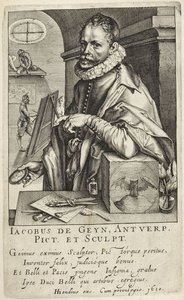
jacob (jacques)de gheyn ii
1565 - 1629 , Belgium
Quick Facts
- Artistic Movement Or Style: Northern Mannerism
- Artists Or Movements Influenced By This Artist: ['Baroque']
- Artists Who Influenced This Artist:
- Pieter Bruegel the Elder
- Hans Holbein the Younger
- Date Of Birth: c. 1565
- Date Of Death: 1629
- Full Name: Jacob de Gheyn II
- Nationality: Dutch
- Notable Artworks:
- Allegory of Transience
- Vanitas Still-Life
- Place Of Birth: Antwerp, Belgium

