 Preview
 Send
Send Share
Share
 Details

 Download
 Similars
 X-Ray
X-Ray Diaporama
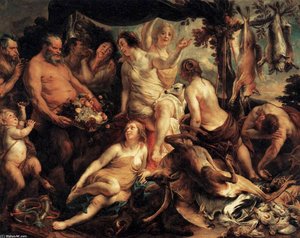
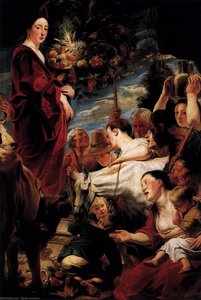
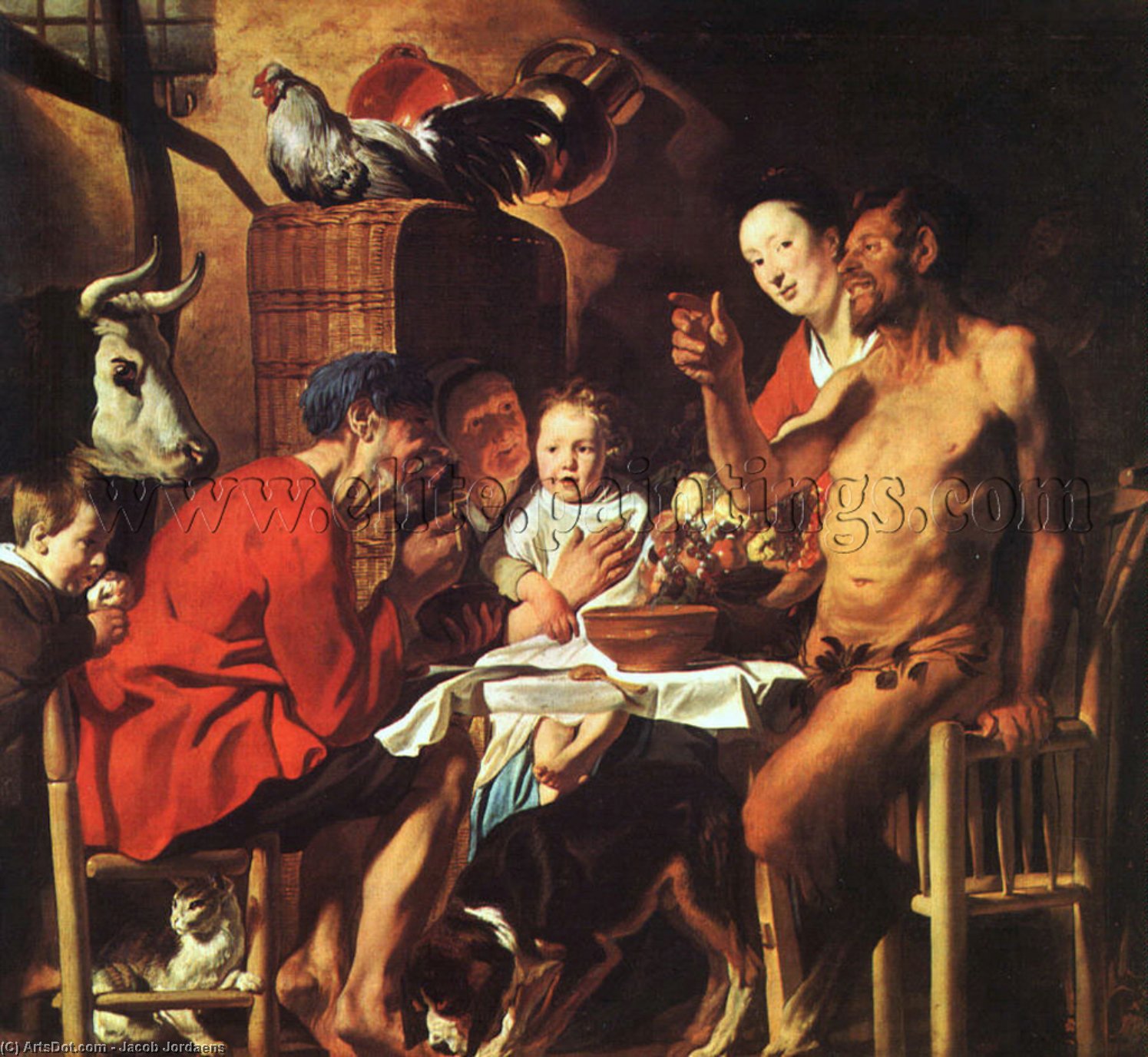
Satyr at the Peasant's House
 Oil On Canvas
- WallArt
- Baroque
 1620
1620 194.0 x 203.0 cm
 Alte Pinakothek
 Read More
Hand Made Oil Reproduction
Hand-painted oil on canvas in your size and frame, made to order by our artists. ( Buy Print Buy Image)




P118B $10

P118H $10

P118W $10

P438Z $10

P508JH $12

P508YH $12

P805H $10

P805Z $10

P919BZ $10

P919G $10

P919XJ $10

P959ZH $10

P968JZ $12

W106C $8

W218G $10

W218JH $8

W218Y $10

W307PJ $10

W316G $10

W316PJ $8

W316Y $10

W398PJ $8

W4111J $10

W500HY $15

W500JH $15

W692G $12

W849H $8

W940BG $15

W953PJ $8




Pick from our preset sizes that match the artwork's original proportions.

You may enter your own dimensions to fit a specific frame or space. If your selected size does not match the original image's proportions, we will either crop the artwork or extend the painting with additional hand-painted elements. A digital mockup will be sent for your approval before production begins.
Please note that the on-screen preview does not reflect the actual cropping or extension. Only the mockup will accurately show the final composition.
While custom sizes are available, we recommend selecting a dimension from the predefined list to preserve the original proportions.
After order, ArtsDot.com team will email client for instructions and provide a mockup preview
Worldwide Delivery () in 3/4 weeks instead of standard 5 weeks. (17 August). No compromise on quality.

Free Worldwide Express Shipping

High-Quality Linen Canvas

Full Shipping Insurance

Customs Tax Refund Guarantee

True Color Matching Guarantee

60-Day Return Policy (Defects Only)

100% Money-Back Guarantee

Bulk Discount Offer
 Glass option is only available in size under 110 CM

Satyr at the Peasant's House
Reproduction Medium
Reproduction Size
-


Total Price
$ 363
Artwork Description
A Symphony of Suffering and Celebration: Exploring Jacob Jordaens’ “The Satyr and the Peasant”
Jacob Jordaens' "The Satyr and the Peasant," completed in 1620, stands as a cornerstone of Flemish Baroque art—a painting that simultaneously confronts viewers with the grim realities of poverty and elevates them to a moment of joyous communion. More than just a depiction of a rural family meal, it’s a meticulously crafted tableau brimming with symbolic resonance and executed with unparalleled technical mastery. This essay delves into the multifaceted layers of meaning embedded within Jordaens' masterpiece, illuminating its significance for understanding the artistic spirit of its time and its enduring appeal to contemporary audiences.The Scene: A Stark Contrast Between Oppressors and Oppressed
At first glance, “The Satyr and the Peasant” presents a jarring juxtaposition. Dominating the canvas is a colossal satyr—a demonic figure embodying primal instincts and indulgence—seated at a table alongside a family of peasants. The satyr’s posture exudes arrogance; he leans back with disdainful confidence, gesturing expansively as if dismissing the humble figures before him. This deliberate positioning underscores the central theme: the destructive influence of unchecked desire against the quiet dignity of honest labor. The artist skillfully employs chiaroscuro—the dramatic interplay of light and shadow—to heighten this visual tension. Harsh sunlight illuminates the satyr’s face and upper torso, emphasizing his muscular physique and conveying a sense of dominance, while deep shadows engulf the peasant family, highlighting their vulnerability and despair.Baroque Realism: Technique and Texture as Vehicles for Emotion
Jordaens' technique exemplifies the Baroque aesthetic—characterized by dynamism, theatricality, and an unwavering commitment to realism. He achieves this remarkable level of detail through layering paint in multiple glazes, creating a surface texture that is palpably rough and uneven. Brushstrokes are visible throughout the composition, conveying a sense of immediacy and capturing the physicality of the scene. The artist’s meticulous attention to anatomical accuracy—particularly evident in the musculature of the satyr—demonstrates his profound understanding of human form. Furthermore, Jordaens skillfully renders fabrics with intricate folds and textures, adding depth and richness to the visual experience. These techniques aren't merely decorative; they serve as conduits for conveying emotion – mirroring the turbulent psychological state of the subjects depicted.Symbolism: Beyond Mere Representation
“The Satyr and the Peasant” is laden with symbolic significance that extends far beyond its immediate depiction. The satyr represents excess, indulgence, and the corrupting influence of pagan instincts—a deliberate critique of aristocratic decadence prevalent during Jordaens’ era. Conversely, the peasant family embodies piety, humility, and the virtues associated with rural life. Their faces are turned upwards in prayer, suggesting a yearning for divine grace amidst hardship. The calf at the table symbolizes innocence and vulnerability – a poignant reminder of the fragility of human existence. These elements converge to form a complex narrative about morality, faith, and the enduring struggle between opposing forces.Emotional Impact: A Momentary Truce Amidst Darkness
Despite the pervasive gloom surrounding the peasant family, “The Satyr and the Peasant” culminates in an unexpectedly uplifting gesture—the father offering the calf to his son. This act represents reconciliation, compassion, and a reaffirmation of familial bonds. The artist’s masterful use of color contributes to this emotional resonance; the muted yellows and browns of the peasant dwelling contrast sharply with the fiery reds of the satyr's attire, creating a visual dichotomy that underscores the painting’s central message. Ultimately, Jordaens invites viewers to contemplate the possibility of finding beauty and solace even in the face of adversity—a timeless theme that continues to captivate audiences centuries later.Conclusion: An Enduring Legacy
“The Satyr and the Peasant” remains a testament to Jacob Jordaens’ artistic genius—a painting that transcends its historical context to speak directly to our own sensibilities. Its masterful technique, profound symbolism, and emotionally charged composition solidify its place as one of the most iconic works of Flemish Baroque art. Reproductions of this extraordinary piece offer an unparalleled opportunity to experience firsthand the power of visual storytelling and to appreciate the enduring legacy of a painter who captured the complexities of human existence with breathtaking precision and sensitivity.Related Artworks
Artist Biography
A Flemish Master of Life’s Abundance: Jacob Jordaens
Born into a prosperous Antwerp family in 1593, Jacob Jordaens emerged as one of the most significant and vibrant voices within the Flemish Baroque. Unlike many of his contemporaries who sought training in Italy, Jordaens remained rooted in his native Flanders, developing a uniquely robust and earthy style that celebrated the pleasures and realities of everyday life. His father, a successful linen merchant, provided him with a comfortable upbringing, allowing for an education befitting his social standing before he began his artistic journey under Adam van Noort – also the master of Peter Paul Rubens. This formative training instilled in Jordaens a foundation in meticulous technique and a keen understanding of composition, yet he quickly diverged to forge his own distinct path. In 1616, solidifying his connection to the established Antwerp art world, he married Van Noort’s daughter, Katharina.The Painter of Peasant Revelry and Baroque Grandeur
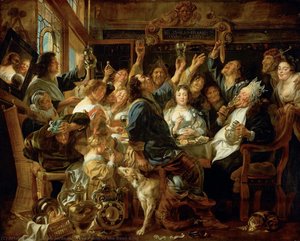
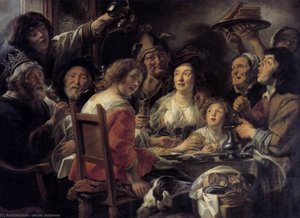
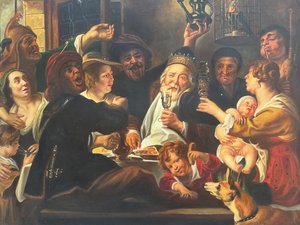
Jordaens' artistic output was remarkably diverse, encompassing religious narratives, mythological scenes, allegorical compositions, genre paintings brimming with life, and even portraits. However, he is perhaps best remembered for his boisterous depictions of peasant festivals and tavern scenes – works that radiate a palpable energy and an uninhibited joy in earthly pleasures. Paintings like *The King Drinks* (also known as the Feast of the Bean King) exemplify this characteristic style: crowded compositions filled with robust figures engaged in lively revelry, rendered in warm, glowing colors and dramatic chiaroscuro. These scenes weren’t merely celebrations of merriment; they were often imbued with subtle moralizing undertones, reflecting the complex relationship between indulgence and restraint prevalent in 17th-century society. Yet, Jordaens was equally adept at handling grander, more formal commissions. His involvement in decorating the Huis ten Bosch palace near The Hague – alongside collaborations with Rubens – showcased his ability to create monumental allegorical works that seamlessly integrated painting and architecture.Influences and a Distinct Artistic Voice
While Jordaens never traveled to Italy, he was deeply influenced by Italian masters like Jacopo Bassano, Paolo Veronese, and Caravaggio—artists whose work reached Flanders through engravings and paintings brought back by other artists. The influence of Caravaggio is particularly evident in his dramatic use of light and shadow, a technique known as tenebrism, which heightens the emotional intensity of his scenes. However, Jordaens didn’t simply imitate these influences; he synthesized them with his own Flemish sensibilities, creating a style that was uniquely his own. He differed from Rubens and Van Dyck in his preference for realism over idealism, embracing a more direct and unrefined approach to depicting the human form. His figures are often substantial, even corpulent, their faces flushed with health and vitality. This commitment to naturalism, combined with his masterful command of color and composition, set him apart from his contemporaries and established him as a leading figure in Flemish Baroque painting.Legacy and Enduring Impact
Throughout his long and prolific career, Jordaens trained numerous pupils – fifteen were officially recorded by the Guild of St. Luke between 1621 and 1667— ensuring the continuation of his artistic legacy. His influence can be seen in the work of later artists like Jan Steen, who shared his penchant for depicting lively genre scenes. Beyond his direct impact on other painters, Jordaens’ classically inspired peasant themes had a lasting effect on the art world, challenging traditional hierarchies and celebrating the dignity of everyday life. Even today, his paintings continue to captivate audiences with their energy, vitality, and honest portrayal of human experience. His ability to blend realism with allegory, sensuality with morality, and grandeur with intimacy makes him one of the most compelling and enduring figures of the Baroque period. Discover more of Jordaens’ masterpieces and explore the rich artistic landscape of the Baroque era through resources available online, including detailed databases of his works and insightful analyses of his life and art.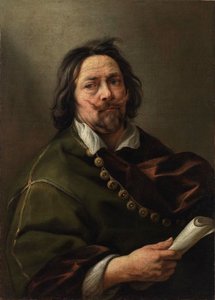
Jacob Jordaens
1593 - 1678 , Belgium
Quick Facts
- Artistic Movement Or Style: Baroque
- Artists Or Movements Influenced By This Artist: ['Jan Steen']
- Artists Who Influenced This Artist:
- Jacopo Bassano
- Paolo Veronese
- Caravaggio
- Date Of Birth: May 19, 1593
- Date Of Death: 1678
- Full Name: Jacob Jordaens
- Nationality: Flemish
- Notable Artworks:
- The Adoration of the Shepherds
- Argus and Mercury
- Place Of Birth: Antwerp, Belgium
Related Articles
Jacob Jordaens: Baroque Dynamism & Genre Innovation of the Antwerp School
Discover Jacob Jordaens, a leading Flemish Baroque painter renowned for his dynamic compositions & realistic genre scenes. Explore his life, art, and lasting influence with ArtsDot.

Baroque Drama: Bringing Opulence & Emotion into Contemporary Interiors
Explore the opulent world of Baroque interior design! Discover key elements, modern applications & how to bring dramatic elegance into your home with 's authentic reproductions.

The Dramatic Flourish: Exploring the Baroque Movement's Enduring Legacy in Art History
Explore the dramatic world of Baroque art! Discover iconic artists like Caravaggio & Rubens, defining techniques, and its lasting impact on art history. Expert insights for collectors & enthusiasts at ArtsDot.

The Visceral Stage: Exploring Dramatic Narratives & Emotional Intensity in Baroque Art
Explore the dramatic world of Baroque art! Discover iconic masters like Caravaggio & Rembrandt, their techniques, and the movement's lasting impact. Expert insights for collectors & enthusiasts at ArtsDot.

Baroque Masterpieces: 10 Paintings That Defined an Era |
Journey through the drama & grandeur of Baroque art! Explore 10 masterpieces by Caravaggio, Rembrandt, Rubens & more. Discover stunning oil paintings, rich colors & timeless stories. Find museum-quality reproductions at .