

 Preview
 Send
Send Share
Share
 Details

 Download
 Similars
 X-Ray
X-Ray Diaporama
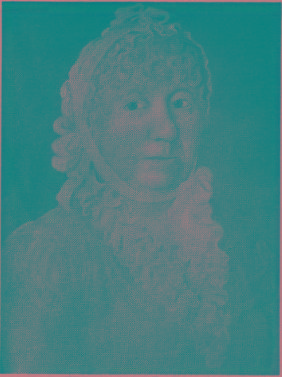
Norwegian Fru Gjertrud Arbin, f. Juel

 Read More
Purchase a high-resolution, enhanced digital image, far superior to the online preview.
Each file is meticulously prepared by our in-house specialists using advanced tools and expert manual retouching. We ensure every image has exceptional clarity, precise color accuracy, and fine detail.
The final file is delivered via email within 72 hours, optimized for immediate use in professional, editorial, and print environments. This is the same quality trusted by top-tier design studios, publishers, and galleries.
Digital Image
Download a high-resolution file for personal display, printing, and creative projects. ( Buy Print Buy Hand Made Painting)
Included in Every Digital Image Order
Expert Digital Delivery, Guaranteed
When you choose ArtsDot.com, you're not just getting an image - you're receiving a professionally enhanced digital artwork, crafted with precision and backed by a satisfaction guarantee. Here's everything that comes with your order, automatically:

Fast Email Delivery
Your high-resolution digital image file will be emailed to you within 72 hours of ordering - ready for immediate use.

AI-Enhanced Digital File
Your artwork is professionally optimized using advanced AI tools and manual editing, ensuring maximum detail, clarity, and color accuracy.

Free Lifetime Re-Delivery
Accidentally deleted or lost your file? No worries - we'll resend it to you anytime, free of charge.

No Import Fees - Ever
Enjoy your artwork instantly with zero customs, duties, or delivery fees - digital downloads are always tax-free.

Color Accuracy Guarantee
We ensure your digital image reflects the original colors as closely as possible using professional tools and color management.

60-Day Satisfaction Guarantee
If you're not satisfied with your digital image, we'll revise it or refund 100% within 60 days - no questions asked.

100% Money-Back Guarantee
Not satisfied? Get a full refund within 60 days of receiving your digital file - no questions asked.

Bulk Order Discounts
Buy 3 images, save 10% - Buy 5, save 15% - Buy 10+, save 20%. Great for creative projects, galleries, and agencies.
Related Artworks










Artist Biography
Jacob Munch: A Norwegian Officer’s Brush and the Seeds of Expression
Jacob Edvardsson Munch (1776-1839) wasn't merely a Norwegian military officer; he was, in many ways, a pivotal figure in the nascent artistic landscape of his nation. Born into a family steeped in naval tradition – his father, Edvard Munch, served as an inspector – Jacob’s path diverged from the expected, leading him to embrace the burgeoning world of painting. His early life, marked by illness and loss, subtly shaped his artistic sensibility, fostering a deep engagement with human emotion and experience—a foundation that would later resonate profoundly within the work of his more famous nephew, Edvard Munch. Initially trained in Copenhagen under the influence of Neoclassical principles, particularly those championed by Jacques-Louis David, Jacob’s style evolved beyond simple imitation, hinting at a nascent desire to capture something deeper than mere representation.Early Career and Royal Commissions
Jacob's artistic career gained significant momentum through royal commissions, most notably his role in documenting the coronation of Charles XIV John, King of Norway, in 1818. This monumental undertaking—a large-scale painting depicting the event—established him as a respected portraitist within the Norwegian court and solidified his reputation for meticulous detail and formal skill. However, it was during this period that Jacob began to experiment with a more personal approach, evident in his portraits of prominent figures like Consul A.M. Labouchère, revealing an increasing interest in capturing psychological nuance alongside physical likeness. His work reflected the prevailing artistic trends of the time—a blend of classical restraint and burgeoning Romanticism—yet he was already subtly pushing against these boundaries, laying groundwork for a more expressive future.A Shift Towards Emotional Landscape
Following his success with the coronation picture, Jacob continued to paint portraits, but also began exploring landscapes and scenes of everyday life. His style became increasingly characterized by a quiet intensity, a sensitivity to light and shadow that hinted at an underlying emotional depth. He spent time in Italy and Germany, absorbing influences from artists like Caspar David Friedrich, whose romantic landscapes emphasized the sublime power of nature and the individual’s relationship with it. This exposure proved crucial, prompting him to move beyond purely representational painting and begin to consider how color, composition, and brushwork could be used to evoke specific moods and feelings. Notably, his work during this period demonstrates a growing interest in capturing not just what was seen, but also what was felt—a key characteristic of the emerging Expressionist movement.Co-Founding the National Academy and Legacy
In 1818, Jacob Munch played a vital role in establishing Norway’s National Academy of Craft and Art Industry in Christiania (now Oslo). This institution represented a significant step forward for artistic development in the country, providing formal training and fostering a sense of national pride. He also served as a teacher at the academy, imparting his knowledge and experience to a new generation of artists. Beyond his institutional contributions, Jacob’s legacy lies primarily in his portraits—works that offer intimate glimpses into the lives and personalities of Norway's elite during a period of significant political and social change. His meticulous technique and subtle emotional insights continue to be appreciated by art historians today.Connections to Edvard Munch and the Expressionist Movement
Perhaps most significantly, Jacob Munch was a relative of Edvard Munch, one of the most influential figures in modern art. While their artistic styles differed considerably—Edvard’s work is characterized by raw emotion and psychological intensity—Jacob's early explorations of human feeling undoubtedly influenced his nephew. The seeds of expressionism were sown within the Munch family, culminating in Edvard’s groundbreaking exploration of themes such as anxiety, death, and the darker aspects of the human psyche. Jacob’s artistic journey, therefore, represents a crucial bridge between the formal traditions of the 18th and 19th centuries and the revolutionary innovations of the 20th—a testament to his enduring impact on Norwegian art history.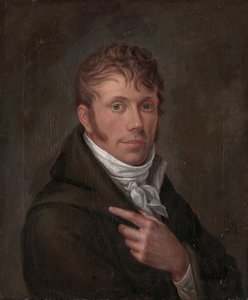
jacob munch
1776 - 1839
Quick Facts
- Artistic Movement Or Style: Neoclassical, Portraiture
- Artists Or Movements Influenced By This Artist: ['Edvard Munch']
- Artists Who Influenced This Artist: ['Jacques-Louis David']
- Date Of Birth: August 9, 1776
- Date Of Death: June 10, 1839
- Full Name: Jacob Edvard Munch
- Nationality: Norwegian
- Notable Artworks:
- Portrait of Architect Olavsen
- Coronation picture Charles XIV John
- Place Of Birth: Christiania (Oslo), Norway

