 Preview
 Send
Send Share
Share
 Details

 Download
 Similars
 X-Ray
X-Ray Diaporama
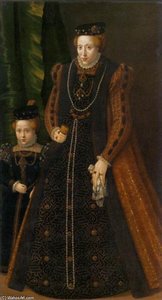
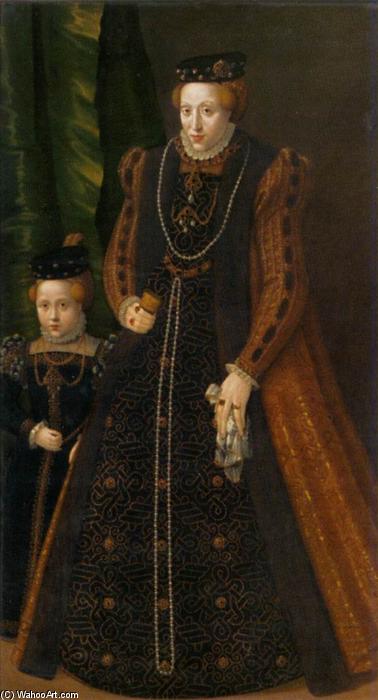
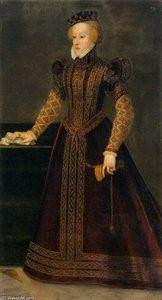
Archduchess Maria with Her Elder Daughter Maria Eleonore


 Read More
Hand Made Oil Reproduction
Hand-painted oil on canvas in your size and frame, made to order by our artists. ( Buy Print Buy Image)




































Pick from our preset sizes that match the artwork's original proportions.

You may enter your own dimensions to fit a specific frame or space. If your selected size does not match the original image's proportions, we will either crop the artwork or extend the painting with additional hand-painted elements. A digital mockup will be sent for your approval before production begins.
Please note that the on-screen preview does not reflect the actual cropping or extension. Only the mockup will accurately show the final composition.
While custom sizes are available, we recommend selecting a dimension from the predefined list to preserve the original proportions.
After order, ArtsDot.com team will email client for instructions and provide a mockup preview
Worldwide Delivery () in 3/4 weeks instead of standard 5 weeks. (22 August). No compromise on quality.

Free Worldwide Express Shipping

High-Quality Linen Canvas

Full Shipping Insurance

Customs Tax Refund Guarantee

True Color Matching Guarantee

60-Day Return Policy (Defects Only)

100% Money-Back Guarantee

Bulk Discount Offer
 Glass option is only available in size under 110 CM

Archduchess Maria with Her Elder Daughter Maria Eleonore
Reproduction Medium
Reproduction Size
-


Total Price
$ 263
Related Artworks





Artist Biography
Jacob Seisenegger: The Habsburg’s Court Painter
Born in Linz, Austria, around 1505 and passing away in 1597, Jacob Seisenegger stands as a pivotal figure in the late Northern Renaissance art scene. While not possessing the flamboyant genius of some contemporaries, his meticulous craftsmanship and dedication to portraying European nobility—particularly the Habsburg dynasty—cemented his place as one of the era’s most sought-after court painters. His legacy lies primarily in his remarkably detailed portraits, which served as visual chronicles of a powerful family and their extensive network of alliances.
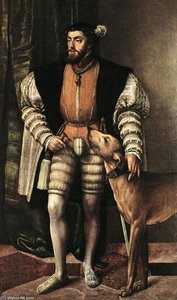
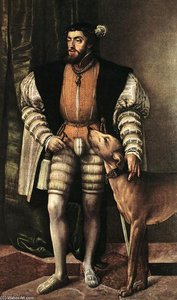
Seisenegger's early life remains somewhat shrouded in mystery, though it is believed he received training within the workshops of various artists in Austria. He quickly gained recognition for his ability to capture likenesses with striking accuracy and an impressive level of realism. His rise to prominence began when he was appointed as the court painter to Ferdinand I, Holy Roman Emperor, a position he held for many years. This appointment afforded him access to the imperial court and provided opportunities to paint numerous members of the Habsburg family, including his brother Charles V, whose portrait with a hound remains one of Seisenegger’s most celebrated works – now housed in the Kunsthistorisches Museum Vienna.
The Rise of the Full-Length Portrait
Seisenegger's artistic development is particularly noteworthy for his pioneering role in popularizing the full-length portrait. Prior to his work, portraits were frequently rendered in half-lengths or profile views. However, Seisenegger boldly embraced a more expansive format, presenting subjects within a staged setting that conveyed their status and authority. This innovation was remarkably influential; it served as a model for subsequent generations of artists, including François Clouet, who adopted this approach to create equally compelling images of European royalty.
His compositions were carefully constructed, often incorporating symbolic elements – such as the hound in Charles V’s portrait – that reinforced the subject's virtues and affiliations. Seisenegger wasn’t merely a recorder of appearances; he was an artist who understood how to imbue his paintings with meaning and convey complex narratives about power, lineage, and social standing.
A Journey Through Europe
Beyond his service at the Habsburg court, Seisenegger traveled extensively throughout Europe, working for various patrons and establishing a reputation as a versatile and skilled painter. He spent time in Italy, where he likely absorbed influences from the High Renaissance masters; he also worked in the Netherlands, absorbing elements of the burgeoning Flemish school of painting, and in Spain, reflecting the artistic trends prevalent there at the time. This peripatetic lifestyle enriched his artistic repertoire and allowed him to adapt his style to diverse regional contexts.
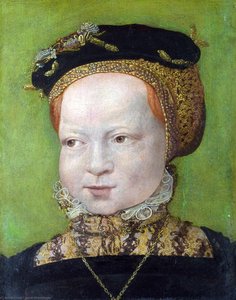
His travels resulted in a remarkably varied body of work, encompassing portraits of royalty, nobility, and prominent figures from across Europe. He painted for rulers, cardinals, and wealthy merchants, demonstrating an ability to cater to the tastes and expectations of a wide range of clients. His output included numerous depictions of children within the Habsburg family, offering intimate glimpses into the lives of the imperial court.
Legacy and Historical Significance
Despite not achieving the same level of fame as some of his contemporaries – such as Titian or Holbein – Jacob Seisenegger’s contribution to portraiture is undeniable. His meticulous attention to detail, innovative use of the full-length format, and dedication to capturing the likenesses of European nobility ensured that his work remained in demand for decades after his death.
His portraits provide invaluable insights into the social and political landscape of 16th-century Europe. They offer a visual record of the Habsburg dynasty’s power and influence, as well as a glimpse into the lives and customs of the European elite. Seisenegger's paintings are now housed in major museums across the continent, serving as enduring testaments to his skill and artistry – and to the importance of courtly portraiture in shaping our understanding of history.
jacob seisenegger
1505 - 1597
Quick Facts
- Artistic Movement Or Style: Renaissance Portraiture
- Artists Who Influenced This Artist: ['François Clouet']
- Date Of Birth: 1505
- Date Of Death: 1597
- Full Name: Jakob Seisenegger
- Nationality: Austrian
- Notable Artworks:
- Emperor Charles V with Hound
- Archduchess Maria
- Place Of Birth: Linz, Austria