

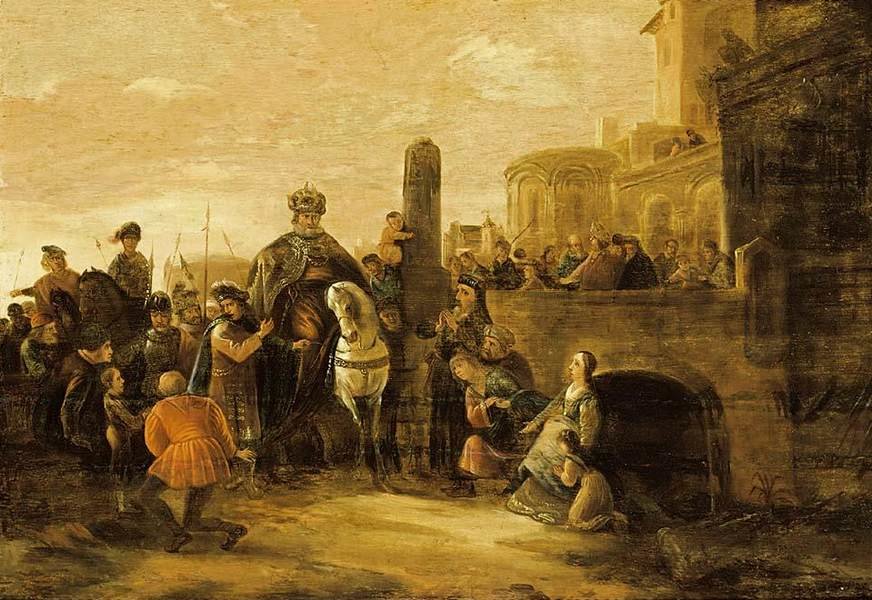
 Preview
 Send
Send Share
Share
 Details

 Download
 Similars
 X-Ray
X-Ray Diaporama
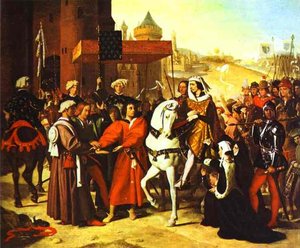
The Triumph Of Mordechai

 Read More
Purchase a high-resolution, enhanced digital image, far superior to the online preview.
Each file is meticulously prepared by our in-house specialists using advanced tools and expert manual retouching. We ensure every image has exceptional clarity, precise color accuracy, and fine detail.
The final file is delivered via email within 72 hours, optimized for immediate use in professional, editorial, and print environments. This is the same quality trusted by top-tier design studios, publishers, and galleries.
Digital Image
Download a high-resolution file for personal display, printing, and creative projects. ( Buy Print Buy Hand Made Painting)
Included in Every Digital Image Order
Expert Digital Delivery, Guaranteed
When you choose ArtsDot.com, you're not just getting an image - you're receiving a professionally enhanced digital artwork, crafted with precision and backed by a satisfaction guarantee. Here's everything that comes with your order, automatically:

Fast Email Delivery
Your high-resolution digital image file will be emailed to you within 72 hours of ordering - ready for immediate use.

AI-Enhanced Digital File
Your artwork is professionally optimized using advanced AI tools and manual editing, ensuring maximum detail, clarity, and color accuracy.

Free Lifetime Re-Delivery
Accidentally deleted or lost your file? No worries - we'll resend it to you anytime, free of charge.

No Import Fees - Ever
Enjoy your artwork instantly with zero customs, duties, or delivery fees - digital downloads are always tax-free.

Color Accuracy Guarantee
We ensure your digital image reflects the original colors as closely as possible using professional tools and color management.

60-Day Satisfaction Guarantee
If you're not satisfied with your digital image, we'll revise it or refund 100% within 60 days - no questions asked.

100% Money-Back Guarantee
Not satisfied? Get a full refund within 60 days of receiving your digital file - no questions asked.

Bulk Order Discounts
Buy 3 images, save 10% - Buy 5, save 15% - Buy 10+, save 20%. Great for creative projects, galleries, and agencies.
Related Artworks

Artist Biography
Michelangelo Merisi da Caravaggio: A Revolutionary of Light and Shadow
Michelangelo Merisi, better known as Caravaggio, remains one of the most intensely debated and profoundly influential figures in art history. Born in Milan in 1571, his life was a whirlwind of dramatic events—a rebellious youth, a period of intense artistic innovation, accusations of murder, and ultimately, an exile marked by continued turmoil. His brief but explosive career irrevocably altered the course of painting, establishing techniques that would be imitated and adapted for generations to come. Caravaggio’s legacy rests not just on his stunning works, but also on the radical departure he made from established artistic conventions, forging a new path toward realism and emotional intensity within religious art.Early Life and Artistic Beginnings
Caravaggio's early life remains shrouded in some mystery. He was born into a family of artists – his father and stepfather were both painters – and received a basic artistic education in Milan. However, it wasn’t until he moved to Rome in 1592 at the age of twenty-one that his career truly began to take shape. Rome, then the epicenter of European art, was a magnet for young artists seeking patronage and recognition. Initially struggling to find work, Caravaggio specialized in still lifes – vibrant arrangements of fruits and flowers – selling them on the streets to supplement his income. These early works, though modest, demonstrated an innate talent for capturing texture and color with remarkable immediacy. Crucially, he began experimenting with a technique that would become his signature: dramatic lighting, known as *tenebrism*. This involved stark contrasts between light and shadow, pushing figures forward against the dark background of the canvas – a device that created a sense of theatrical drama and heightened emotional impact.The Rise to Fame and Revolutionary Techniques
Caravaggio’s fortunes dramatically shifted in 1595 when he caught the eye of Cardinal Francesco del Monte, a prominent patron known for his discerning taste. The cardinal provided Caravaggio with quarters and commissions, launching him into the Roman art scene. His first major public works – *The Calling of Saint Matthew* and *The Martyrdom of Saint Matthew*, painted for the Contarelli Chapel in the church of San Luigi dei Francesi – were groundbreaking. These paintings shattered traditional conventions by depicting biblical scenes with a startling realism and immediacy. Caravaggio didn’t idealize his subjects; instead, he used ordinary people—often from the streets—as models, imbuing them with dignity and humanity. He placed these figures directly within the picture plane, as if they were stepping out of the canvas and into the viewer's space. Furthermore, his masterful use of *tenebrism* created a powerful sense of drama, drawing attention to key moments and amplifying the emotional intensity of the scenes. As one contemporary critic observed, Caravaggio’s lighting was “as though in a room with a single window and the walls painted black,” creating an almost unnaturally intense effect.Controversy and Exile
Despite his rapid success, Caravaggio's life was marked by instability and conflict. He possessed a volatile temper, engaging in frequent brawls and acts of violence – including slashing a man’s cloak, throwing an artichoke at a waiter, and even assaulting a police officer. In 1606, he tragically escalated a dispute with a young man into a deadly swordfight, killing him. Rather than face justice, Caravaggio fled Rome, abandoning his reputation and leaving behind a trail of scandal. He sought refuge in Naples, then traveled to Malta, where he was granted membership in the Knights of Malta after painting *The Beheading of Saint John the Baptist*. However, his temper flared again, leading to imprisonment and expulsion from the order.Later Years and Legacy
Caravaggio spent his final years in Sicily, where he suffered a severe injury during another bar brawl, leaving him permanently scarred. He eventually returned to Naples, where he continued to paint until his death in 1610 at the age of thirty-nine. The circumstances surrounding his demise remain uncertain, though illness is often cited as a contributing factor. Despite his short life and turbulent existence, Caravaggio’s influence on European art was immense. His innovations in lighting, composition, and modeling—particularly *tenebrism*—were widely imitated by artists throughout Europe, shaping the course of Baroque painting for decades to come. Artists like Rembrandt, Rubens, and Velázquez all owe a debt to Caravaggio's revolutionary approach. His work continues to captivate viewers today with its dramatic intensity, emotional depth, and unparalleled realism, solidifying his place as one of history’s most important and enduring artists.
jacob willemsz de wet
1610 - 1675 , Netherlands
Quick Facts
- Artistic Movement Or Style: Caravaggism
- Artists Or Movements Influenced By This Artist: ['Baroque']
- Artists Who Influenced This Artist: ['Leonardo da Vinci']
- Date Of Birth: 1571
- Date Of Death: 1610
- Full Name: Michelangelo Merisi da Caravaggio
- Nationality: Italian
- Notable Artworks:
- The Calling of Saint Matthew
- Supper at Emmaus
- David and Goliath
- Place Of Birth: Milan, Italy

