 Preview
 Send
Send Share
Share
 Details

 Download
 Similars
 X-Ray
X-Ray Diaporama
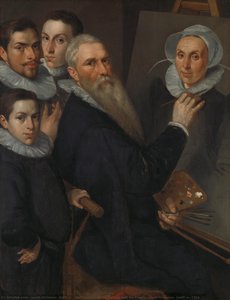
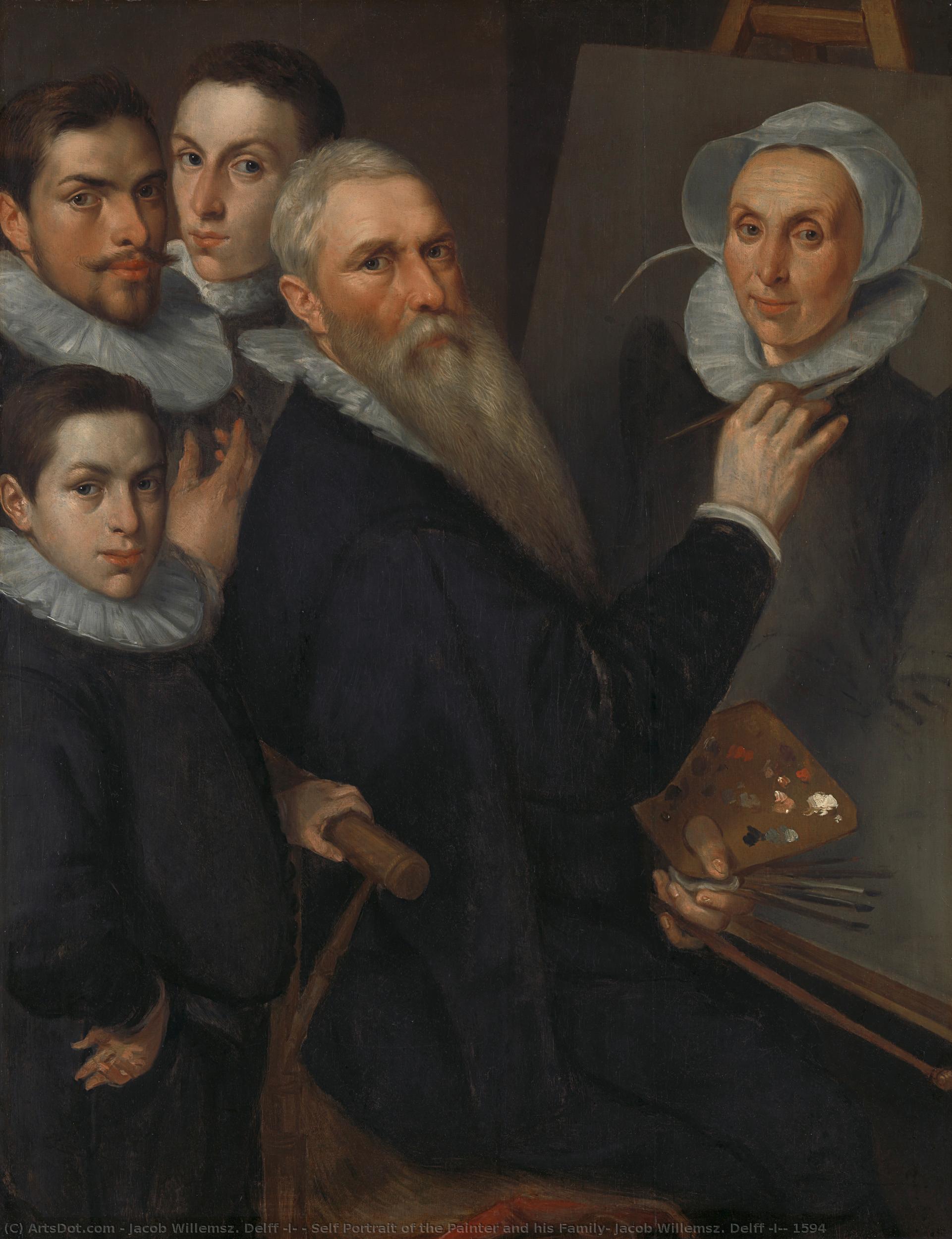
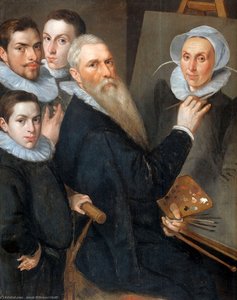
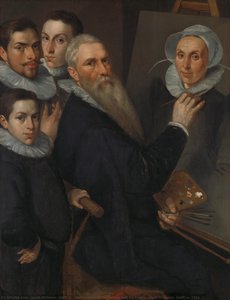
Self Portrait of the Painter and his Family, Jacob Willemsz. Delff (I), 1594
 1594
1594 109.0 x 84.0 cm
 Read More
Hand Made Oil Reproduction
Hand-painted oil on canvas in your size and frame, made to order by our artists. ( Buy Print Buy Image)




































Pick from our preset sizes that match the artwork's original proportions.

You may enter your own dimensions to fit a specific frame or space. If your selected size does not match the original image's proportions, we will either crop the artwork or extend the painting with additional hand-painted elements. A digital mockup will be sent for your approval before production begins.
Please note that the on-screen preview does not reflect the actual cropping or extension. Only the mockup will accurately show the final composition.
While custom sizes are available, we recommend selecting a dimension from the predefined list to preserve the original proportions.
After order, ArtsDot.com team will email client for instructions and provide a mockup preview
Worldwide Delivery () in 3/4 weeks instead of standard 5 weeks. (3 September). No compromise on quality.

Free Worldwide Express Shipping

High-Quality Linen Canvas

Full Shipping Insurance

Customs Tax Refund Guarantee

True Color Matching Guarantee

60-Day Return Policy (Defects Only)

100% Money-Back Guarantee

Bulk Discount Offer
 Glass option is only available in size under 110 CM

Self Portrait of the Painter and his Family, Jacob Willemsz. Delff (I), 1594
Reproduction Medium
Reproduction Size
-


Total Price
$ 263
Related Artworks





Artist Biography
The Delft Master of Glass: Jacob Willemsz. Delff (I)
Jacob Willemsz. Delff, the elder, stands as a pivotal figure in the burgeoning world of 17th-century Dutch glassmaking. Born into a family already steeped in the craft – his father, Willem Janszoon Delff, was also a prominent glassblower – Jacob inherited not only a workshop but a legacy of innovation and artistic ambition. While precise dates surrounding his birth remain elusive, we know he flourished during a period when Delft was rapidly establishing itself as a center for refined artistry, rivaling even Venice in the quality and sophistication of its glass production. Delff’s life wasn't one documented by grand narratives or courtly patronage; rather, it was a story woven into the very fabric of his workshop, the meticulous process of creation, and the growing demand for Dutch *glas* across Europe. He lived and worked in Delft throughout his career, becoming a leading figure in the glassblower’s guild and shaping the aesthetic landscape of the Golden Age.A Family Tradition & The Rise of Delft Glass
The Delff family's influence on Dutch glassmaking cannot be overstated. Willem Janszoon Delff, Jacob’s father, had already begun to experiment with new techniques, moving away from traditional Venetian models and establishing a distinctly Dutch style. This foundation proved crucial for Jacob, who further refined these methods and expanded the range of forms and decorations produced in his workshop. The early 17th century witnessed a deliberate effort by Dutch artisans to compete with Italian glassblowing supremacy. Venice had long held the monopoly on luxury glass, but political instability and trade disruptions created an opening for ambitious workshops like Delff’s. Delft capitalized on this opportunity, attracting skilled workers from other regions and fostering a culture of experimentation. Jacob Willemsz. Delff was at the forefront of this movement, skillfully blending inherited techniques with his own artistic vision to create glass that was both beautiful and uniquely Dutch. His success helped solidify Delft's reputation as a premier center for glass production, drawing commissions from wealthy merchants and noble families throughout Europe.Innovation in Form & Decoration
Delff’s artistry lay not in radical departures from existing forms but in the exquisite refinement of them. He specialized in *roemer* glasses – elaborate stemmed drinking vessels often decorated with intricate designs – and *tasters* (small, conical tasting glasses). However, it was his mastery of decoration that truly set him apart. He employed a variety of techniques, including engraving, cutting, and the application of enamel paints to create scenes inspired by classical mythology, biblical stories, and allegorical subjects. His workshop became renowned for its detailed depictions of animals, plants, and heraldic emblems. A hallmark of Delff’s work is the use of *diamant point* engraving – a technique involving tiny, precise cuts that created a shimmering, jewel-like effect on the glass surface. He also pioneered the use of *grisailles*, delicate monochrome enamel paintings that added depth and nuance to his designs. The quality of the glass itself was exceptional; Delff’s artisans produced clear, resonant vessels with thin walls and elegant proportions.The Legacy & Historical Significance
Jacob Willemsz. Delff (I) didn't just create beautiful objects; he established a dynasty. His son, Jacob Willemsz. Delff II, continued the family tradition, further expanding the workshop’s output and maintaining its high standards of quality. The influence of the Delff workshops extended far beyond Delft, shaping the development of glassmaking throughout the Netherlands and influencing artisans across Europe. The demand for Delft glass remained strong throughout the 17th century, and examples of Delff's work can be found in museums and private collections worldwide today. His pieces offer a fascinating glimpse into the artistic sensibilities of the Golden Age – a period characterized by prosperity, intellectual curiosity, and a growing appreciation for refined craftsmanship. Delff’s contribution lies in his ability to synthesize existing techniques with innovative designs, creating glass that was both aesthetically pleasing and technically impressive. He represents a key figure in the transition from Venetian dominance to Dutch leadership in luxury glass production, leaving behind a legacy of artistry that continues to inspire admiration centuries later. His work is not merely decorative; it’s a testament to the skill, ingenuity, and artistic vision of a master craftsman at the heart of a flourishing cultural center.Identifying Delff Glass
- Roemer Glasses: Look for elaborate stemmed glasses with detailed engravings. Common motifs include animals, plants, biblical scenes and heraldry.
- Diamant Point Engraving: Examine the surface closely for tiny, precise cuts that create a shimmering effect.
- Grisaille Decoration: Identify delicate monochrome enamel paintings in shades of grey or brown.
- Workshop Marks: While not always present, some Delff glass bears the initials “J.D.” or other workshop marks.
- Glass Quality: Authentic Delff glass is known for its clarity, thin walls and elegant proportions.
Quick Facts
- Artistic Movement Or Style: Mannerism, Dutch Golden Age
- Date Of Death: Living
- Full Name: Jacob Willemsz. Delff (I)
- Nationality: Dutch
- Notable Artworks:
- Still Life with Oysters
- Banquet Still Life
- Fruit and Flowers