

 Preview
 Send
Send Share
Share
 Details

 Download
 Similars
 X-Ray
X-Ray Diaporama
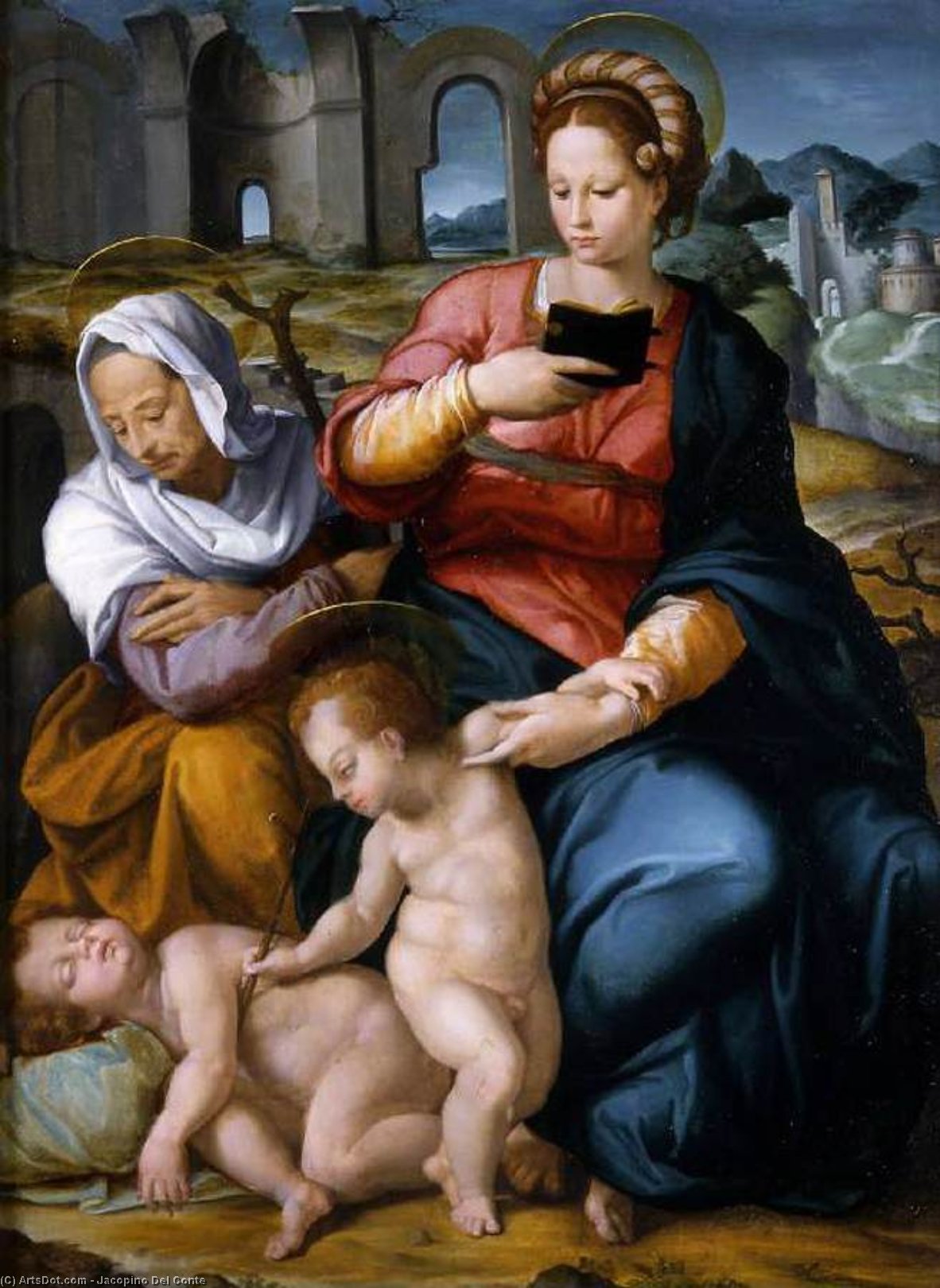
Virgin and Child with St Elizabeth and the Infant Baptist
 1550
1550 100.0 x 77.0 cm
 Fitzwilliam College
 Read More
Purchase a high-resolution, enhanced digital image, far superior to the online preview.
Each file is meticulously prepared by our in-house specialists using advanced tools and expert manual retouching. We ensure every image has exceptional clarity, precise color accuracy, and fine detail.
The final file is delivered via email within 72 hours, optimized for immediate use in professional, editorial, and print environments. This is the same quality trusted by top-tier design studios, publishers, and galleries.
Digital Image
Download a high-resolution file for personal display, printing, and creative projects. ( Buy Print Buy Hand Made Painting)
Included in Every Digital Image Order
Expert Digital Delivery, Guaranteed
When you choose ArtsDot.com, you're not just getting an image - you're receiving a professionally enhanced digital artwork, crafted with precision and backed by a satisfaction guarantee. Here's everything that comes with your order, automatically:

Fast Email Delivery
Your high-resolution digital image file will be emailed to you within 72 hours of ordering - ready for immediate use.

AI-Enhanced Digital File
Your artwork is professionally optimized using advanced AI tools and manual editing, ensuring maximum detail, clarity, and color accuracy.

Free Lifetime Re-Delivery
Accidentally deleted or lost your file? No worries - we'll resend it to you anytime, free of charge.

No Import Fees - Ever
Enjoy your artwork instantly with zero customs, duties, or delivery fees - digital downloads are always tax-free.

Color Accuracy Guarantee
We ensure your digital image reflects the original colors as closely as possible using professional tools and color management.

60-Day Satisfaction Guarantee
If you're not satisfied with your digital image, we'll revise it or refund 100% within 60 days - no questions asked.

100% Money-Back Guarantee
Not satisfied? Get a full refund within 60 days of receiving your digital file - no questions asked.

Bulk Order Discounts
Buy 3 images, save 10% - Buy 5, save 15% - Buy 10+, save 20%. Great for creative projects, galleries, and agencies.
Related Artworks
Artist Biography
Jacopino del Conte: A Florentine Mannerist Bridging Rome and Florence
Jacopino del Conte (c. 1510 – 1598) stands as a compelling figure within the vibrant tapestry of 16th-century Italian art, a painter whose career unfolded across both the artistic heartland of Florence and the papal seat of Rome. Born in Florence during a period of intense artistic innovation, Conte’s life was marked by apprenticeship under the esteemed Andrea del Sarto, a master who profoundly shaped his early style. Yet, unlike many of his contemporaries, Conte didn't simply replicate his teacher’s techniques; he forged a distinct path, developing a unique Mannerist voice characterized by dramatic compositions, intricate detail, and a subtle emotional depth.
Conte’s formative years were spent absorbing the principles of Florentine Renaissance art. His initial training with Andrea del Sarto instilled in him a meticulous approach to drawing and an understanding of classical forms. However, it was through his early commissions – frescoes like the “Annunciation to Zachariah” (1536), the “Preaching of Saint John the Baptist” (1538), and the “Baptism of Christ” (1541) – that Conte truly began to establish his own artistic identity. These works, executed in the Oratory of San Giovanni Decollato in Rome, showcased a burgeoning talent for narrative storytelling and a growing interest in complex spatial arrangements— hallmarks of the emerging Mannerist style. Notably, the “Preaching” fresco drew inspiration from the masterful drawing of Perin del Vaga, demonstrating Conte’s willingness to learn from and incorporate the work of other accomplished artists.
Collaborations and Roman Influence
Conte's career took a significant turn in 1547-48 when he joined forces with Siciolante da Sermoneta on the ambitious fresco decoration of the chapel of San Remigio in San Luigi dei Francesi. This collaboration provided Conte with invaluable experience working on large-scale projects and exposed him to new techniques and compositional strategies. The resulting frescoes, though sometimes debated in terms of authorship, reveal a shared interest in dramatic lighting, dynamic figures, and intricate details—elements that would become increasingly prominent in Conte’s later work.
His time in Rome proved particularly influential. He continued to receive commissions for altarpieces and devotional paintings, often exploring themes of religious ecstasy and profound emotional states. The “Deposition” (1552), painted for the Oratory of San Giovanni Decollato, exemplifies this shift towards a more emotionally charged style. While some scholars attribute aspects of this painting to Daniele da Volterra, Conte’s distinctive use of color, drapery, and expressive gestures firmly establish his presence as the primary artist. The work demonstrates a growing departure from the idealized forms of High Renaissance art, embracing a greater sense of dynamism and psychological complexity.
Portraiture and Artistic Development
Beyond his fresco cycles, Conte also produced a series of individual portraits, most notably his portrait of Michelangelo (c. 1540). This painting offers a fascinating glimpse into the artist’s ability to capture not only physical likeness but also the personality and inner life of his subject. The portrait is characterized by its dramatic lighting, intense gaze, and subtle gestures—elements that reflect Conte's growing mastery of chiaroscuro and his increasing interest in psychological realism.
Later in his career, Conte continued to refine his style, incorporating elements of both Mannerism and the emerging Baroque. His works from this period are marked by a heightened sense of drama, intense color palettes, and dynamic compositions. The “Virgin and Child with Saint Elizabeth and John the Baptist” (1535), now housed in the Uffizi Gallery, exemplifies this evolution, showcasing a masterful command of perspective, drapery, and emotional expression.
Legacy and Historical Significance
Jacopino del Conte’s legacy lies not only in his individual works but also in his role as a pivotal figure in the transition between Mannerism and the Baroque. He bridged the gap between the refined elegance of the High Renaissance and the dramatic intensity of the new style, leaving behind a body of work that continues to captivate art historians and collectors alike. His paintings offer a valuable insight into the artistic currents of 16th-century Italy, revealing the complex interplay of influences and innovations that shaped the course of Western art history. His works are testament to his skill as both a draftsman and painter, and his ability to imbue religious scenes with profound emotional resonance.

Jacopino del Conte
1510 - 1598 , Italy
Quick Facts
- Artistic Movement Or Style: Mannerist
- Artists Or Movements Influenced By This Artist: ['Michelangelo']
- Artists Who Influenced This Artist: ['Andrea del Sarto']
- Date Of Birth: 1510, Florence, Italy
- Date Of Death: 1598
- Full Name: Jacopino del Conte
- Nationality: Italian
- Notable Artworks:
- Annunciation to Zachariah
- Preaching of Saint John
- Baptism of Christ
- Deposition
- Place Of Birth: Florence, Italy

