 Preview
 Send
Send Share
Share
 Details

 Download
 Similars
 X-Ray
X-Ray Diaporama
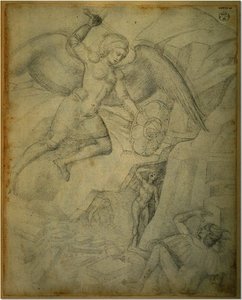
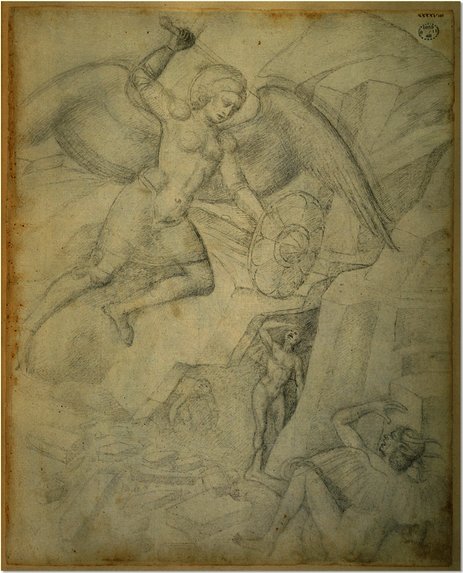
St Michael Defeating Satan
 Acrylic On Canvas
- WallArt
- Early Renaissance
 33.0 x 41.0 cm
 British Museum
 Read More
Hand Made Oil Reproduction
Hand-painted oil on canvas in your size and frame, made to order by our artists. ( Buy Print Buy Image)




P118B $10

P118H $10

P118W $10

P438Z $10

P508JH $12

P508YH $12

P805H $10

P805Z $10

P919BZ $10

P919G $10

P919XJ $10

P959ZH $10

P968JZ $12

W106C $8

W218G $10

W218JH $8

W218Y $10

W307PJ $10

W316G $10

W316PJ $8

W316Y $10

W398PJ $8

W4111J $10

W500HY $15

W500JH $15

W692G $12

W849H $8

W940BG $15

W953PJ $8




Pick from our preset sizes that match the artwork's original proportions.

You may enter your own dimensions to fit a specific frame or space. If your selected size does not match the original image's proportions, we will either crop the artwork or extend the painting with additional hand-painted elements. A digital mockup will be sent for your approval before production begins.
Please note that the on-screen preview does not reflect the actual cropping or extension. Only the mockup will accurately show the final composition.
While custom sizes are available, we recommend selecting a dimension from the predefined list to preserve the original proportions.
After order, ArtsDot.com team will email client for instructions and provide a mockup preview
Worldwide Delivery () in 3/4 weeks instead of standard 5 weeks. (17 August). No compromise on quality.

Free Worldwide Express Shipping

High-Quality Linen Canvas

Full Shipping Insurance

Customs Tax Refund Guarantee

True Color Matching Guarantee

60-Day Return Policy (Defects Only)

100% Money-Back Guarantee

Bulk Discount Offer
 Glass option is only available in size under 110 CM

St Michael Defeating Satan
Reproduction Medium
Reproduction Size
-


Total Price
$ 263
Artwork Description
A Clash of Heavens: Jacopo Bellini’s ‘St Michael Defeating Satan’
Jacopo Bellini's “St Michael Defeating Satan,” painted circa 1450, isn’t merely a depiction of an epic biblical battle; it’s a visceral embodiment of the eternal struggle between good and evil. This arresting work, currently housed in the British Museum, transcends its historical context to resonate with a profound sense of drama and spiritual intensity – qualities that continue to captivate viewers centuries later. Bellini, a pivotal figure in bridging the gap between late Gothic and early Renaissance styles, masterfully employed techniques honed during his extensive travels throughout Italy and beyond, resulting in an image brimming with dynamic movement and carefully rendered detail.
The composition immediately commands attention. At its heart stands St Michael, not as a serene saint, but as a warrior – clad in gleaming armor, he dominates the scene with a resolute posture. His outstretched hand firmly grasps his sword, poised to strike down Satan, who writhes beneath him, a grotesque figure of serpentine coils and fiery wings. The fallen angel’s contorted face is a mask of rage and despair, reflecting the agonizing defeat. Bellini's use of chiaroscuro – the dramatic interplay of light and shadow – intensifies this sense of conflict, highlighting Michael’s heroic form while plunging Satan into an abyss of darkness. Notice how the folds of Michael’s cloak billow dramatically, mirroring the turbulent energy of the battle itself.
Renaissance Perspective and Symbolism
Bellini's genius lies not just in his dramatic portrayal but also in his innovative application of Renaissance perspective. Unlike the flattened, symbolic representations common in earlier Gothic art, Bellini meticulously constructs a three-dimensional space, drawing the viewer into the heart of the conflict. The receding lines of the architecture behind the figures create an illusion of depth, while the carefully rendered details – from the intricate scales on Satan’s body to the folds of Michael's armor – contribute to the overall realism. This commitment to naturalism was a hallmark of the burgeoning Renaissance aesthetic.
Beyond its technical brilliance, “St Michael Defeating Satan” is rich in symbolic meaning. The battle itself represents the ongoing conflict between divine justice and demonic corruption. St Michael’s sword symbolizes faith and righteousness, while Satan's fiery wings represent temptation and sin. The eagle soaring above – a traditional symbol of imperial power and divine vigilance – reinforces this theme. Furthermore, the setting, often interpreted as a symbolic representation of Hell itself, underscores the gravity of the struggle.
Historical Context and Artistic Influences
Bellini’s work emerged during a period of profound artistic and intellectual transformation in Venice. The city was experiencing a surge of wealth and patronage, fueling an explosion of creativity. Bellini himself was deeply influenced by the works of Giotto, whose naturalistic style paved the way for Renaissance realism. He also drew inspiration from Byzantine art, particularly its use of vibrant colors and dramatic compositions. The painting’s powerful emotional impact reflects this confluence of influences.
Interestingly, “St Michael Defeating Satan” is one of relatively few surviving original Bellini canvases. Much of his legacy resides in his extensive sketchbook pages, offering invaluable insights into his artistic process – a testament to the meticulous observation and innovative thinking that characterized his work. The painting’s enduring appeal speaks to its timeless themes and Bellini's masterful ability to capture the drama and intensity of this pivotal biblical narrative.
A Timeless Masterpiece: Reproduction Possibilities
Reproductions of “St Michael Defeating Satan” offer a remarkable opportunity to bring this iconic artwork into your home or office. Available in a range of sizes, from intimate prints to large-scale canvases, these reproductions faithfully capture the painting’s rich colors, dramatic lighting, and dynamic composition. Whether you're an art enthusiast, a collector, or simply seeking a striking piece for your interior design, this reproduction provides a beautiful and accessible way to experience the power and beauty of Jacopo Bellini’s masterpiece.
Related Artworks



Artist Biography
The Venetian Pioneer of Renaissance Perspective
Jacopo Bellini stands as a pivotal figure in the burgeoning Renaissance style of painting that flourished in Venice and northern Italy. He was far more than a mere painter; he was one of the foundational innovators of his era, shaping artistic sensibilities through a meticulous observation of nature and a masterful incorporation of linear perspective—a technique that was previously largely absent from the Venetian tradition. While few of Bellini's original canvases survive today to be viewed in their full glory, his profound legacy resides primarily within his exquisite sketchbooks, such as those housed in the British Museum and the Louvre. These drawings reveal a deep fascination with sweeping landscape vistas and elaborate architectural designs, offering invaluable insight into an artistic process that foreshadowed the stylistic revolutions of the centuries to follow.
Born in Venice around 1396, Jacopo’s formative years were steeped in the rich, decorative traditions of the late Gothic period. His early training suggests he was a pupil of the celebrated Gentile da Fabriano, an artist whose workshop produced some of the most ambitious and ornate frescoes of the era. This prestigious association undoubtedly instilled in Bellini a lifelong appreciation for intricate detail, color harmony, and a certain decorative complexity. His early career saw him active in Foligno between 1411 and 1412, where he collaborated on the monumental frescoes of the Palazzo Trinci, working alongside the very masters who defined the international Gothic style.
A Journey Through the Heart of the Renaissance
A significant turning point arrived when Bellini traveled to Florence around 1423. This journey placed him at the epicenter of an intense period of artistic experimentation led by luminaries such as Brunelleschi, Donatello, and Masaccio. In Florence, he encountered the burgeoning science of linear perspective, a discovery that would fundamentally alter his approach to space and depth. By blending the lyrical, decorative elegance of his Venetian roots with the structural rigor and spatial clarity of the Florentine innovators, Bellini began to forge a unique visual language. This synthesis allowed him to move beyond the flat, symbolic planes of the Middle Ages toward a more immersive, window-like depiction of the world.
As his career progressed, Bellini became a central figure in establishing a family dynasty that would dominate Venetian art for generations. His influence was not merely personal but pedagogical, as he passed his innovations down to his sons, Gentile and Giovanni. Through them, the seeds of his experimentation with light, landscape, and perspective blossomed into the high Renaissance splendor associated with the Bellini name. His work served as a bridge between the ornamental traditions of the past and the humanistic realism of the future, making him an indispensable link in the evolution of Italian art.
Legacy and Historical Significance
The historical significance of Jacopo Bellini lies in his role as a catalyst for change. Though much of his output remains captured in the intimate medium of ink and pen, those sketches serve as a blueprint for the Venetian Renaissance. His ability to envision complex, multi-layered landscapes and mathematically coherent architectures provided the groundwork for his successors to explore the atmospheric beauty of the Venetian lagoon. To study Bellini is to witness the very moment when the eye of the artist began to truly master the illusion of depth, forever changing how humanity perceives the painted world.
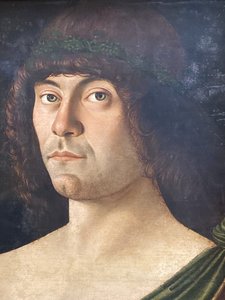
Jacopo Bellini
1396 - 1470 , Italy
Quick Facts
- Artistic Movement Or Style: Renaissance
- Artists Or Movements Influenced By This Artist: ['Masaccio']
- Artists Who Influenced This Artist: ['Gentile da Fabriano']
- Date Of Birth: Venice, Italy (1396)
- Date Of Death: c. 1470
- Full Name: Jacopo Bellini
- Nationality: Italian
- Notable Artworks:
- The Crucifixion in Verona Cathedral
- Madonna and Child
- Place Of Birth: Venice
Related Articles

Celestial Messengers: A Comprehensive Exploration of Angelic Representation in Art History
Explore the captivating history of angels in art! Discover symbolism, iconic Renaissance masterpieces & renowned artists. Expert insights for art lovers & collectors at ArtsDot.

Celestial Messengers: Angels in Painting – A Historical & Artistic Exploration
Explore the captivating history of angels in painting! Discover symbolism, iconic Renaissance & Byzantine masterpieces, and renowned artists. Expert insights for art lovers & collectors at ArtsDot.
El Greco's Masterpieces: Explore 25 Iconic Paintings & Spiritual Visions | ArtsDot
Journey through El Greco's 25 most iconic paintings! Explore the spiritual depth & dramatic beauty of this Spanish Renaissance master. Discover art history, techniques & find museum-quality reproductions for your home at ArtsDot.com.
Fra Angelico's Masterpieces: 25 Renaissance Paintings for Your Home | ArtsDot
Explore 25 breathtaking masterpieces by Fra Angelico, a Renaissance master. Discover the stories behind his iconic frescoes, Annunciations & religious art. Find museum-quality reproductions and elevate your home decor with ArtsDot.com.

Jacopo Tintoretto's Masterpieces: 25 Paintings That Define Venetian Drama | ArtsDot
Explore 25 breathtaking masterpieces by Jacopo Tintoretto, the Venetian master of drama and light. Discover the stories behind iconic Renaissance paintings & find museum-quality art reproductions to elevate your home decor on ArtsDot.com.