 Preview
 Send
Send Share
Share
 Details

 Download
 Similars
 X-Ray
X-Ray Diaporama
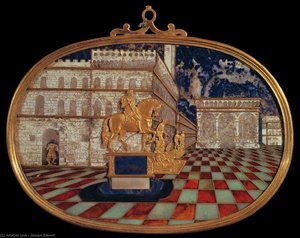
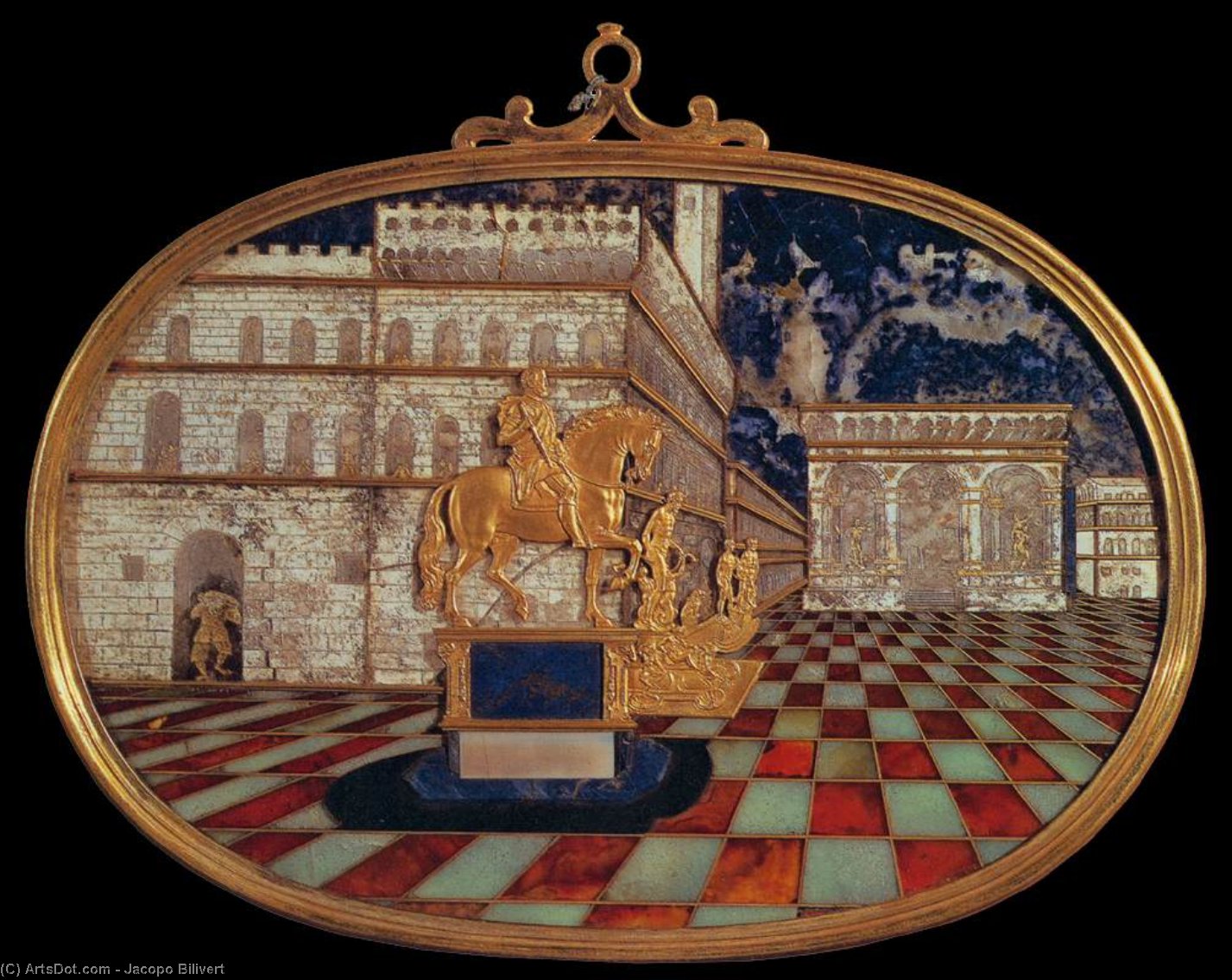
Oval with Panorama of Piazza della Signoria
 1599
1599 28.0 x 26.0 cm
 Read More
Hand Made Oil Reproduction
Hand-painted oil on canvas in your size and frame, made to order by our artists. ( Buy Print Buy Image)




































Pick from our preset sizes that match the artwork's original proportions.

You may enter your own dimensions to fit a specific frame or space. If your selected size does not match the original image's proportions, we will either crop the artwork or extend the painting with additional hand-painted elements. A digital mockup will be sent for your approval before production begins.
Please note that the on-screen preview does not reflect the actual cropping or extension. Only the mockup will accurately show the final composition.
While custom sizes are available, we recommend selecting a dimension from the predefined list to preserve the original proportions.
After order, ArtsDot.com team will email client for instructions and provide a mockup preview
Worldwide Delivery () in 3/4 weeks instead of standard 5 weeks. (29 August). No compromise on quality.

Free Worldwide Express Shipping

High-Quality Linen Canvas

Full Shipping Insurance

Customs Tax Refund Guarantee

True Color Matching Guarantee

60-Day Return Policy (Defects Only)

100% Money-Back Guarantee

Bulk Discount Offer
 Glass option is only available in size under 110 CM

Oval with Panorama of Piazza della Signoria
Reproduction Medium
Reproduction Size
-


Total Price
$ 263
Related Artworks









Artist Biography
The Goldsmith of Florence: The Life and Legacy of Jacopo Bilivert
In the grand tapestry of the late Renaissance, few figures possess a narrative as enchanting as Jacopo Bilivert. Born in the industrious Dutch city of Delft around 1550, his journey was not one of immediate brushstrokes upon canvas, but rather one of meticulous precision with precious metals. Before he became a celebrated chronicler of Florentine vistas, Bilivert was a master goldsmith and jeweler, a craftsman whose hands were trained to manipulate the finest gold and gemstones. This early immersion in the delicate world of ornamentation instilled in him an unparalleled eye for detail—a quality that would later transform his approach to painting, allowing him to render the architectural splendor of Italy with a clarity that felt almost tactile.
His transition from the workshop to the studio was fueled by a profound mastery of perspective, likely nurtured during his apprenticeship under Johannes Maasdam in Delft. This training provided the structural foundation for his later triumphs; while many artists of his era sought beauty through soft, atmospheric hazes, Bilivert embraced the rigorous logic of linear perspective. When he traveled to Italy in 1573, he did not merely arrive as a visitor but as an artist ready to capture the soul of a city. His arrival in Florence coincided with a period of immense cultural flowering under the patronage of the Medici family, and it was here that his dual identity as a craftsman and a painter converged into a singular, brilliant style.
A Vision of Florentine Grandeur
The true magic of Bilivert’s oeuvre lies in his ability to elevate the cityscape from mere documentation to a form of monumental celebration. Secured by the powerful commissions of Cosimo II and Frenandino I de' Medici, Bilivert specialized in breathtaking oval compositions that acted as windows into the heart of Tuscany. These were not simple landscapes; they were panoramic triumphs that utilized his goldsmith’s precision to map out the streets, piazzas, and palazzos of Florence with astonishing accuracy. Through his work, the viewer is invited to wander through the Piazza della Signoria or gaze upon the bustling marketplaces, feeling the very pulse of the city's architectural achievements.
His technique was characterized by an assertive use of space that defied the common reliance on aerial perspective. Instead, he leaned into the mathematical beauty of the vanishing point, creating a sense of depth that felt both expansive and intimate. This meticulousness extended to the human element within his scenes; Bilivert did not merely paint buildings, but populated them with the vibrant life of the Florentine populace. He captured the movement of crowds and the intricate textures of public spaces, weaving a narrative of urban vitality that celebrated the Medici's prosperous reign. His work served as both a historical record and a poetic tribute to the cultural zenith of the era.
Historical Significance and Artistic Heritage
Though his reputation was for many years inextricably linked to his skill in jewelry and goldsmithing, modern art history has reclaimed Bilivert as a vital contributor to the Dutch Golden Age's influence on Italian landscapes. He represents a unique bridge between Northern European precision and the Southern Renaissance's grandeur. His legacy is found not only in the surviving canvases that depict the lost glory of 16th-century Florence but also in the way he redefined the genre of the panoramic cityscape through the lens of a craftsman.
The impact of his life can be summarized through several key milestones:
- Mastery of Perspective: His ability to translate the mathematical rigor of architectural drawing into emotive, large-scale paintings.
- Medici Patronage: His role in documenting the architectural and cultural prestige of the Medici court through monumental oval works.
- The Convergence of Crafts: The rare historical example of an artist successfully transitioning from the fine arts of goldsmithing to the grand scale of panoramic painting.
- Cultural Synthesis: Representing the artistic dialogue between the Netherlands and Italy during a period of intense European exchange.
Today, when we look upon the works of Jacopo Bilivert, we see more than just old cities; we see the vision of a man who saw the world through the sharp, glittering lens of a jeweler, finding the eternal beauty in the stone, the street, and the sky.
jacopo bilivert
1550 - 1603 , Netherlands
Quick Facts
- Artistic Movement Or Style: Dutch Golden Age
- Artists Or Movements Influenced By This Artist: ['Renaissance Art']
- Artists Who Influenced This Artist:
- Abraham van Dyck
- Pieter Bruegel the Elder
- Date Of Birth: November 17, 1550
- Date Of Death: February 19, 1603
- Full Name: Jacques Bylivelt
- Nationality: Dutch
- Notable Artworks:
- Florence Cityscapes
- Panoramic Painting
- Place Of Birth: Delft, Netherlands