

 Preview
 Send
Send Share
Share
 Details

 Download
 Similars
 X-Ray
X-Ray Diaporama
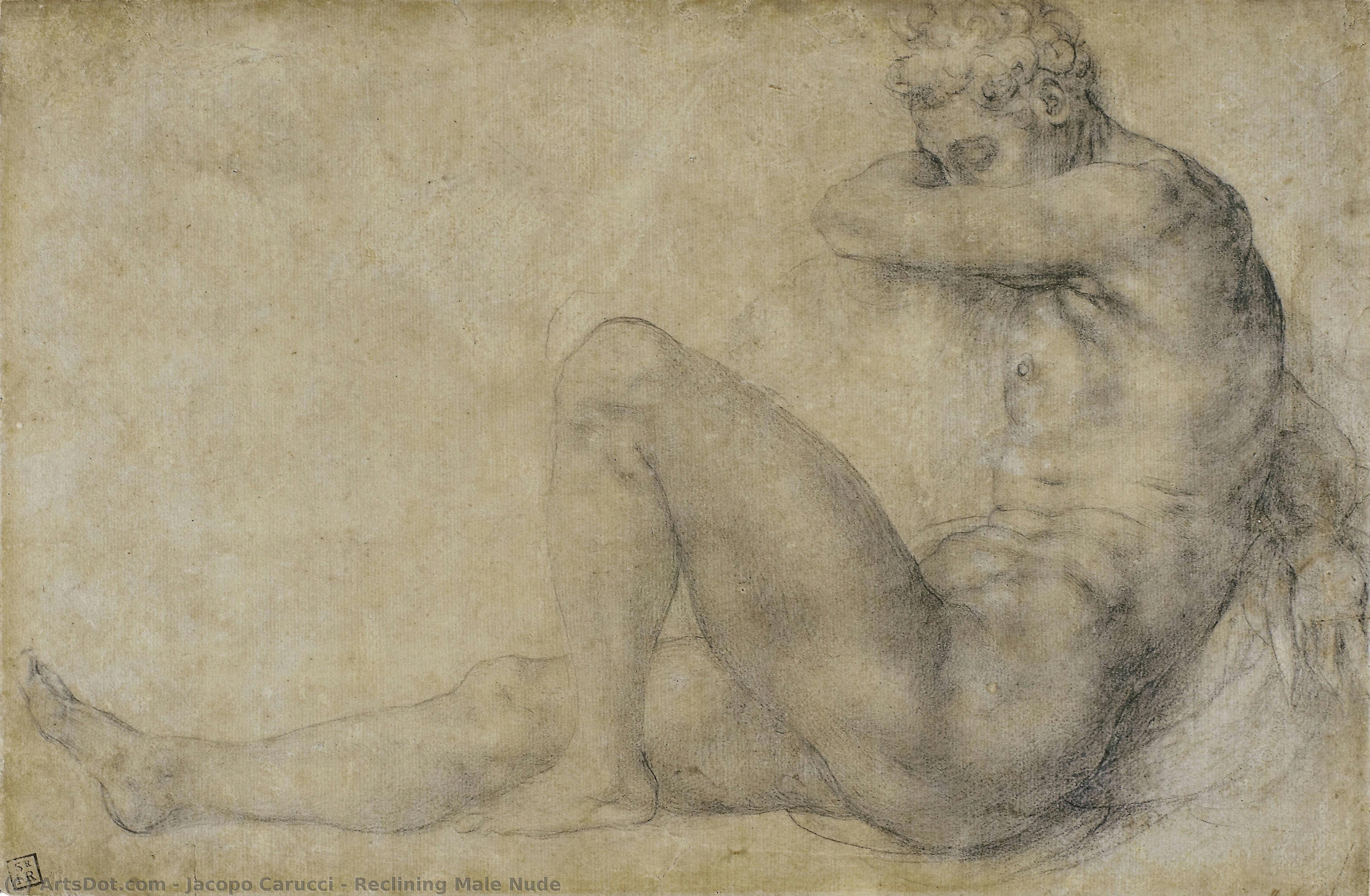
Reclining Male Nude
 Oil On Canvas
- WallArt
- Renaissance
 1540
1540 25.0 x 38.0 cm
 National Gallery of Canada
 Read More
Purchase a high-resolution, enhanced digital image, far superior to the online preview.
Each file is meticulously prepared by our in-house specialists using advanced tools and expert manual retouching. We ensure every image has exceptional clarity, precise color accuracy, and fine detail.
The final file is delivered via email within 72 hours, optimized for immediate use in professional, editorial, and print environments. This is the same quality trusted by top-tier design studios, publishers, and galleries.
Digital Image
Download a high-resolution file for personal display, printing, and creative projects. ( Buy Print Buy Hand Made Painting)
Included in Every Digital Image Order
Expert Digital Delivery, Guaranteed
When you choose ArtsDot.com, you're not just getting an image - you're receiving a professionally enhanced digital artwork, crafted with precision and backed by a satisfaction guarantee. Here's everything that comes with your order, automatically:

Fast Email Delivery
Your high-resolution digital image file will be emailed to you within 72 hours of ordering - ready for immediate use.

AI-Enhanced Digital File
Your artwork is professionally optimized using advanced AI tools and manual editing, ensuring maximum detail, clarity, and color accuracy.

Free Lifetime Re-Delivery
Accidentally deleted or lost your file? No worries - we'll resend it to you anytime, free of charge.

No Import Fees - Ever
Enjoy your artwork instantly with zero customs, duties, or delivery fees - digital downloads are always tax-free.

Color Accuracy Guarantee
We ensure your digital image reflects the original colors as closely as possible using professional tools and color management.

60-Day Satisfaction Guarantee
If you're not satisfied with your digital image, we'll revise it or refund 100% within 60 days - no questions asked.

100% Money-Back Guarantee
Not satisfied? Get a full refund within 60 days of receiving your digital file - no questions asked.

Bulk Order Discounts
Buy 3 images, save 10% - Buy 5, save 15% - Buy 10+, save 20%. Great for creative projects, galleries, and agencies.
Collectible Description
A Study in Quiet Intensity: Reclining Male Nude by Jacopo Carucci
The image before you – Jacopo Carucci’s “Reclining Male Nude” (1540) – isn't merely a depiction of the human form; it’s a carefully constructed meditation on stillness, vulnerability, and the profound beauty found within repose. Painted during the tumultuous transition between the High Renaissance and the burgeoning Baroque period in Florence, this work embodies the Mannerist style’s characteristic embrace of psychological complexity and emotional depth – a departure from the idealized forms that dominated earlier artistic traditions.
The painting immediately draws the eye to its central figure: a male nude sprawled languidly on his side. He's not presented as a heroic, dynamic subject, but rather as an individual caught in a moment of quiet contemplation. The musculature is rendered with a subtle precision, hinting at underlying strength without resorting to overt display. Notice the careful attention to detail – the delicate curve of the spine, the relaxed drape of the limbs, and the almost imperceptible tension in his brow. These are not gestures of power or conquest, but rather expressions of vulnerability and introspection.
The Palette and Technique: A Masterclass in Monochrome
What immediately sets this work apart is its masterful use of monochrome – a deliberate choice that amplifies the painting’s emotional resonance. Carucci employs a restricted palette of browns, greys, and blacks, creating an atmosphere of somber elegance. This technique wasn't simply about economy; it served to heighten the sense of drama and focus attention entirely on the figure itself. The subtle gradations of tone – from deep shadows to delicate highlights – reveal a remarkable understanding of light and form, demonstrating Carucci’s technical skill.
The artist’s brushwork is remarkably controlled, almost meditative in its execution. There's a sense of deliberate layering and building up of tones, creating a rich surface texture that invites close examination. The lines are clean and precise, yet imbued with a subtle fluidity – reflecting the subject’s relaxed posture and conveying a feeling of effortless grace.
A Window into Florentine Mannerism
“Reclining Male Nude” is deeply rooted in the artistic landscape of Florence during the 16th century. Carucci, born Jacopo Pontormo, was a pivotal figure within the Mannerist movement – a style characterized by its rejection of classical ideals and its embrace of emotional intensity, elongated forms, and complex spatial arrangements. This painting exemplifies these characteristics perfectly, showcasing a departure from the balanced compositions and harmonious colors of the High Renaissance.
The work’s influence can be seen in the works of other Mannerist artists such as Pontormo himself and Bronzino. However, Carucci's approach is particularly notable for its introspective quality – he doesn’t simply depict a nude figure; he explores the psychological state of the subject, inviting the viewer to contemplate his thoughts and emotions.
Symbolism and Emotional Resonance
Beyond its technical brilliance, “Reclining Male Nude” is rich in symbolic meaning. The pose itself – a reclining figure – has long been associated with vulnerability, contemplation, and even death. Here, it suggests a moment of profound introspection, inviting the viewer to share in the subject’s quiet solitude. The lack of adornment or external distractions further emphasizes this sense of inner focus.
The painting's emotional impact is undeniably powerful. It evokes a feeling of melancholy and serenity simultaneously – a recognition of human fragility combined with an appreciation for the beauty of stillness. It’s a work that lingers in the mind long after it has been viewed, prompting reflection on themes of mortality, introspection, and the enduring power of art to capture the essence of the human experience.
Related Artworks
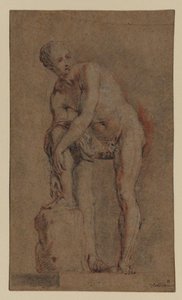
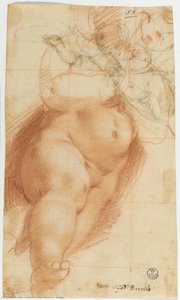
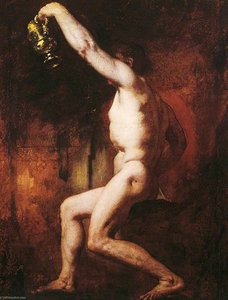
Artist Biography
The Melancholy Visionary: The Life and Legacy of Jacopo Pontormo
Jacopo Carucci, known to history by the evocative moniker Pontormo, was an artist whose brush captured the very essence of transition. Born in the small Tuscan village of Pontorme around 1494, his early life was marked by a profound sense of solitude and melancholy, qualities that would later infuse his canvases with an unparalleled psychological depth. As a young apprentice in Florence, he moved through a world of shifting artistic paradigms, eventually emerging as a central figure of the Florentine Mannerist movement. Unlike the masters of the High Renaissance who sought perfection through balance and mathematical harmony, Pontormo looked inward, seeking to express the turbulent, often unsettling complexities of the human soul. His formative years were shaped by the shadows of giants. Under the tutelage of Domenico del Pollaiuolo and the monumental influence of Michelangelo Buonarroti, he mastered the anatomical precision required of a Renaissance master, yet he possessed an irrepressible urge to distort that very reality for emotional effect. He drew inspiration not only from the sculptural weight of Michelangelo but also from the intricate, emotive engravings of Albrecht Dürer. This unique synthesis of Italian form and Northern European expressive detail allowed him to pioneer a style where figures seemed to lose their tether to gravity, drifting through ambiguous, dreamlike spaces.The Architecture of Mannerism: Style and Innovation
To witness a Pontormo painting is to enter a realm where the familiar laws of physics and perspective are suspended. His work represents a deliberate departure from the serene, perspectival regularity of his predecessors. In masterpieces such as his "Visitation" or the haunting "Deposition," one observes the hallmarks of his revolutionary Mannerist aesthetic: elongated limbs, twining and unnatural poses, and a palette of vibrant, almost acidic colors that clash and shimmer with an otherworldly light. He replaced the stable, triangular compositions of the Renaissance with swirling, crowded arrangements that evoke a sense of restless energy and spiritual unrest. The technical brilliance of Pontormo lay in his ability to use color and form as psychological tools. His figures often appear to float within uncertain environments, unhampered by weight, creating a sense of profound instability. This was not mere artifice; it was a deliberate attempt to convey the spiritual anxieties of an era caught between the certainties of the Renaissance and the looming drama of the Baroque. Whether through the dramatic light in his "Supper at Emmaus" or the stark, emotive intensity found in his studies of Christ, Pontormo utilized every brushstroke to explore themes of grief, devotion, and the divine.A Lasting Impression on Art History
The historical significance of Jacopo Pontormo cannot be overstated. He served as a vital bridge, translating the classical ideals of the 15th century into the expressive, theatrical language that would define much of the 16th-century art. His influence rippled through the Florentine School, shaping the works of successors like Bronzino and ensuring that the tension between beauty and artifice remained a central dialogue in European painting. His oeuvre remains a testament to the power of individual vision over tradition. Through his portraits, such as the regal "Cosimo I de' Medici," and his deeply symbolic religious works, he demonstrated that art could be more than a mirror of reality; it could be a window into the subconscious. Though his life was often shadowed by personal sorrow, the brilliance of his color and the complexity of his compositions continue to captivate, inviting every viewer to lose themselves in the beautiful, distorted, and deeply human world of the Florentine master.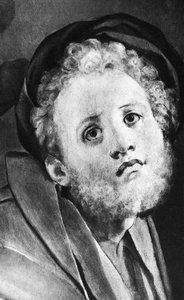
jacopo carucci
1494 - 1557 , Italy
Quick Facts
- Artistic Movement Or Style: Mannerism
- Artists Or Movements Influenced By This Artist:
- Michelangelo
- Rosso Fiorentino
- Artists Who Influenced This Artist:
- Leonardo da Vinci
- Andrea del Sarto
- Date Of Birth: 1494
- Full Name: Jacopo Pontormo
- Nationality: Italian
- Notable Artworks:
- Visitation
- Deposition
- Halberdier
- Place Of Birth: Pontorme, Italy

