

 Preview
 Send
Send Share
Share
 Details

 Download
 Similars
 X-Ray
X-Ray Diaporama
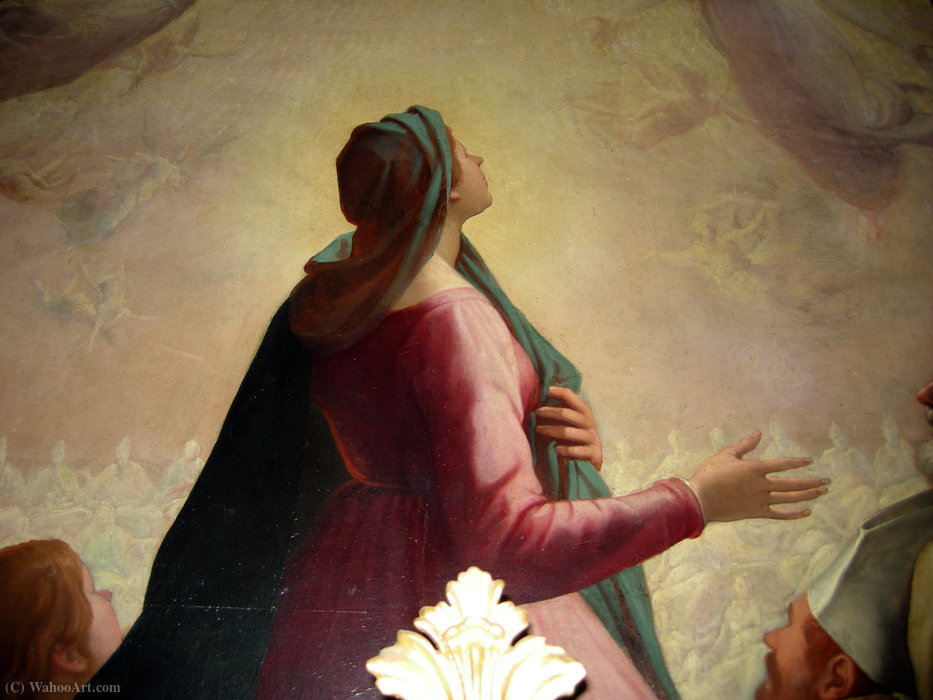
Fresco(detail)

 Read More
Purchase a high-resolution, enhanced digital image, far superior to the online preview.
Each file is meticulously prepared by our in-house specialists using advanced tools and expert manual retouching. We ensure every image has exceptional clarity, precise color accuracy, and fine detail.
The final file is delivered via email within 72 hours, optimized for immediate use in professional, editorial, and print environments. This is the same quality trusted by top-tier design studios, publishers, and galleries.
Digital Image
Download a high-resolution file for personal display, printing, and creative projects. ( Buy Print Buy Hand Made Painting)
Included in Every Digital Image Order
Expert Digital Delivery, Guaranteed
When you choose ArtsDot.com, you're not just getting an image - you're receiving a professionally enhanced digital artwork, crafted with precision and backed by a satisfaction guarantee. Here's everything that comes with your order, automatically:

Fast Email Delivery
Your high-resolution digital image file will be emailed to you within 72 hours of ordering - ready for immediate use.

AI-Enhanced Digital File
Your artwork is professionally optimized using advanced AI tools and manual editing, ensuring maximum detail, clarity, and color accuracy.

Free Lifetime Re-Delivery
Accidentally deleted or lost your file? No worries - we'll resend it to you anytime, free of charge.

No Import Fees - Ever
Enjoy your artwork instantly with zero customs, duties, or delivery fees - digital downloads are always tax-free.

Color Accuracy Guarantee
We ensure your digital image reflects the original colors as closely as possible using professional tools and color management.

60-Day Satisfaction Guarantee
If you're not satisfied with your digital image, we'll revise it or refund 100% within 60 days - no questions asked.

100% Money-Back Guarantee
Not satisfied? Get a full refund within 60 days of receiving your digital file - no questions asked.

Bulk Order Discounts
Buy 3 images, save 10% - Buy 5, save 15% - Buy 10+, save 20%. Great for creative projects, galleries, and agencies.
Collectible Description
A Glimpse of Divine Grace: Jacopo da Empoli's Fresco Detail
This captivating artwork presents a detailed section from a larger fresco by Jacopo da Empoli, an Italian painter active in the late 16th and early 17th centuries. The image offers a profound glimpse into a religious scene, most likely depicting the Virgin Mary surrounded by angels – a common subject for devotional art during the Renaissance and Baroque periods. The fragment showcases Empoli’s mastery of detail and his ability to evoke a sense of ethereal beauty.
Style & Technique: Echoes of the Renaissance
The artwork's style is firmly rooted in the classical tradition, exhibiting characteristics reminiscent of both the High Renaissance and early Baroque. Notice the meticulous rendering of drapery, the soft modeling of faces, and the overall sense of idealized beauty. Empoli employs a traditional oil painting technique, utilizing layering and glazing to achieve rich color depth and subtle textural variations. The use of oil paint allows for a remarkable level of detail and luminosity, particularly evident in Mary’s skin tones and the intricate floral motif below her. While perspective is somewhat flattened compared to later Baroque works, Empoli skillfully uses atmospheric perspective – softening distant elements – to create an illusion of depth within the composition.
Symbolism & Iconography: A Language of Faith
Beyond its aesthetic beauty, this fresco detail is rich in symbolic meaning. The central figure of Mary embodies piety and grace, her contemplative pose suggesting a deep connection with the divine. The halo above her head is a traditional symbol of sanctity, while her flowing robes further emphasize her spiritual nature. The surrounding angelic figures reinforce the heavenly setting and underscore Mary’s role as an intercessor between humanity and God. The elaborate floral motif at the base of the composition likely holds symbolic significance within the original context of the fresco – perhaps representing purity, fertility, or divine abundance.
Emotional Impact & Historical Context
The overall emotional impact of this artwork is one of reverence, serenity, and a palpable sense of divine presence. The dramatic lighting, with its strong contrasts between light and shadow, draws the viewer's eye to Mary’s face and hands, emphasizing her humanity and spiritual power. Jacopo da Empoli worked during a period of significant religious fervor and artistic innovation in Italy. His style reflects the transition from the High Renaissance towards the more dynamic and emotionally charged Baroque aesthetic. While biographical details about Empoli remain scarce, his works demonstrate a clear understanding of established artistic conventions and a talent for creating compelling devotional imagery.
A Timeless Masterpiece: Bringing History Home
This detailed reproduction captures the essence of Jacopo da Empoli’s artistry, offering art lovers, collectors, and interior designers an opportunity to bring a piece of Renaissance history into their own spaces. Whether displayed in a study, living room, or hallway, this artwork will serve as a constant source of inspiration and contemplation.
Related Artworks
Artist Biography
Jacopo da Empoli: A Florentine Master of the Transitional Era
Born in 1551 in the heart of Florence, Jacopo Chimenti – later known as Jacopo da Empoli – emerged from a lineage steeped in artistic tradition. His father, a painter himself, provided an early foundation, while his brother, Domenico, would also carve out a career within the vibrant Florentine art scene. Jacopo’s formative years were spent absorbing the stylistic currents of the late Renaissance and the burgeoning Mannerism that was beginning to challenge its dominance. This period marked a crucial transition in Italian painting – a shift away from the idealized clarity of High Renaissance masters towards a more subjective, emotionally charged, and often unsettling aesthetic. Jacopo found himself at the very epicenter of this transformation, becoming a pivotal figure in bridging the gap between these distinct artistic approaches.
His early apprenticeship under Maso da San Friano proved invaluable, exposing him to the complex techniques and dramatic compositions characteristic of the Maestro’s work. Maso's influence is evident in Jacopo’s initial style – a deliberate layering of figures, intricate details, and a penchant for theatrical gestures. However, it wasn’t long before Jacopo began to forge his own distinctive path, moving beyond mere imitation and developing a unique visual language. This evolution was significantly shaped by the prevailing artistic climate of Florence at the time, particularly the rise of Santi di Tito, whose “Counter-Maniera” style – characterized by crisp lines, simplified forms, and a rejection of excessive ornamentation – exerted a considerable influence on Jacopo’s development.
The World of Commedia dell'Arte
Jacopo da Empoli’s artistic career was inextricably linked to the world of *commedia dell’arte*, the popular Italian theatrical tradition that relied heavily on stock characters and improvisational dialogue. He became a devoted follower of Francesco Andreini, one of the most celebrated performers in this genre, and his portraits of Andreini and other *improvagatori* (actors) are among his most enduring achievements. These works aren’t simply likenesses; they capture the essence of these larger-than-life personalities – their flamboyant costumes, expressive gestures, and captivating stage presence. Jacopo masterfully rendered the physicality of the characters, conveying not just their appearance but also their inherent theatricality. His portraits are imbued with a sense of movement and vitality, as if frozen in mid-performance, offering viewers a glimpse into the thrilling world of the *palco* (stage).
- Francesco Andreini: Perhaps his most famous subject, Andreini’s portrait exemplifies Jacopo's ability to capture personality through gesture and expression.
- Other *Improvagatori*: Jacopo frequently depicted other prominent figures from the *commedia dell’arte* troupe, showcasing his understanding of their distinctive roles and mannerisms.
Technique and Style
Jacopo da Empoli's style is often described as “Counter-Maniera,” a term coined to characterize artists who reacted against the excesses of Mannerism while retaining its core principles. Unlike many of his contemporaries, he avoided the extreme contortions and elongated figures that were hallmarks of the movement. Instead, he favored a more balanced and harmonious composition, employing clear lines, precise details, and a restrained palette. His portraits are notable for their crispness and realism – a departure from the hazy, atmospheric effects often associated with Mannerism. He was particularly adept at rendering fabrics and textures, imbuing his paintings with a sense of tactile richness.
His use of light and shadow is equally sophisticated, creating a subtle interplay of tones that adds depth and volume to his figures. Jacopo’s compositions are often dynamic and engaging, drawing the viewer's eye through a carefully orchestrated arrangement of elements. He demonstrated a remarkable ability to capture fleeting moments – a gesture, a glance, a subtle expression – conveying a sense of immediacy and spontaneity.
Key Works and Legacy
Among Jacopo da Empoli’s most celebrated works are “Deposition,” a dramatic Baroque engraving that showcases his mastery of composition and detail; “Madonna who hands the child to St. Francis,” a serene depiction of the Holy Family imbued with classical elegance; and his exquisite portrait of the Chimenti family, a testament to his skill in capturing familial likenesses. His later works, particularly his still lifes depicting scenes of everyday life, reveal a growing interest in exploring themes of mortality and transience – reflecting the broader cultural anxieties of the 17th century.
Jacopo da Empoli’s legacy is complex and multifaceted. He was a transitional figure, bridging the gap between the Renaissance and Baroque periods, and his work embodies the spirit of this pivotal moment in art history. His portraits of *commedia dell'arte* figures offer a unique window into the vibrant theatrical culture of Florence, while his masterful technique and sophisticated compositions continue to captivate viewers today. He remains an important figure in the study of Counter-Maniera and a testament to the enduring power of Italian painting.
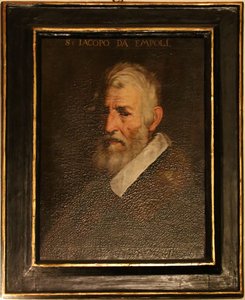
jacopo da empoli
1551 - 1640 , Italy
Quick Facts
- Artistic Movement Or Style: Mannerism, Counter-Maniera
- Artists Or Movements Influenced By This Artist: ['Felice Ficherelli']
- Artists Who Influenced This Artist: ['Maso da San Friano']
- Date Of Birth: April 30, 1551
- Date Of Death: September 30, 1640
- Full Name: Jacopo Chimenti (Empoli)
- Nationality: Italian
- Notable Artworks:
- Deposition
- Madonna...
- Chimenti Family portrait
- Still Life with Games
- Place Of Birth: Florence, Italy

