

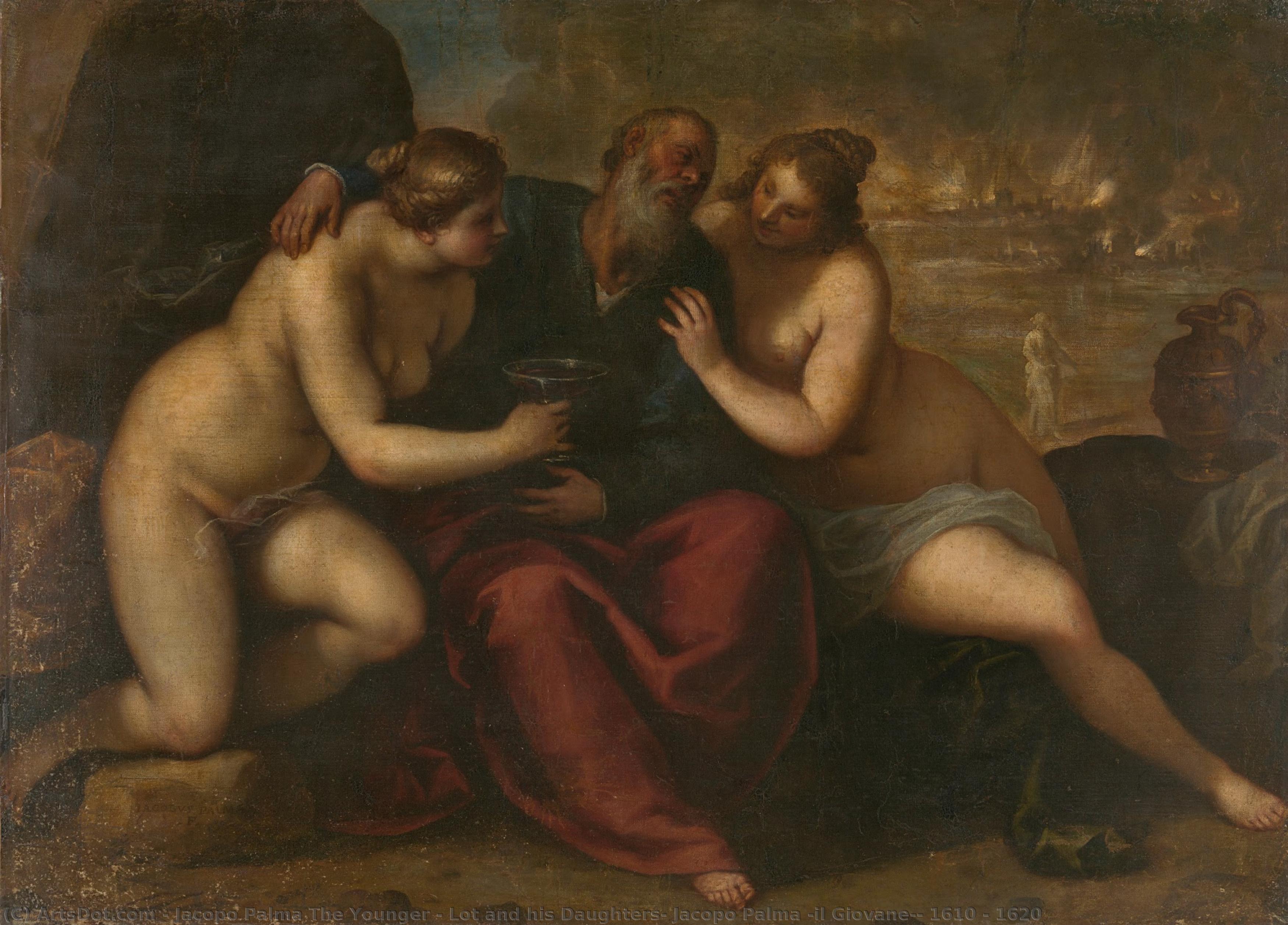
 Preview
 Send
Send Share
Share
 Details

 Download
 Similars
 X-Ray
X-Ray Diaporama
Lot and his Daughters, Jacopo Palma (il Giovane), 1610 - 1620


 Read More
Purchase a high-resolution, enhanced digital image, far superior to the online preview.
Each file is meticulously prepared by our in-house specialists using advanced tools and expert manual retouching. We ensure every image has exceptional clarity, precise color accuracy, and fine detail.
The final file is delivered via email within 72 hours, optimized for immediate use in professional, editorial, and print environments. This is the same quality trusted by top-tier design studios, publishers, and galleries.
Digital Image
Download a high-resolution file for personal display, printing, and creative projects. ( Buy Print Buy Hand Made Painting)
Included in Every Digital Image Order
Expert Digital Delivery, Guaranteed
When you choose ArtsDot.com, you're not just getting an image - you're receiving a professionally enhanced digital artwork, crafted with precision and backed by a satisfaction guarantee. Here's everything that comes with your order, automatically:

Fast Email Delivery
Your high-resolution digital image file will be emailed to you within 72 hours of ordering - ready for immediate use.

AI-Enhanced Digital File
Your artwork is professionally optimized using advanced AI tools and manual editing, ensuring maximum detail, clarity, and color accuracy.

Free Lifetime Re-Delivery
Accidentally deleted or lost your file? No worries - we'll resend it to you anytime, free of charge.

No Import Fees - Ever
Enjoy your artwork instantly with zero customs, duties, or delivery fees - digital downloads are always tax-free.

Color Accuracy Guarantee
We ensure your digital image reflects the original colors as closely as possible using professional tools and color management.

60-Day Satisfaction Guarantee
If you're not satisfied with your digital image, we'll revise it or refund 100% within 60 days - no questions asked.

100% Money-Back Guarantee
Not satisfied? Get a full refund within 60 days of receiving your digital file - no questions asked.

Bulk Order Discounts
Buy 3 images, save 10% - Buy 5, save 15% - Buy 10+, save 20%. Great for creative projects, galleries, and agencies.
Related Artworks
Artist Biography
A Venetian Legacy: The Life and Art of Jacopo Palma il Giovane
Jacopo Palma il Giovane, born in Venice around 1548 and passing away in 1628, stands as a compelling figure bridging the High Renaissance with the burgeoning Baroque era. He wasn’t merely an inheritor of artistic tradition; he was a dynamic interpreter, absorbing the lessons of his predecessors while forging a distinctive style that resonated throughout Italy and Central Europe. His lineage itself speaks to this connection – he was the great-nephew of the celebrated Palma Vecchio, a relationship that initially defined expectations but ultimately allowed him to develop an individual voice within the vibrant Venetian school. Palma il Giovane’s early life was steeped in artistic atmosphere; his father, Antonio Nigreti, though a minor painter himself, ensured young Jacopo received foundational training within the workshop of Bonifacio de' Pitati, who had been a key assistant to Palma Vecchio. This grounding provided a crucial understanding of color, composition, and the Venetian approach to painting—an emphasis on rich textures, luminous light, and sensual forms.From Urbino to Prague: A Career Shaped by Patronage
The trajectory of Palma il Giovane’s career was significantly influenced by patronage. In 1567, his talent caught the eye of Guidobaldo II della Rovere, Duke of Urbino, a discerning collector who recognized the young artist's potential. For four formative years, Palma resided at the ducal court, an experience that broadened his artistic horizons and exposed him to different aesthetic sensibilities. This period was followed by a sojourn in Rome, further refining his skills and introducing him to a wider network of artists and connoisseurs. However, it was upon his return to Venice that Palma truly began to establish himself as a leading figure. The death of Tintoretto in 1594 created a void at the apex of Venetian painting, and Palma skillfully stepped into this role, becoming the city’s dominant artist. His reputation soon extended beyond the lagoon, attracting commissions from prominent figures, most notably Emperor Rudolph II in Prague. This imperial patronage led to an influx of work for the court, solidifying his international standing and introducing his art to a new audience eager for the splendor of Venetian painting.A Synthesis of Styles: Tintoretto, Titian, and Palma’s Unique Vision
Palma il Giovane's artistic style is characterized by a fascinating synthesis of influences. While deeply rooted in the traditions of his great-uncle, Palma Vecchio—evident in his early works with their elegant figures and refined compositions—he increasingly absorbed the dramatic energy of Tintoretto and the coloristic brilliance of Titian. He didn’t simply imitate these masters; rather, he distilled their strengths into a personal idiom. His paintings often feature dynamic compositions reminiscent of Tintoretto, filled with swirling movement and heightened emotion. However, unlike Tintoretto's sometimes stark chiaroscuro, Palma favored a warmer palette and a more sensual treatment of the human form, echoing Titian’s mastery of color and texture. Religious scenes formed a significant portion of his oeuvre, often depicting moments of intense spiritual drama with a theatrical flair. He also excelled in mythological subjects, showcasing his ability to render classical narratives with grace and sophistication.Themes and Techniques: Capturing the Venetian Spirit
Palma il Giovane’s paintings are not merely visually striking; they are imbued with a distinctly Venetian spirit. He possessed an exceptional talent for capturing the interplay of light and shadow, creating a sense of atmosphere and depth that draws the viewer into the scene. His use of color was particularly noteworthy—rich, vibrant hues applied with a loose brushstroke that anticipates the Baroque emphasis on painterly effects. He frequently employed complex compositions, often featuring numerous figures arranged in dynamic groupings, reflecting the bustling energy of Venetian life.- His religious works often emphasize the humanity of biblical characters.
- Mythological scenes are characterized by a sense of elegance and refinement.
- Palma’s portraits reveal his skill in capturing both physical likeness and psychological depth.
Historical Significance: A Bridge Between Eras
Jacopo Palma il Giovane’s legacy extends beyond his impressive body of work. He represents a crucial link between the High Renaissance ideals of harmony and balance and the more dynamic, emotionally charged aesthetic of the Baroque period. His ability to synthesize the styles of his predecessors while developing a distinctive voice made him one of the most sought-after artists of his time. His influence can be seen in the work of numerous later painters, particularly those who embraced the Venetian tradition of colorism and painterly effects. Interred in the Basilica di San Giovanni e Paolo—a traditional burial place for the Doges of Venice—Palma il Giovane’s final resting place serves as a fitting tribute to an artist who played a pivotal role in shaping the artistic landscape of his city and beyond, leaving behind a vibrant testament to the enduring power of Venetian painting.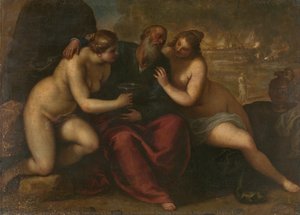
jacopo palma the younger
1628 , Italy
Quick Facts
- Artistic Movement Or Style: Venetian School
- Artists Who Influenced This Artist:
- Tintoretto
- Titian
- Date Of Birth: ca. 1548
- Date Of Death: 1628
- Full Name: Jacopo Palma il Giovane
- Nationality: Italian
- Place Of Birth: Venice, Italy

