

 Preview
 Send
Send Share
Share
 Details

 Download
 Similars
 X-Ray
X-Ray Diaporama
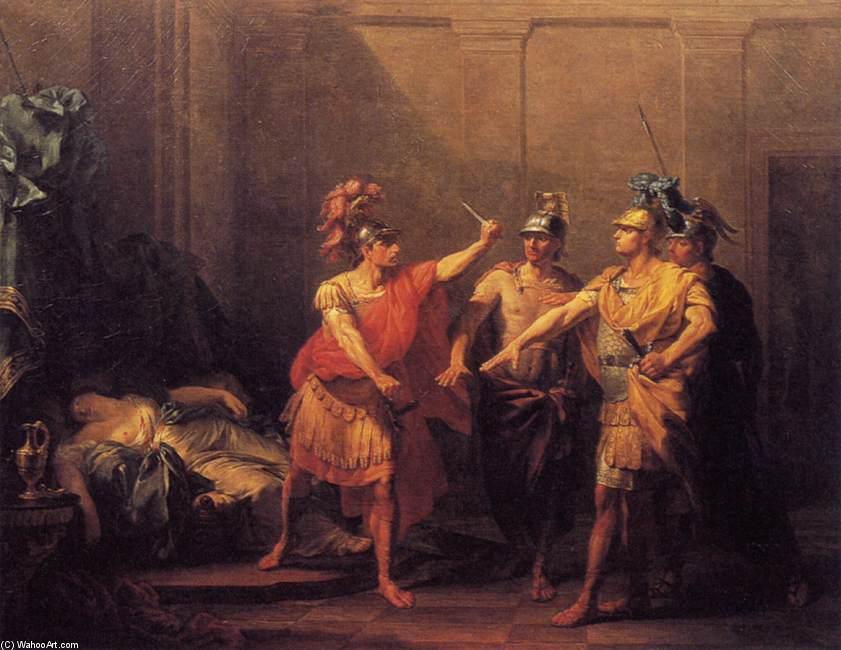
The Oath of Brutus
 1771
1771 129.0 x 167.0 cm
 Musée Municipal Frederic Blandin
 Read More
Hand Made Oil Reproduction
Hand-painted oil on canvas in your size and frame, made to order by our artists. ( Buy Print Buy Image)




































Pick from our preset sizes that match the artwork's original proportions.

You may enter your own dimensions to fit a specific frame or space. If your selected size does not match the original image's proportions, we will either crop the artwork or extend the painting with additional hand-painted elements. A digital mockup will be sent for your approval before production begins.
Please note that the on-screen preview does not reflect the actual cropping or extension. Only the mockup will accurately show the final composition.
While custom sizes are available, we recommend selecting a dimension from the predefined list to preserve the original proportions.
After order, ArtsDot.com team will email client for instructions and provide a mockup preview
Worldwide Delivery () in 3/4 weeks instead of standard 5 weeks. (17 August). No compromise on quality.

Free Worldwide Express Shipping

High-Quality Linen Canvas

Full Shipping Insurance

Customs Tax Refund Guarantee

True Color Matching Guarantee

60-Day Return Policy (Defects Only)

100% Money-Back Guarantee

Bulk Discount Offer
 Glass option is only available in size under 110 CM

The Oath of Brutus
Reproduction Medium
Reproduction Size
-


Total Price
$ 263
Related Artworks
Artist Biography
Early Life and Training
Jacques Antoine Beaufort (1721 in Paris – 1784 in Rueil), was a French neoclassical painter whose career spanned the mid-18th century, leaving behind a legacy primarily defined by his monumental history paintings. Despite limited biographical details surviving from his formative years, Beaufort’s artistic journey began within the vibrant intellectual milieu of Parisian academies—specifically, the Marseille Académie—where he honed his skills as a drawing instructor. The precise circumstances surrounding his initial training remain obscure, hinting at an education outside the formal institutions of Paris itself, a characteristic common among artists of his era who sought patronage and recognition beyond the capital’s artistic circles. His acceptance into the Académie Royale in 1766 marked a pivotal moment, solidifying his position within the established artistic hierarchy and granting him access to influential networks that would propel his career forward.Notable Works and Artistic Style
Beaufort's fame rests principally upon “Oath of Brutus,” executed in 1771 for the Salon, a masterpiece that exemplifies the stylistic conventions of neoclassical painting. This monumental canvas depicts Lucretia’s assassination and Brutus’s solemn vow to avenge her honor—a subject deeply rooted in Roman mythology and history—reflecting the prevailing fascination with classical ideals during the Enlightenment. Beaufort skillfully employed dramatic lighting and architectural grandeur to convey a sense of heroic resolve, mirroring the compositional innovations championed by artists like Gavin Hamilton and Domenico Cunego, whose “Oath of Brutus” had captivated audiences just prior. However, Beaufort’s approach differed subtly from Hamilton's, prioritizing directness and emotional intensity over picturesque embellishments—a stylistic preference that foreshadowed David’s own groundbreaking rendition in 1784. The painting’s meticulous detail and masterful handling of color underscore Beaufort’s commitment to artistic excellence. Beyond “Oath of Brutus,” Beaufort produced other significant works including “Roman Charity” (Salon 1777) and “Death of Calamus in the Presence of Alexander” (Salon 1779), demonstrating his versatility as a painter across diverse historical narratives.Influence and Legacy
Beaufort’s artistic endeavors coincided with a period of profound intellectual transformation—the Enlightenment—during which classical ideals served as inspiration for artists and thinkers alike. His embrace of Roman history painting, particularly the depiction of heroic figures confronting moral dilemmas, resonated powerfully with contemporary audiences and established him as an influential voice within the neoclassical movement. Notably, Beaufort’s “Oath of Brutus” directly influenced Jacques-Louis David's own monumental canvas—a testament to the transmission of artistic ideas across generations. Furthermore, Beaufort’s meticulous technique and unwavering dedication to portraying historical events contributed to the development of a distinctly French aesthetic that distinguished itself from its British counterpart. Although Beaufort’s oeuvre remained relatively modest in quantity compared to some of his contemporaries, his contribution to shaping the visual culture of the 18th century is undeniable.Later Life and Recognition
Beaufort continued to exhibit at the Salon until his death in 1784, securing royal patronage and establishing himself as a respected artist within Parisian society. Despite facing setbacks—such as the rejection of his tapestry designs by the Gobelins manufactory—Beaufort persevered in his artistic pursuits, demonstrating resilience and unwavering belief in his craft. His passing marked the end of an era for French neoclassical painting, leaving behind a singular masterpiece that continues to inspire admiration and scholarly study. Beaufort’s legacy resides not only in his enduring artwork but also in his role as a teacher and mentor—passing on his knowledge and passion for art to future generations—solidifying his place within the annals of French artistic history.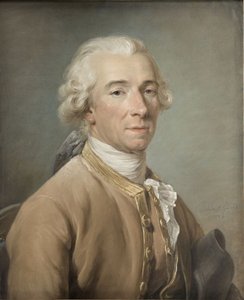
jacques antoine beaufort
1721 - 1784 , France
Quick Facts
- Artistic Movement Or Style: Neoclassical Art
- Artists Or Movements Influenced By This Artist: ['Oath of Brutus']
- Artists Who Influenced This Artist:
- Gavin Hamilton
- David
- Date Of Birth: Paris, France (1721)
- Date Of Death: 1784
- Full Name: Jacques Antoine Beaufort
- Nationality: French
- Notable Artworks:
- Oath of Brutus
- Roman Charity
- Death of Calamus
- Place Of Birth: Paris


