 Preview
 Send
Send Share
Share
 Details

 Download
 Similars
 X-Ray
X-Ray Diaporama
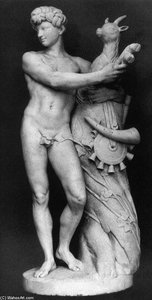
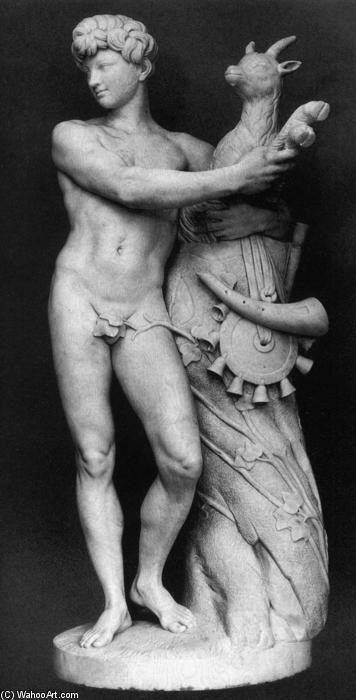
Faun Holding a Goat


 Read More
Giclée / Art Print
Museum-quality giclée or canvas print with fast production and flexible finish options. ( Buy Hand Made Painting Buy Image)




































Pick from our preset sizes that match the artwork's original proportions.

You may enter your own dimensions to fit a specific frame or space. If your selected size does not match the original image's proportions, we will either crop the artwork or extend the image with a mirrored or solid-fill edge. A digital mockup will be sent for your approval before production begins.
Please note that the on-screen preview does not reflect the actual cropping or extension. Only the mockup will accurately show the final composition.
While custom sizes are available, we recommend selecting a dimension from the predefined list to preserve the original proportions.
Worldwide Delivery () in 2 weeks instead of standard 4/5 weeks. (24 August)

Free Worldwide Express Shipping

High-Quality Linen Canvas

Full Shipping Insurance

Customs Tax Refund Guarantee

True Color Matching Guarantee

60-Day Return Policy (Defects Only)

100% Money-Back Guarantee

Bulk Discount Offer
 Glass option is only available in size under 110 CM

Faun Holding a Goat
Giclée / Art Print
Reproduction Size
-


Total Price
$ 63
Related Artworks



Artist Biography
A Sculptor of Enlightenment: The Life and Legacy of Jacques Saly
The history of eighteenth-century sculpture is often told through the lens of grand royal commissions and the pursuit of classical perfection, a narrative in which Jacques François Joseph Saly stands as a luminous figure. Born in 1717 in Valenciennes, France, Saly’s journey from a provincial apprentice to a central pillar of European neoclassicism is a testament to the era's burgeoning artistic mobility. His early training began at the tender age of nine under the local master Antoine Gilles, but his profound talent soon beckoned him toward the heart of the French art world. By 1732, he had arrived in Paris, immersing himself in the prestigious studio of Guillaume Coustou and attending the Académie royale de peinture et de sculpture. It was within these hallowed halls that Saly began to refine a style characterized by anatomical precision and a graceful command over form, earning him several medals that signaled the arrival of a master in the making.
Saly’s artistic identity was forged in the crucible of French grandeur, yet his most enduring impact would be felt far beyond the borders of his homeland. While his early years were steeped in the opulent traditions of the French court, his career took a transformative turn when he moved into the international sphere, working across France, Italy, and Malta. However, it was in Denmark that Saly truly found his monumental stage. His appointment as the Director of the Royal Danish Academy of Art from 1754 to 1771 was more than a professional milestone; it was a cultural mission. Under the patronage of the Danish crown, specifically during the era of Christian VII, Saly became an architect of national identity, blending the sophisticated aesthetics of French Neoclassianism with the ambitious architectural projects of the Danish Enlightenment.
Mastery in Marble and Bronze
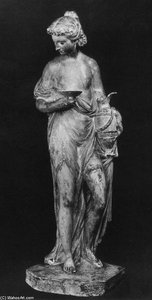
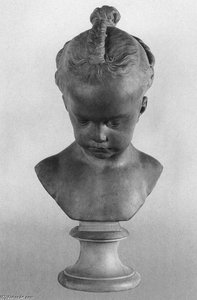
The breadth of Saly’s oeuvre reflects a remarkable ability to navigate between the delicate intimacy of portraiture and the overwhelming scale of public monuments. His works often capture a sense of timelessness, where the cold rigidity of stone is breathed into life through meticulous detail. In pieces such as Hebe, one can observe his profound connection to classical mythology, utilizing the elegance of the Greek goddess to showcase a mastery of drapery and soft, flowing lines that suggest movement even in stillness. Similarly, his Head of a Girl demonstrates an exquisite sensitivity to the human form, capturing a fleeting moment of youthful grace with a tenderness that resonates across centuries.
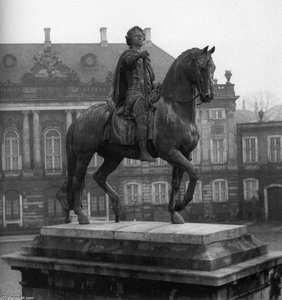
Beyond the delicate, Saly possessed a rare talent for the monumental and the anatomical. His most celebrated achievement remains the Equestrian Statue of Frederick V of Denmark, located at Amalienborg. This colossal work serves as a pinnacle of his career, representing a triumph of technical skill and symbolic power. The statue, which depicts the monarch on horseback, required an extraordinary understanding of equine anatomy—a subject Saly studied with obsessive devotion. Through this work, he achieved a seamless integration of royal propaganda and artistic excellence, creating a landmark that continues to define the architectural landscape of Copenhagen.
The hallmarks of his technical development include:
- Anatomical Accuracy: A rigorous dedication to the study of musculature, particularly evident in his equine models and mythological figures.
- Neoclassical Harmony: The ability to balance the grandeur of classical themes with a clarity of composition that avoids unnecessary ornamentation.
- Material Versatility: An expert command over both the softness required for marble portraiture and the strength necessary for large-scale bronze casting.
A Lasting Impression on European Art
The historical significance of Jacques Saly lies in his role as a cultural bridge. He did not merely transplant French style to Northern Europe; rather, he helped cultivate a unique artistic synthesis that elevated the Danish Academy to international prominence. By collaborating with figures such as Nicolas Henri Jardin, Saly contributed to an era of architectural and sculptural innovation that sought to rival the great capitals of Europe. His life’s work represents the very essence of the Enlightenment—a period defined by the pursuit of order, the celebration of reason, and the elevation of human achievement through the beauty of the arts.
Though he passed away in 1776 in his native Valenciennes, Saly’s influence endured through the institutions he led and the monuments he left behind. He remains a vital figure for any student of the Neoclassical movement, embodying the transition from the ornate flourishes of the Rococo to the disciplined, noble simplicity that would define the modern era of sculpture. His legacy is etched not just in the marble of Copenhagen, but in the very spirit of European artistic excellence.
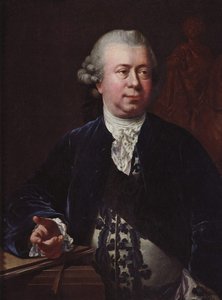
jacques françois joseph saly
1717 - 1776 , France
Quick Facts
- Artistic Movement Or Style: Neoclassical
- Artists Or Movements Influenced By This Artist: ['French Academy']
- Artists Who Influenced This Artist:
- Jean-Baptiste Girardon
- Nicolas Beauvais
- Date Of Birth: June 20, 1717 Valenciennes, France
- Date Of Death: May 4, 1776 Valenciennes, France
- Full Name: Jacques François Joseph Saly
- Nationality: French
- Notable Artworks:
- Equestrian Statue of Frederick V
- Head of a Girl
- Hebe
- Place Of Birth: Valenciennes, France