 Preview
 Send
Send Share
Share
 Details

 Download
 Similars
 X-Ray
X-Ray Diaporama
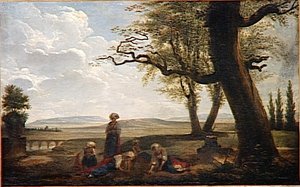
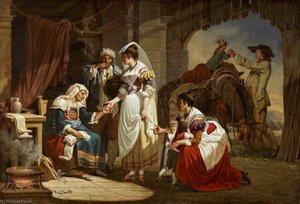
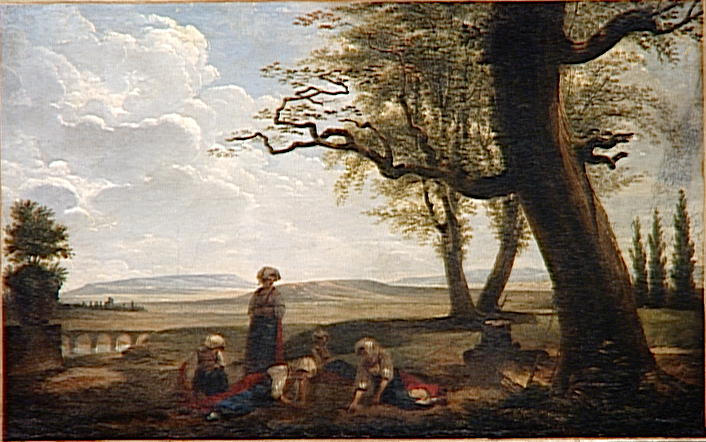
PAYSANNES DE FRASCATI DANS UN PAYSAGE

 Read More
Giclée / Art Print
Museum-quality giclée or canvas print with fast production and flexible finish options. ( Buy Hand Made Painting Buy Image)




































Pick from our preset sizes that match the artwork's original proportions.

You may enter your own dimensions to fit a specific frame or space. If your selected size does not match the original image's proportions, we will either crop the artwork or extend the image with a mirrored or solid-fill edge. A digital mockup will be sent for your approval before production begins.
Please note that the on-screen preview does not reflect the actual cropping or extension. Only the mockup will accurately show the final composition.
While custom sizes are available, we recommend selecting a dimension from the predefined list to preserve the original proportions.
Worldwide Delivery () in 2 weeks instead of standard 4/5 weeks. (25 August)

Free Worldwide Express Shipping

High-Quality Linen Canvas

Full Shipping Insurance

Customs Tax Refund Guarantee

True Color Matching Guarantee

60-Day Return Policy (Defects Only)

100% Money-Back Guarantee

Bulk Discount Offer
 Glass option is only available in size under 110 CM

PAYSANNES DE FRASCATI DANS UN PAYSAGE
Giclée / Art Print
Reproduction Size
-


Total Price
$ 63
Related Artworks





Artist Biography
A Legacy of Light: The Life and Art of Jacques-Henri Sablet
The history of eighteenth-century painting is often told through the grand, sweeping gestures of monumental history painters, yet some of its most profound beauty resides in the quiet, sun-drenched moments captured by masters of genre. Jacques-Henri Sablet, a Swiss-born painter who would eventually leave an indelible mark on the Parisian art scene, was such a master. Born in 1749 in Morges, near Lausanne, Sablet’s early life was steeped in the traditions of craftsmanship. As the son of Jacob Sablet, a respected gilder and picture dealer, his very foundation was built upon an intimate understanding of color, texture, and the meticulous detail required to adorn the grand estates of Europe. This upbringing instilled in him a reverence for the fine details that would later define his ability to breathe life into the seemingly mundane.
Sablet’s journey from the shores of Lake Geneva to the heart of the French art world was a path paved with ambition and academic rigor. After initial training in Lausanne, he moved through Lyon before arriving in Paris in 1772. It was here, alongside his brother Jean-François, that he entered the prestigious Académie royale de peinture et de sculpture. Under the tutelage of Joseph-Marie Vien, Sablet began to refine a style that balanced the structured elegance of Neoclassicism with a burgeoning sensitivity toward light and atmosphere. While his brother found success within the rigid hierarchies of the Academy, Jacques-Henri’s path was more wandering and perhaps more poetic, leading him away from the formal constraints of historical epic toward the intimate charm of landscape and genre painting.
The Roman Influence and the Painter of the Sun
A pivotal transformation occurred in 1775 when Sablet traveled to Rome, a move that would fundamentally alter the trajectory of his career. Immersed in the classical grandeur of Italy, he became part of a vibrant community of expatriate artists, earning various monikably names such as Sablet le Romain or even le peintre du Soleil—the painter of the Sun. This period was not merely about studying ancient ruins; it was an era of profound emotional discovery. His work began to reflect the warmth of the Italian light and the idyllic, often nostalgic, atmosphere of the Roman countryside.
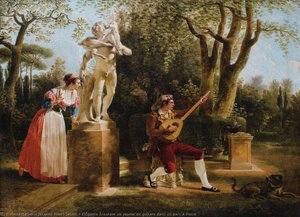
One of his most poignant achievements from this era is Les premiers pas de l'enfance (Primi passi), a work that showcases his ability to capture the fleeting innocence of childhood. In this piece, as in much of his Roman output, there is a masterful use of light that seems to glow from within the canvas, lending a sense of eternal peace to the scene. His fascination with the Campagna—the sweeping Italian landscapes—allowed him to explore themes of romance, music, and leisure. Whether depicting an elegant figure listening to a guitarist in a tranquil park or the rhythmic labor of Italian washerwomen, Sablet possessed a unique gift for elevating everyday life into something timeless and sublime.
Artistic Significance and Enduring Charm
As the eighteenth century transitioned into the nineteenth, Sablet’s work stood as a bridge between the ordered grace of the Enlightenment and the emotive depth of the Romantic movement. Though he may not have sought the political or religious grandiosity of his contemporaries, his significance lies in his ability to find the extraordinary within the ordinary. His paintings serve as windows into a lost world of 18th-century elegance, where the rustle of silk and the soft shadows of an Italian afternoon are preserved with exquisite precision.
The enduring legacy of Jacques-Henri Sablet can be summarized through several key artistic contributions:
- Mastery of Light: His ability to manipulate luminosity, earning him the reputation of a painter who could capture the very essence of sunlight.
- Genre Innovation: The elevation of everyday Parisian and Roman scenes into works of high art, focusing on human connection and atmosphere.
- Cultural Synthesis: A unique stylistic blend that merged his Swiss-French training with the classical inspirations found in Italy.
- Emotional Resonance: A profound sensitivity to themes of childhood, romance, and the quiet beauty of nature.
Though he passed away in Paris in 1803, Sablet’s vision remains vibrant. His works continue to enchant collectors and historians alike, offering a serene escape into an era defined by grace, light, and the simple joys of existence.
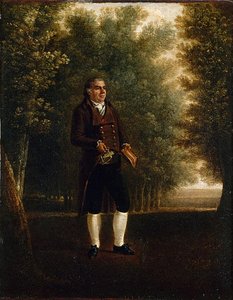
jacques henri sablet
1749 - 1803
Quick Facts
- Artistic Movement Or Style: Campagna Paintings
- Artists Or Movements Influenced By This Artist: ['Jacques Louis David']
- Artists Who Influenced This Artist: ['Joseph Marie Vien']
- Date Of Birth: Jan. 28, 1749
- Full Name: Jacques Henri Sablet
- Nationality: Swiss-French
- Notable Artworks:
- Les premiers pas de l'enfance
- La mort de Pallas
- Place Of Birth: Morges, Switzerland