 Preview
 Send
Send Share
Share
 Details

 Download
 Similars
 X-Ray
X-Ray Diaporama
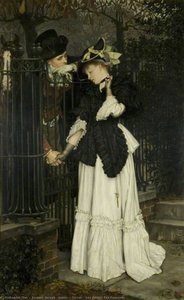
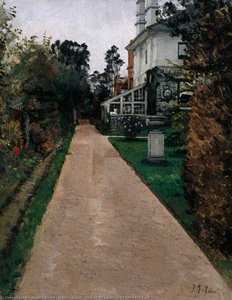
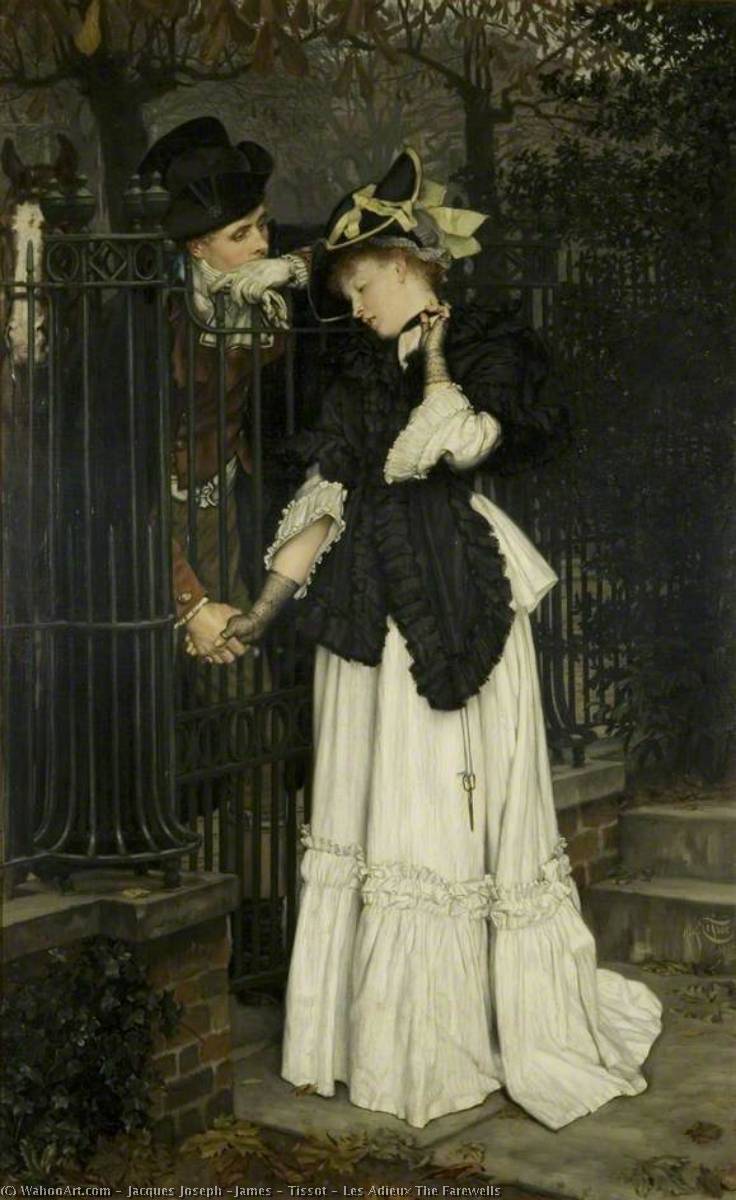
Les Adieux The Farewells
 Contemporary Realism
 1871
1871 100.0 x 63.0 cm
 Bristol Museum - Art Gallery
 Read More
Hand Made Oil Reproduction
Hand-painted oil on canvas in your size and frame, made to order by our artists. ( Buy Print Buy Image)




































Pick from our preset sizes that match the artwork's original proportions.

You may enter your own dimensions to fit a specific frame or space. If your selected size does not match the original image's proportions, we will either crop the artwork or extend the painting with additional hand-painted elements. A digital mockup will be sent for your approval before production begins.
Please note that the on-screen preview does not reflect the actual cropping or extension. Only the mockup will accurately show the final composition.
While custom sizes are available, we recommend selecting a dimension from the predefined list to preserve the original proportions.
After order, ArtsDot.com team will email client for instructions and provide a mockup preview
Worldwide Delivery () in 3/4 weeks instead of standard 5 weeks. (16 August). No compromise on quality.

Free Worldwide Express Shipping

High-Quality Linen Canvas

Full Shipping Insurance

Customs Tax Refund Guarantee

True Color Matching Guarantee

60-Day Return Policy (Defects Only)

100% Money-Back Guarantee

Bulk Discount Offer
 Glass option is only available in size under 110 CM

Les Adieux The Farewells
Reproduction Medium
Reproduction Size
-


Total Price
$ 288
Artwork Description
The Painting's Composition
The scene depicts a man and woman standing close to each other on the street, holding hands as they stand next to a fence. The woman is wearing a dress with a lace collar, while the man appears to be dressed in a suit. In addition to the main couple, there are two more people visible in the background, one of whom seems to be wearing a tie. The scene is set against a backdrop of trees and buildings, creating an urban atmosphere. Key elements of the painting include the use of warm colors, which creates a sense of comfort and closeness between the couple. The brushwork is also noteworthy, with Tissot using bold strokes to convey emotion and texture.Artistic Style and Influences
Jacques Joseph James Tissot's style is characterized by his use of realism and attention to detail. His work was influenced by the Impressionist movement, which emphasized capturing everyday life and modernity. Other notable artists from this period include Claude Monet, known for his painting The Blue House at Zaandam, available on /art/list/?Filter=8XXRFW-Claude-Monet-The-Blue-House-at-Zaandam.Conclusion and Availability
Les Adieux The Farewells is a beautiful example of Tissot's skill as an artist. For those interested in purchasing a handmade oil painting reproduction of this piece, visit /en/art/show/art-arjhfu-en/. Additionally, more information on Tissot and his work can be found on Wikipedia.- View the painting: Les Adieux The Farewells by Jacques Joseph James Tissot
- Purchase a handmade oil painting reproduction on https://ArtsDot.com
- Learn more about the artist and his work on Wikipedia
Related Artworks

Artist Biography
James Jacques Joseph Tissot (1836-1902): A Victorian Visionary Bridging Realism and Impressionism
James Jacques Joseph Tissot, born October 15th, 1836, in Paris, France, was a prolific painter whose career spanned decades and cemented his place as one of the most celebrated artists of the Victorian era. Though initially trained as an architect, Tissot swiftly abandoned this path for the captivating allure of painting, dedicating himself to capturing the grandeur and intricacies of Parisian society alongside profound biblical narratives. His distinctive style—a masterful blend of realism and Impressionistic techniques—continues to fascinate art historians and collectors alike.- Early Life & Artistic Training: Tissot’s formative years were marked by a privileged upbringing within a wealthy family, affording him access to exceptional artistic instruction. He studied architecture at École Polytechnique before transitioning to drawing under Alexandre Cabanel and Jean-Léon Gérôme, absorbing the stylistic influences of academic realism prevalent during his time. These foundational experiences instilled in him a meticulous attention to detail and a disciplined approach to composition—traits that would characterize his entire oeuvre.
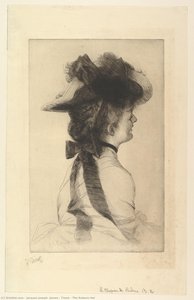
- Victorian Paris & Societal Portraiture: Tissot’s artistic breakthrough arrived with his depictions of Parisian life during the Belle Époque. He meticulously documented scenes from theaters, opera houses, and fashionable gatherings, capturing not only visual splendor but also subtle nuances of social behavior. His canvases—such as “The Rubens Hat” and “Tea”—became iconic representations of Victorian elegance and sophistication, reflecting the anxieties and aspirations of a rapidly changing society.
- Biblical Narratives & Dramatic Composition: Beyond urban landscapes, Tissot excelled in portraying biblical stories with remarkable theatricality. He approached these narratives with an unwavering commitment to historical accuracy combined with expressive brushwork—a hallmark of Impressionism—creating emotionally resonant images that captivated audiences. Notable works include “The Finding of the Holy Grail” and “The Last Supper,” demonstrating his ability to convey spiritual depth alongside visual dynamism.
- Technique & Artistic Evolution: Tissot’s artistic technique evolved considerably throughout his career. Initially favoring academic realism, he gradually embraced Impressionistic influences, experimenting with looser brushstrokes and capturing fleeting moments of light and color. This stylistic shift allowed him to imbue his paintings with a palpable sense of atmosphere and emotion—a departure from the static formality of earlier works.
- Legacy & Historical Significance: Jacques Joseph Tissot died August 8th, 1902, leaving behind an impressive body of work that continues to inspire admiration. His paintings are housed in prominent museums worldwide, including the Bibliothèque Nationale Centrale and the Getty Museum, testament to his enduring artistic legacy. More than simply documenting his era, Tissot elevated painting to a form of storytelling—a powerful blend of observation and imagination that solidified his position as one of the most influential artists of the Victorian period.
Further Exploration
You can delve deeper into Tissot’s artistic journey by visiting these resources:- James Tissot - Wikipedia:https://en.wikipedia.org/wiki/James_Tissot
- Jacques Joseph Tissot - Getty Museum:https://www.getty.edu/art/collection/person/103KY1
- Jacques Joseph Tissot: A Chronicle of Parisian Life & Narrative Evolution:/en/articles/jacques-joseph-tissot-a-chronicle-of-parisian-life-narrative-evolution-en/
- James Tissot (1836-1902), Ambiguously modern | Musée d’Orsay:https://www.musee-orsay.fr/en/whats-on/exhibitions/presentation/james-tissot-1836-1902-ambiguously-modern
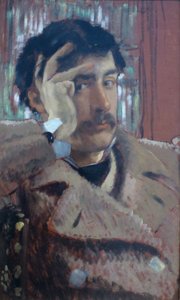
jacques joseph (james ) tissot
1836 - 1902
Quick Facts
- Artistic Movement Or Style: Realism & Impressionism
- Artists Or Movements Influenced By This Artist: ['Impressionism']
- Artists Who Influenced This Artist:
- Gustave Courbet
- Jean-François Millet
- Date Of Birth: October 15, 1836
- Date Of Death: August 8, 1902
- Full Name: Jacques Joseph Tissot
- Nationality: French
- Notable Artworks:
- The Rubens Hat
- Tea
- Place Of Birth: Paris, France
Related Articles

The Enduring Legacy of Oil on Canvas: Technique, History & Aesthetic Impact
Explore the rich history & techniques of oil painting – from Renaissance masters to Impressionism. Discover pigments, layering methods, and why this timeless medium endures. Expert insights for artists & art enthusiasts.

Oil on Canvas: A Historical & Technical Exploration of a Timeless Artistic Medium
Explore the rich history & enduring techniques of oil painting on canvas. Discover the science behind its longevity, conservation practices, and contemporary relevance. Expert insights for art enthusiasts.

The Enduring Legacy of Oil on Canvas: Technique, History & Contemporary Practice
Explore the rich history & enduring techniques of oil painting on canvas. Discover the science behind its longevity, conservation practices, and contemporary relevance. Expert insights for art enthusiasts.
Oil on Canvas Masters: 10 Paintings That Redefined Art History |
Journey through art history with our guide to 10 legendary oil on canvas masterpieces! Explore iconic works by Van Gogh, Monet & Rembrandt. Find museum-quality reproductions and elevate your home decor at . Discover all masterpieces online.
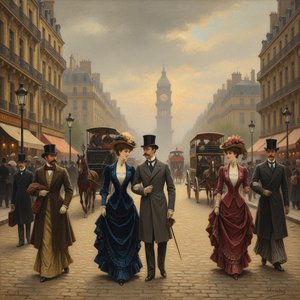
Jacques Joseph Tissot: A Chronicle of Parisian Life & Narrative Evolution
Explore the captivating world of Jacques Joseph Tissot, a master painter of Belle Époque society. Discover his realism, Impressionistic style, and lasting influence on art history. Learn more at ArtsDot.