

 Preview
 Send
Send Share
Share
 Details

 Download
 Similars
 X-Ray
X-Ray Diaporama
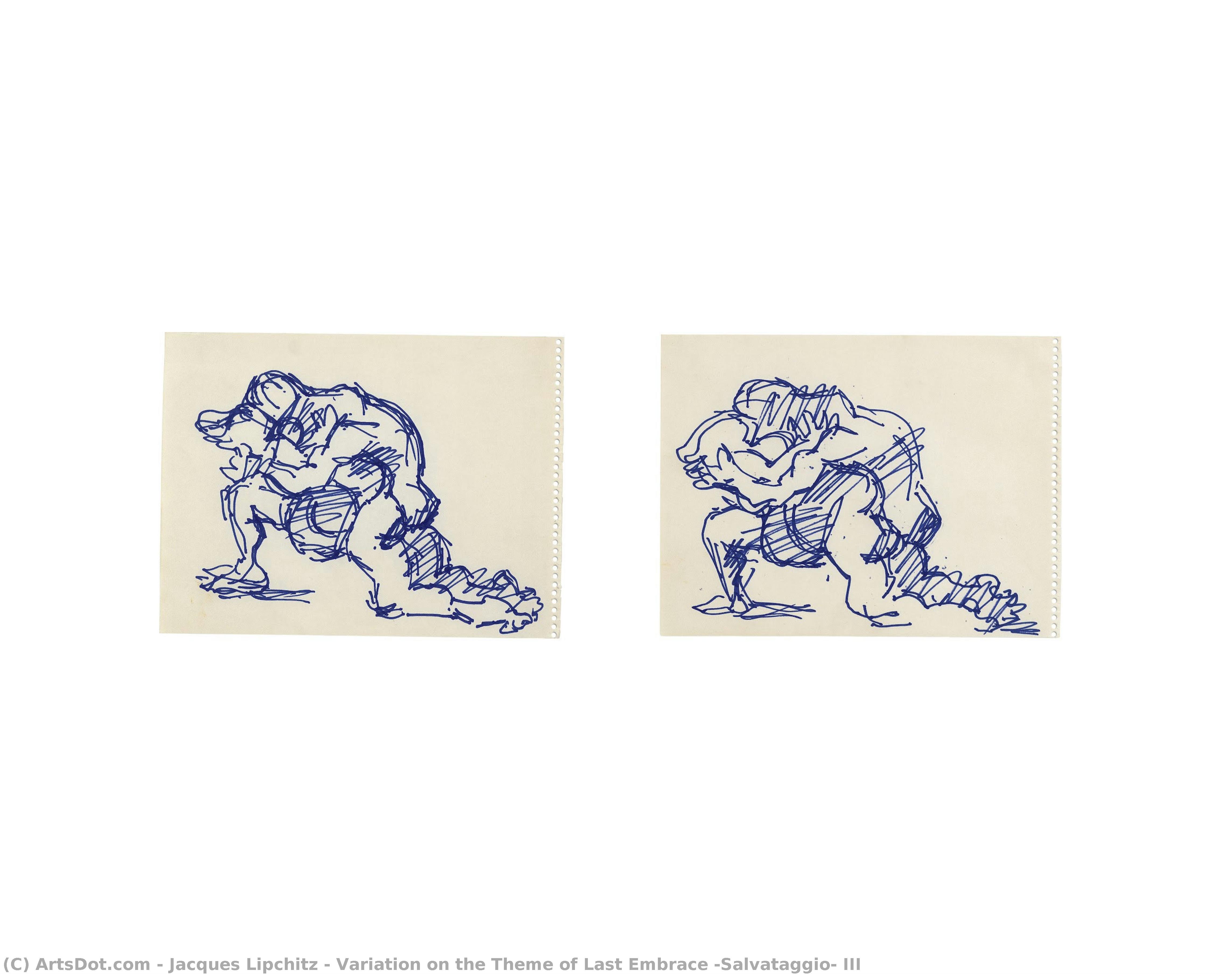
Variation on the Theme of Last Embrace (Salvataggio) III
 Acrylic On Canvas
- WallArt
- Cubism
 1972
1972 32.0 x 67.0 cm
 Guggenheim Museum Bilbao
 Read More
Purchase a high-resolution, enhanced digital image, far superior to the online preview.
Each file is meticulously prepared by our in-house specialists using advanced tools and expert manual retouching. We ensure every image has exceptional clarity, precise color accuracy, and fine detail.
The final file is delivered via email within 72 hours, optimized for immediate use in professional, editorial, and print environments. This is the same quality trusted by top-tier design studios, publishers, and galleries.
Digital Image
Download a high-resolution file for personal display, printing, and creative projects. ( Buy Print Buy Hand Made Painting)
Included in Every Digital Image Order
Expert Digital Delivery, Guaranteed
When you choose ArtsDot.com, you're not just getting an image - you're receiving a professionally enhanced digital artwork, crafted with precision and backed by a satisfaction guarantee. Here's everything that comes with your order, automatically:

Fast Email Delivery
Your high-resolution digital image file will be emailed to you within 72 hours of ordering - ready for immediate use.

AI-Enhanced Digital File
Your artwork is professionally optimized using advanced AI tools and manual editing, ensuring maximum detail, clarity, and color accuracy.

Free Lifetime Re-Delivery
Accidentally deleted or lost your file? No worries - we'll resend it to you anytime, free of charge.

No Import Fees - Ever
Enjoy your artwork instantly with zero customs, duties, or delivery fees - digital downloads are always tax-free.

Color Accuracy Guarantee
We ensure your digital image reflects the original colors as closely as possible using professional tools and color management.

60-Day Satisfaction Guarantee
If you're not satisfied with your digital image, we'll revise it or refund 100% within 60 days - no questions asked.

100% Money-Back Guarantee
Not satisfied? Get a full refund within 60 days of receiving your digital file - no questions asked.

Bulk Order Discounts
Buy 3 images, save 10% - Buy 5, save 15% - Buy 10+, save 20%. Great for creative projects, galleries, and agencies.
Collectible Description
Jacques Lipchitz: Variation on the Theme of Last Embrace (Salvataggio) III
Variation on the Theme of Last Embrace (Salvataggio) III by Jacques Lipchitz stands as a testament to the artist’s enduring fascination with duality—the interplay between love and conflict, tenderness and aggression—themes that permeate his entire oeuvre. Executed in 1970-72, this drawing embodies Lipchitz's signature crystalline Cubist style, reflecting a pivotal moment in his artistic evolution following the initial embrace of abstraction in the early 1910s. The piece resides within the Guggenheim Museum Bilbao Collection, offering visitors an intimate glimpse into the creative process behind one of Lipchitz’s final sculptural endeavors.- Subject Matter: At its core, the drawing depicts two embracing figures—a motif recurrent throughout Lipchitz's artistic journey—representing a dynamic tension between connection and opposition. This recurring theme speaks to the artist’s exploration of human relationships and their inherent contradictions.
- Style & Technique: Lipchitz’s approach is characterized by expressive sketching, prioritizing immediacy and emotional resonance over meticulous realism. Thick blue lines define the forms with bold confidence, conveying a sense of movement and energy despite the simplified geometric shapes employed. The technique relies heavily on line drawing, eschewing shading or detailed rendering to maintain an informal aesthetic that captures the essence of the subject matter.
- Composition: The diptych format—two mirrored sketches—amplifies this duality, mirroring the intertwined figures and reinforcing the compositional balance. Symmetry contributes to a feeling of quiet contemplation, inviting viewers to consider the subtle nuances of human interaction.
- Historical Context: Lipchitz’s work emerged during the post-war period, reflecting the broader artistic currents of Crystal Cubism—a stylistic shift away from the fragmented geometric forms of Picasso and Braque toward a more lyrical exploration of sculptural space. This evolution underscores Lipchitz's commitment to pushing boundaries while retaining recognizable elements of human anatomy.
- Symbolic Significance: Beyond its formal qualities, Variation on the Theme of Last Embrace delves into deeper symbolic territory. The embrace itself symbolizes intimacy and vulnerability, yet simultaneously hints at underlying conflict—a visual representation of the complexities inherent in human connection. Art historian Alan Wilkinson aptly describes Lipchitz’s approach as “expressing a tension between extremes,” capturing the artist's profound engagement with fundamental human emotions.
Related Artworks

Artist Biography
A Life Sculpted by Change: The Journey of Jacques Lipchitz
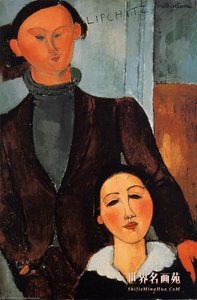
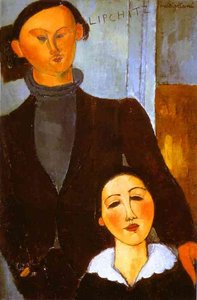
Born Chaim Jacob Lipschitz in 1891 in the Lithuanian town of Druskininkai, Jacques Lipchitz’s artistic path was one dramatically shaped by displacement and innovation. His early life, rooted in a Litvak Jewish family where his father worked as a building contractor, initially steered him towards engineering studies. However, a burgeoning creative spirit, nurtured by his mother's support, propelled him toward Paris in 1909 – a city then pulsating with artistic revolution. He enrolled at the École des Beaux-Arts and the Académie Julian, immersing himself in the vibrant communities of Montmartre and Montparnasse. It was within these circles that he forged friendships with luminaries like Juan Gris, Pablo Picasso, and Amedeo Modigliani – the latter famously capturing Lipchitz and his wife Berthe in a poignant double portrait. These early connections were pivotal, laying the groundwork for Lipchitz’s embrace of Cubism, though one distinctly tempered by his own sensibility.The Crystallization of Form: Lipchitz and Cubist Sculpture
Lipchitz didn't simply translate painting into three dimensions; he *sculpted* Cubism. While deeply influenced by Picasso and Braque’s fractured perspectives, Lipchitz retained a remarkable degree of figuration in his work up to around 1915-16. His sculptures weren’t entirely abstract; they hinted at recognizable forms, imbued with a sense of emotional weight. This evolved into what became known as “Crystal Cubism,” a style characterized by faceting and transparency – an attempt to capture multiple viewpoints simultaneously within a single form. He experimented with fracturing space, creating dynamic compositions that seemed to shimmer with inner light. His 1920 solo exhibition at Léonce Rosenberg’s Galerie L'Effort Moderne in Paris cemented his position as a leading figure of the School of Paris and showcased this unique sculptural language. Works like “Harlequin with Clarinet” exemplify this period, showcasing fragmented forms that still manage to convey a sense of playful energy and human presence. He wasn’t merely deconstructing form; he was rebuilding it according to a new visual logic.Exile and Reinvention: A New World, A Renewed Vision
The looming shadow of World War II forced a profound upheaval in Lipchitz's life. As the Nazi regime tightened its grip on France and persecution of Jews intensified, he was compelled to flee his adopted homeland. With the invaluable assistance of American journalist Varian Fry in Marseille, he escaped to the United States, eventually settling in New York City and later Hastings-on-Hudson. This relocation wasn’t merely a geographical shift; it marked a turning point in his artistic trajectory. While continuing to explore Cubist principles, Lipchitz's work began to take on new dimensions, reflecting the trauma of exile and a growing engagement with existential themes. He created monumental sculptures like “Birth of the Muses” (1944-1950), commissioned in memory of Jerome Wiesner, which demonstrated his mastery of bronze and his ability to convey profound emotion through abstract forms.Late Reflections: Faith, Legacy, and a Tuscan Retreat
In his later years, Lipchitz experienced a deepening connection to his Jewish faith, embracing religious observance with renewed fervor – even studying daily and wearing tefillin at the urging of the Lubavitcher Rebbe, Rabbi Menachem Schneerson. This spiritual awakening infused his work with a new layer of meaning. He returned frequently to Europe, finding solace and inspiration in Pietrasanta, Italy, where he forged a close friendship with fellow sculptor Fiore de Henriquez. His autobiography, co-authored with H. Harvard Arnason and published in 1972 alongside an exhibition at the Metropolitan Museum of Art, offered a poignant reflection on his life and artistic journey. Jacques Lipchitz passed away in Capri, Italy, in 1973, but his body was brought to Jerusalem for burial – a testament to his profound connection to his heritage. His Tuscan villa, Bozio, now serves as a Jewish summer camp, ensuring that his legacy continues to inspire future generations. He left behind not just a remarkable body of sculpture, but also a powerful example of artistic resilience and the enduring human spirit.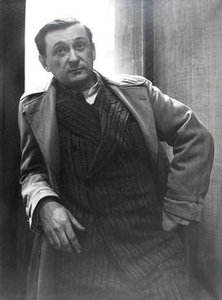
Jacques Lipchitz
1891 - 1973 , Lithuania
Quick Facts
- Artistic Movement Or Style: Cubism, Crystal Cubism
- Artists Who Influenced This Artist:
- Pablo Picasso
- Juan Gris
- Date Of Birth: 1891
- Date Of Death: 1973
- Full Name: Jacques Lipchitz
- Nationality: Lithuanian-French-American
- Notable Artworks:
- Acrobat on horseback
- Instruments de musique
- Le guitariste
- Pierrot
- Harlequin w/ clarinet
- Man with guitar
- Birth of the muses
- Place Of Birth: Druskininkai, Lithuania

