 Send
Send Share
Share
 Details

 Download
 Similars
 Diaporama
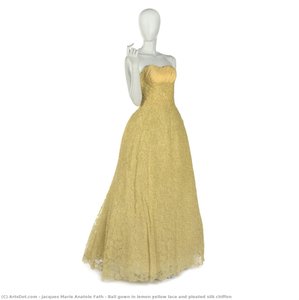
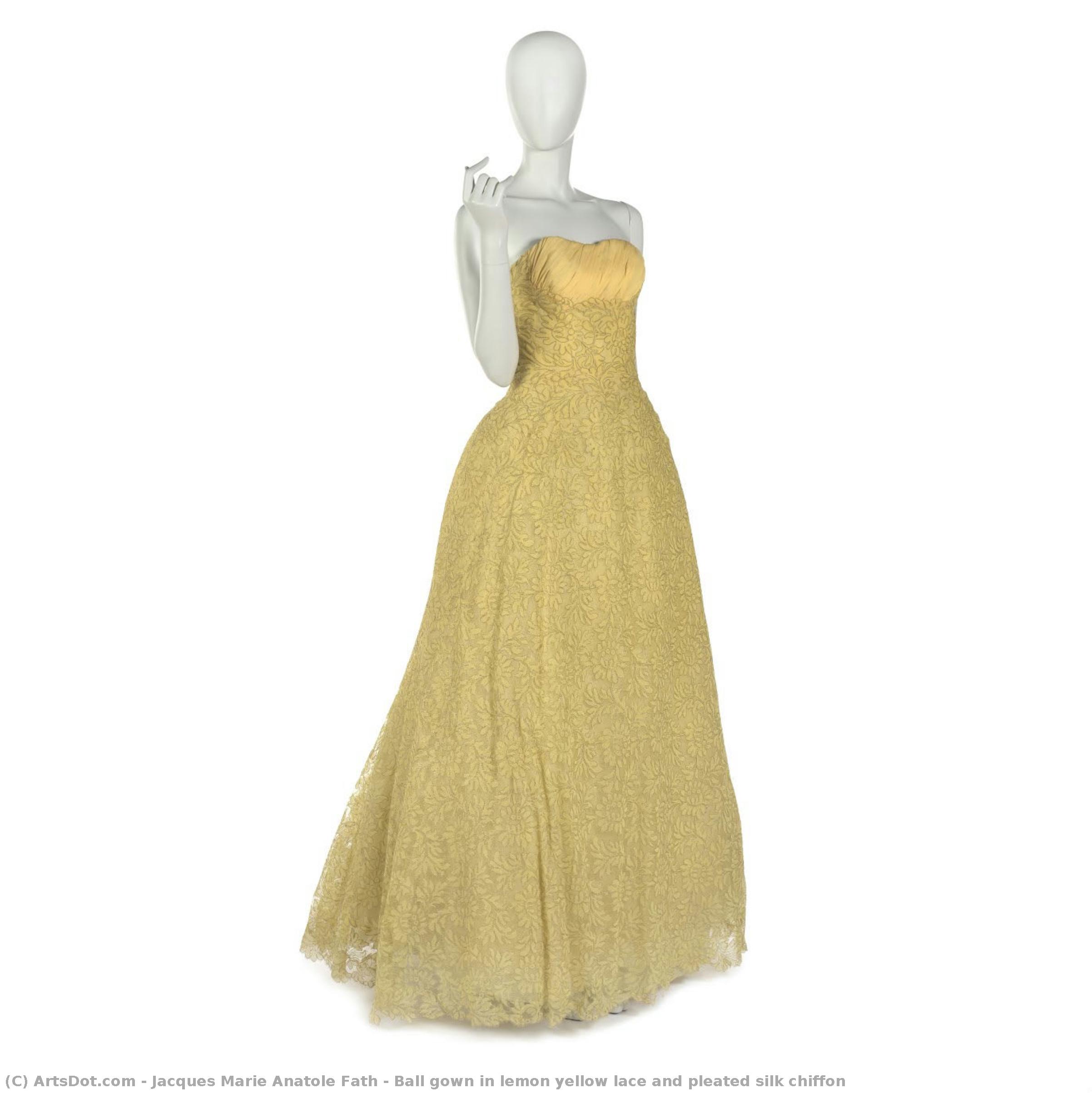
Ball gown in lemon yellow lace and pleated silk chiffon


 Read More
Giclée / Art Print
Museum-quality giclée or canvas print with fast production and flexible finish options. ( Buy Hand Made Painting Buy Image)




































Pick from our preset sizes that match the artwork's original proportions.

You may enter your own dimensions to fit a specific frame or space. If your selected size does not match the original image's proportions, we will either crop the artwork or extend the image with a mirrored or solid-fill edge. A digital mockup will be sent for your approval before production begins.
Please note that the on-screen preview does not reflect the actual cropping or extension. Only the mockup will accurately show the final composition.
While custom sizes are available, we recommend selecting a dimension from the predefined list to preserve the original proportions.
Worldwide Delivery () in 2 weeks instead of standard 4/5 weeks. (3 September)

Free Worldwide Express Shipping

High-Quality Linen Canvas

Full Shipping Insurance

Customs Tax Refund Guarantee

True Color Matching Guarantee

60-Day Return Policy (Defects Only)

100% Money-Back Guarantee

Bulk Discount Offer
 Glass option is only available in size under 110 CM

Ball gown in lemon yellow lace and pleated silk chiffon
Giclée / Art Print
Reproduction Size
-


Total Price
$ 63
A Vision in Lemon Yellow: Jacques Fath’s Ball Gown
The painting of “Ball gown in lemon yellow lace and pleated silk chiffon” by Jacques Marie Anatole Fath isn't merely a depiction of a garment; it’s a frozen moment of Parisian glamour, a testament to the designer’s audacious vision. Executed with meticulous detail, the artwork captures the essence of 1954 haute couture – an era defined by unapologetic femininity and a desire for opulent expression. Fath, born in Maison-Laffitte in 1912, was more than just a fashion creator; he was a weaver of dreams, translating artistic principles into wearable art. His designs, often described as architectural in their construction, prioritized both form and function, resulting in pieces that were as structurally impressive as they were breathtakingly beautiful.
Technique and Materials: A Symphony of Texture
- Lace and Silk Chiffon: The dominant use of lemon yellow lace over a foundation of yellow net-backed China silk immediately draws the eye. Fath’s masterful manipulation of these materials creates a dynamic interplay of textures – the delicate, almost ethereal quality of the lace contrasted with the substantial weight and fluidity of the chiffon.
- Pleating and Layering: The pleated silk chiffon contributes to the gown's voluminous silhouette, while multiple layers of net and silk create depth and movement within the skirt. This layering technique was a hallmark of Fath’s work, adding to the garment’s dramatic effect.
- Gold Thread Embroidery: The strategically placed gold thread edging highlights key design elements – the floral and leaf motifs – elevating the gown to a piece of wearable jewelry.
Historical Context and Symbolism
Created in 1954, this ball gown reflects the post-war optimism and renewed interest in luxury that characterized Parisian fashion at mid-century. The lemon yellow hue itself carries significant symbolic weight – representing joy, prosperity, and a return to celebration after years of austerity. The sweetheart neckline, a popular silhouette of the era, further emphasizes the wearer’s décolletage, reinforcing the theme of feminine allure. The inclusion of a built-in corselet and boned net suggests Fath's commitment to both beauty and structure, reflecting the evolving role of women in society at the time.
The Artist's Legacy
Jacques Fath’s influence on fashion extends beyond his individual designs. He was a pioneer in using innovative construction techniques and challenging conventional notions of femininity. His work anticipated many of the trends that would dominate the 1960s, including the use of bold colors and sculptural forms. This painting serves as a poignant reminder of Fath’s artistic genius and his enduring legacy within the world of haute couture. The image's composition – the woman posed before a mannequin – subtly nods to the atelier process itself, inviting the viewer into the heart of design.
Related Artworks


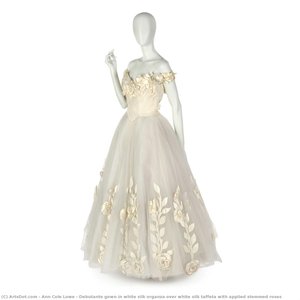
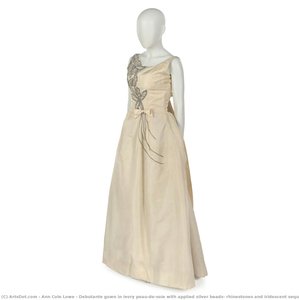
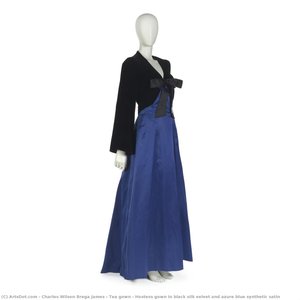
Artist Biography
Jacques Fath: The Parisian Weaver of Dreams
Born in Maison-Laffitte, France, in 1912, Jacques Marie Anatole Fath wasn’t merely a fashion designer; he was an architect of dreams, a conjurer of elegance. His life unfolded against the backdrop of turbulent times – the shadow of war, the rise of fascism – yet from this turmoil emerged a singular vision: to clothe women in garments that whispered of romance, sophistication, and a touch of audacious beauty. Unlike many of his contemporaries who meticulously honed their craft within established ateliers, Fath’s journey was one of intuitive exploration, fueled by an innate artistic sensibility nurtured by a family steeped in creativity. His great-grandfather, Georges Fath, a celebrated playwright, and his paternal grandfather, René-Maurice Fath, a landscape painter, provided a fertile ground for his burgeoning imagination – a lineage that instilled within him a deep appreciation for aesthetics and storytelling.
Fath’s early years were marked by an unconventional education. He eschewed formal training in fashion design, instead immersing himself in the world of museums and books, absorbing the techniques and philosophies of past masters. This self-taught approach allowed him to develop a unique perspective, one that prioritized fluidity, movement, and a profound understanding of the female form. His designs weren’t simply garments; they were expressions of personality, imbued with an almost theatrical quality. He famously stated, “Once upon a time, there was a man named Jacques Fath. He was obsessed with dresses.” This simple declaration encapsulates his entire philosophy – a belief that clothing should be more than mere protection from the elements; it should transport the wearer to another realm.
The Dawn of a New Silhouette
Fath’s ascent began in 1937, when he boldly established his own fashion house at 32 Rue La Boétie in Paris. He quickly gained recognition for his innovative designs, which challenged the prevailing norms of the time. His early collections were characterized by a slender silhouette, emphasizing the natural curves of the female body and creating an illusion of effortless grace. He was a pioneer in introducing thematic collections, a revolutionary concept at the time, demonstrating that fashion could be more than just seasonal trends – it could tell stories, evoke emotions, and transport the wearer to another world. This approach set him apart from many of his contemporaries who adhered to more rigid, traditional design principles.
His signature style was defined by a masterful manipulation of fabric and form. He favored luxurious materials such as silk chiffon, lace, and velvet, expertly layering them to create textures that shimmered and moved with the wearer’s every gesture. The “lily” collection from 1950 is perhaps his most iconic achievement – skirts sculpted into the delicate shapes of blooming flowers, a testament to his ability to seamlessly blend art and fashion. His evening wear designs were equally breathtaking, exemplified by the "ball gown in lemon yellow lace and pleated silk chiffon," a masterpiece of craftsmanship that showcased his meticulous attention to detail and his understanding of color theory.
A Legacy Woven in Glamour
Fath’s influence extended far beyond the Parisian fashion scene. He captivated Hollywood royalty, dressing Ava Gardner, Rita Hayworth, and Greta Garbo – icons who embodied the glamour and sophistication that defined the era. His designs graced the pages of leading fashion magazines, solidifying his reputation as a visionary designer. He wasn't merely a couturier; he was a cultural force, shaping the aesthetic sensibilities of an entire generation.
Following World War II, Fath expanded his creative horizons into perfumery, launching his first fragrance, “Chasuble,” in 1945. This marked a natural extension of his brand – a desire to capture and convey the essence of his designs through scent. His fragrances, like his clothing, were characterized by their sophisticated compositions and evocative aromas.
The Tragic End and Lasting Impact
Tragically, Jacques Fath’s life was cut short in 1954 at the age of 41. He died suddenly in Paris, leaving behind a legacy that continues to inspire designers today. Despite his untimely death, his influence on post-war haute couture is undeniable. His innovative designs, his emphasis on fluidity and movement, and his willingness to challenge conventional norms paved the way for future generations of fashion designers. His work can be found in museums around the world, including the Musée des Arts Décoratifs in Paris and the Kyoto Costume Institute, a testament to his enduring artistic merit.
Jacques Fath wasn’t just a designer; he was an artist who transformed the world of fashion into a canvas for dreams. His legacy lives on through his timeless designs, his innovative spirit, and his unwavering belief in the power of clothing to transport us to another realm.
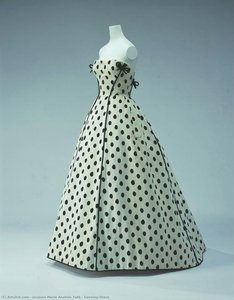
jacques marie anatole fath
1912 - 1954 , France
Quick Facts
- Artistic Movement Or Style: Haute couture
- Artists Or Movements Influenced By This Artist: ['Post-war fashion']
- Artists Who Influenced This Artist:
- Georges Fath
- René-Maurice Fath
- Date Of Birth: September 6, 1912
- Date Of Death: November 13, 1954
- Full Name: Jacques Marie Anatole Fath
- Nationality: French
- Notable Artworks:
- Lily collection
- Evening gowns
- Ball gown (lemon)
- Place Of Birth: Maisons-Laffitte, France
Related Articles
Golden Hues: 10 Masterpieces Dominated by Chrome Yellow | ArtsDot
Immerse yourself in golden light! Explore 10 famous paintings dominated by 'Chrome Yellow', from Van Gogh’s Sunflowers to Monet's Haystacks. Discover the stories behind these iconic Impressionist & Post-Impressionist masterpieces and find museum-quality art reproductions at ArtsDot.com.
Golden Hues: Top 10 Paintings Dominated by Yellow Ochre |
Explore 10 iconic paintings bathed in golden yellow ochre! From Van Gogh's sunflowers to Monet’s haystacks, discover the stories behind these masterpieces. Find museum-quality art reproductions & elevate your home decor on .
The Golden Hue: Exploring Symbolism & Emotion in Yellow Art
Explore the rich symbolism & emotional power of yellow in art history! From Van Gogh to Kandinsky, discover how artists used this vibrant hue. Expert analysis & high-quality reproductions at ArtsDot.
Jacques Joseph Tissot: A Chronicle of Parisian Life & Narrative Evolution
Explore the captivating world of Jacques Joseph Tissot, a master painter of Belle Époque society. Discover his realism, Impressionistic style, and lasting influence on art history. Learn more at ArtsDot.
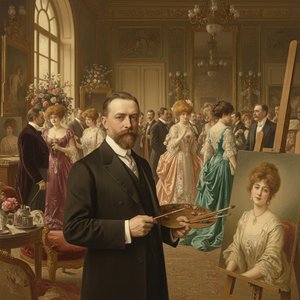
Jacques-Émile Blanche: Capturing Belle Époque Society & the Cult of Personality
Explore the captivating portraits of Jacques-Émile Blanche, a master Impressionist who captured the essence of Belle Époque society in Paris and London. Discover his unique style & lasting legacy.