 Preview
 Send
Send Share
Share
 Details

 Download
 Similars
 X-Ray
X-Ray Diaporama
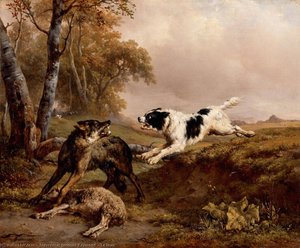
LOUP DEVORANT UNE BREBIS


 Read More
Hand Made Oil Reproduction
Hand-painted oil on canvas in your size and frame, made to order by our artists. ( Buy Print Buy Image)




P118B $10

P118H $10

P118W $10

P438Z $10

P508JH $12

P508YH $12

P805H $10

P805Z $10

P919BZ $10

P919G $10

P919XJ $10

P959ZH $10

P968JZ $12

W106C $8

W218G $10

W218JH $8

W218Y $10

W307PJ $10

W316G $10

W316PJ $8

W316Y $10

W398PJ $8

W4111J $10

W500HY $15

W500JH $15

W692G $12

W849H $8

W940BG $15

W953PJ $8




Pick from our preset sizes that match the artwork's original proportions.

You may enter your own dimensions to fit a specific frame or space. If your selected size does not match the original image's proportions, we will either crop the artwork or extend the painting with additional hand-painted elements. A digital mockup will be sent for your approval before production begins.
Please note that the on-screen preview does not reflect the actual cropping or extension. Only the mockup will accurately show the final composition.
While custom sizes are available, we recommend selecting a dimension from the predefined list to preserve the original proportions.
After order, ArtsDot.com team will email client for instructions and provide a mockup preview
Worldwide Delivery () in 3/4 weeks instead of standard 5 weeks. (17 August). No compromise on quality.

Free Worldwide Express Shipping

High-Quality Linen Canvas

Full Shipping Insurance

Customs Tax Refund Guarantee

True Color Matching Guarantee

60-Day Return Policy (Defects Only)

100% Money-Back Guarantee

Bulk Discount Offer
 Glass option is only available in size under 110 CM

LOUP DEVORANT UNE BREBIS
Reproduction Medium
Reproduction Size
-


Total Price
$ 313
Artwork Description
The Drama of Nature's Edge: An Encounter with Brascassat
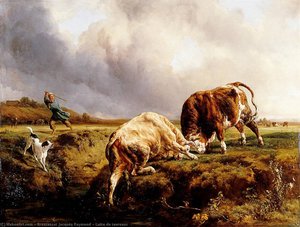
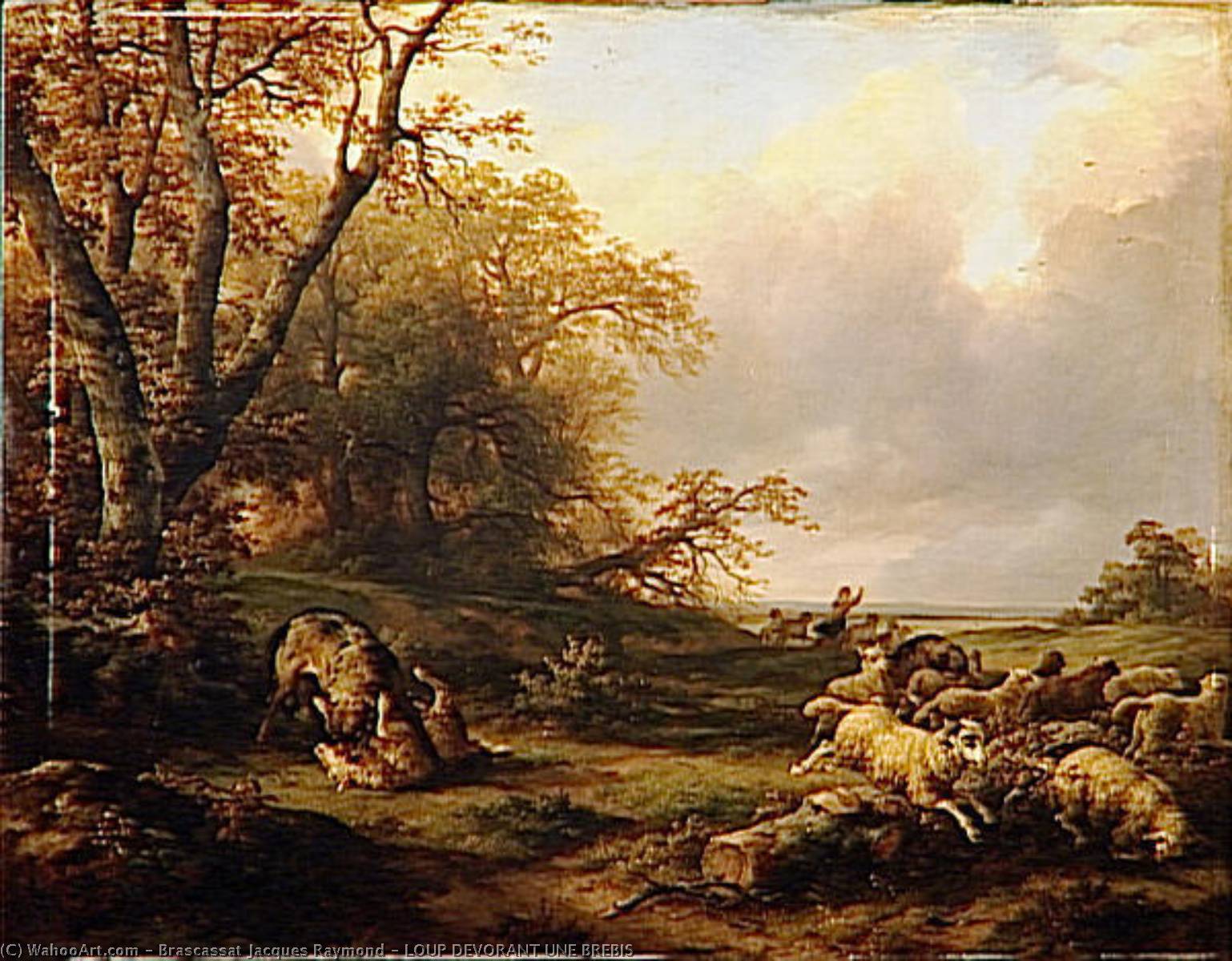
To stand before Jacques Raymond Brascassat’s Loup Devorant une Brebis (The Wolf Devouring a Sheep) is to be plunged instantly into the raw, untamed heart of Romanticism. This painting is far more than a mere depiction of pastoral life; it is a visceral confrontation with nature's inherent brutality and the fragility of innocence. Brascassat, celebrated as a pioneer in animal painting, possessed an almost unparalleled gift for rendering creatures not just anatomically, but psychologically. Here, the composition explodes with kinetic energy. The viewer’s eye is immediately drawn into the central vortex of action—the wolf's menacing form poised against the scattering flock. It captures that fleeting, terrifying moment where order dissolves into primal instinct.
Mastery in Technique and Atmosphere
Technically, the work is a breathtaking display of 19th-century oil painting prowess on canvas. Brascassat employs a palette dominated by rich, earthy tones—deep greens, ochres, and shadowed browns that ground the scene in believable wilderness. Yet, this grounded realism is elevated by dramatic contrasts. Observe how the sunlight struggles to penetrate the dense foreground foliage; these filtered highlights of yellow and white lend an almost ethereal quality to the otherwise brutal subject matter. The artist’s brushwork itself speaks volumes: it appears loose and expressive when capturing the agitated movement of the fleeing sheep, contrasting sharply with the more defined textures found in the rough bark of the fallen log or the musculature of the predator. This interplay between detailed rendering and sweeping gesture gives the piece its profound sense of depth and immediacy.
Symbolism: The Eternal Struggle
Beyond the technical brilliance lies a deep layer of symbolism that has captivated art lovers for generations. The wolf, universally recognized as the embodiment of wild danger or unchecked appetite, confronts the sheep, the quintessential symbol of vulnerability, purity, and gentle life. This dynamic tension—the predator versus the prey—is not merely narrative; it is an allegory. It speaks to the perennial human struggle between civilization and savagery, between safety and peril. For the collector or decorator, this piece offers a potent focal point for any room, inviting contemplation on themes of guardianship, risk, and survival.
A Romantic Echo for Modern Spaces
For those seeking art that possesses both historical weight and undeniable emotional resonance, Loup Devorant une Brebis remains profoundly compelling. Its dramatic scope makes it a magnificent statement piece, capable of anchoring an entryway or serving as the centerpiece in a grand salon. While its subject matter is intense, the overall effect—the masterful control over light, shadow, and movement—lends it a sophisticated drama that complements both traditional and modern interiors. Owning a reproduction allows one to bring this captured moment of sublime natural conflict into your home, transforming a simple wall space into a gallery of raw, untamed emotion.
Related Artworks
Artist Biography
Jacques Raymond Brascassat: A Pioneer of Animal Painting
Jacques Raymond Brascassat (August 30, 1804 – February 28, 1867) stands as a singular figure in French Romanticism, celebrated primarily for his breathtaking depictions of animals—a genre he elevated to unprecedented levels of realism and psychological insight. Born in Bordeaux, France, Brascassat’s artistic journey began under the tutelage of Louis Hersent at the École des Beaux-Arts in Paris, where he honed his skills and secured a prestigious second place in the Prix de Rome competition of 1825 with “The Hunt of Meleager,” establishing him as an artist of considerable promise. This early success foreshadowed a lifelong dedication to capturing the essence of the natural world through meticulous observation and masterful technique.- Early Influences: Brascassat’s artistic sensibilities were profoundly shaped by Romantic ideals—a fascination with emotion, imagination, and the sublime beauty of untamed landscapes. The fervor for portraying dramatic scenes from mythology and folklore resonated deeply within him, informing his stylistic choices.
- Italian Sojourn & Landscape Studies: Recognizing the importance of grounding artistic vision in direct experience, Brascassat traveled extensively throughout Italy between 1827 and 1835. During this period, he immersed himself in studying Italian landscapes—particularly those imbued with grandeur and atmospheric drama—drawing inspiration from artists like Claude Lorrain and Nicolas Poussin. These formative years instilled in him a profound understanding of tonal painting and compositional balance.
The Rise of Animal Painting: Bulls Fighting and Beyond
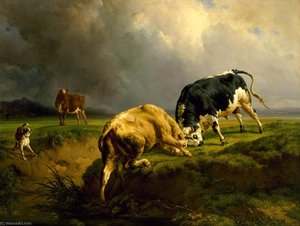
Brascassat’s artistic focus swiftly shifted toward animal painting, marking him as one of the foremost practitioners of this challenging genre. Unlike many artists of his time who favored idealized representations, Brascassat relentlessly pursued accuracy—capturing not merely the physical appearance of animals but also their behavior and emotional states. His iconic “Bulls Fighting” (1837), housed in Nantes Museum of Arts, Nantes, France, exemplifies this commitment to realism, presenting a visceral portrayal of the confrontation between bull and matador with remarkable detail and psychological nuance. Similarly, his “Cow Attacked by Wolves” (1845) displayed at Museum of Fine Arts, Leipzig, Germany, showcases an equally compelling depiction of animal struggle—a testament to Brascassat’s ability to convey emotion through visual language.Technique and Artistic Vision
Brascassat's artistic method was characterized by a meticulous approach to tonal painting. He painstakingly built up layers of color, utilizing subtle gradations to create atmospheric depth and conveying the textures of animal fur with astonishing precision. His canvases pulsated with life—infused with an almost palpable sense of movement and emotion. Brascassat’s paintings weren't merely representations of animals; they were explorations of their inner lives—expressions of courage, vulnerability, and primal instinct.Recognition and Legacy
Brascassat’s unwavering dedication to his craft garnered him considerable acclaim during his lifetime. He was elected a member of the Académie française in 1846—a prestigious honor recognizing his artistic merit and intellectual contribution—solidifying his place among France's leading artists. Though he died prematurely at the age of sixty-two, Brascassat’s influence endured, inspiring subsequent generations of painters to embrace realism and psychological depth in their depictions of animals. His enduring legacy resides not only in his stunning artworks but also in his pioneering role as a champion of naturalistic observation—a cornerstone of artistic achievement.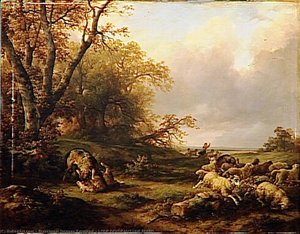
jacques raymond brascassat
1804 - 1867
Quick Facts
- Artistic Movement Or Style: Realism
- Artists Or Movements Influenced By This Artist: ['Rosa Bonheur']
- Artists Who Influenced This Artist: ['Louis Hersent']
- Date Of Birth: August 30, 1804
- Date Of Death: February 28, 1867
- Full Name: Jacques Raymond Brascassat
- Nationality: French
- Notable Artworks:
- Bull Fighting
- Cow Attacked by Wolves
- Place Of Birth: Bordeaux, France
Related Articles
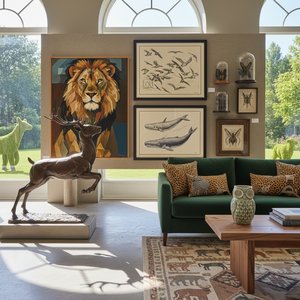
Animalia: Exploring the Enduring Presence of Animals in Art & Interior Design
Explore the rich history of animal symbolism in art, from ancient mythology to modern masterpieces. Discover how animals have inspired artists for centuries and learn how to incorporate these powerful motifs into your home décor.

Giclée Prints: Archival Quality & Aesthetic Nuances for the Discerning Collector
Explore the world of giclée prints with ArtsDot. Learn about archival quality, aesthetic nuances & investment potential. Expert guidance for discerning art collectors seeking museum-quality reproductions and lasting value.

Level Up Your Art: Transform Personal Photos into High-Octane Action Anime Masterpieces with AI-Driven Oil Painting
Transform your favorite photos into high-octane action anime masterpieces. Using proprietary AI and master artists, we turn digital memories into hand-painted oil on canvas legacies. Experience the perfect fusion of pop culture energy and timeless fine artistry at ArtsDot.com.

The Enduring Legacy of Fine Art Prints: Technique, History & Aesthetic Impact
Explore the rich history & techniques of fine art prints. Discover investment potential, assess authenticity, and learn how to preserve your collection with expert guidance. Trusted insights for discerning collectors.

Echoes of Time: Exploring the Enduring Appeal & Historical Context of Vintage Art Prints
Explore the captivating world of vintage art prints! Discover their history, collecting tips & enduring appeal. Expert insights on chromolithography and building a legacy collection with ArtsDot.