 Preview
 Send
Send Share
Share
 Details

 Download
 Similars
 X-Ray
X-Ray Diaporama
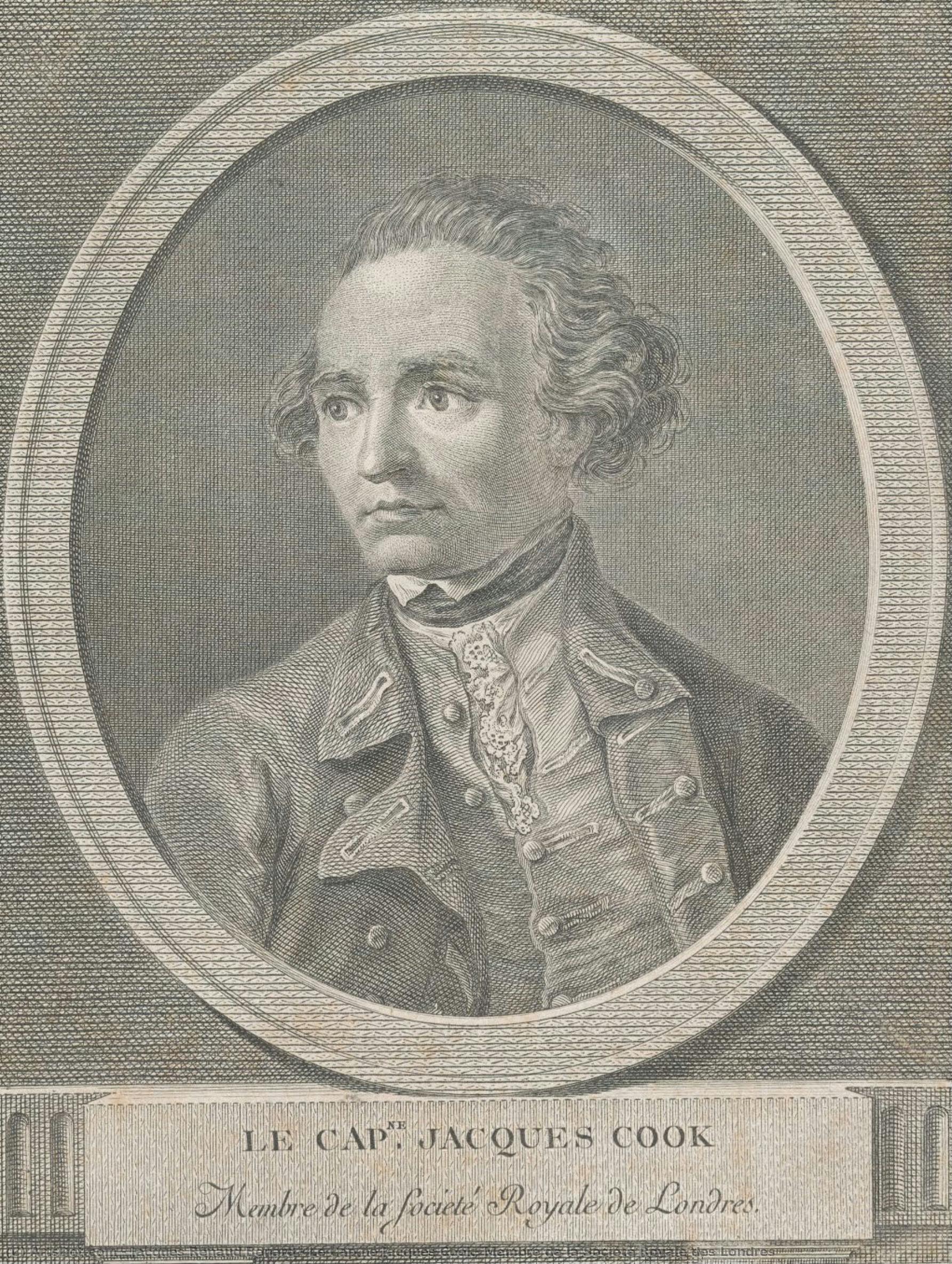
Le Cap.ne Jacques Cook, Membre de la Société Royale des Londres
 1778
1778 30.0 x 23.0 cm
 National Portrait Gallery
 Read More
Hand Made Oil Reproduction
Hand-painted oil on canvas in your size and frame, made to order by our artists. ( Buy Print Buy Image)




































Pick from our preset sizes that match the artwork's original proportions.

You may enter your own dimensions to fit a specific frame or space. If your selected size does not match the original image's proportions, we will either crop the artwork or extend the painting with additional hand-painted elements. A digital mockup will be sent for your approval before production begins.
Please note that the on-screen preview does not reflect the actual cropping or extension. Only the mockup will accurately show the final composition.
While custom sizes are available, we recommend selecting a dimension from the predefined list to preserve the original proportions.
After order, ArtsDot.com team will email client for instructions and provide a mockup preview
Worldwide Delivery () in 3/4 weeks instead of standard 5 weeks. (22 August). No compromise on quality.

Free Worldwide Express Shipping

High-Quality Linen Canvas

Full Shipping Insurance

Customs Tax Refund Guarantee

True Color Matching Guarantee

60-Day Return Policy (Defects Only)

100% Money-Back Guarantee

Bulk Discount Offer
 Glass option is only available in size under 110 CM

Le Cap.ne Jacques Cook, Membre de la Société Royale des Londres
Reproduction Medium
Reproduction Size
-


Total Price
$ 263
Related Artworks





Artist Biography
William Aikman: A Pioneer of British Watercolour
William Aikman, born in Edinburgh in 1682 and tragically died in London in 1731, remains a pivotal yet often overlooked figure in the early development of British watercolour painting. His life was marked by both artistic innovation and personal hardship, shaping a body of work that continues to intrigue art historians today. Aikman’s career unfolded during a period of significant transition for the British arts scene, as artists began to move away from the dominance of oil paint and embrace the lighter, more immediate qualities of watercolour. He wasn't a flamboyant personality or a court painter; instead, he was a diligent observer and a remarkably skilled draughtsman who quietly established himself as one of the foremost watercolorists of his time. Aikman’s early life is shrouded in some mystery. Records suggest he was apprenticed to John Thirtle, a prominent Edinburgh artist, around 1698. This training provided him with a solid foundation in drawing and perspective – skills that would prove crucial to his later success. However, Aikman's artistic journey took an unexpected turn when he moved to London in 1713. There, he quickly gained recognition for his meticulous topographical drawings, which were highly sought after by architects, surveyors, and mapmakers. These commissions provided him with valuable experience in capturing the nuances of urban landscapes – a skill that would later inform his more expansive watercolour paintings. Aikman’s ability to render buildings with astonishing accuracy, combined with a subtle understanding of light and shadow, set him apart from many of his contemporaries. He wasn't interested in romanticizing or idealizing; he presented London as it was, a bustling metropolis teeming with life and commerce.The Rise of Watercolour and Aikman’s Style
The early 18th century witnessed a growing appreciation for watercolour amongst British artists. Influenced by the Dutch masters – particularly their use of transparent washes to create atmospheric effects – painters began experimenting with this medium, seeking alternatives to the heavy, opaque qualities of oil paint. William Aikman was at the forefront of this movement in England. Unlike some of his peers who embraced a more decorative or theatrical style, Aikman’s approach remained grounded in observation and draughtsmanship. His watercolors are characterized by their remarkable clarity, precision, and subtle tonal range. He employed a technique known as ‘wash drawing,’ building up layers of translucent color to create luminous effects and capture the play of light on surfaces. Aikman's meticulous attention to detail is evident in his renderings of buildings, streets, and figures – each element rendered with remarkable accuracy and sensitivity. His work demonstrates an exceptional understanding of perspective and a keen eye for capturing the essence of his subjects.Notable Works and Commissions
Aikman’s career produced a substantial body of work, encompassing a diverse range of subjects. He was particularly renowned for his views of London, which offer invaluable insights into the city's architecture and social life during the early 18th century. His series of watercolors depicting the Tower of London, St. Paul’s Cathedral, and other iconic landmarks are considered masterpieces of topographical art. Beyond urban scenes, Aikman also produced a number of landscapes, portraits, and genre paintings. He was commissioned to create numerous drawings for architectural plans and surveys, including those for the rebuilding of Hampton Court Palace. His work for the Royal Society, documenting botanical specimens, showcases his scientific eye and his ability to render delicate details with precision. A particularly significant commission involved creating a series of watercolors for the Earl of Chesterfield’s library at Holkham Hall, demonstrating his versatility and mastery of the medium.Giovanni Camillo Sagrestani: An Influential Connection
Interestingly, William Aikman's career intersected with that of Giovanni Camillo Sagrestani, an Italian painter who arrived in London around 1730. Sagrestani, known for his dramatic and emotionally charged frescoes, brought a new dynamism to the British art scene. While their artistic styles differed significantly – Aikman’s focused on meticulous observation while Sagrestani favored expressive brushwork – they shared a common interest in watercolour and engaged in a professional correspondence. It is believed that Aikman studied Sagrestani's techniques, incorporating elements of his vibrant color palette and dynamic composition into his own work. This exchange highlights the interconnectedness of the British art world during this period and demonstrates how artists influenced one another through collaboration and observation.Legacy and Historical Significance
Despite his untimely death in 1731, William Aikman left a lasting legacy as one of the pioneers of British watercolour painting. His meticulous draughtsmanship, combined with his innovative use of color and light, established him as a leading figure in the development of this medium. His topographical drawings provided invaluable documentation of London’s urban landscape, while his landscapes offered a fresh perspective on the English countryside. Aikman's work continues to be admired for its clarity, precision, and understated beauty – a testament to his skill as an artist and his contribution to the rich history of British art. His influence can still be seen in the works of later watercolourists who followed in his footsteps, cementing his place as a foundational figure in the medium's evolution.
jacques renaud benard
1731 - 1794 , France
Quick Facts
- Artistic Movement Or Style: British Baroque
- Artists Or Movements Influenced By This Artist: ['Rococo']
- Artists Who Influenced This Artist: ['Peter Lely']
- Date Of Birth: 1682
- Date Of Death: 1731
- Full Name: William Aikman
- Nationality: Scottish
- Notable Artworks:
- The Death of Sir Robert Peel
- Portrait of William Murray, 4th Earl of Mansfield
- Place Of Birth: Scotland