 Preview
 Send
Send Share
Share
 Details

 Download
 Similars
 X-Ray
X-Ray Diaporama
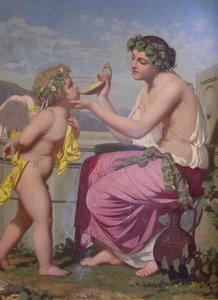
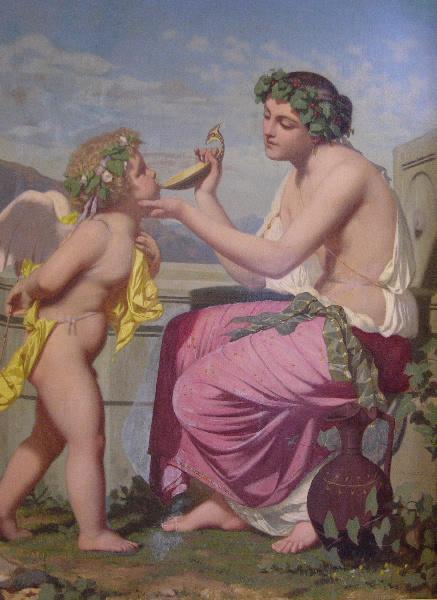
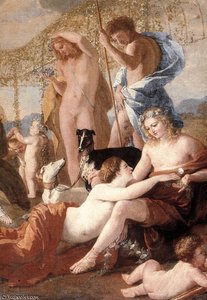
L'Amour nourri par la Muse
 Read More
Giclée / Art Print
Museum-quality giclée or canvas print with fast production and flexible finish options. ( Buy Hand Made Painting Buy Image)




































Pick from our preset sizes that match the artwork's original proportions.

You may enter your own dimensions to fit a specific frame or space. If your selected size does not match the original image's proportions, we will either crop the artwork or extend the image with a mirrored or solid-fill edge. A digital mockup will be sent for your approval before production begins.
Please note that the on-screen preview does not reflect the actual cropping or extension. Only the mockup will accurately show the final composition.
While custom sizes are available, we recommend selecting a dimension from the predefined list to preserve the original proportions.
Worldwide Delivery () in 2 weeks instead of standard 4/5 weeks. (21 August)

Free Worldwide Express Shipping

High-Quality Linen Canvas

Full Shipping Insurance

Customs Tax Refund Guarantee

True Color Matching Guarantee

60-Day Return Policy (Defects Only)

100% Money-Back Guarantee

Bulk Discount Offer
 Glass option is only available in size under 110 CM

L'Amour nourri par la Muse
Giclée / Art Print
Reproduction Size
-


Total Price
$ 63
Related Artworks
![The Courtship Of Paris And Helen [detail 1] — Jacques-louis David, Neoclassical](/media/artworks/images/thumbnails/da/d9/dad913800b0c40ffb964066782c8425a.jpg)

Artist Biography
A Visionary of Faith: The Life and Art of Jacques Victor Eugène Froment Delormel
Jacques Victor Eugène Froment Delormel, a name perhaps less celebrated than some of his contemporaries, nevertheless occupies a significant place in the landscape of 19th-century French painting. His work, deeply imbued with religious sentiment and a refined classical sensibility, offers a compelling glimpse into the spiritual currents that flowed beneath the surface of a rapidly changing era. While biographical details remain somewhat elusive – a common fate for artists whose focus lay more on the divine than self-promotion – we can trace through his canvases a dedicated pursuit of beauty as a pathway to faith and an exceptional talent for rendering ethereal grace. Born in France (the exact year remains unconfirmed, contributing to the mystique surrounding him), Delormel emerged during a period marked by both fervent religious revivalism and increasing secularization. This tension likely informed his artistic choices, leading him to create works that served as powerful affirmations of traditional beliefs.Early Influences and Artistic Development
Delormel’s training is not extensively documented, but the influence of academic painting is readily apparent in his meticulous technique and anatomical precision. He clearly admired the Old Masters – particularly those of the Renaissance and Baroque periods – absorbing their compositional strategies and mastery of light and shadow. However, he wasn't merely a copyist; Delormel synthesized these influences with a distinctly personal vision. His early works demonstrate a commitment to classical form, but even then, a subtle emotionality begins to emerge. He moved beyond the purely illustrative towards a more evocative style, seeking to capture not just the *appearance* of religious figures, but their inner states of grace and devotion. The influence of painters like William-Adolphe Bouguereau, known for his idealized depictions of classical subjects and religious scenes, is also discernible in Delormel’s early compositions, particularly in the smooth finish and delicate modeling of flesh tones. As he matured, Delormel increasingly focused on themes of angelic intervention, ecstatic visions, and the quiet contemplation of saints, establishing a recognizable thematic core to his oeuvre.Themes of Faith and Allegory
The heart of Froment Delormel’s artistic practice lies in his exploration of religious narratives and allegorical representations of faith. His paintings are not bombastic displays of divine power, but rather intimate moments of connection between the earthly and the spiritual realms. “Saint en extase” (Saint in Ecstasy), one of his most recognizable works, exemplifies this approach. The saint is depicted not as a figure overwhelmed by supernatural forces, but as a woman lost in peaceful communion with the divine, her expression radiating serenity and inner light. Similarly, “L’Ange intercesseur” (The Interceding Angel) portrays an angel gently guiding a soul towards salvation, emphasizing compassion and hope rather than judgment or fear. Delormel frequently employed allegorical figures – representing virtues like Charity, Faith, and Hope – to convey complex theological concepts in visually compelling ways. These figures are not merely symbolic representations; they possess a tangible presence, rendered with the same care and attention to detail as his religious subjects.Technique and Style: A Pursuit of Ethereal Beauty
Delormel’s technical skill is undeniable. He was a master of oil painting, employing a smooth, refined brushstroke that creates a luminous quality in his works. His palette is typically subdued, favoring soft blues, pinks, and golds to evoke a sense of tranquility and spiritual elevation.- He meticulously layered glazes to create depth and richness in his colors.
- His compositions are carefully balanced, often employing pyramidal structures to draw the viewer’s eye towards the central figure or focal point.
- The use of light is particularly significant; Delormel skillfully manipulates chiaroscuro – the contrast between light and shadow – to create a sense of drama and highlight the emotional intensity of his scenes.