 Preview
 Send
Send Share
Share
 Details

 Download
 Similars
 X-Ray
X-Ray Diaporama
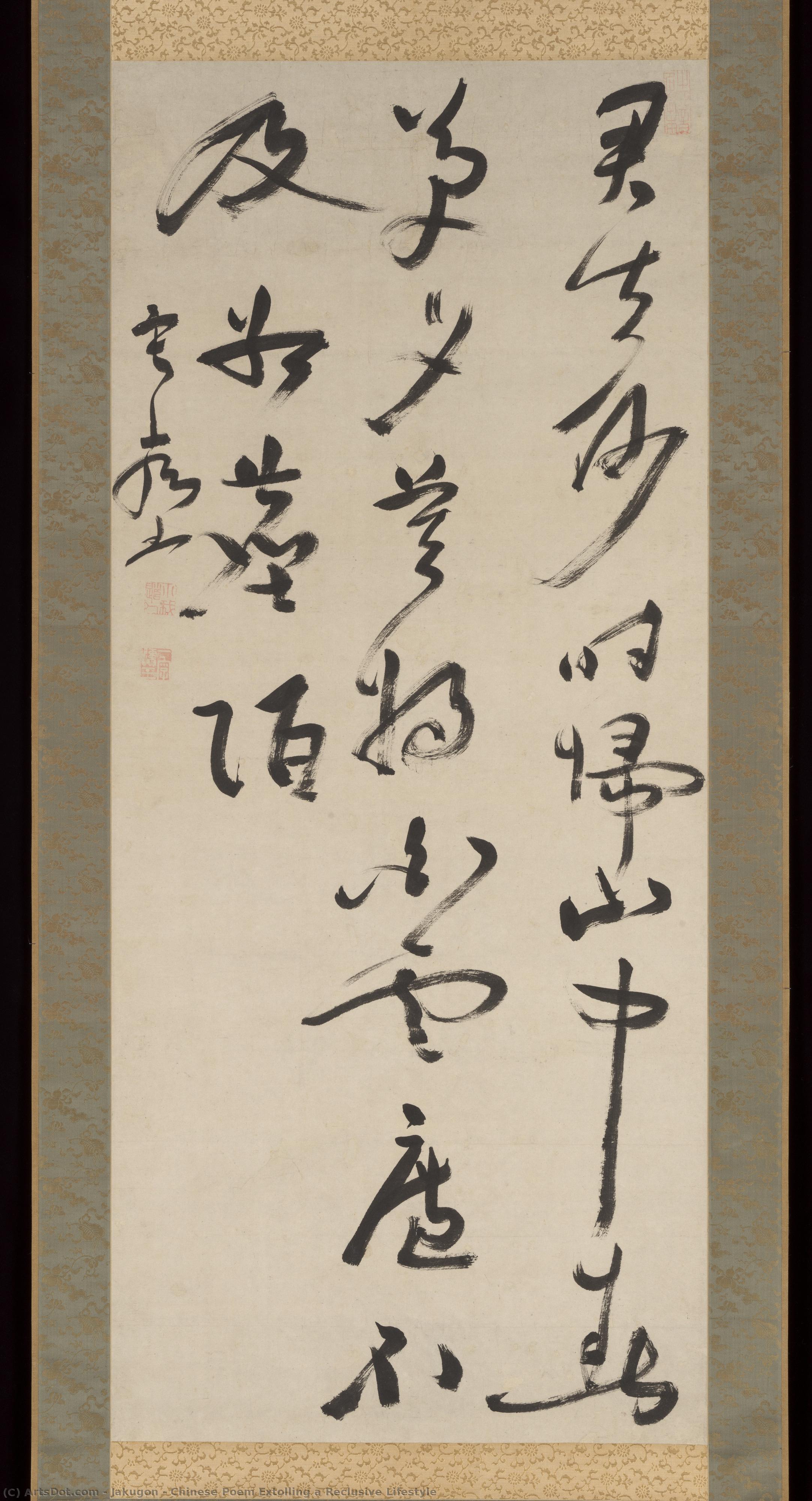
Chinese Poem Extolling a Reclusive Lifestyle
 701
701 127.0cm x 55.0cm
 Read More
Giclée / Art Print
Museum-quality giclée or canvas print with fast production and flexible finish options. ( Buy Hand Made Painting Buy Image)




































Pick from our preset sizes that match the artwork's original proportions.

You may enter your own dimensions to fit a specific frame or space. If your selected size does not match the original image's proportions, we will either crop the artwork or extend the image with a mirrored or solid-fill edge. A digital mockup will be sent for your approval before production begins.
Please note that the on-screen preview does not reflect the actual cropping or extension. Only the mockup will accurately show the final composition.
While custom sizes are available, we recommend selecting a dimension from the predefined list to preserve the original proportions.
Worldwide Delivery () in 2 weeks instead of standard 4/5 weeks. (26 August)

Free Worldwide Express Shipping

High-Quality Linen Canvas

Full Shipping Insurance

Customs Tax Refund Guarantee

True Color Matching Guarantee

60-Day Return Policy (Defects Only)

100% Money-Back Guarantee

Bulk Discount Offer
 Glass option is only available in size under 110 CM

Chinese Poem Extolling a Reclusive Lifestyle
Giclée / Art Print
Reproduction Size
-


Total Price
$ 63
Related Artworks









Artist Biography
A Life Dedicated to Brush and Dharma
Jakugon, born in Okayama, Japan in 660 as a poet and Buddhist monk, represents a fascinating intersection of artistic expression and spiritual devotion within the Nara period. While precise details of his early life remain elusive—a common characteristic for figures from this era—his enduring legacy rests upon a single, profoundly influential poem: ‘Chinese Poem Extolling a Reclusive Lifestyle,’ penned in 701 on delicate paper. This work wasn’t merely an aesthetic creation; it was a testament to a worldview deeply rooted in Buddhist principles and a rejection of worldly ambition. The Nara period (710-794) itself was a time of significant cultural import, marked by the increasing influence of Buddhism from China and Korea, and Jakugon found himself at the heart of this transformative era. He wasn’t simply *in* his time; he actively shaped its literary landscape through his embrace of solitude and contemplation as paths to enlightenment.The Power of Withdrawal: A Poetic Philosophy
Jakugon's most celebrated work, ‘Chinese Poem Extolling a Reclusive Lifestyle,’ speaks volumes about the artist’s inner life and philosophical leanings. The poem, inspired by the writings of Li Panlong (1514-1570), isn’t a grand narrative but rather an intimate reflection on the allure of simplicity and the perceived emptiness of societal pursuits. It questions the value of worldly success, contrasting it with the peace found in nature and spiritual isolation. The imagery is stark yet evocative—spring grasses at dusk, a thatched hut shrouded in white clouds—symbols that represent a deliberate turning away from the “red dust” of everyday life. This wasn’t simply an aesthetic preference; it was a conscious embrace of Zen ideals, even before the formal establishment of Zen Buddhism as a distinct school in Japan. The poem's enduring appeal lies in its universal resonance: the longing for tranquility and meaning in a chaotic world. It is a call to introspection, urging viewers to consider what truly constitutes a fulfilling existence.Calligraphy as Meditation
While known primarily for his poetry, Jakugon’s skill extended into calligraphy—a discipline deeply intertwined with Buddhist practice. For monks like Jakugon, the act of writing wasn't merely about reproducing characters; it was a form of meditation, a physical manifestation of spiritual concentration. The brushstrokes themselves were imbued with intention and reverence, each line reflecting the artist’s state of mind. His calligraphy often featured inscriptions of Buddhist sutras or poems that reinforced his core beliefs. He became recognized as one of the great monk-calligraphers of the Edo period (1615–1868), alongside figures like Jiun Onkō and Ryōkan Taigu, all masters who used their art to deepen their understanding of Zen principles. The Metropolitan Museum of Art holds a piece attributed to him, showcasing his signature style and seals that further authenticate the work.Legacy and Influence
Jakugon’s influence extends far beyond the single poem for which he is best known. He became part of a lineage of scholar-monks who championed Sanskrit studies and refined calligraphic techniques. He was considered one of the “Yondai-Syosou” (四大書僧: the four great monk ) alongside Ryokan, Meigetsu, and Jiun—a testament to his profound impact on Japanese art and spirituality. His work helped bridge the gap between intellectual pursuits and meditative practice, demonstrating that artistic expression could be a powerful tool for enlightenment. The enduring popularity of his calligraphy and poetry continues to inspire artists and scholars today, reminding us of the timeless appeal of simplicity, contemplation, and the search for inner peace. He died in 735 leaving behind a legacy that would resonate through centuries of Japanese art and religious thought. His work remains a potent symbol of the power of withdrawal—not as an escape from the world, but as a path *within* it to deeper understanding and spiritual fulfillment.
jakugon
Japan
Quick Facts
- Artistic Movement Or Style: Nara period poetry
- Date Of Birth: 660
- Date Of Death: 735
- Full Name: Jakugon
- Nationality: Japanese
- Notable Artworks: ['Chinese Poem Extolling a Reclusive Lifestyle']
- Other Names: 寂厳
- Place Of Birth: Okayama, Japan