 Preview
 Send
Send Share
Share
 Details

 Download
 Similars
 X-Ray
X-Ray Diaporama
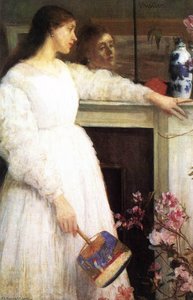
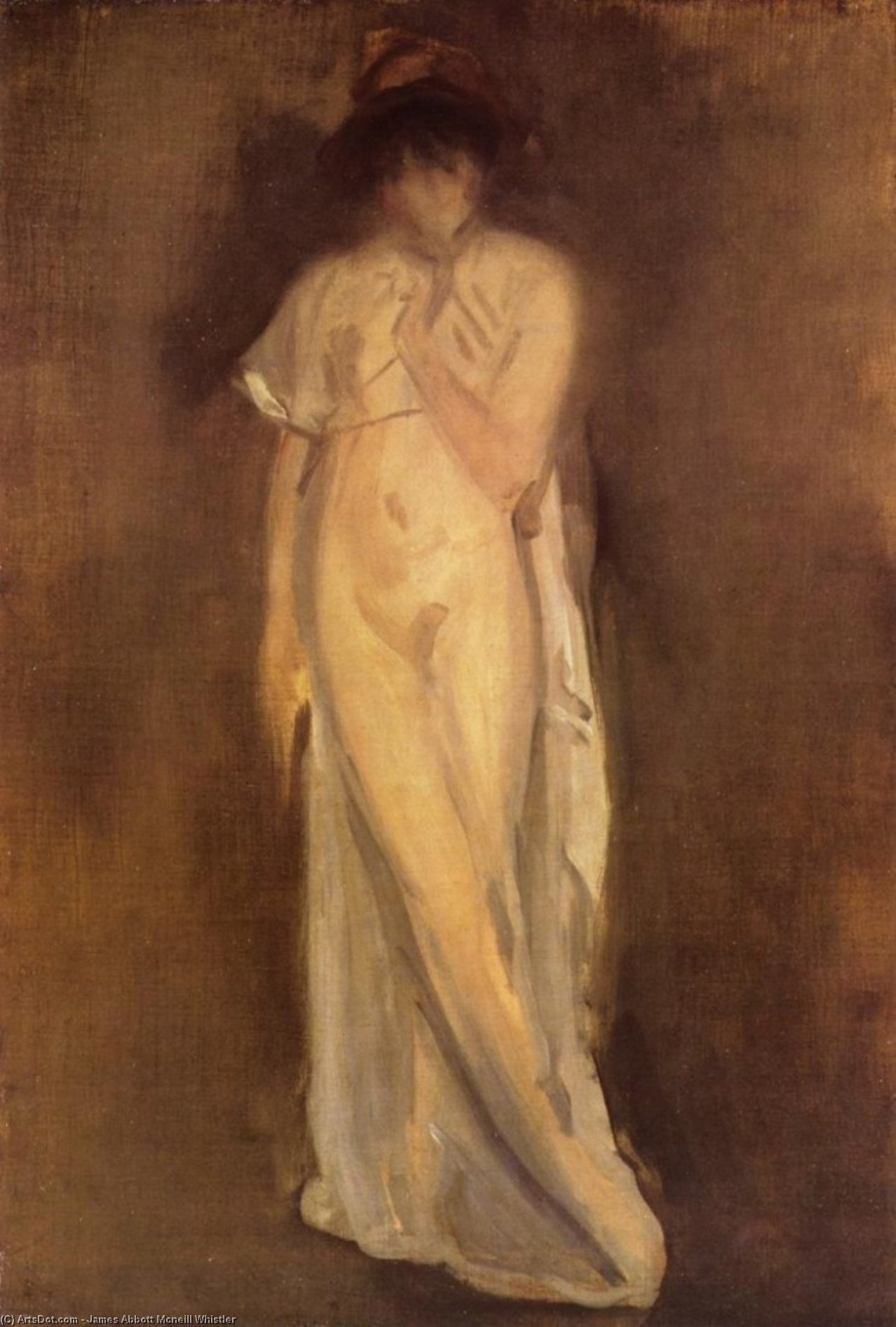
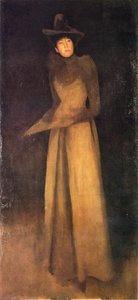
The Little Red Cap


 Read More
Hand Made Oil Reproduction
Hand-painted oil on canvas in your size and frame, made to order by our artists. ( Buy Print Buy Image)




P118B $10

P118H $10

P118W $10

P438Z $10

P508JH $12

P508YH $12

P805H $10

P805Z $10

P919BZ $10

P919G $10

P919XJ $10

P959ZH $10

P968JZ $12

W106C $8

W218G $10

W218JH $8

W218Y $10

W307PJ $10

W316G $10

W316PJ $8

W316Y $10

W398PJ $8

W4111J $10

W500HY $15

W500JH $15

W692G $12

W849H $8

W940BG $15

W953PJ $8




Pick from our preset sizes that match the artwork's original proportions.

You may enter your own dimensions to fit a specific frame or space. If your selected size does not match the original image's proportions, we will either crop the artwork or extend the painting with additional hand-painted elements. A digital mockup will be sent for your approval before production begins.
Please note that the on-screen preview does not reflect the actual cropping or extension. Only the mockup will accurately show the final composition.
While custom sizes are available, we recommend selecting a dimension from the predefined list to preserve the original proportions.
After order, ArtsDot.com team will email client for instructions and provide a mockup preview
Worldwide Delivery () in 3/4 weeks instead of standard 5 weeks. (16 August). No compromise on quality.

Free Worldwide Express Shipping

High-Quality Linen Canvas

Full Shipping Insurance

Customs Tax Refund Guarantee

True Color Matching Guarantee

60-Day Return Policy (Defects Only)

100% Money-Back Guarantee

Bulk Discount Offer
 Glass option is only available in size under 110 CM

The Little Red Cap
Reproduction Medium
Reproduction Size
-


Total Price
$ 263
Artwork Description
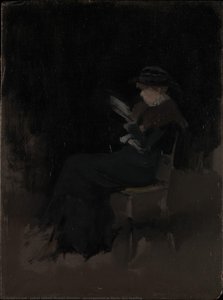
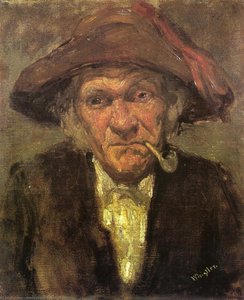
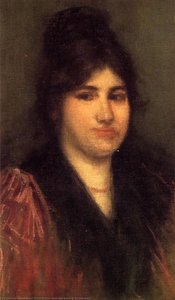
A Study in Quiet Contemplation: Unveiling Whistler’s *The Little Red Cap*
James Abbott McNeill Whistler's *The Little Red Cap*, painted in 1890, is more than just a portrait; it’s an evocative mood piece that encapsulates the Aesthetic movement’s emphasis on ‘art for art’s sake.’ Currently residing at the Hunterian Museum and Art Gallery, this oil on canvas invites viewers into a world of subtle beauty and introspective emotion.Artistic Style & Whistler's Tonalism
Whistler was a master of *tonalism*, a style characterized by muted colors, atmospheric effects, and an emphasis on harmonious arrangements. In *The Little Red Cap*, he eschews bright hues for a restrained palette of browns, grays, and creams, punctuated only by the titular red cap. This deliberate choice focuses attention on the interplay of light and shadow, creating a sense of quiet intimacy. His brushwork is loose and suggestive, prioritizing overall impression over precise detail – a hallmark of his innovative approach to painting.Decoding the Symbolism
The symbolism within *The Little Red Cap* is deliberately ambiguous, inviting personal interpretation. The red cap itself stands out as a vibrant focal point, potentially representing passion, vitality, or even a touch of defiance against the subdued background. However, Whistler avoids explicit narrative, leaving the woman’s story open-ended. Her downward gaze and contemplative expression suggest introspection, melancholy, or perhaps simply a moment of quiet reverie. The painting isn't about *what* she is thinking, but rather *that* she is thinking.Historical Context & Aesthetic Influences
Whistler’s work emerged during a period of significant artistic transition. He was influenced by both Impressionism and the Aesthetic movement, rejecting the Victorian emphasis on moralizing art in favor of pure aesthetic experience. He sought to create paintings that were beautiful in themselves, independent of any didactic purpose. This philosophy is clearly evident in *The Little Red Cap*, where form and color take precedence over narrative content. Whistler’s time spent in Paris exposed him to avant-garde ideas, while his American roots instilled a sense of independence and experimentation.Emotional Resonance & Lasting Impact
*The Little Red Cap* possesses a remarkable emotional depth despite its apparent simplicity. The painting evokes a feeling of quiet solitude and invites viewers to project their own emotions onto the subject. Whistler’s masterful use of color and composition creates an atmosphere of subtle beauty that lingers in the mind long after viewing. His innovative approach paved the way for future generations of artists, influencing abstract expressionism and other movements that prioritized form and emotion over representational accuracy.Collecting & Reproductions
For collectors: Owning a reproduction of *The Little Red Cap* allows you to bring Whistler’s elegant aesthetic into your home or office. The painting's muted tones and contemplative mood make it a versatile addition to various interior design schemes, particularly those emphasizing sophistication and tranquility.- Consider pairing this piece with similarly toned artwork for a cohesive gallery wall.
- The painting’s subtle color palette complements both modern and traditional furnishings.
- Its introspective quality makes it ideal for spaces designed for relaxation and contemplation.
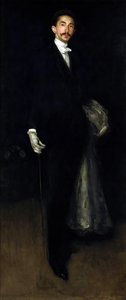
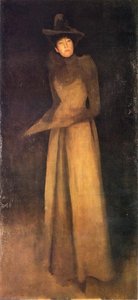
- Arrangement in Black and Gold: Comte Robert de Montesquiou-Fezensac, a stunning example of his signature style.
- Explore the collections of museums like The Frick Collection and the Musée Réattu to delve deeper into the artistic movements that influenced Whistler.
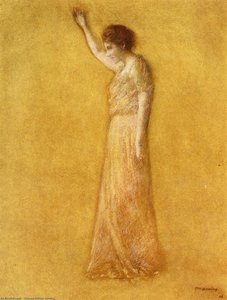
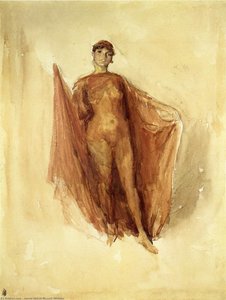
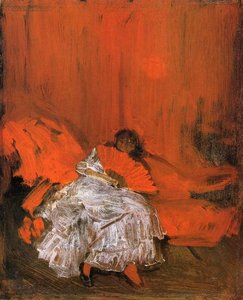
Related Artworks
Artist Biography
A Life Shaped by Aestheticism: The World of James Abbott McNeill Whistler
James Abbott McNeill Whistler, born in Lowell, Massachusetts in 1834, was a figure perpetually at odds with convention—a painter who championed “art for art’s sake” during an era obsessed with moralizing narratives. His early life, marked by frequent relocations due to his father's railroad engineering career, instilled within him a sense of adaptability and exposure to diverse environments. A brief, unhappy stint at West Point proved ill-suited to his artistic temperament, followed by work with the U.S. Coast and Geodetic Survey that, while delaying, did not extinguish his burgeoning passion for art. These formative years were characterized by an innate talent for drawing and a resolute desire to forge a path as a professional artist, a pursuit that would ultimately lead him across the Atlantic and into the heart of the European avant-garde. The seeds of Whistler’s artistic rebellion were sown early, nurtured by a spirit that resisted conformity and embraced aesthetic exploration above all else.Parisian Beginnings and the Cultivation of Style
The pivotal moment in Whistler's artistic journey arrived with his move to Paris in 1855. Here, under the tutelage of Sébastien Bouré, he honed his skills in oil painting, watercolor, and printmaking, absorbing the influences of French Realism and the Barbizon School painters. However, Whistler quickly transcended mere imitation, developing a distinctive style characterized by tonal harmonies and atmospheric effects. He wasn’t interested in replicating reality; rather, he sought to capture its *essence*, its fleeting moods and subtle nuances. This period marked a crucial shift from representational accuracy towards an exploration of pure aesthetic form. His early works already hinted at the delicate balance between observation and abstraction that would define his mature style. It was in Paris that Whistler began to articulate his belief that art should be judged solely on its aesthetic qualities, free from didactic or moralizing constraints—a philosophy that would become the cornerstone of his artistic practice and a defining characteristic of the Aesthetic movement.Nocturnes, Portraits, and the Pursuit of Harmony
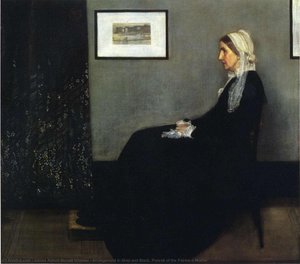
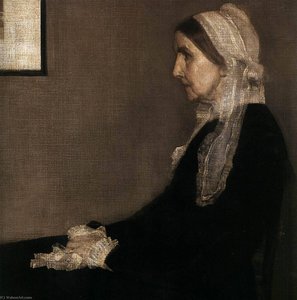
Whistler’s artistic vision crystallized in several key themes and stylistic choices. He championed the concept of “art for art’s sake,” rejecting narratives laden with moral or social commentary. His work became an exercise in capturing subtle nuances of light, color, and atmosphere—a pursuit that led to his iconic *Nocturnes*. These atmospheric paintings of twilight scenes, often depicting the Thames River at night, were not intended as literal depictions but rather as evocative impressions, studies in tonal harmony and mood. He frequently employed limited palettes and delicate brushwork, creating a sense of ethereal beauty and quiet contemplation. Portraits also occupied a central place in his practice, though he approached them with a unique sensibility. Whistler wasn’t concerned with capturing perfect likenesses; instead, he focused on formal arrangements and tonal relationships, treating his sitters as compositional elements within a carefully constructed aesthetic framework. Works like *Arrangement in Grey and Black No. 1*—better known as *Whistler's Mother*—demonstrate this approach perfectly, transforming a familial portrait into an iconic image of Victorian motherhood through its masterful use of form and tone.Controversy, Influence, and Lasting Legacy
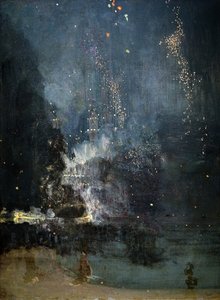
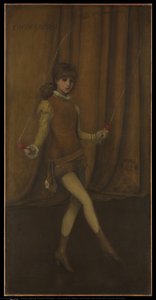
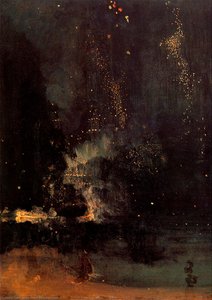
Whistler’s career was not without controversy. The infamous libel suit brought against him by the critic John Ruskin in 1878, sparked by *Nocturne in Black and Gold – The Falling Rocket*, became a landmark moment in art history. Whistler successfully defended his artistic autonomy, arguing that his paintings were not intended to be realistic representations but rather aesthetic arrangements of color and form. This case elevated his profile and ignited important debates about the nature of art criticism and artistic freedom. Beyond this legal battle, Whistler’s influence extended far and wide. He was deeply inspired by Japanese prints (ukiyo-e), which informed his compositional principles and emphasis on decorative patterns, as well as the tonal mastery of Spanish painters like Velázquez. His advocacy for “art for art’s sake” profoundly impacted the Aesthetic movement in England and America, paving the way for modernism and challenging conventional notions about artistic purpose. He left an indelible mark on American art, inspiring generations of artists to embrace formalist approaches and explore the expressive potential of color and composition.- Notable Works: *The Forge* (1861), *Portrait of Charles Lang Freer* (1873), *Brown and Gold: The Gold Girl—Connie Gilchrist* (1876-77), *Arrangement in Grey and Black No. 1 (Whistler’s Mother)* (1871), *Nocturne in Black and Gold – The Falling Rocket* (1875).
- Influences: Japanese prints, Velázquez.
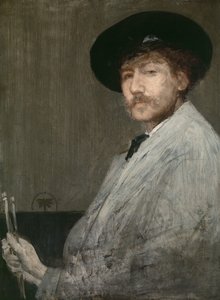
James Abbott McNeill Whistler
1834 - 1903 , United States of America
Quick Facts
- Artistic Movement Or Style: Tonalism, Aestheticism
- Artists Or Movements Influenced By This Artist:
- Aesthetic movement
- Modernism
- Artists Who Influenced This Artist:
- Velázquez
- Japanese prints
- Date Of Birth: July 14, 1834
- Date Of Death: 1903
- Full Name: James Abbott McNeill Whistler
- Nationality: American
- Notable Artworks:
- Whistler’s Mother
- Nocturne in Black & Gold
- The Forge
- Peacock Room
- Place Of Birth (City And Country): Lowell, USA
Related Articles
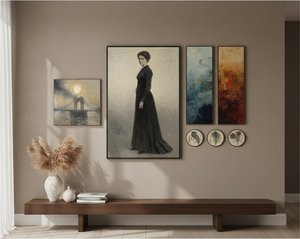
Whistler's Masterpieces: Explore 25 Iconic Paintings & Aesthetic Art for Your Home
Journey through 25 iconic James Abbott McNeill Whistler paintings! Explore his masterpieces of Aestheticism, from 'Nocturne in Black and Gold' to captivating portraits. Find museum-quality art reproductions & elevate your home decor with ArtsDot.com. Discover the full collection online.
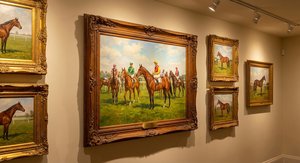
Sir Alfred Munnings' Masterpieces: 25 Paintings That Define Equine Art | ArtsDot
Explore 25 iconic Sir Alfred Munnings paintings! Discover the beauty of British Impressionism, equine art & rural England. Find museum-quality reproductions and elevate your home decor with ArtsDot. Explore the full collection online.

Crimson Threads of Narrative: Exploring Symbolism & Representation in Artworks Featuring the Red Dress
Explore the rich symbolism of the red dress in art history! From ancient power displays to iconic portraits like Cézanne’s 'Madame Cezanne', discover the cultural and artistic significance behind this captivating color. Expert analysis & insights.
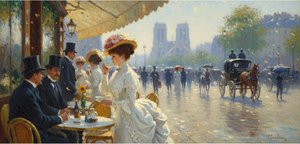
Impressionistic Realism's Finest: 10 Masterpieces for Your Home | ArtsDot
Journey through Impressionistic Realism with 10 iconic masterpieces by Monet, Renoir & Van Gogh. Explore art history, techniques & find museum-quality reproductions for your home at ArtsDot.com. Discover all masterpieces online!
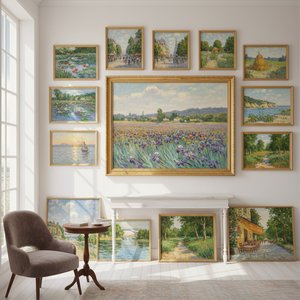
Impressionist Landscapes: 10 Masterpieces for Your Home | ArtsDot
Journey through 10 iconic Impressionist landscapes by Monet, Renoir & Degas. Explore the history, techniques & emotions behind these masterpieces. Find museum-quality reproductions for your home at ArtsDot.com – where art comes to life! Discover all masterpieces on ArtsDot.com