 Preview
 Send
Send Share
Share
 Details

 Download
 Similars
 X-Ray
X-Ray Diaporama
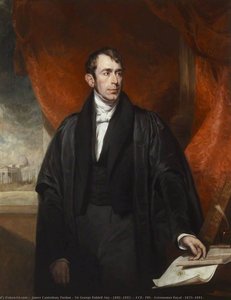
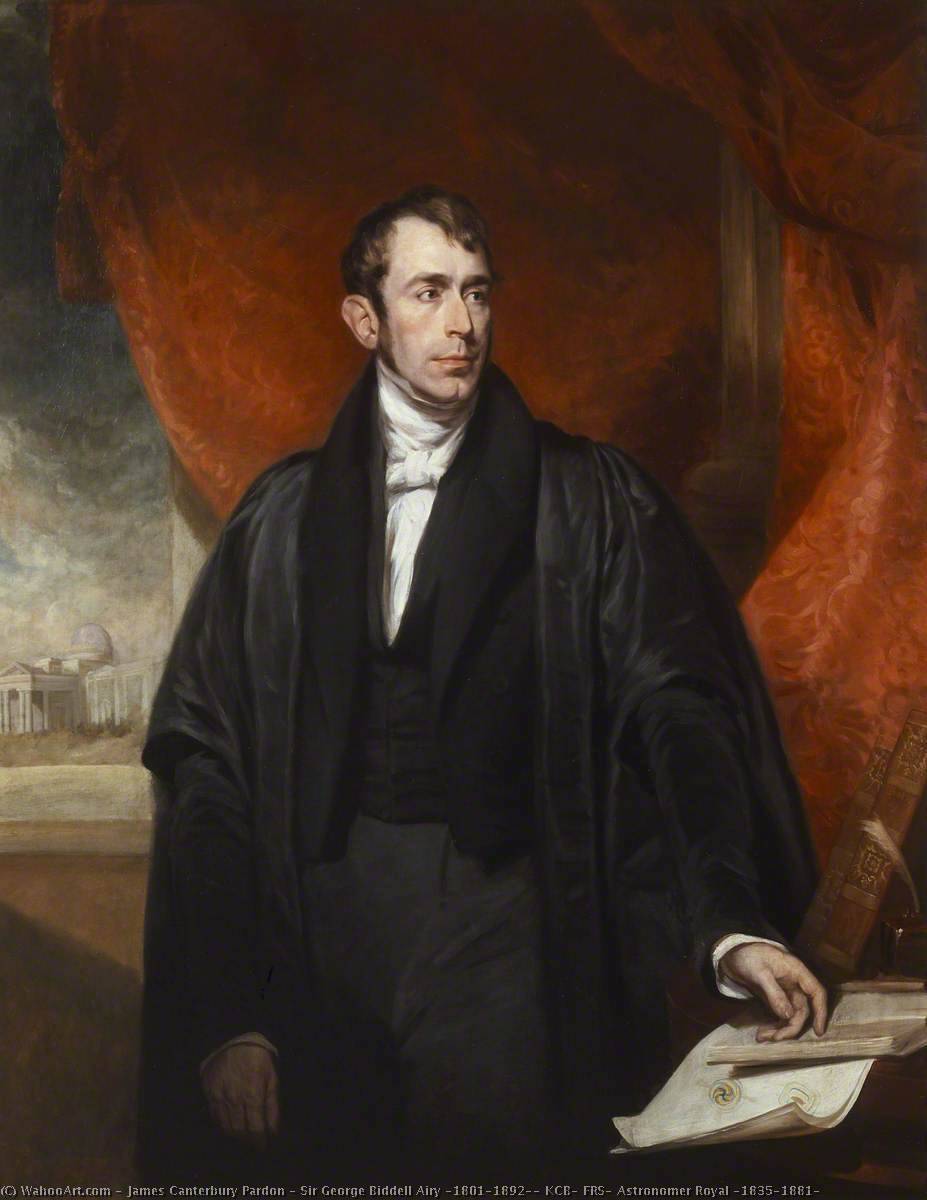
Sir George Biddell Airy (1801–1892), KCB, FRS, Astronomer Royal (1835–1881)
 1834
1834 140.0 x 109.0 cm
 Institute of Astronomy
 Read More
Giclée / Art Print
Museum-quality giclée or canvas print with fast production and flexible finish options. ( Buy Hand Made Painting Buy Image)




































Pick from our preset sizes that match the artwork's original proportions.

You may enter your own dimensions to fit a specific frame or space. If your selected size does not match the original image's proportions, we will either crop the artwork or extend the image with a mirrored or solid-fill edge. A digital mockup will be sent for your approval before production begins.
Please note that the on-screen preview does not reflect the actual cropping or extension. Only the mockup will accurately show the final composition.
While custom sizes are available, we recommend selecting a dimension from the predefined list to preserve the original proportions.
Worldwide Delivery () in 2 weeks instead of standard 4/5 weeks. (29 August)

Free Worldwide Express Shipping

High-Quality Linen Canvas

Full Shipping Insurance

Customs Tax Refund Guarantee

True Color Matching Guarantee

60-Day Return Policy (Defects Only)

100% Money-Back Guarantee

Bulk Discount Offer
 Glass option is only available in size under 110 CM

Sir George Biddell Airy (1801–1892), KCB, FRS, Astronomer Royal (1835–1881)
Giclée / Art Print
Reproduction Size
-


Total Price
$ 63
Related Artworks









Artist Biography
The Silent Chronicler of Victorian Valor
In the grand, sweeping tapestry of nineteenth-century British art, certain names resonate with the thunder of battle or the brilliance of light, yet others whisper with a more profound, quiet dignity. James Canterbury Pardon belongs to that latter, more intimate category. A portraitist whose brush served as a meticulous witness to the era’s most distinguished figures, Pardon occupied a unique space in the Victorian artistic landscape. While his contemporaries often sought the dramatic spectacle of Romanticism, Pardon found his calling in the precise, dignified rendering of character, specializing in the commemoration of military officers and statesmen whose lives were defined by duty and service.
Born around 1830 in the historic city of Canterbury, England, Pardon’s early life was steeped in a tradition of scholarly and clerical reverence, being the son of Reverend William Pardon. This foundation of discipline and observation likely informed his later artistic pursuits. Seeking to refine his natural eye, he pursued formal training at the prestigious Slade School of Fine Art in London. It was within these hallowed halls that he honed a technique characterized by an almost scientific accuracy, moving away from the grand, sweeping narratives of his age toward a more restrained, focused approach that prioritized the subtle nuances of the human countenance and the heavy textures of military regalia.
A Mastery of Detail and Dignity
The artistry of James Canterbury Pardon was defined by a remarkable devotion to verisimilitude. He did not merely paint faces; he captured the weight of responsibility held within a gaze and the stiff, formal pride of a uniform. Utilizing oil on canvas, Pardon employed sophisticated glazing techniques to achieve luminous tonal gradencies that breathed life into his subjects. His ability to render the tactile reality of skin, the sheen of polished brass, and the intricate weaves of heavy fabrics allowed him to create portraits that felt less like static images and more like living legacies.
His compositions were rarely empty; even when focusing on a single figure, Pardon often integrated carefully arranged backgrounds—be they sweeping landscapes or stately architectural interiors—to provide context to his sitter's status. This careful orchestration of environment and subject served to elevate the individual, transforming a simple portrait into a profound statement of accomplishment. His work stands as a testament to the Neoclassical influence on his style, where clarity, order, and a sense of permanence were paramount.
Legacy in the Halls of History
Though he may remain an obscure figure to the casual observer of art history, Pardon’s impact is preserved within the permanent collections of some of Britain's most significant institutions. His reputation was built upon a foundation of prestigious commissions from the very men who shaped the British Empire. To study his oeuvre is to encounter the faces of Victorian authority and scientific progress:
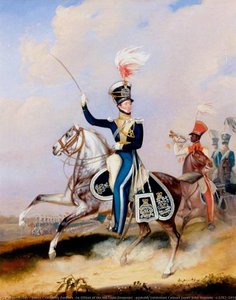
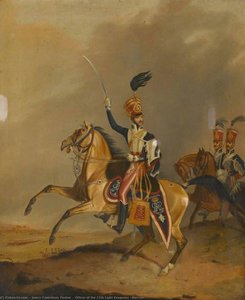
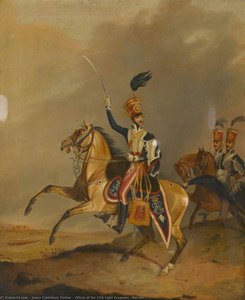
- Military Commemoration: His portraits of officers, such as those belonging to the 4th Light Dragoons and the 15th Light Dragoons (Hussars), serve as vital historical records of military identity and regimental pride.
- Scientific and Naval Eminence: Through his depictions of figures like Rear Admiral William Henry Smyth and the Astronomer Royal, Sir George Airy, Pardon bridged the gap between the martial and the intellectual, honoring those who expanded the boundaries of human knowledge and naval power.
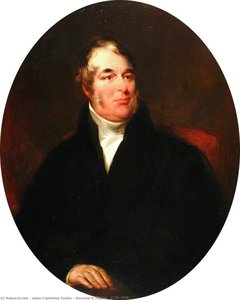
- Ecclesiastical and Civic Portraits: His work extended to the clergy and local dignitaries, such as his portrait of Reverend W. Hopkins, capturing the spiritual and social fabric of the era.
Ultimately, the historical significance of James Canterbury Pardon lies in his role as a visual biographer. In an age before the ubiquity of photography, his paintings provided the enduring image of leadership. He did not seek to reinvent the world through abstraction, but rather to honor it through precision. Through his meticulous execution, he ensured that the dignity, the duty, and the very essence of the Victorian era's most notable figures would remain etched in the annals of art for generations to come.
Quick Facts
- Artistic Movement Or Style: Victorian Portraiture
- Date Of Death: Living
- Full Name: James Canterbury Pardon
- Nationality: British
- Notable Artworks: ['An Officer of the 4th Light Dragoons']
- Place Of Birth: Canterbury, England