 Preview
 Send
Send Share
Share
 Details

 Download
 Similars
 X-Ray
X-Ray Diaporama
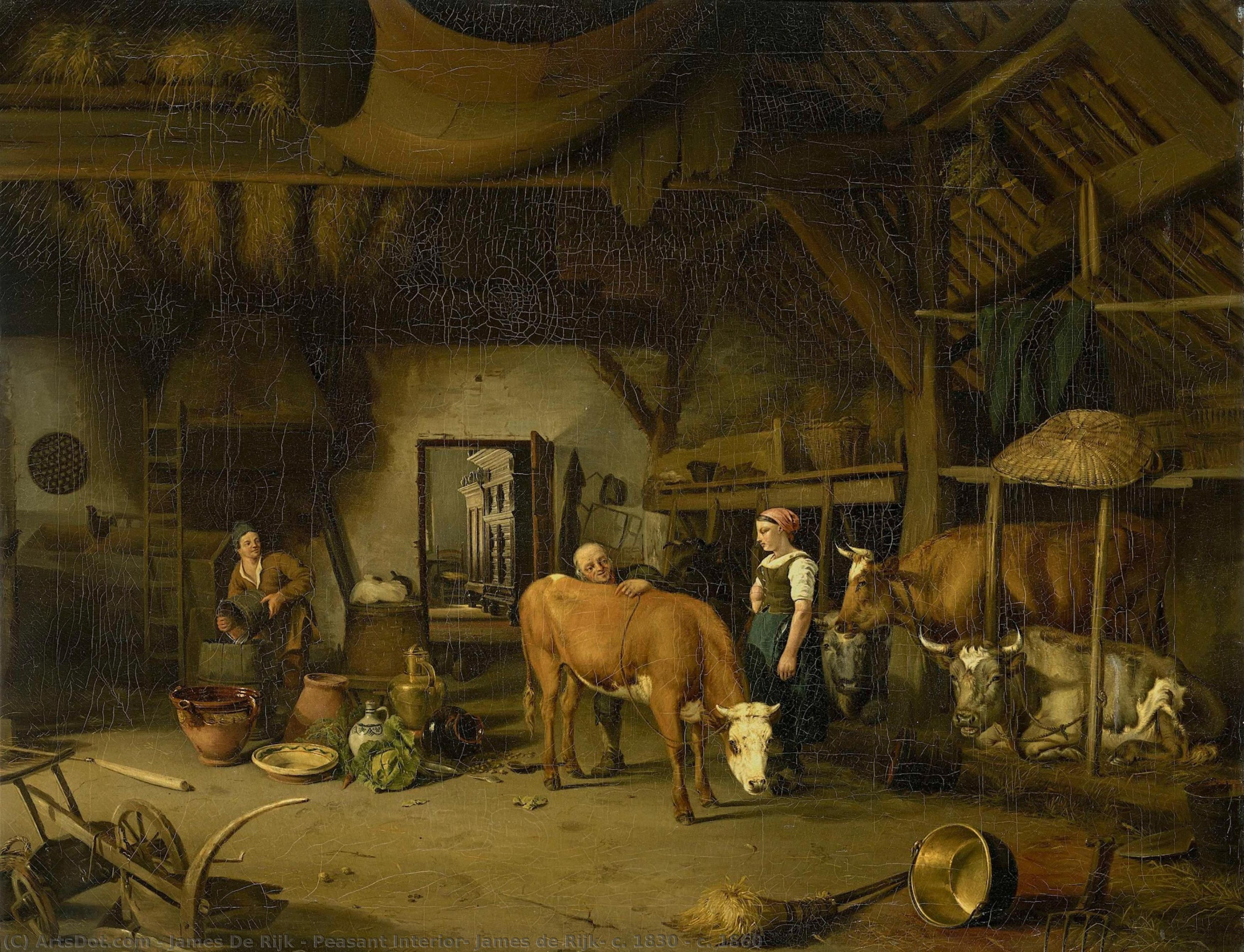
Peasant Interior, James de Rijk, c. 1830 - c. 1860
 1860
1860 57.0 x 72.0 cm
 Read More
Hand Made Oil Reproduction
Hand-painted oil on canvas in your size and frame, made to order by our artists. ( Buy Print Buy Image)




































Pick from our preset sizes that match the artwork's original proportions.

You may enter your own dimensions to fit a specific frame or space. If your selected size does not match the original image's proportions, we will either crop the artwork or extend the painting with additional hand-painted elements. A digital mockup will be sent for your approval before production begins.
Please note that the on-screen preview does not reflect the actual cropping or extension. Only the mockup will accurately show the final composition.
While custom sizes are available, we recommend selecting a dimension from the predefined list to preserve the original proportions.
After order, ArtsDot.com team will email client for instructions and provide a mockup preview
Worldwide Delivery () in 3/4 weeks instead of standard 5 weeks. (25 August). No compromise on quality.

Free Worldwide Express Shipping

High-Quality Linen Canvas

Full Shipping Insurance

Customs Tax Refund Guarantee

True Color Matching Guarantee

60-Day Return Policy (Defects Only)

100% Money-Back Guarantee

Bulk Discount Offer
 Glass option is only available in size under 110 CM

Peasant Interior, James de Rijk, c. 1830 - c. 1860
Reproduction Medium
Reproduction Size
-


Total Price
$ 263
Artwork Description
Related Artworks










Artist Biography
James de Rijk: A Northern Master of Domestic Scenes
James de Rijk (1806-1882) stands as a significant, yet often overlooked, figure in 19th-century Dutch landscape painting. Born in Hilversum, Netherlands, into a family with artistic roots, De Rijk’s career unfolded primarily within the Northern provinces, a region renowned for its distinctive light and atmospheric qualities. Initially studying drawing under Jordanus Hoorn in Amsterdam before transitioning to the tutelage of Pieter Gerardus van Os, he quickly established himself as a skilled observer of everyday life, particularly focusing on the interiors of peasant homes and rural landscapes. His work offers a poignant glimpse into the lives of ordinary people during a period of significant social change.Early Years and Artistic Training
De Rijk’s artistic journey began with a solid grounding in traditional drawing techniques. His early instruction under Hoorn instilled a disciplined approach to observation and composition, while van Os further refined his understanding of color and tonal values. Crucially, De Rijk's travels throughout Belgium, Germany, and Switzerland during his formative years broadened his visual vocabulary and exposed him to diverse artistic styles. These experiences undoubtedly influenced his later work, contributing to the nuanced realism that characterizes his paintings. Notably, he became a member of the Royal Academy of Art in Amsterdam in 1832, a prestigious recognition of his talent and dedication. This membership provided access to resources and opportunities for professional development, solidifying his position within the Dutch art world.Notable Works and Artistic Style
De Rijk’s artistic style is immediately recognizable by its meticulous attention to detail and its ability to evoke a strong sense of atmosphere. He excelled at depicting interiors—peasant homes, barns, and workshops—with remarkable accuracy and sensitivity. These scenes are not merely representations of physical spaces; they are imbued with a palpable sense of life, revealing the daily routines, labors, and quiet moments of those who inhabited them. His use of light is particularly noteworthy, capturing the subtle shifts in illumination that define the Northern Netherlands’ distinctive landscape. A prime example of this style can be seen in his painting “Peasant Interior,” which showcases a remarkable level of realism and emotional depth. The work, dating from around 1830-1860, offers an intimate portrayal of rural life, capturing the essence of a humble dwelling and its inhabitants.Influence and Legacy
De Rijk’s influence extended beyond his own artistic practice. He was a dedicated teacher, mentoring several promising young artists, including Jacobus Theodorus Abels and Remigius Adrianus Haanen. These pupils went on to establish their own careers as landscape painters, carrying forward De Rijk's commitment to realism and his appreciation for the beauty of the Northern Netherlands. Furthermore, his niece, Adriana van Ravenswaay, also followed in artistic footsteps, becoming a painter herself—a testament to the family’s legacy within the art world. His work is often associated with the *Arti Sacrum* society in Rotterdam, a group dedicated to promoting and supporting Dutch artists.Historical Significance
James de Rijk's paintings offer valuable insights into 19th-century Dutch society and culture. They provide a window into the lives of ordinary people—peasants, farmers, and artisans—who formed the backbone of the nation’s economy and identity. His meticulous depictions of domestic interiors and rural landscapes serve as a poignant reminder of a time when life was closely tied to the land and traditional ways of living. While perhaps not as widely celebrated as some of his contemporaries, De Rijk's work deserves recognition for its quiet beauty, technical skill, and profound understanding of human experience. His paintings remain valuable historical documents, offering a glimpse into a bygone era and preserving the memory of a region and its people.
james de rijk
1806 - 1882 , Netherlands
Quick Facts
- Artistic Movement Or Style: Landscape painting
- Artists Or Movements Influenced By This Artist:
- Jacobus Abels
- Remigius Haanen
- Artists Who Influenced This Artist:
- Jordanus Hoorn
- Pieter Gerardus van Os
- Date Of Birth: 1806-05-17
- Date Of Death: 1882-08-09
- Full Name: James de Rijk
- Nationality: Dutch
- Notable Artworks:
- Landschap met dieren
- Peasant Interior
- Place Of Birth: Hilversum, Netherlands