 Preview
 Send
Send Share
Share
 Details

 Download
 Similars
 X-Ray
X-Ray Diaporama
The Lone Shieling on the Misty Island


 Read More
Giclée / Art Print
Museum-quality giclée or canvas print with fast production and flexible finish options. ( Buy Hand Made Painting Buy Image)




































Pick from our preset sizes that match the artwork's original proportions.

You may enter your own dimensions to fit a specific frame or space. If your selected size does not match the original image's proportions, we will either crop the artwork or extend the image with a mirrored or solid-fill edge. A digital mockup will be sent for your approval before production begins.
Please note that the on-screen preview does not reflect the actual cropping or extension. Only the mockup will accurately show the final composition.
While custom sizes are available, we recommend selecting a dimension from the predefined list to preserve the original proportions.
Worldwide Delivery () in 2 weeks instead of standard 4/5 weeks. (24 August)

Free Worldwide Express Shipping

High-Quality Linen Canvas

Full Shipping Insurance

Customs Tax Refund Guarantee

True Color Matching Guarantee

60-Day Return Policy (Defects Only)

100% Money-Back Guarantee

Bulk Discount Offer
 Glass option is only available in size under 110 CM

The Lone Shieling on the Misty Island
Giclée / Art Print
Reproduction Size
-


Total Price
$ 63
Collectible Description
A Vision of Highland Life: "The Lone Shieling on the Misty Island"
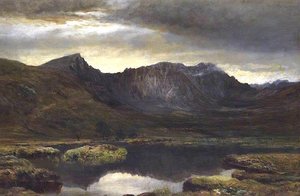
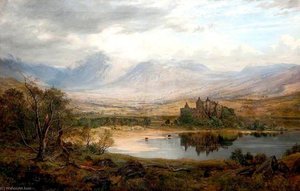
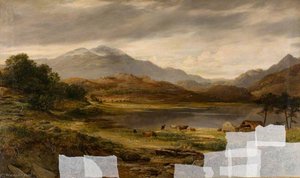
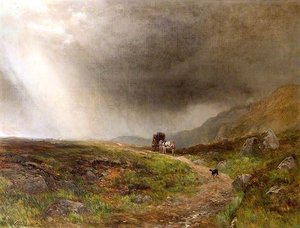
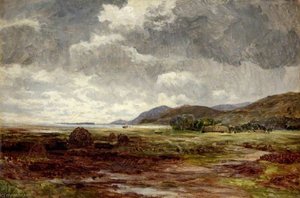
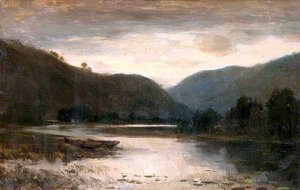
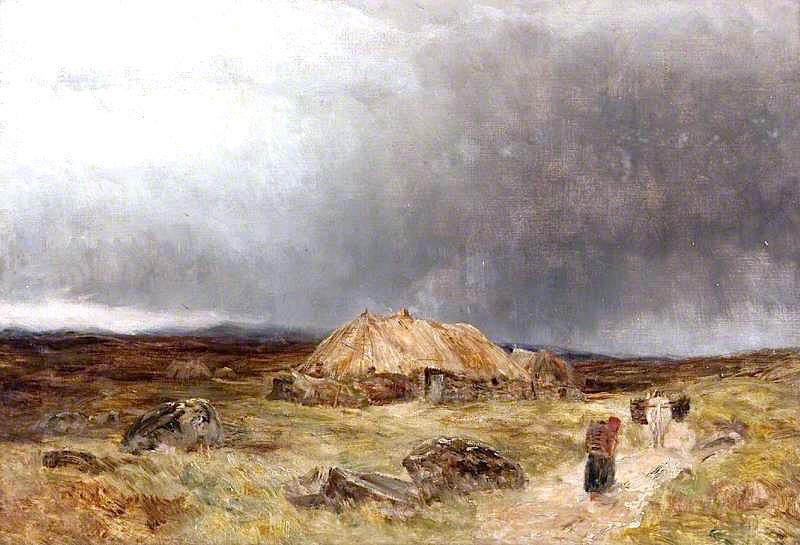
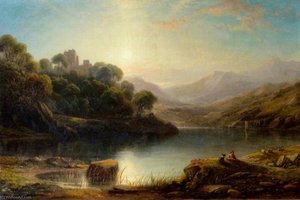
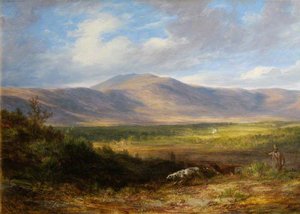
Step into a world of evocative beauty with James Docharty’s “The Lone Shieling on the Misty Island,” a captivating landscape painted around 1870. This work transports viewers to the rugged, atmospheric heart of Scotland, offering a glimpse into a traditional way of life intertwined with the dramatic forces of nature. The painting depicts a solitary shieling – a seasonal dwelling used by shepherds and their families during lambing season – nestled on a misty island within what appears to be a loch or expansive moorland. A small group of figures, accompanied by dogs and horses, populate the foreground, adding a sense of scale and human presence to the vastness of the scene. The overcast sky and swirling mists create an atmosphere of both tranquility and mystery, characteristic of the Romantic era’s fascination with sublime landscapes.Style & Technique: Romanticism in the Scottish Highlands
Docharty's style firmly places him within the Romantic movement, a period celebrated for its emotional intensity and focus on nature's power. Unlike earlier, more formal landscape painting styles, Romantic artists sought to evoke feeling rather than simply depict reality. This is evident in Docharty’s use of atmospheric perspective – the gradual blurring and softening of distant objects due to the effect of atmosphere – which creates a palpable sense of depth and distance. The muted color palette, dominated by greys, browns, and greens, further enhances the painting's melancholic yet serene mood. While specific details about Docharty’s technique are scarce, it is likely he employed oil paints on canvas, layering colors to achieve the subtle gradations of light and shadow that define the misty atmosphere. The visible brushstrokes contribute to a sense of movement and dynamism within the seemingly still scene.Historical Context & Symbolism
Painted in 1870, “The Lone Shieling on the Misty Island” reflects a period of significant change in Scotland. The Highland Clearances, a forced eviction of tenant farmers from their land, had largely concluded by this time, leaving a lasting impact on rural communities and traditional ways of life. Docharty’s painting can be interpreted as a nostalgic portrayal of a disappearing culture, romanticizing the simplicity and resilience of those who lived in harmony with the harsh Highland environment. The shieling itself symbolizes self-sufficiency, connection to nature, and a simpler existence – values that were increasingly threatened by industrialization and modernization. The presence of animals—the dog representing loyalty and companionship, the horses signifying work and transportation—further reinforces this theme of rural life.Emotional Impact & Artistic Legacy
“The Lone Shieling on the Misty Island” evokes a powerful sense of solitude, peace, and contemplation. The misty atmosphere creates an almost dreamlike quality, inviting viewers to lose themselves in the scene and reflect upon the relationship between humanity and nature. While James Docharty remains a lesser-known figure compared to some of his contemporaries, this painting exemplifies his skill in capturing the beauty and drama of the Scottish landscape. His work resonates with those who appreciate evocative landscapes that explore themes of memory, tradition, and the enduring power of the natural world. Owning a reproduction of this piece allows you to bring a touch of Highland serenity and Romantic artistry into your home or office space.Related Artworks
Artist Biography
A Brush with the Scottish Soul: The Life and Art of James Docharty
James Docharty, born in 1829 and passing in 1878, remains a captivating figure within the pantheon of British Romantic landscape painters. Though not as widely celebrated as some of his contemporaries, Docharty’s work possesses an undeniable charm and authenticity, deeply rooted in the rugged beauty of Scotland. His paintings are more than mere depictions of scenery; they are evocative poems rendered in oil and watercolor, capturing a specific mood and spirit of place that resonates even today. While biographical details surrounding Docharty's life remain somewhat sparse – a common fate for artists operating outside the immediate orbit of major artistic centers – his canvases speak volumes about his profound connection to the land he portrayed. He wasn’t an artist who sought grand historical narratives or allegorical complexity; instead, he found inspiration in the everyday lives unfolding within Scotland’s dramatic landscapes and the quiet dignity of its people.Early Influences and Artistic Development
Docharty's artistic journey began amidst a growing national fascination with Scottish identity and heritage. The Romantic movement had already taken hold across Europe, but in Scotland it took on a particularly poignant character, fueled by a renewed interest in folklore, history, and the untamed wilderness of the Highlands. While formal training details are limited, Docharty clearly absorbed the influence of earlier landscape masters like John Constable and J.M.W. Turner, though he developed a distinctly personal style. Unlike Turner’s often dramatic and atmospheric depictions, or Constable's meticulous realism, Docharty favored a more direct and intimate approach. His early works demonstrate a keen eye for detail and a sensitivity to light and color, but also reveal a growing desire to capture the *feeling* of a place rather than simply its appearance. He moved away from precise topographical accuracy towards a looser, more expressive brushstroke that prioritized mood and atmosphere. This shift is particularly evident in his depictions of moorlands and lochs, where he skillfully used subtle gradations of tone to convey the vastness and solitude of the Scottish countryside.The Trossachs and Beyond: Defining Themes
Docharty’s most recognizable works center around the Trossachs region of Scotland – a landscape immortalized by Sir Walter Scott in his novels and poems. He became intimately familiar with this area, returning to it repeatedly throughout his career. His paintings of Loch Katrine, Ben Venue, and other iconic landmarks are not simply picturesque views; they are imbued with a sense of romantic longing and a deep appreciation for the natural world. He often included figures within his landscapes, typically engaged in everyday activities like fishing or tending to livestock, adding a human element that grounds the scenes and emphasizes the connection between people and their environment. However, Docharty’s artistic scope extended beyond the Trossachs. He also painted scenes of Skye, capturing the unique character of its rugged coastline and remote villages. His depictions of a *Skye fishing village* are particularly noteworthy for their sensitive portrayal of rural life and their evocative use of light and shadow.Technique and Style: A Master of Watercolor
While proficient in oil painting, Docharty is perhaps best known for his exquisite watercolors. He possessed a remarkable ability to capture the subtle nuances of color and tone in this medium, creating works that are both delicate and powerful. His watercolor technique involved layering washes of transparent color to build up depth and atmosphere, often leaving areas of white paper untouched to suggest light and reflection. He was particularly adept at capturing the effects of mist and rain, which frequently shroud the Scottish landscape. This mastery of watercolor allowed him to create paintings that are remarkably atmospheric and evocative, conveying a sense of place that is both immediate and deeply personal. His oil paintings share a similar sensitivity to light and color, but often feature a more textured brushstroke and a greater emphasis on form.Historical Significance and Legacy
James Docharty’s work occupies an important niche within the history of British landscape painting. He wasn't striving for groundbreaking innovation; rather, he perfected a style that beautifully captured the spirit of Romanticism as it manifested in Scotland. His paintings offer valuable insights into 19th-century Scottish life and culture, providing a glimpse into a world that was rapidly changing.- His focus on everyday scenes and rural landscapes distinguishes him from many of his contemporaries who favored more dramatic or historical subjects.
- Docharty’s watercolors are particularly prized for their exquisite technique and evocative atmosphere.
- He contributed to the growing national fascination with Scottish identity and heritage, helping to shape a romanticized vision of the country that continues to resonate today.
james docharty
1829 - 1878
Related Articles
Alexander Nasmyth: Picturing Scotland's Romantic Landscape – Innovation & Identity
Explore the life & art of Alexander Nasmyth, a pivotal figure in Scottish Romantic landscape painting. Discover his iconic works, including portraits of Robert Burns, and learn about his lasting influence on national identity. Fine art reproductions available.

Romantic Landscapes: 10 Masterpieces for Your Home | ArtsDot
Journey through 10 Romantic landscape masterpieces by Friedrich, Turner & Cole. Explore emotional art, sublime nature scenes & iconic 19th-century paintings. Find museum-quality reproductions for your home at ArtsDot.com – discover the full collection online!

John Constable's Masterpieces: Explore 25 Iconic Landscapes for Your Home
Journey through John Constable's 25 most celebrated landscapes. Explore Romanticism, Dedham Vale & his masterful use of light in iconic paintings like 'Hay Wain'. Find museum-quality art reproductions and elevate your home decor on ArtsDot.com.

Evocations of Place: A Historical Journey Through Landscape Art
Explore the rich history of landscape art with ArtsDot. Discover renowned artists, movements like Impressionism & Romanticism, and expert guidance for collecting timeless pieces. Find your perfect serene escape today!
Evoking Nature's Sublime: A Comprehensive Exploration of 19th-Century Landscape Painting
Explore the captivating world of 19th-century landscape painting! Discover renowned artists like Friedrich & Monet, key movements, and find the perfect artwork to bring nature's serenity into your home. Expert insights at ArtsDot.