 Preview
 Send
Send Share
Share
 Details

 Download
 Similars
 X-Ray
X-Ray Diaporama
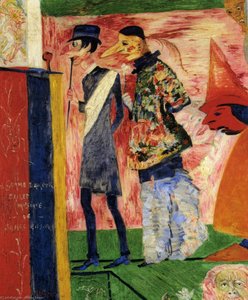
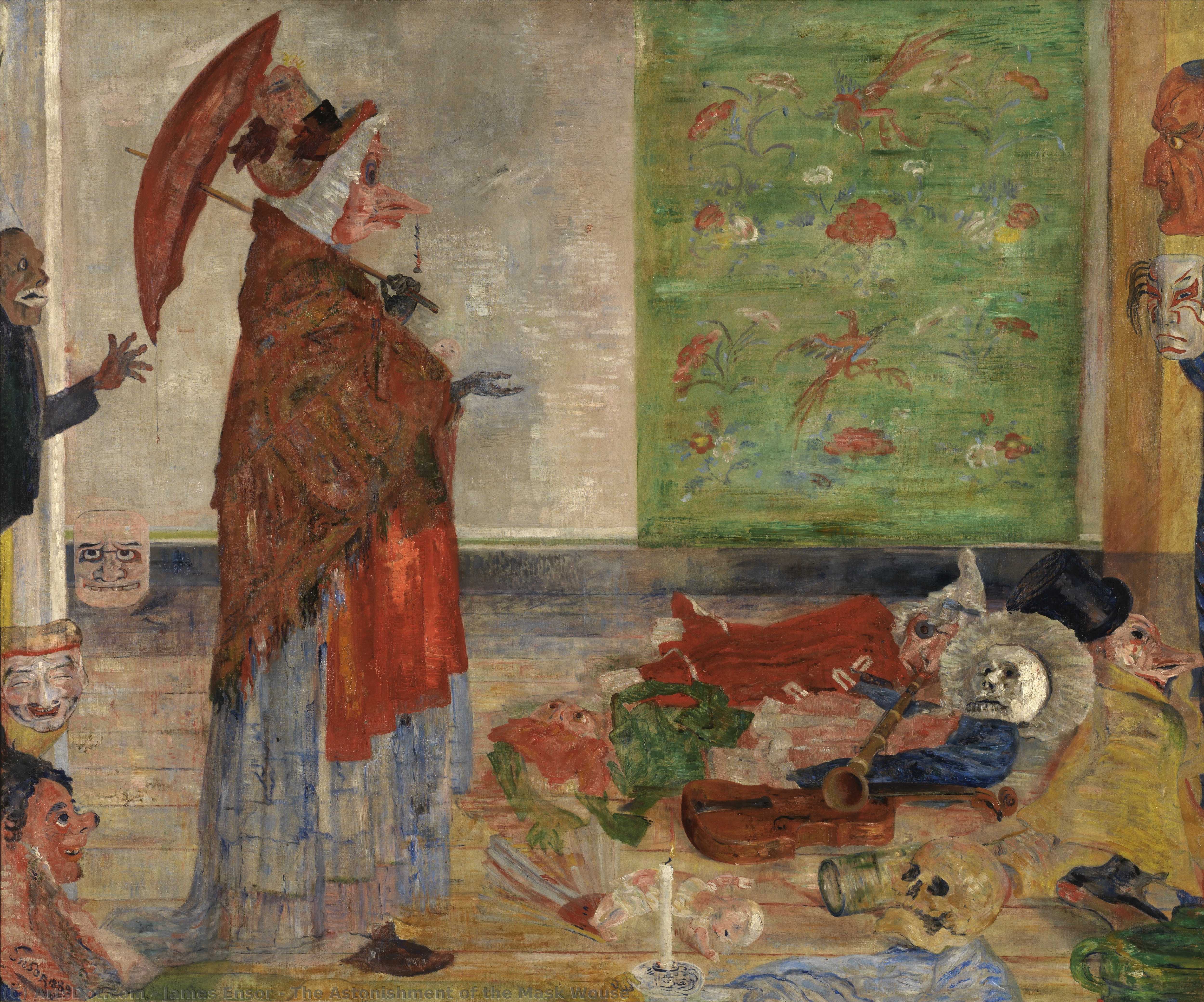
The Astonishment of the Mask Wouse


 Read More
Hand Made Oil Reproduction
Hand-painted oil on canvas in your size and frame, made to order by our artists. ( Buy Print Buy Image)




P118B $10

P118H $10

P118W $10

P438Z $10

P508JH $12

P508YH $12

P805H $10

P805Z $10

P919BZ $10

P919G $10

P919XJ $10

P959ZH $10

P968JZ $12

W106C $8

W218G $10

W218JH $8

W218Y $10

W307PJ $10

W316G $10

W316PJ $8

W316Y $10

W398PJ $8

W4111J $10

W500HY $15

W500JH $15

W692G $12

W849H $8

W940BG $15

W953PJ $8




Pick from our preset sizes that match the artwork's original proportions.

You may enter your own dimensions to fit a specific frame or space. If your selected size does not match the original image's proportions, we will either crop the artwork or extend the painting with additional hand-painted elements. A digital mockup will be sent for your approval before production begins.
Please note that the on-screen preview does not reflect the actual cropping or extension. Only the mockup will accurately show the final composition.
While custom sizes are available, we recommend selecting a dimension from the predefined list to preserve the original proportions.
After order, ArtsDot.com team will email client for instructions and provide a mockup preview
Worldwide Delivery () in 3/4 weeks instead of standard 5 weeks. (20 August). No compromise on quality.

Free Worldwide Express Shipping

High-Quality Linen Canvas

Full Shipping Insurance

Customs Tax Refund Guarantee

True Color Matching Guarantee

60-Day Return Policy (Defects Only)

100% Money-Back Guarantee

Bulk Discount Offer
 Glass option is only available in size under 110 CM

The Astonishment of the Mask Wouse
Reproduction Medium
Reproduction Size
-


Total Price
$ 263
Artwork Description
The Astonishment of the Mask Wouse: A Descent into Surreal Belgian Expressionism
James Ensor’s *The Astonishment of the Mask Wouse* (1889) isn't merely a painting; it’s an immersive experience, a carefully constructed tableau designed to unsettle and intrigue. Created in oil on canvas during his peak period of artistic experimentation, this large-scale work transports the viewer into a dimly lit, almost claustrophobic room brimming with unsettling details and a palpable sense of bewilderment. Ensor, a pivotal figure bridging Expressionism and Surrealism, masterfully employs a rich palette of earthy tones—ochres, browns, deep reds—interspersed with startling bursts of color in the masks and fabrics, creating a visual dissonance that mirrors the painting’s thematic core: the disconcerting nature of reality itself. The scene unfolds around a central figure – a woman holding an open umbrella – whose gaze is directed off-canvas, as if witnessing something extraordinary beyond our comprehension. This immediate displacement draws us into Ensor's deliberately ambiguous world.Composition and Symbolism: A Stage for the Unexplained
At first glance, the composition appears deceptively conventional—a dining room setting with tables, chairs, and a clock on the wall. However, closer inspection reveals a deliberate subversion of normalcy. Multiple umbrellas, bottles, cups, bowls, a vase, and an assortment of masks populate the space, each object contributing to an atmosphere of surrealism and unease. The arrangement isn’t one of domestic comfort but rather a carefully orchestrated chaos, suggesting a disrupted ritual or a dreamscape where familiar objects take on distorted meanings. The open umbrellas, frequently associated with protection, here seem to herald impending change—a shift in the established order. The clock, a recurring motif in Ensor's work, serves as a potent symbol of mortality and the fleeting nature of human experience, emphasizing the painting’s underlying themes of transience and decay. The absence of clear narrative or identifiable characters further amplifies this sense of disorientation, inviting viewers to project their own interpretations onto the scene.James Ensor's Expressionist Vision: Masks as Social Critique
Ensor was deeply concerned with exposing the hypocrisy and social conventions of his time, a preoccupation powerfully expressed through his use of masks. While *The Astonishment of the Mask Wouse* doesn’t feature a literal mask on the central figure, it's profoundly imbued with their symbolic weight. The masks scattered throughout the room—carnival masks, Japanese stage masks, and even skeletal representations—represent hidden identities, false appearances, and the performative nature of social interaction. They are a visual metaphor for the deception inherent in societal roles and expectations. Influenced by artists like Gauguin and Van Gogh, Ensor’s bold brushstrokes and vibrant colors create a dreamlike quality, pushing beyond mere representation to capture the raw emotions and psychological states associated with his subjects. His style is characterized by a deliberate distortion of form, creating an unsettling yet captivating effect that draws the viewer into the painting's enigmatic atmosphere.Legacy and Interpretation: A Window into the Psyche
James Ensor’s place within art history is secured as a key figure in both Expressionism and Surrealism. His work resonated with anxieties about modernity, social alienation, and the breakdown of traditional values—themes that continue to resonate today. *The Astonishment of the Mask Wouse* exemplifies this engagement, offering a glimpse into the artist’s complex psychological landscape. Exhibited prominently at museums like the Rugby Art Gallery and Museum in the United Kingdom, Ensor's paintings, including this arresting work, have been celebrated for their originality and emotional depth. The painting invites us to contemplate not just what we see but also what lies beneath the surface—the hidden anxieties, unspoken desires, and unsettling truths that shape our experience of the world. It remains a powerful testament to Ensor’s ability to transform everyday objects into potent symbols of human existence.For a high-quality reproduction of *The Astonishment of the Mask Wouse*, please visit ArtsDot’s website.
Related Artworks
Artist Biography
A Life Immersed in Masks and Shadows: The World of James Ensor
Born in Ostend, Belgium, in 1860, James Sidney Edouard Ensor emerged from a fascinating confluence of cultures—his father English, his mother Belgian. This duality perhaps foreshadowed the artist’s lifelong fascination with masks and disguise, themes that would come to dominate his unsettling yet captivating oeuvre. Growing up amidst the bustling energy of a seaside resort town, young James was deeply affected by the atmosphere of carnivals and curiosities. His parents operated a souvenir shop brimming with shells, carnival masks, and peculiar objects—a veritable cabinet of wonders that ignited his imagination and provided a rich visual vocabulary for his future art. Though initially hesitant to embrace traditional academic pursuits, Ensor eventually enrolled at the Académie Royale des Beaux-Arts in Brussels, but found its rigid structure stifling to his burgeoning artistic vision. He quickly realized he needed to forge his own path, one that would lead him far beyond conventional boundaries.
From Somber Realism to Grotesque Visions
Ensor’s early paintings reflected a more traditional approach, depicting scenes of everyday life rendered in somber tones. Works like *Russian Music* (1881) and *The Drunkards* (1883) reveal a nascent talent grappling with realism, but even within these early pieces, hints of the unsettling imagery to come are present. A pivotal shift occurred as Ensor’s palette brightened and his subject matter grew increasingly bizarre. He began to populate his canvases with carnivals, skeletons, puppets, and allegorical figures—a world steeped in fantasy and often bordering on the grotesque. This wasn't merely a stylistic change; it was a deliberate exploration of the darker aspects of human existence, a rejection of societal norms, and an embrace of the irrational. His style became instantly recognizable for its bold brushwork, vibrant colors, and theatrical quality—a visual language uniquely his own. The influence of his childhood surroundings is undeniable: those carnival masks weren’t simply decorative elements; they were symbols of hidden identities, social critique, and the fragility of appearances.
Masterpieces of Disquiet: Key Works and Recurring Themes
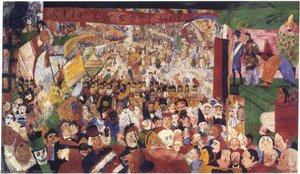
Throughout his career, Ensor produced a series of works that continue to shock and fascinate audiences today. *The Scandalized Masks* (1883) stands as an early testament to his fascination with the power of disguise and its ability to reveal hidden emotions. Perhaps his most controversial work, *Christ's Entry into Brussels* (1888-1889), remains a powerful satire of religious hypocrisy and societal indifference—a painting initially met with harsh criticism but now celebrated as a masterpiece. The unsettling image of Christ entering a city teeming with grotesque masked figures is a potent commentary on the disconnect between spiritual ideals and human behavior. *Skeletons Fighting over a Hanged Man* (1891) offers a stark meditation on mortality, decay, and the absurdity of life, while *Tribulations of Saint Anthony* (1887) delves into complex allegorical themes of temptation, sin, and spiritual struggle. Recurring throughout his work are explorations of death, social critique, religious satire, and the boundless power of imagination—themes that resonate with a timeless relevance.
A Pioneer of Modernism: Influences and Legacy
While Ensor resisted easy categorization, his artistic lineage is complex and fascinating. He acknowledged influences from masters like Pieter Bruegel the Elder, whose crowded scenes and moralizing narratives resonated with his own vision, as well as Francisco Goya, whose dark humor and unflinching depictions of human suffering left a lasting impression. James Abbott McNeill Whistler’s emphasis on aestheticism also played a role in shaping Ensor's artistic sensibilities. However, Ensor was not merely an imitator; he synthesized these influences into something entirely new and original. He is now widely recognized as a pivotal figure in the transition from 19th-century Symbolism to early 20th-century Expressionism and Surrealism—a true pioneer of modern art. His fearless exploration of the subconscious, his embrace of grotesque imagery, and his rejection of academic conventions paved the way for future generations of artists who dared to challenge artistic norms. Despite facing initial resistance, Ensor eventually gained recognition in his later years, being named a Baron by King Albert I in 1929 and awarded the Légion d'honneur in 1933. He died in Ostend in 1949, leaving behind a body of work that continues to captivate, disturb, and inspire. His legacy endures as a testament to the power of art to confront uncomfortable truths and explore the depths of the human condition.
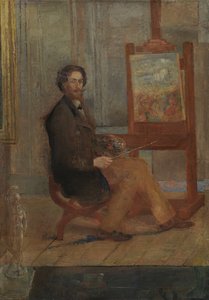
James Ensor
1860 - 1949 , Belgium
Quick Facts
- Artistic Movement Or Style: Expressionism, Surrealism
- Artists Or Movements Influenced By This Artist:
- Expressionism
- Surrealism
- Artists Who Influenced This Artist:
- Bruegel the Elder
- Francisco Goya
- Whistler
- Date Of Birth: April 13, 1860
- Date Of Death: November 19, 1949
- Full Name: James Sidney Edouard Ensor
- Nationality: Belgian
- Notable Artworks:
- The Scandalized Masks
- Skeletons Fighting...
- Christ's Entry into Brussels
- Tribulations of Saint Anthony
- Place Of Birth: Ostend, Belgium
Related Articles
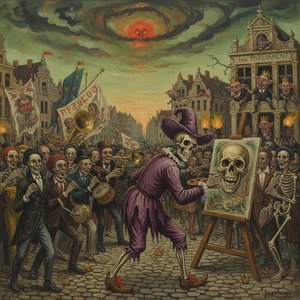
James Ensor's Grotesque Visions: Social Commentary & Artistic Innovation
Explore the unsettling yet captivating world of James Ensor, a pioneer of Expressionism. Discover his satirical masterpieces, symbolic imagery & lasting influence on modern art. High-quality reproductions available at ArtsDot.
Whistler's Masterpieces: Explore 25 Iconic Paintings & Aesthetic Art for Your Home
Journey through 25 iconic James Abbott McNeill Whistler paintings! Explore his masterpieces of Aestheticism, from 'Nocturne in Black and Gold' to captivating portraits. Find museum-quality art reproductions & elevate your home decor with ArtsDot.com. Discover the full collection online.
Sir Alfred Munnings' Masterpieces: 25 Paintings That Define Equine Art | ArtsDot
Explore 25 iconic Sir Alfred Munnings paintings! Discover the beauty of British Impressionism, equine art & rural England. Find museum-quality reproductions and elevate your home decor with ArtsDot. Explore the full collection online.
Beyond Reality's Grasp: Surrealism & Expressionism in 20th-Century Art
Explore the captivating interplay of Surrealism & Expressionism in 20th-century art. Discover key artists like Masson and Pollock, automatism techniques, and their lasting influence. Expert insights for art enthusiasts.
René Magritte's Masterpieces: 25 Surrealist Paintings for Art Lovers | ArtsDot
Explore 25 iconic René Magritte paintings & delve into the world of surrealism. Discover the stories behind 'The Son of Man', 'Golconda' & more. Find museum-quality art reproductions and elevate your home decor with ArtsDot.com.