Preview
 Send
Send Share
Share
 Details

 Download
 Similars
 X-Ray
X-Ray Diaporama
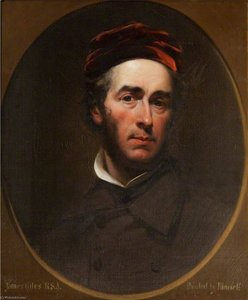
Self Portrait in a Maroon Coat and Crimson Beret
 Oil On Canvas
- WallArt
- Realism
 1846
1846- 19th Century
 59.0 x 49.0 cm
 The National Trust For Scotland
 Read More
Hand Made Oil Reproduction
Hand-painted oil on canvas in your size and frame, made to order by our artists. ( Buy Print Buy Image)




































Pick from our preset sizes that match the artwork's original proportions.

You may enter your own dimensions to fit a specific frame or space. If your selected size does not match the original image's proportions, we will either crop the artwork or extend the painting with additional hand-painted elements. A digital mockup will be sent for your approval before production begins.
Please note that the on-screen preview does not reflect the actual cropping or extension. Only the mockup will accurately show the final composition.
While custom sizes are available, we recommend selecting a dimension from the predefined list to preserve the original proportions.
After order, ArtsDot.com team will email client for instructions and provide a mockup preview
Worldwide Delivery () in 3/4 weeks instead of standard 5 weeks. (24 August). No compromise on quality.

Free Worldwide Express Shipping

High-Quality Linen Canvas

Full Shipping Insurance

Customs Tax Refund Guarantee

True Color Matching Guarantee

60-Day Return Policy (Defects Only)

100% Money-Back Guarantee

Bulk Discount Offer
 Glass option is only available in size under 110 CM

Self Portrait in a Maroon Coat and Crimson Beret
Reproduction Medium
Reproduction Size
-


Total Price
$ 263
Artwork Description
A Gaze Through Time: The Intimacy of James Giles
In the quiet, evocative depths of Self Portrait in a Maroon Coat and Crimson Beret, we encounter more than just a likeness; we meet the soul of a man caught in a moment of profound introspection. Painted in 1846 by the Scottish master James Giles, this oil on canvas serves as a window into the mid-19th century, offering a striking encounter with an artist who found his greatest inspiration in the misty, atmospheric landscapes of the Highlands. The subject, gazing directly at the viewer with a serious and steady expression, commands the space with a dignified presence that transcends the boundaries of time. His well-groomed beard and mustache lend him an air of distinction, suggesting a man of intellect and refined character, while the rich, saturated tones of his attire anchor the composition in a sense of classical permanence.
The technical mastery displayed in this work lies in Giles’s ability to manipulate light and texture to create a palpable sense of depth. The heavy, velvety weight of the maroon coat is rendered with such precision that one can almost feel the warmth of the fabric against the cool air of a Scottish studio. This tactile quality is contrasted beautifully by the vibrant, textured application of paint in the crimson beret, which catches the light and draws the eye upward toward the man's face. Through delicate brushwork and a sophisticated use of chiaroscuro, Giles illuminates the subtle contours of his own features, allowing shadows to pool softly around the eyes and jawline, thereby imbuing the portrait with a psychological complexity that is both haunting and deeply human.
Beyond its technical brilliance, the painting carries a profound emotional resonance that makes it an extraordinary choice for discerning collectors and interior designers alike. There is a certain melancholic grace inherent in the work—a hallmark of Giles’s broader oeuvre—that speaks to the quiet dignity found in solitude. For those looking to curate a space of reflection, this portrait offers a focal point of immense gravity and warmth. Whether placed in a traditional study adorned with leather-bound books or integrated into a modern, minimalist gallery setting, the piece acts as an anchor of history and emotion. It is not merely a reproduction of a face, but a preservation of a moment of self-recognition, inviting anyone who stands before it to pause, reflect, and connect with the enduring spirit of the Scottish Romantic era.
Related Artworks


Artist Biography
James Giles: The Highland Visionary
James William Giles (1801–1870) wasn’t a name that dominated the grand halls of the Royal Academy in London, nor did his canvases command the immediate attention of the Parisian art world. Yet, within the heart of Scotland, particularly in Aberdeen, he cultivated a singular and profoundly evocative style – one that captured the rugged beauty of the Highlands with an almost melancholic grace. He was, in essence, a painter of atmosphere, of light filtering through mist-laden mountains, and of the quiet dignity of ancient castles standing sentinel against the vastness of the Scottish landscape. His legacy lies not in flamboyant exhibitions or celebrity patronage, but in a deeply personal and remarkably consistent body of work that continues to resonate with viewers today.
Born in Glasgow in 1801, Giles’s early life was marked by hardship following his father's death. Forced to contribute to the household income at a young age, he honed his artistic skills through self-teaching and private instruction, demonstrating an innate talent that quickly surpassed mere technical proficiency. His family’s connection to the textile industry – his father worked as a designer for calico – instilled in him a keen eye for color and pattern, which later informed his landscape paintings with subtle shifts of hue and texture. Moving to Aberdeen around 1805, he found a fertile ground for artistic development, immersing himself in the city’s vibrant cultural scene and establishing a studio where he began to develop his distinctive style.
The Influence of Italy and the Highland Landscape
Giles's artistic journey took a pivotal turn with his travels to Italy in the mid-1820s. This extended sojourn proved transformative, exposing him to the masterpieces of the Old Masters – Raphael, Michelangelo, and Titian – and profoundly influencing his approach to composition, color, and light. He meticulously copied numerous paintings, not merely as exercises in technique but as a means of absorbing their essence, learning how they rendered atmosphere and emotion. Returning to Scotland, he brought with him a renewed sense of purpose and a heightened ability to translate the dramatic Highland landscape onto canvas. Crucially, his Italian experience didn’t lead to a slavish imitation of classical styles; instead, it provided him with a sophisticated understanding of artistic principles that he then applied uniquely to his Scottish subject matter.
His subjects were predominantly landscapes – the rugged mountains of Deeside, the rolling hills of Aberdeenshire, and the dramatic coastline. He wasn’t interested in grand vistas or heroic scenes; rather, he sought out intimate moments—a lone shepherd against a brooding sky, a ruined castle shrouded in mist, a stream winding through a glen. He frequently depicted these scenes during periods of inclement weather – rain, fog, and snow – imbuing them with a sense of solitude and melancholy. This preference for atmospheric conditions became a hallmark of his style, contributing to the haunting beauty of his paintings.
Royal Commissions and Artistic Recognition
Giles’s talent quickly gained recognition within Scotland's aristocratic circles. He was commissioned to paint numerous landscapes for prominent families, including the Earls of Aberdeen and Sutherland, securing him a comfortable living and establishing his reputation as a skilled and reliable artist. Perhaps most significantly, Queen Victoria herself became a patron, commissioning several paintings of Balmoral Castle – the estate she acquired in 1848. Giles’s depiction of the old castle, predating the grand Victorian rebuild, is particularly noteworthy for its faithfulness to the original structure and its evocative portrayal of the surrounding landscape. This royal patronage cemented his position as one of Scotland's most respected artists.
In 1829, he was elected an Academician of the Royal Scottish Academy, a prestigious honor that further validated his artistic achievements. He continued to exhibit his work at both the Royal Scottish Academy and the British Institution in London throughout his career, consistently receiving positive reviews for his atmospheric landscapes and skillful rendering of light and color. His later years were marked by a dedication to documenting the ancient castles of Aberdeenshire, culminating in the publication of “Drawings of Aberdeenshire Castles” (1838-1855), a collection of meticulously rendered watercolor sketches that remain highly valued for their artistic merit and historical significance.
A Lasting Legacy
James Giles died in Aberdeen in 1870, leaving behind a substantial body of work that reflects his deep connection to the Scottish landscape. While he may not be as widely celebrated as some of his contemporaries, his paintings possess a quiet power and emotional resonance that continues to captivate viewers today. His ability to capture the essence of the Highland atmosphere—the mist-shrouded mountains, the brooding skies, and the sense of timeless solitude—makes him one of Scotland’s most important landscape painters. His work stands as a testament to the enduring beauty of the Scottish Highlands and the artistic vision of a man who dedicated his life to capturing its spirit on canvas.
james giles
1801 - 1870
Quick Facts
- Artistic Movement Or Style: Landscape painting
- Artists Or Movements Influenced By This Artist: ['Turner']
- Artists Who Influenced This Artist: ['Jean-François Regnault']
- Date Of Birth: January 4, 1801
- Date Of Death: October 6, 1870
- Full Name: James William Giles
- Nationality: Scottish
- Notable Artworks:
- Balmoral Castle Painting
- Aberdeen Castles Drawings
- Place Of Birth: Glasgow, Scotland
Related Articles
Maroon Masterpieces: 10 Famous Paintings & Their Rich History |
Explore 10 famous paintings dominated by rich maroon tones! Discover iconic artworks, from Renaissance masterpieces to modern classics. Learn about artists & techniques. Find museum-quality reproductions for your home at .
Etching Masters: 10 Legendary Prints That Revolutionized Art | ArtsDot
Journey through 10 legendary etching masterpieces by Rembrandt, Dürer & Goya. Explore the history of printmaking and discover timeless art for your home. Find museum-quality reproductions at ArtsDot.com.
Leonardo da Vinci's Masterpieces: Explore 25 Iconic Artworks for Your Home | ArtsDot
Journey through Leonardo da Vinci's genius with our curated selection of 25 iconic artworks. Explore the stories behind Mona Lisa, The Last Supper & more Renaissance masterpieces. Find museum-quality art reproductions for your home at ArtsDot.com.
Mark Rothko's Masterpieces: 25 Paintings That Define Abstract Expressionism | ArtsDot
Explore 25 iconic Mark Rothko paintings that define Abstract Expressionism. Discover the stories, colors & emotions behind these masterpieces. Find museum-quality art reproductions and curated decor ideas at ArtsDot.com.

Cristóbal Balenciaga: Deconstructing Haute Couture's Architectural Legacy
Explore the revolutionary world of Cristóbal Balenciaga, the 'couturier's couturier'. Discover his architectural designs, lasting influence on haute couture, and guide to collecting rare pieces. A connoisseur’s resource.