 Preview
 Send
Send Share
Share
 Details

 Download
 Similars
 X-Ray
X-Ray Diaporama
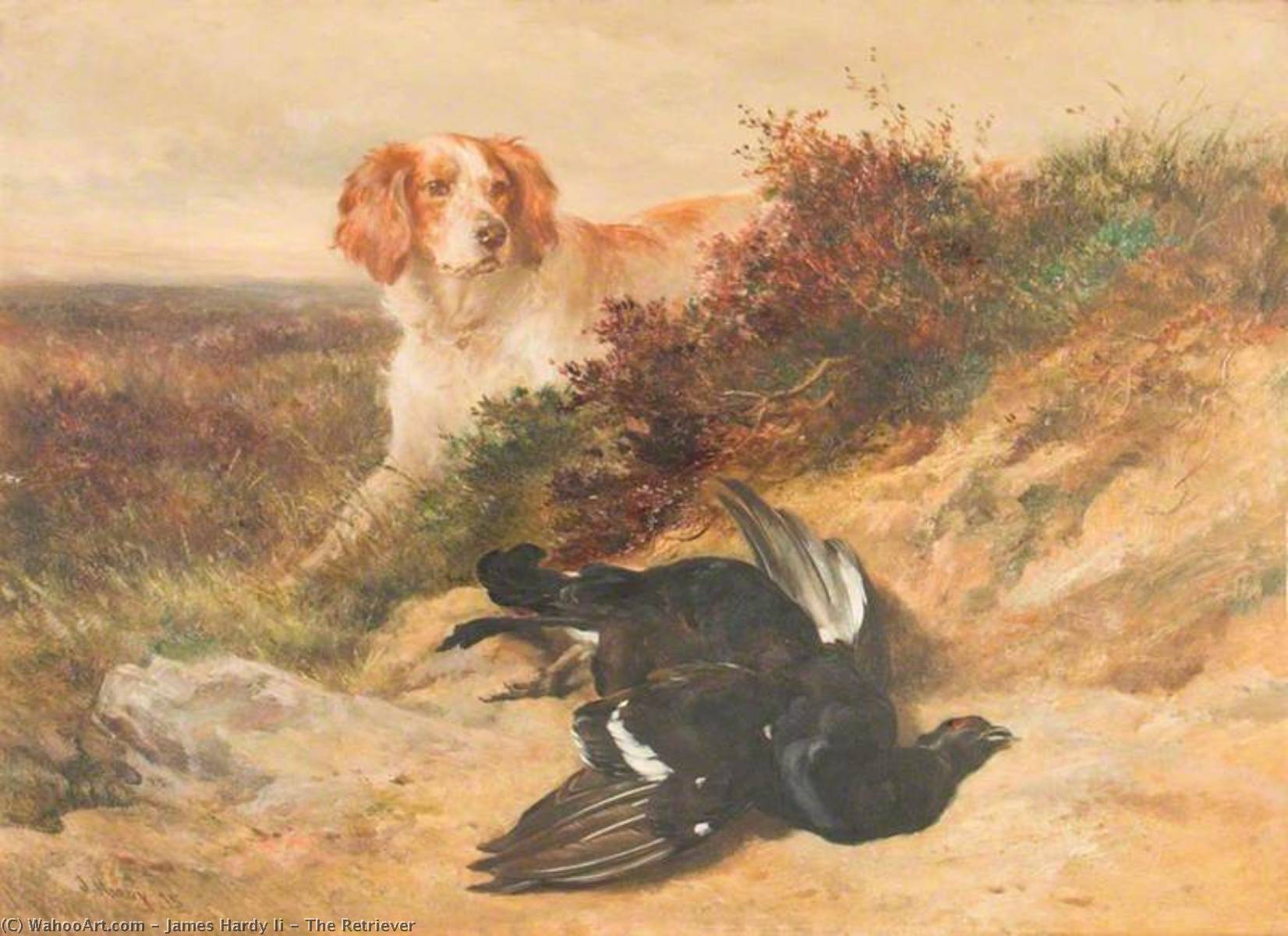
The Retriever
 1875
1875 33.0 x 46.0 cm
 Read More
Giclée / Art Print
Museum-quality giclée or canvas print with fast production and flexible finish options. ( Buy Hand Made Painting Buy Image)




































Pick from our preset sizes that match the artwork's original proportions.

You may enter your own dimensions to fit a specific frame or space. If your selected size does not match the original image's proportions, we will either crop the artwork or extend the image with a mirrored or solid-fill edge. A digital mockup will be sent for your approval before production begins.
Please note that the on-screen preview does not reflect the actual cropping or extension. Only the mockup will accurately show the final composition.
While custom sizes are available, we recommend selecting a dimension from the predefined list to preserve the original proportions.
Worldwide Delivery () in 2 weeks instead of standard 4/5 weeks. (18 August)

Free Worldwide Express Shipping

High-Quality Linen Canvas

Full Shipping Insurance

Customs Tax Refund Guarantee

True Color Matching Guarantee

60-Day Return Policy (Defects Only)

100% Money-Back Guarantee

Bulk Discount Offer
 Glass option is only available in size under 110 CM

The Retriever
Giclée / Art Print
Reproduction Size
-


Total Price
$ 63
Collectible Description
Artistic Style and Technique
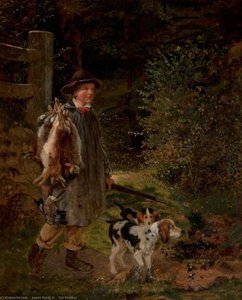
James Hardy Ii's artistic style is characterized by his use of warm colors and delicate brushstrokes. In The Retriever, he employs a range of earthy tones to create a sense of realism and depth. The painting's composition is also noteworthy, with the dog and bird placed in a harmonious balance that draws the viewer's eye. Key Features of the painting include:- The use of oil on panel, which allows for a high level of detail and texture
- The depiction of the dog's fur and feathers, which showcases the artist's attention to detail
- The subtle expression on the dog's face, which conveys a sense of curiosity and loyalty
Provenance and Exhibition History
The Retriever is currently housed in the West Park Museum in Macclesfield, Cheshire East, England. The museum is known for its collection of artworks from the 19th and 20th centuries, and The Retriever is one of its most prized possessions. To learn more about the West Park Museum and its collection, visit /art/list/?Filter=A@D3C7VT-Discovering-the-Artworks-of-West-Park-Museum-United-Kingdom. For art enthusiasts interested in purchasing a handmade oil painting reproduction of The Retriever, visit /art/list/?Filter=ARAF9Y-James-Hardy-Ii-The-Retriever. Our team of skilled artists can create a beautiful and accurate replica of the original painting, using only the highest quality materials and techniques.To explore more artworks by James Hardy Ii and other notable artists, visit https://ArtsDot.com and discover a world of art and beauty.
Related Artworks

Artist Biography
James Hardy II (1832–1889): A Pioneer of Victorian Hunting Painting
James Hardy II, born in Cranleigh, Surrey, England, in 1877, emerged as a singular figure within the British art landscape—specifically recognized for his masterful depictions of hunting scenes and rural life during the Victorian era. Raised in a family deeply rooted in mathematics and education, Hardy’s formative years instilled an unwavering fascination with numbers and intellectual exploration, shaping him into the artist he would become. His early aptitude for mathematical reasoning was evident from childhood, where he engaged in spirited debates about philosophical concepts—most notably Santa Claus—demonstrating a characteristic blend of curiosity and independent thought. Hardy's artistic journey began at Winchester College, followed by studies at Trinity College Cambridge, where he honed his skills under the guidance of influential mathematicians like Robert Rumsey Webb and Augustus Love. It was Love’s recommendation to delve into Camille Jordan’s Cours d’analyse that proved pivotal, introducing Hardy to a more rigorous mathematical tradition originating in continental Europe—a foundation that would profoundly impact his artistic sensibilities. He joined the Cambridge Apostles, an elite intellectual society, fostering connections with fellow thinkers who shared his passion for knowledge and debate. A transformative encounter occurred when Hardy invited Srinivasa Ramanujan, a brilliant Indian mathematician he had barely known, to Cambridge. Recognizing Ramanujan’s extraordinary talent—a skill far surpassing conventional understanding—Hardy established a lifelong collaboration that cemented his legacy as a champion of unconventional brilliance. Their correspondence revealed Hardy's profound admiration for Ramanujan, describing him as “the one romantic incident in my life,” highlighting the significance of this relationship within Hardy’s personal narrative. Hardy’s artistic style evolved throughout his career, reflecting influences from both British and continental traditions. He achieved considerable acclaim for his meticulous ship portraits and chronicles of the America's Cup races—works that captured the grandeur and excitement of maritime exploration during Victorian times. His paintings are characterized by a distinctive blend of realism and expressive brushwork, conveying not only accurate depictions of landscapes and animals but also capturing the emotional essence of the subjects portrayed. Hardy’s contribution to mathematics extended beyond his collaboration with Ramanujan; he championed the abolition of the Tripos system at Cambridge, advocating for a more holistic approach to academic education—a stance that underscored his commitment to intellectual progress. His final years were spent at Oxford University, where he held the Savilian Chair of Geometry and served as Fellow of New College. Hardy’s legacy continues to inspire mathematicians and artists alike, securing his place as one of Britain's most distinguished figures in both disciplines—a testament to his unwavering dedication to intellectual pursuits and artistic excellence. He passed away peacefully in 1947, leaving behind a profound impact on the history of art and mathematics.
Quick Facts
- Artistic Movement Or Style: Mathematical Analysis
- Artists Or Movements Influenced By This Artist: ['Ramanujan']
- Artists Who Influenced This Artist: ['Robert Alfred Herman']
- Date Of Birth: 7 February 1877
- Full Name: Godfrey Harold Hardy
- Nationality: English
- Notable Artworks: ["Cours d'analyse"]
- Place Of Birth: Cranleigh, Surrey, England