 Preview
 Send
Send Share
Share
 Details

 Download
 Similars
 X-Ray
X-Ray Diaporama
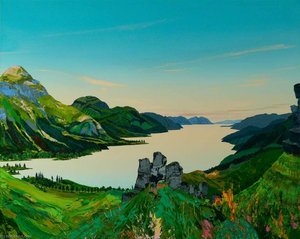
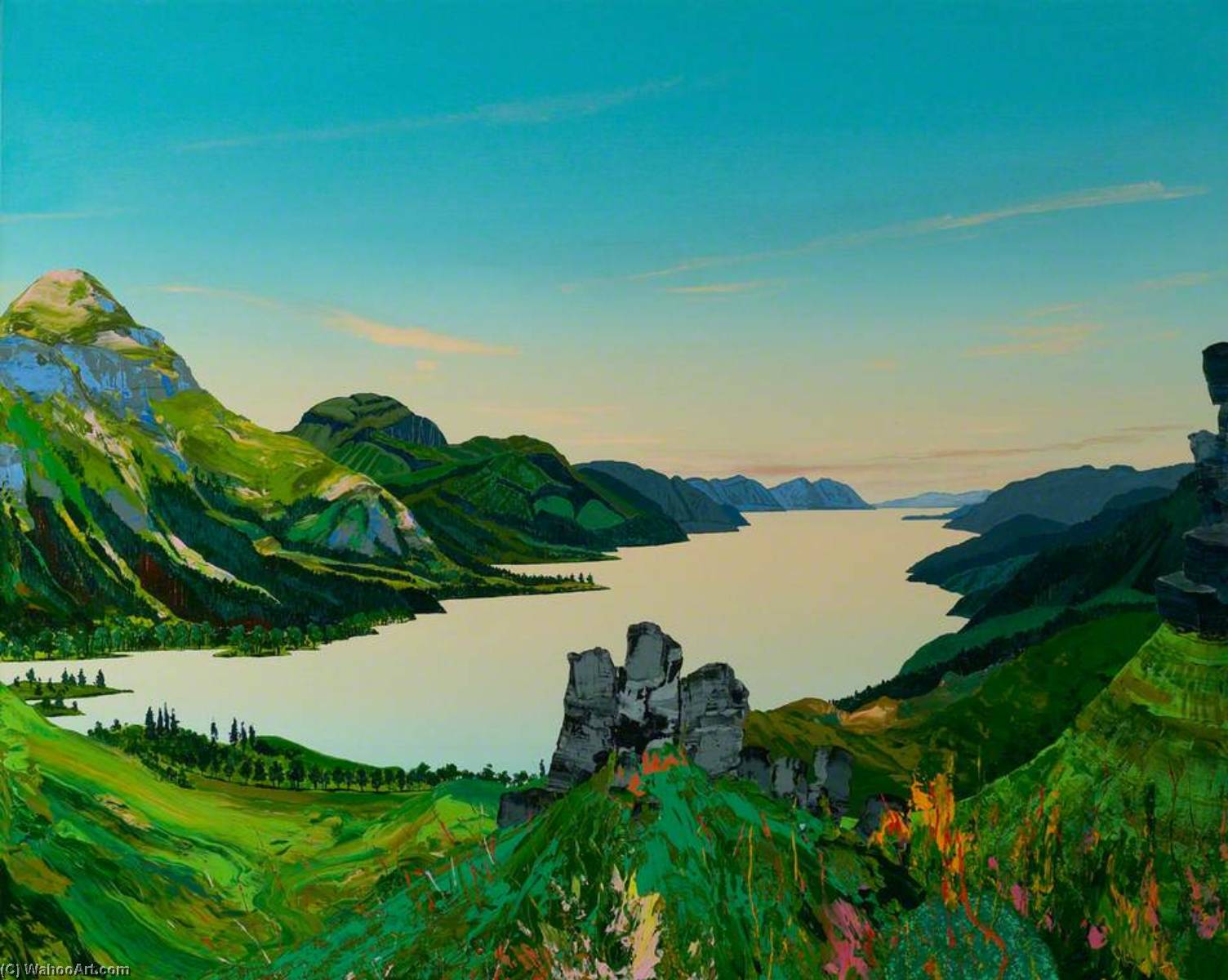
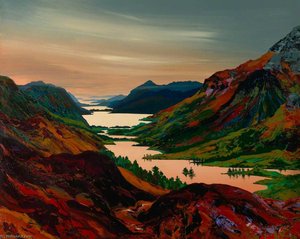
The Great Glen through Four Seasons (panel 4 of 4)
 Oil On Panel
- Contemporary Realism
 2004
2004- Contemporary
 122.0 x 153.0 cm
 Inverness Airport
 Read More
Hand Made Oil Reproduction
Hand-painted oil on canvas in your size and frame, made to order by our artists. ( Buy Print Buy Image)




P118B $10

P118H $10

P118W $10

P438Z $10

P508JH $12

P508YH $12

P805H $10

P805Z $10

P919BZ $10

P919G $10

P919XJ $10

P959ZH $10

P968JZ $12

W106C $8

W218G $10

W218JH $8

W218Y $10

W307PJ $10

W316G $10

W316PJ $8

W316Y $10

W398PJ $8

W4111J $10

W500HY $15

W500JH $15

W692G $12

W849H $8

W940BG $15

W953PJ $8




Pick from our preset sizes that match the artwork's original proportions.

You may enter your own dimensions to fit a specific frame or space. If your selected size does not match the original image's proportions, we will either crop the artwork or extend the painting with additional hand-painted elements. A digital mockup will be sent for your approval before production begins.
Please note that the on-screen preview does not reflect the actual cropping or extension. Only the mockup will accurately show the final composition.
While custom sizes are available, we recommend selecting a dimension from the predefined list to preserve the original proportions.
After order, ArtsDot.com team will email client for instructions and provide a mockup preview
Worldwide Delivery () in 3/4 weeks instead of standard 5 weeks. (25 August). No compromise on quality.

Free Worldwide Express Shipping

High-Quality Linen Canvas

Full Shipping Insurance

Customs Tax Refund Guarantee

True Color Matching Guarantee

60-Day Return Policy (Defects Only)

100% Money-Back Guarantee

Bulk Discount Offer
 Glass option is only available in size under 110 CM

The Great Glen through Four Seasons (panel 4 of 4)
Reproduction Medium
Reproduction Size
-


Total Price
$ 263
Artwork Description
A Symphony of Nature: The Great Glen through Four Seasons
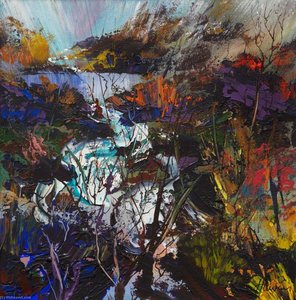
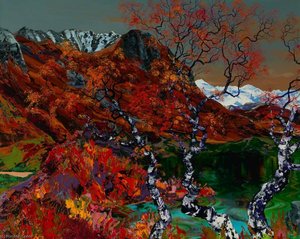
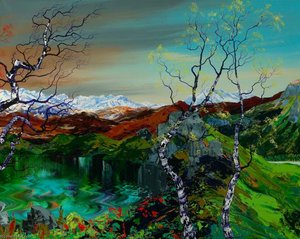
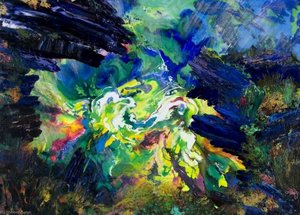
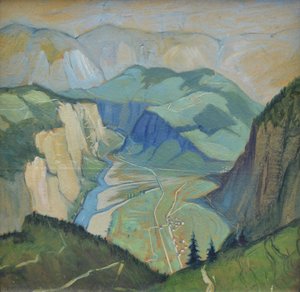
In this breathtaking fourth panel of his seasonal series, James Hawkins invites the viewer into a profound communion with the Scottish Highlands. The Great Glen through Four Seasons is more than a mere landscape; it is a meditative exploration of time and the enduring spirit of the earth. The composition centers on a vast, tranquil body of water that acts as a mirror to the towering mountains in the distance, creating a sense of infinite depth. Scattered trees punctuate the shoreline, their forms providing a delicate organic rhythm against the rugged permanence of the stone peaks. In the foreground, weathered rocks anchor the scene, offering a tactile connection to the terrain and grounding the ethereal atmosphere in physical reality.
The artist employs a masterful approach to light and texture, capturing the specific atmospheric weight that defines this particular corner of the world. Through a sophisticated use of color layering, Hawkins evokes the crisp, cool essence of the landscape, where the interplay between shadow and luminosity suggests the shifting moods of the Highland sky. The technique breathes life into the water's surface, suggesting a gentle movement that contrasts beautifully with the stoic, unyielding presence of the mountains. This balance of fluidity and stability creates a visual harmony that is both captivating and deeply restorative to the eye.
For the discerning collector or interior designer, this piece serves as a powerful focal point capable of transforming any space into a sanctuary of peace. The painting carries a symbolic weight, representing the cyclical nature of life and the quiet resilience found in the natural world. Its grand scale and serene palette make it an ideal centerpiece for sophisticated residential or professional environments, where it can inspire moments of reflection and awe. To possess a reproduction of this work is to bring a fragment of the sublime into one's own home, offering a window into a landscape that remains eternally majestic and untouched by the passage of time.
Related Artworks
Artist Biography
Henri Matisse: A Life Painted in Color
Born Henri Émile Benoît Matisse on December 31, 1869, in Cateau-Cambrésis, Northern France, Matisse’s journey to becoming one of the most influential artists of the 20th century was marked by a relentless pursuit of color and form. His life spanned nearly nine decades, witnessing and profoundly shaping the evolution of modern art, from the vibrant energy of Fauvism to the refined elegance of his later years. He died on November 3, 1954, leaving behind an astonishing body of work that continues to captivate audiences worldwide.
Matisse’s early artistic development was shaped by a formal education in law and literature – pursuits he largely abandoned for the burgeoning world of art. He initially studied at the École des Beaux-Arts in Paris, but found the rigid academic style stifling. It was during this period that he encountered the Impressionists and Post-Impressionists, artists who prioritized subjective perception over strict representation. These encounters proved pivotal, igniting a passion for capturing light and emotion through color and brushstroke. His early works reflected a more traditional approach, but it wasn’t long before he began to experiment with bolder techniques and palettes.
The Fauvist Revolution
Matisse's artistic breakthrough arrived in the early 1900s with his embrace of Fauvism – a movement characterized by its unrestrained use of color, often applied in arbitrary and non-naturalistic ways. This radical departure from established conventions shocked the art world, earning him the moniker “wild beast.” Works like *Woman with a Hat* (1905) and *The Joy of Life* (1906) exemplify this period, showcasing vibrant reds, blues, yellows, and greens applied with thick, expressive brushstrokes. These paintings weren’t intended to depict reality faithfully; instead, they aimed to evoke mood and emotion through the sheer intensity of color.
Influenced by Paul Gauguin's use of color in Tahiti and Vincent van Gogh’s emotionally charged brushwork, Matisse sought to create a visual language that transcended mere representation. He believed that color itself could communicate feelings and ideas, independent of subject matter. This philosophy drove him to explore the expressive potential of his palette with an almost obsessive dedication.
Mature Style & Beyond
Following the initial shock of Fauvism, Matisse gradually refined his style, moving towards a more controlled and decorative approach. He developed a distinctive technique characterized by flattened forms, simplified shapes, and rhythmic patterns. This period saw him create iconic works such as *The Red Studio* (1911), a bold exploration of color and composition, and *Dance* (1910), which captured the dynamism of movement through vibrant hues and angular lines. He also experimented with printmaking, creating striking lithographs and woodcuts that showcased his mastery of line and color.
Despite facing health challenges in his later years, Matisse continued to paint prolifically, focusing on paper cutouts – intricate compositions created by arranging brightly colored pieces of paper. These works, produced between 1947 and 1954, represent a remarkable testament to his artistic vitality and ingenuity. They demonstrate a shift towards abstraction while retaining the fundamental principles of color and composition that defined his entire career.
Legacy & Historical Significance
Henri Matisse’s impact on the art world is undeniable. He was instrumental in breaking away from academic traditions and paving the way for future generations of artists to explore new possibilities in color, form, and expression. His influence can be seen in the works of numerous artists who followed, including Joan Miró, Paul Klee, and Wassily Kandinsky. Matisse’s emphasis on intuition, emotion, and the transformative power of color continues to resonate with audiences today, solidifying his place as one of the most important figures in modern art.
His work is held in major museums worldwide, including the MoMA in New York, the Tate Modern in London, and the Centre Pompidou in Paris. Matisse’s legacy extends beyond the canvas; he was also a celebrated designer, creating textiles, wallpaper, and furniture that further demonstrated his innovative approach to visual communication.
james hawkins
1954 - , United Kingdom
Quick Facts
- Artistic Movement Or Style: Feminist Art, Pictures Generation
- Artists Or Movements Influenced By This Artist:
- Barbara Kruger
- Sherrie Levine
- Artists Who Influenced This Artist:
- Cindy Sherman
- Andy Warhol
- Date Of Birth: January 19, 1954
- Full Name: Cynthia Morris Sherman
- Nationality: American
- Notable Artworks:
- Untitled Film Stills
- Centerfold
- Marilyn
- Place Of Birth: New York City, USA
Related Articles

Hokusai's Masterpieces: 25 Iconic Prints & Paintings for Art Lovers | ArtsDot
Journey through Katsushika Hokusai’s 25 most iconic artworks, including *The Great Wave*. Explore the ukiyo-e master's history, style & timeless Japanese woodblock prints. Find museum-quality reproductions for your home at ArtsDot.com.

John Constable's Masterpieces: Explore 25 Iconic Landscapes for Your Home
Journey through John Constable's 25 most celebrated landscapes. Explore Romanticism, Dedham Vale & his masterful use of light in iconic paintings like 'Hay Wain'. Find museum-quality art reproductions and elevate your home decor on ArtsDot.com.
Serene Visions: Exploring Themes of Tranquility in Art History & Contemporary Practice
Explore the history of serene landscape art & discover artists who evoke tranquility. Find the perfect calming artwork for your home with expert guidance from ArtsDot.

Romantic Landscapes: 10 Masterpieces for Your Home | ArtsDot
Journey through 10 Romantic landscape masterpieces by Friedrich, Turner & Cole. Explore emotional art, sublime nature scenes & iconic 19th-century paintings. Find museum-quality reproductions for your home at ArtsDot.com – discover the full collection online!

Evocations of Place: A Historical Journey Through Landscape Art
Explore the rich history of landscape art with ArtsDot. Discover renowned artists, movements like Impressionism & Romanticism, and expert guidance for collecting timeless pieces. Find your perfect serene escape today!