 Preview
 Send
Send Share
Share
 Details

 Download
 Similars
 X-Ray
X-Ray Diaporama
Levers Water
 1904
1904 160.0 x 246.0 cm
 Read More
Hand Made Oil Reproduction
Hand-painted oil on canvas in your size and frame, made to order by our artists. ( Buy Print Buy Image)




































Pick from our preset sizes that match the artwork's original proportions.

You may enter your own dimensions to fit a specific frame or space. If your selected size does not match the original image's proportions, we will either crop the artwork or extend the painting with additional hand-painted elements. A digital mockup will be sent for your approval before production begins.
Please note that the on-screen preview does not reflect the actual cropping or extension. Only the mockup will accurately show the final composition.
While custom sizes are available, we recommend selecting a dimension from the predefined list to preserve the original proportions.
After order, ArtsDot.com team will email client for instructions and provide a mockup preview
Worldwide Delivery () in 3/4 weeks instead of standard 5 weeks. (17 August). No compromise on quality.

Free Worldwide Express Shipping

High-Quality Linen Canvas

Full Shipping Insurance

Customs Tax Refund Guarantee

True Color Matching Guarantee

60-Day Return Policy (Defects Only)

100% Money-Back Guarantee

Bulk Discount Offer
 Glass option is only available in size under 110 CM

Levers Water
Reproduction Medium
Reproduction Size
-


Total Price
$ 263
Artwork Description
Artistic Style and Technique
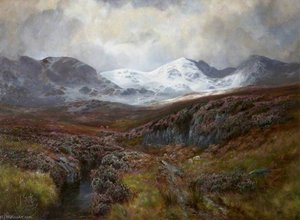
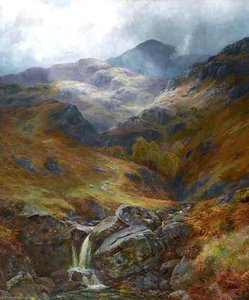
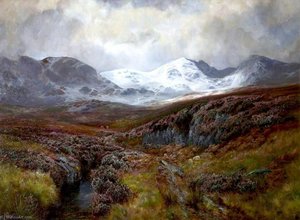
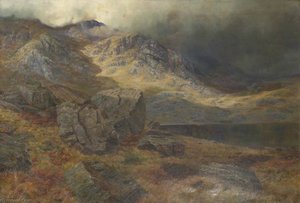
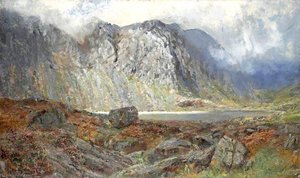
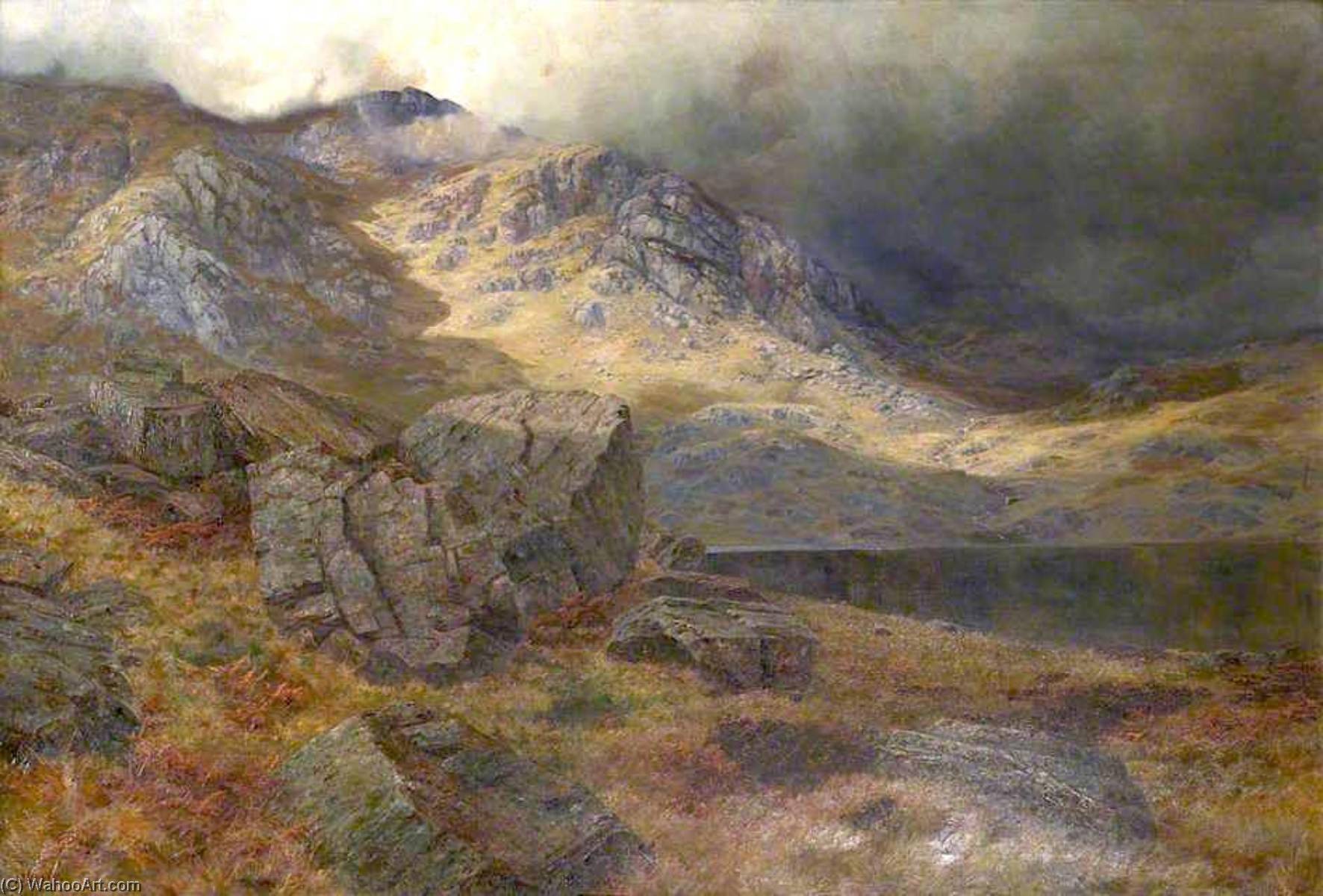
James Henry Crossland's style is characterized by his attention to detail and ability to capture the play of light on water and land. In Levers Water, he employs a range of techniques, including subtle color gradations and delicate brushstrokes, to convey the serene atmosphere of the scene. The painting's composition, featuring two prominent mountains and a lake, creates a sense of depth and balance. Key Features of the painting include:- The majestic mountain range, with rocks and trees scattered throughout
- The tranquil lake, reflecting the surrounding landscape
- The dramatic sky, filled with clouds that add to the overall sense of drama
Artist and Museum Background
James Henry Crossland was a talented artist, and his work can be found in various collections, including The Ruskin Museum. This museum, named after John Ruskin, is a treasure trove of art and artifacts, showcasing the region's rich cultural heritage. To learn more about James Henry Crossland and his work, visit his page on ArtsDot.com.For those interested in acquiring a handmade oil painting reproduction of Levers Water, ArtsDot.com offers high-quality reproductions that capture the essence of the original piece. Experience the beauty of Levers Water in your own home, and discover the magic of James Henry Crossland's artistry.
Related Artworks

Artist Biography
James Henry Crossland: A Yorkshire Painter of Mountain Majesty
James Henry Crossland (1852-1939) emerges from the heart of Victorian England as a quietly significant landscape artist, a master of capturing the rugged beauty and atmospheric drama of the Yorkshire Dales, Derbyshire Peak District, and the dramatic mountain ranges of Wales. His work, often overlooked in broader narratives of 19th-century British art, reveals a deep connection to the land and an ability to translate its essence onto canvas with remarkable sensitivity and technical skill. Crossland’s legacy lies not in grand exhibitions or celebrity status, but rather in a substantial body of paintings that offer intimate glimpses into a vanishing world – a world of rural life, dramatic weather, and timeless landscapes. Born in Wakefield, Yorkshire, in 1852, Crossland's early life was steeped in the traditions of his family’s farming background. While details of his formal artistic training are somewhat sparse, it is believed he initially studied at Huddersfield College, honing his observational skills and developing a foundational understanding of drawing and composition. Crucially, he later apprenticed himself to the established artist, Cyril Crossland (no relation), who instilled in him a rigorous approach to landscape painting – emphasizing accurate representation, tonal values, and the skillful use of light and shadow. This mentorship proved pivotal, shaping his artistic philosophy and technique. His move to Derbyshire around 1870 marked a turning point, exposing him to the dramatic limestone landscapes that would become central to his oeuvre. The stark beauty of these mountains – the rugged edges of the Peak District, the imposing presence of Kinder Scout – provided an endless source of inspiration. Crossland’s artistic development can be traced through a progression in subject matter and style. Early works often depicted scenes of rural life – farmers tending their fields, villagers engaged in daily routines – but it was his fascination with the dramatic landscapes that truly defined his career. He possessed a remarkable ability to capture the ever-changing weather conditions prevalent in these regions: swirling mists clinging to valleys, brooding skies unleashing torrential rain, and the golden light of sunset bathing the mountains in an ethereal glow. His paintings are not merely topographical representations; they are imbued with a palpable sense of atmosphere – a feeling of solitude, power, and the sublime beauty of nature. His use of color is particularly noteworthy: muted greens and browns dominate his palette, reflecting the earthy tones of the landscape, punctuated by flashes of vibrant blues and grays to convey the intensity of the weather. A significant aspect of Crossland’s artistic journey involved a commission from Archdeacon Matthew Hale in 1854 to paint portraits of the indigenous people of Poonindie, a community established near Sheffield. These paintings – depicting Nannultera and Samuel Kandwillan – represent an important, albeit often overlooked, chapter in his career. They stand as some of the earliest professional portraits of Aboriginal Australians, offering a rare visual record of their lives and culture during a period of profound social change. These works demonstrate Crossland’s willingness to engage with diverse communities and document the beauty of unfamiliar landscapes. Throughout his long career, Crossland exhibited regularly at prestigious venues such as Suffolk Street, the Royal Academy, and the Royal Cambrian Academy. His work gained recognition for its technical proficiency and evocative qualities. He was a founding member of the Lake Artists’ Society in 1904, further solidifying his position within the artistic community. His paintings are now held by institutions like the National Collection, the Lakeland Art Trust, and the Keswick Museum, ensuring that his legacy continues to be appreciated. In later years, Crossland established a practice in Egham, Surrey, where he continued to paint prolifically until his death in 1939. His final major commission was the portrait of Captain Charles Sturt for Rochdale Town Hall, a testament to his enduring skill and artistic vision. James Henry Crossland’s work represents more than just landscapes; it is a poignant reflection on a changing England – a country grappling with industrialization, social reform, and the challenges of modernity. His paintings offer a valuable window into the past, inviting us to contemplate the beauty and resilience of the natural world and the enduring spirit of its people.The Influence of Victorian Landscape Painting
Crossland’s artistic practice was firmly rooted in the traditions of Victorian landscape painting, yet he possessed a distinctive voice that set him apart from his contemporaries. The influence of artists such as J.M.W. Turner, with his atmospheric effects and emphasis on light and color, is readily apparent in Crossland's work. Turner’s radical approach to depicting nature – prioritizing mood and sensation over strict topographical accuracy – clearly resonated with Crossland. Similarly, the works of John Constable, known for his detailed depictions of the Suffolk countryside, provided a model for Crossland’s meticulous observation of detail and his ability to capture the subtle nuances of light and shadow. However, Crossland's style was not simply imitative; he synthesized these influences with his own unique sensibility, resulting in a distinctly personal vision. Unlike some of his contemporaries who favored idealized or romanticized landscapes, Crossland presented a more realistic portrayal of the Yorkshire Dales – capturing their ruggedness, austerity, and often challenging conditions. His paintings are characterized by a sense of quiet dignity and understated beauty, reflecting a deep respect for the land and its inhabitants. The influence of the Pre-Raphaelites is also detectable in his use of color and composition, particularly in his depictions of dramatic weather events – the swirling mists, the torrential rain, and the fleeting glimpses of sunlight that pierce through the clouds. Furthermore, Crossland’s artistic development coincided with a broader shift in attitudes towards nature during the Victorian era. The Romantic movement had championed the sublime beauty of nature as a source of spiritual inspiration, while the Victorian period witnessed a growing interest in scientific observation and detailed documentation. Crossland's paintings reflect this dual influence – combining an appreciation for the emotional power of landscape with a commitment to accurate representation. He was not merely painting what he saw; he was striving to capture the essence of the land itself.Key Works and Notable Paintings
Several works by James Henry Crossland stand out as particularly significant examples of his artistic achievement. “Great End from Borrowdale, Cumbria” (circa 1890) is a masterful depiction of the dramatic mountain range, capturing its imposing scale and atmospheric drama with remarkable skill. The painting’s use of light and shadow creates a sense of depth and perspective, drawing the viewer into the heart of the landscape. “Levers Water” (circa 1875), another iconic work, showcases Crossland's ability to capture the tranquility of a secluded valley, bathed in the soft glow of twilight. The painting’s muted colors and subtle details evoke a sense of peace and serenity. “Alum Scar” (circa 1880) is perhaps his most celebrated work, depicting the dramatic limestone cliffs of Alum Scar with breathtaking clarity. The painting's composition – featuring a solitary figure standing on the edge of the cliff – creates a powerful sense of scale and isolation. Crossland’s meticulous attention to detail – capturing the texture of the rock face, the movement of the clouds, and the expression on the figure’s face – elevates the painting beyond mere topographical representation. Beyond these individual works, Crossland produced a substantial body of paintings that document the diverse landscapes of Yorkshire, Derbyshire, and Wales. His portraits of notable figures – including Captain Charles Sturt, Henry Young, Sir Charles Cooper, and George Fife Angas – provide valuable insights into Victorian society and culture. His work in documenting Aboriginal Australians is equally important, offering a rare visual record of a marginalized community during a period of profound social change.Legacy and Historical Significance
James Henry Crossland’s legacy as an artist is often understated, yet his paintings continue to resonate with viewers today. His ability to capture the beauty and drama of the Yorkshire Dales and other mountainous regions has ensured that his work remains relevant and engaging. His paintings are not merely historical artifacts; they offer a powerful connection to the past – inviting us to contemplate the changing landscape and the enduring spirit of rural England. Furthermore, Crossland’s commission to paint portraits of Aboriginal Australians represents an important chapter in the history of art and cultural exchange. His work provides valuable insights into the lives and culture of the indigenous people of Australia during a period of profound social change. Crossland's paintings are now held by institutions such as the National Collection, the Lakeland Art Trust, and the Keswick Museum, ensuring that his legacy continues to be appreciated and studied for generations to come. His work serves as a reminder of the importance of preserving cultural heritage and documenting the experiences of marginalized communities.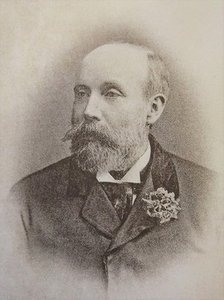
james henry crossland
1852 - 1939
Quick Facts
- Artistic Movement Or Style: Landscape art
- Artists Or Movements Influenced By This Artist: ['Victorian art']
- Artists Who Influenced This Artist: ['George Gilbert Scott']
- Date Of Birth: 1852
- Date Of Death: 1939
- Full Name: James Henry Crossland
- Nationality: British
- Notable Artworks:
- Great End from Borrowdale
- Levers Water
- Alum Scar
- Place Of Birth: Wakefield, Yorkshire