 Preview
 Send
Send Share
Share
 Details

 Download
 Similars
 X-Ray
X-Ray Diaporama
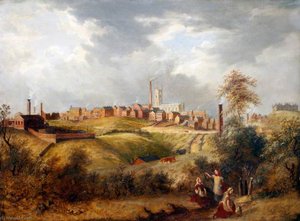
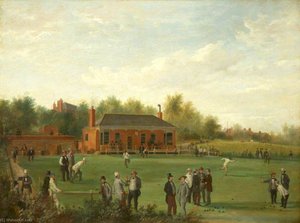
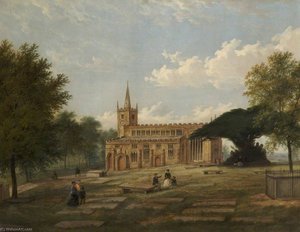
Nordens, Oldham, Lancashire
 1866
1866 76.0 x 64.0 cm
 Read More
Hand Made Oil Reproduction
Hand-painted oil on canvas in your size and frame, made to order by our artists. ( Buy Print Buy Image)




































Pick from our preset sizes that match the artwork's original proportions.

You may enter your own dimensions to fit a specific frame or space. If your selected size does not match the original image's proportions, we will either crop the artwork or extend the painting with additional hand-painted elements. A digital mockup will be sent for your approval before production begins.
Please note that the on-screen preview does not reflect the actual cropping or extension. Only the mockup will accurately show the final composition.
While custom sizes are available, we recommend selecting a dimension from the predefined list to preserve the original proportions.
After order, ArtsDot.com team will email client for instructions and provide a mockup preview
Worldwide Delivery () in 3/4 weeks instead of standard 5 weeks. (21 August). No compromise on quality.

Free Worldwide Express Shipping

High-Quality Linen Canvas

Full Shipping Insurance

Customs Tax Refund Guarantee

True Color Matching Guarantee

60-Day Return Policy (Defects Only)

100% Money-Back Guarantee

Bulk Discount Offer
 Glass option is only available in size under 110 CM

Nordens, Oldham, Lancashire
Reproduction Medium
Reproduction Size
-


Total Price
$ 263
Related Artworks
Artist Biography
James Howe Carse: Bridging Scotland and the Australian Bush
James Howe Carse (1819-1900) wasn’t merely a painter; he was an explorer of landscapes, a chronicler of evolving environments, and a pivotal figure in establishing a distinctly Australian artistic voice. Born in Edinburgh to a family steeped in artistic tradition – his father, Alexander Carse, was himself a respected Scottish landscape painter – Carse inherited both a technical skill and a deep appreciation for the evocative power of nature. His journey took him across continents, culminating in a prolific career documenting the dramatic shifts occurring within Scotland and, crucially, the burgeoning landscapes of colonial Australia.
Carse’s early artistic training was primarily focused on capturing the rugged beauty of his native Scotland. He exhibited in London during the 1860s, producing scenes of familiar Scottish vistas – rolling hills, lochs shrouded in mist, and the dramatic coastline. These works established a foundation built upon meticulous observation and a keen understanding of light and shadow, hallmarks that would later inform his Australian paintings. However, it was his relocation to Australia in the mid-1860s that truly defined his artistic trajectory. Drawn by the promise of adventure and the allure of a rapidly changing frontier, Carse arrived in Adelaide, marking the beginning of a transformative period.
The Shaping of an Australian Eye
Carse’s time in Australia wasn't characterized by a sudden stylistic shift, but rather a gradual adaptation to a new visual language. Initially, his paintings mirrored his Scottish work – detailed depictions of familiar landscapes. Yet, as he spent years traversing the colonies, particularly Victoria and Queensland, he began to incorporate elements specific to the Australian environment: the vastness of the bush, the unique flora and fauna, and the interplay between burgeoning industry and untouched wilderness. This period witnessed a remarkable evolution in his technique; he moved away from the highly polished surfaces of his earlier work towards looser brushstrokes and a greater emphasis on capturing atmosphere and mood.
His depictions of industrial landscapes – factories alongside rivers, mines nestled amongst hills – offered a poignant commentary on Australia’s rapid development. These weren't romanticized portrayals; Carse presented the realities of colonial life with an unflinching honesty, juxtaposing the progress of industry with the enduring beauty of the natural world. Notable works like “Oldham, Lancashire, from Glodwick Fields” and “St Mary the Virgin, Deane Parish Church, Bolton,” demonstrate this early ability to capture industrial growth amidst rural beauty.
A Gold Medal and Recognition
Carse’s artistic reputation reached a significant milestone in 1876 when he secured a gold medal at the Intercolonial Exhibition held in Chicago. This prestigious award served as a powerful validation of his talent, catapulting him to international recognition. It was a testament not only to his technical skill but also to his ability to capture the essence of both Scottish and Australian landscapes with equal conviction. Returning to Australia, he continued to exhibit prolifically, gaining increasing acclaim for his evocative depictions of the bush and its inhabitants.
Legacy and Enduring Influence
James Howe Carse’s legacy extends beyond his individual paintings. He played a crucial role in establishing landscape painting as a distinct genre within Australian art. His work served as an inspiration to subsequent generations of artists, encouraging them to explore the vastness and diversity of the Australian landscape. His ability to seamlessly blend technical skill with emotional resonance ensured that his paintings continue to resonate with viewers today, offering a captivating glimpse into a pivotal period in Australian history – a time of dramatic transformation and the forging of a unique national identity.
Carse’s final years were spent in Mosman, New South Wales, where he passed away in 1900. His paintings remain an invaluable record of this era, offering a poignant reminder of the enduring power of art to capture both the beauty and the complexities of the human experience within the context of a changing world.
james howe carse
1819 - 1900
Quick Facts
- Artistic Movement Or Style: Landscape Painting
- Artists Or Movements Influenced By This Artist: ['Romanticism']
- Artists Who Influenced This Artist: ['Alexander Carse']
- Date Of Birth: ca. 1819
- Date Of Death: 1900
- Full Name: James Howe Carse
- Nationality: British Australian
- Notable Artworks:
- Oldham, Lancashire
- St Mary the Virgin
- Nordens, Oldham
- Place Of Birth: Edinburgh, Scotland